The Home-Grown School Feeding Programme in Nigeria
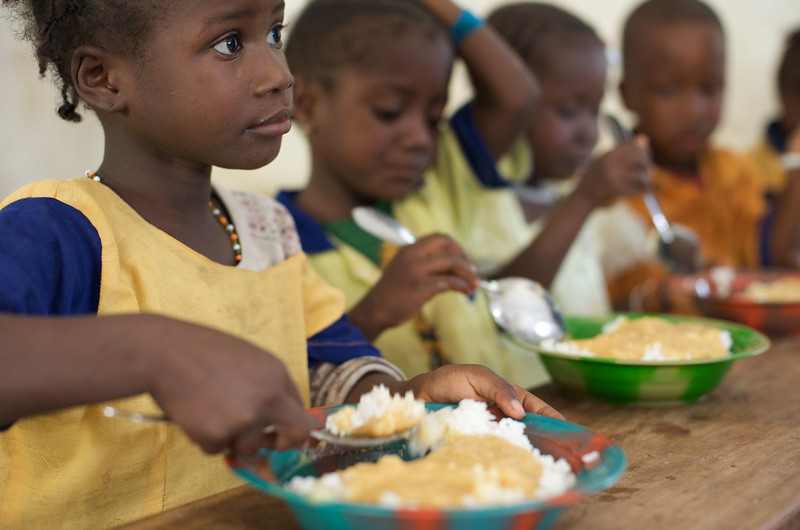 Globally, 244 million children and youth aged 6 to 18 remain without access to education. Nigeria, as Africa’s most populous and largest economy, contributes significantly, with 20 million of its young population currently out of school, with the threat of additional millions facing the risk of dropout looms large.
Among the complex factors hindering education, one stands out prominently – “Hunger.” Childhood malnutrition disorders affect more than 42% of school children in the country and are responsible for 49% of the absenteeism of primary school-age children.
Studies by the United Nations Children’s Fund (UNICEF) reveal a grim reality. Nigeria carries the world’s second-highest burden of stunted children under 5, with a prevalence rate of 32%. This widespread malnutrition not only impacts physical health but also hinders cognitive development, learning outcomes and future productivity.
The Vicious Cycle of Hunger and Education
Studies conducted by the World Food Programme (WFP) demonstrate a strong correlation between malnutrition and educational outcomes. Specifically, research has shown that providing daily meals at school can have several positive effects, including:
- Improved focus and concentration in children.
- Increased enrollment and attendance rates.
- Higher retention rates in educational programs.
- Enhanced cognitive abilities.
Data analysis indicates that such school meal programs can, on average, boost enrollment by 9%. This suggests that addressing hunger is a critical factor in removing barriers to education.
Enter the Home-Grown School Feeding Programme
In a 2016 attempt to tackle Nigeria’s out-of-school crisis, the Federal Government of Nigeria revived the Home-Grown School Feeding Programme (HGSFP) in 22 states nationwide. This N70 (around $0.17) per child, per day initiative aimed to boost primary school enrollment, improving students’ health and nutrition, all within a social safety net framework. To achieve this, the program targeted multiple areas: increasing farmers’ income, empowering women, fostering collaboration among ministries of education, health, justice, agriculture and budget and planning. Additionally, it actively engaged state governments, school boards, community leaders, women’s groups and parents.
Beyond Nourishment
Sourcing ingredients from 150,000 smallholder farmers, the HGSFP creates a stable market for their produce and boosts their income, fostering agricultural development. This has spurred 106,000 jobs, especially for women cooks and food deliverers, directly combating Nigeria’s unemployment rate, which stood at 33.3% in Q4 2020.
Impact Quantified
Initially aiming to reach 12.8 million primary school children by July 2019, the program currently nourishes at least 9.4 million pupils in 46,000 public schools across 31 states. These children receive a nutritious meal every school day, with menus varying across regions from moi moi (beans pudding) to beans, porridge, rice and other local staples.
The impressive scale of the program is evident in the sheer volume of ingredients used. Each week, 594 cattle, 138,000 chickens, 6.8 million eggs and 83 metric tons of fish contribute to feeding the children. This not only nourishes young minds but also stimulates domestic agriculture and food production.
The program’s positive impact extends beyond plates. In 2019, the federal government acknowledged HGSFP’s significant contribution to a 20% increase in primary school enrollment nationwide since its launch in 2016. This increase demonstrates the program’s effectiveness in attracting and retaining children in school, paving the way for a brighter future for individuals and the nation.
Challenges and the Road Ahead
While the HGSFP boasts impressive achievements in feeding millions of children and boosting local agriculture, it faces several hurdles that threaten its full potential. Limited funding restricts meal quality and reach, while corruption involving some cooks necessitates stricter monitoring. Inefficient management, including the lack of regular reviews, leads to unmet demand and potential mismanagement. Additionally, discrepancies exist between reported successes and experiences in specific areas, raising concerns about uneven implementation.
A Tech Boost
WFP has declared Nigeria’s National Home-Grown School Feeding Programme (NHGSFP) the best in Africa. It is partnering with the government to enhance its impact further. WFP will provide tablets loaded with the PLUS Schools Menus app to promote better nutrition and dietary habits, empowering nutrition officers to design budget-friendly, nutritious meals for schools. This decision stems from a joint assessment to strengthen, scale and sustain the NHGSFP.
A Plateful of Potential
The HGSFP offers a powerful antidote to Nigerians’ struggle with hunger and unequal access to education. Nurturing both minds and bodies, it illuminates a path toward a more promising future for millions of children. With continued commitment and collaborative efforts, a plate of food can truly transform lives and reshape the educational ecosystem of Nigeria.
– Abraham Ikongshul
Photo: Flickr
