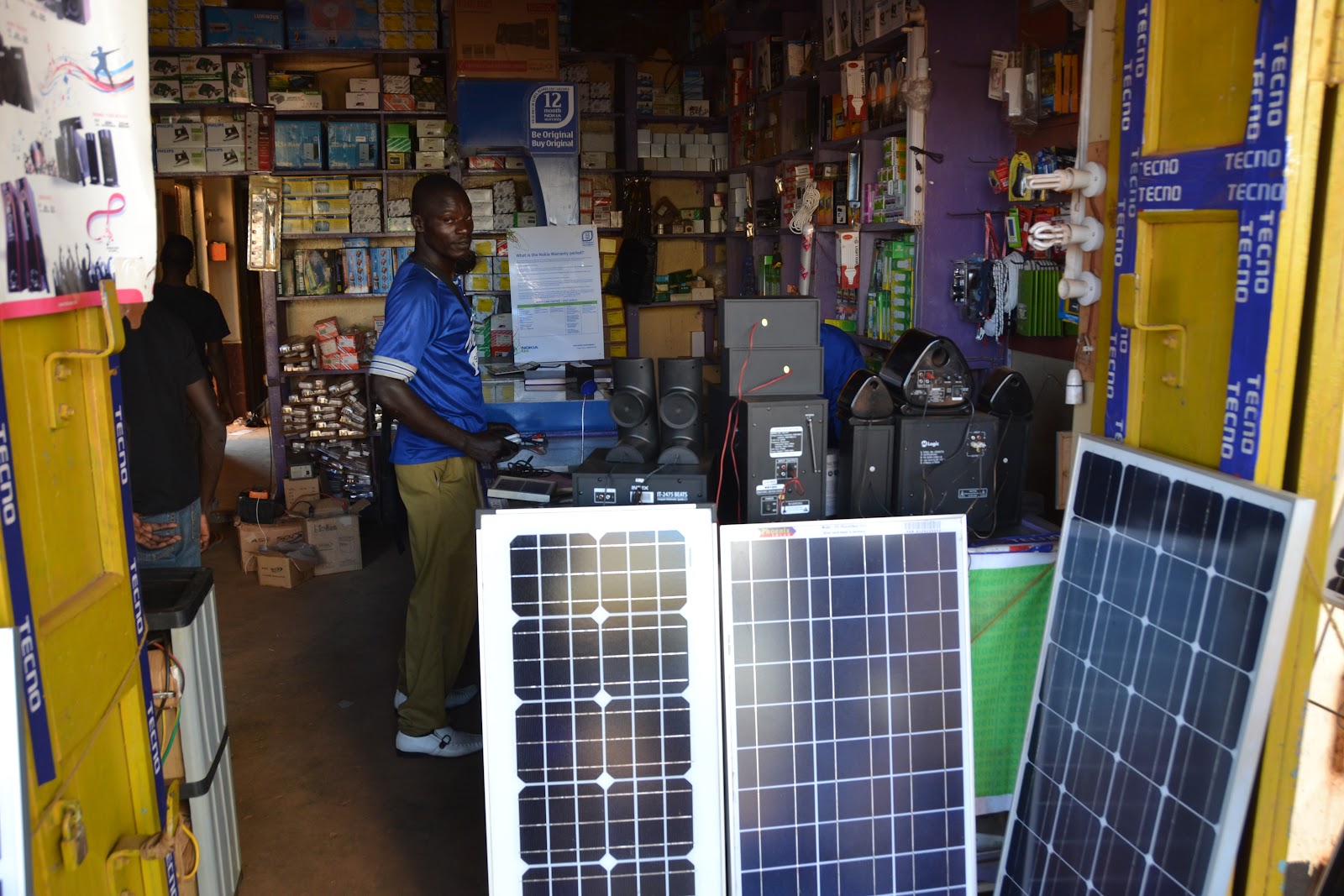
 In 2016, the African Development Bank launched the New Deal on Energy for Africa to accelerate the supply of electricity across the continent. After the African Development Bank launched its bold initiative, the president of the organization, Akinwumi Adesina, made a statement that resonated with countless communities: “Africa is tired of being in the dark.”
Fast forward to today and the vision of the New Deal has faded. All across Africa, communities suffer from frequent blackouts and grid congestion plagues slowly growing businesses. As the world becomes more tech-centered, it is critical that Africa is supported by modern technology rather than, as Adesina feared, being left in the dark.
High Population, High Demand
As the population in Africa steadily rises, so does the demand for reliable electricity to power growing communities. In sub-Saharan Africa, growing populations are overtaking electricity access, and the percentage of people in the region with access to electricity is declining. Additionally, mere access to power does not guarantee a high value in energy service. For instance, in Nigeria, it is estimated that homes and businesses spend $14 billion each year on fuel to power supplemental generators. This is because the current power grid is unable to keep up with the needs of the people.
If energy storage in Africa can be optimized, millions of people and small businesses will experience fewer blackouts. This will, in turn, provide energy, electricity and economic boosts for many struggling, impoverished communities. If executed properly, energy access could be the break in the poverty cycle that Africa has been waiting for.
Renewable Energy in Africa
With a consistently sunny climate, Africa has an incredible potential for solar energy. The cost of solar energy generation in Africa may even be relatively inexpensive compared to the current average prices for electricity. In Liberia, for example, one would have to pay a high average of $490 per megawatt-hour for electricity. However, if investors utilize the expansive supply of sunlight across the continent, the price will drop in the long run and provide more African consumers with stable energy. This could also provide more work opportunities in industry, technology and small businesses that would otherwise be unable to pay an electricity bill.
Overall, the impact of investing in new energy storage technology will be substantial. Impoverished communities will have access to reliable power, the poor can find work and countries’ economies will grow. However, the path to renewable energy integration is not as simple as one may hope.
In recent years, older and more traditional power plants have been attempting to provide stable power to communities with moderate success. It is estimated that 42% of Africans lack access to electricity in their homes because they are not in zones served by an electric grid. Additionally, frequent blackouts and massive regions without power are not uncommon in the continent.
Energy Storage
As Africa aims to integrate affordable solar energy on a large scale, the current grid capacity will not be able to respond to the high levels of demand. Without massive design changes, this issue will continue to worsen in the near future.
Energy storage in Africa allows for the integration of renewable energy on a broad scale and can address the electrical challenges found across the continent. It will also create a buffer between the limited supply and increasingly high demand. Thus, a new grid system concentrated on energy storage and more resilient power systems will be absolutely critical in guaranteeing renewable energy. Such a system will also lower the cost of electricity for Africans. With this progress, millions of families and businesses will have access to stable electricity.
Making Progress
Though there is still a great deal of work to be done, it is impossible to ignore the remarkable advancements in African energy in recent history.
When looking for companies that are investing in the people of Africa, one need look no further than the massive retailer Amazon, one of the largest and most successful businesses today. Amazon recently announced that it is hiring around 3,000 South Africans for customer service positions that are designed to be fully remote. It is a rare case in which Africans prove to have a stable-enough internet connection for the work from home lifestyle to be possible.
The potential impact this will have on the poverty rate in South Africa is outstanding. The ability to work from home opens doors for a number of people who previously did not have the opportunity to work. For example, mothers who were generally expected to be the familial homemaker can now work from home while taking care of their children. Additionally, people all across the region will be able to avoid expensive travel costs altogether.
With more investments in energy storage in Africa, more families and businesses will be able to thrive. Should these massive economic leaps continue in the future, the unemployment rate in the region will gradually decrease. Providing access to electricity also benefits families, businesses and consumers by improving education, healthcare and quality of life. At the same time, it helps to improve the bottom line for utility costs and rates of return for investors, drawing in more business.
It is evident that investing in one region can slowly bleed into the next, giving hope for a more stable future to the whole of the African continent. Through these continued efforts, Africa will no longer be left in the dark but rather will be brought light.
– Daniela Canales
Photo: Flickr

Hybrid Solar Dryer: Fruit Preservation Technology on Jamaica and Haiti
Hybrid Solar Dryer Design
Trees That Feed distributed 12 hybrid solar dryers in Jamaica and Haiti. Each dryer comprises six modules to ease assembly and material transportation. The modules include three solar collectors, a lower and an upper cabinet and a roof. The three solar collectors capture heat and feed warm air into an upper cabinet that holds five shelves of sliced or shredded fruit. The roof of the hybrid solar dryer contains a solar exhaust fan to pull moisture from the air and protect against harsh weather conditions, dust and insect contamination. Excess space is provided in the lower cabinet to include an optional fueled heater that functions in the absence of sunlight.
Passive Solar Thermal Technology
Solar thermal technology captures heat energy from the sun and uses it to produce electricity or provide heat. Likewise, the hybrid solar dryer uses passive solar thermal technology to rely on design features when capturing heat. The dryer operates without photovoltaic panels or fuel to provide an efficient, hygienic and inexpensive method of food preservation. However, the hybrid design includes space for an optional kerosene or propane heater to incorporate alternative forms of heat energy. While fuel increases the cost of operation, it prevents crop spoilage that can occur on a day with minimal sunlight.
Fruit Dehydration Benefits
Fruit moisture content must be reduced below 20% to ensure a secure shelf life. The design of the Trees That Feed dryer decreases fruit moisture content by 60% and increases fruit shelf life for over a year. Temperatures between 130 to 140 degrees Fahrenheit dehydrate fruit at a rapid rate that removes moisture content and inhibits the growth of mold or bacteria.
The benefits of fruit dehydration in developing countries include:
Breadfruit is a highly perishable fruit grown in Jamaica and Haiti. Tropical regions across the world cultivate over 120 varieties of the high-yielding breadfruit crop. The hybrid solar dryer extends the initial three-day shelf life of breadfruit to approximately one year.
Dehydration preserves the nutritional benefits of breadfruit such as riboflavin, protein, potassium and vitamin C. Also, dehydrated breadfruit is ground and used to produce high-value products such as flour, pastries and pasta that sell across local and national markets.
Moving Forward
McLaughlin reported the success of a hybrid solar dryer located at the Sydney Pagon STEM Academy, a Jamaican agricultural school in the parish of St. Elizabeth. Once Sydney Pagon extended dryer access to members of the community, St. Elizabeth locals noticed the efficiency of the hybrid solar dryer and requested an additional model. Trees That Feed recently provided the parish of St. Elizabeth with a second dryer to increase access to food preservation in the community.
Trees That Feed has designed a dryer that provides opportunities for economic activity in impoverished nations like Jamaica and Haiti. Efficient and successful food preservation allows Caribbean farmers to make small profits by selling excess dehydrated fruit. In turn, farmers can increase their economic independence and stimulate their local economy by selling surplus dehydrated fruit across community markets.
McLaughlin told The Borgen Project that “empowering people to become independent” is a crucial step in alleviating poverty and increasing economic opportunity. While Jamaica and Haiti are the only nations with current access to the hybrid solar dryer, Trees That Feed plans to implement its design in Kenya and Uganda to extend this unique method of food preservation to additional countries in need.
– Madeline Zuzevich
Photo: Flickr
Infrastructure Development in Cambodia
Progress in Infrastructure Development
Although infrastructure development in Cambodia is increasing, only 96 percent of rural roads and 70 percent of provincial roads are paved. The World Bank-financed the Road Asset Management Project (RAMP) to support Cambodia’s path to road development, which resulted in more than 292 miles of rehabilitated roads with improved climate resiliency and road safety. Ports are also important to Cambodian trade, though it has been stated that the country’s seaport has the highest fees out of all Asian countries. The government said in 2019 that it would reduce its high fees to help increase competitive prices.
Sihanoukville Autonomous Port (SAP) is Cambodia’s only commercial and international deep seaport. Since 2014, the number of containers the port received has grown by 11 percent. It can hold about 4,560 containers total, but there is a plan to expand the port so that it can handle approximately 90 percent of ships in the region by 2023. When completed the TEUs (twenty-foot equivalent units) will rise from 537,000 to 1.29 million. A TEU is the length of a standard shipping container.
Investors See a Positive Future in Cambodia
China is Cambodia’s largest investor. Cambodia is seen as an important project due to frequent trade between the two nations. The development of roads, ports, railways and other forms of transportation benefits both countries. China has created jobs through manufacturing investments and has contributed to real estate and hydropower plant construction. China Development Bank invested more than $5.7 billion from 2007 to 2019 in infrastructure development in Cambodia, and the bank is constructing an expressway between Sihanoukville and Phnom Penh costing $1.87 billion. The port in Sihanoukville is a part of China’s Belt and Road Initiative.
The European Development Bank (EIB) is also seeing a great future in Cambodia’s development, as it is investing $57 million in Cambodian rural infrastructure starting in 2020. The project is a joint operation between the EIB, the International Fund for Agricultural Development and the Royal Government of Cambodia. About 200,000 rural families will benefit from new technology, safer roads and better food supply. The money is invested in the Sustainable Assets for Agriculture Markets, Business and Trade project (SAAMBAT), which is a rural development project launched in February 2020. The project will create 4,500 jobs and 500 SMEs. It will also result in training 25,000 Cambodians on digital technologies that will improve business and increase trade.
Infrastructure development in Cambodia is not the only area affected by recent population growth. Poverty reduced from 48 percent in 2007 to 13 percent in 2018, which went along with Cambodia’s fast growth rate in the past two decades. As a country develops, its poverty rate is lowered. Ports, roads, airports and the power sector are all improving as part of Cambodia’s Rectangular Strategy Phase V, which encourages the development process and the policies that align with further development. Cambodia’s goal of becoming an upper-middle-income country by 2030 expresses the country’s positive outlook in its future.
– Lucas Schmidt
Photo: Flickr
8 Groups Tackling the Pandemic in South Asia
Many areas throughout South Asia are at an increased risk of COVID-19 transmission due to high population densities. Health infrastructure, personal protective equipment and even access to knowledge about the virus in their area are all scarce resources in South Asia. According to Executive Director of Innovations in Healthcare, Krishna Udayakumar, it is imperative that companies develop systems for data and population surveillance, testing, communications, therapeutics and vaccine development and the supply chain to eliminate COVID-19. These eight groups tackling the pandemic in South Asia are innovating products and systems that further develop and strengthen the sectors of COVID-19 relief.
8 Groups Tackling the Pandemic
All around the world, organizations and governments are attempting to prevent the spread of COVID-19. Non-governmental organizations are at the forefront of providing care and developing new technology in all countries, but these eight groups are tackling the pandemic in South Asia. As coronavirus cases continue to rise in South Asia, these organizations will need to give further assistance to better serve the high-density population. With increased donations and volunteers, the organizations will hopefully be able to decrease the effects of the pandemic and provide stability to the South Asia region.
– Pratik Koppikar
Photo: Flickr
Children of the Dump and Education
Payatas Dump
Looking more specifically at Manila, the city has a garbage dump that’s named Payatas Dump. The garbage dump allows people in poverty to sift through it to find items to sell. People collect the items, wash them if needed and then sell them for a minimal amount. Some people don’t just work in the dump, but also live near it since transportation can be expensive. The shelters created near the dumps are made from surrounding garbage and house several people in a confined space. In 2017, the Payatas Dump was closed, and many people lost their livelihoods. Some asked garbage truck drivers to dump garbage into the streets to scavenge enough for a small meal. This type of work doesn’t just appeal to adults; many children work in the dump to earn money for their families. As a result, many children of the dump are unable to have an education and some will sift through garbage their entire lives.
Children of the Dump
Children of the Dump is an organization created to aid children and their families who sift through garbage for money. The organization is partnered with another charity located in the Philippines and relies heavily on donations. Due to the lack of opportunities for these families, Children of the Dump provides three different programs:
There are several success stories of children who were a part of Children of the Dump’s program. Two students, Danny and Jamaica, participated in the programs at very young ages. The two went on to become college graduates and are working full time.
Sifting through garbage dumps can be a way for people in poverty to earn income. However, it can prevent children in the dumps from having time to get an education because they are looking through garbage to earn money for their families. Children of the Dump works to ensure kids have access to education, helping students like Danny and Jamacia work toward future economic success.
– Brooke Young
Photo: Flickr
Problems with Healthcare in Ukraine
According to Ukrainian law, healthcare is free. However, this is not the reality that many of the country’s citizens experience when seeking medical treatment. Instead, a recent poll suggested that only 10% of patients were able to afford treatment. People all around Ukraine are avoiding going to the hospital for lack of proper funds.
Problems Contributing to Ukraine’s Healthcare System
There is no universal healthcare system in place. After gaining its independence in 1991, Ukraine did not properly create a healthcare system that would guarantee its citizens free access to treatment. Many citizens who may have received care when the nation was part of the Soviet Union are now unable to.
Medical professionals are receiving incredibly low pay. While the average monthly salary in the country is approximately 389.14 USD, the average doctor in Ukraine will receive between 140 and 280 USD per month. Other medical professionals will likely make even less. This has resulted in many Ukrainian doctors seeking employment outside of the country after receiving their degree.
Government leadership for healthcare in Ukraine has been changing so frequently that the citizens lack belief in growth. In their 29 years of independence, Ukraine has seen 21 Ministers of Health. Additionally, the current acting Minister of Health, Uliana Suprun, is Ukrainian by descent. However, she was born in America, which some citizens find concerning.
Corruption is rampant within the system. Doctors have acknowledged a system of nonofficial payments. However, it is understood that without them, healthcare in Ukraine would collapse. Therefore, there are relatively few Ukrainian citizens able to pay under the table, while the others simply hope for recovery.
A Nation at Risk
Without a stable or affordable healthcare system, the health of Ukrainian citizens is severely at risk. This is affecting the nation as a whole. For example, the country’s life expectancy of 71.6 years falls well below that of the average for Europe and Central Asia, which is 78 years. Also, as of 2016, the probability of dying between 15 and 60 years for males was 26.4% but only 9.8% for females.
Physical and Mental Health
A large portion of Ukrainian citizens is also battling tuberculosis and HIV/AIDS compared to other Eastern European countries. A significant barrier to the treatment of tuberculosis in the country is the high percentage of citizens experiencing multi-drug resistant tuberculosis. However, agencies across the United States including USAID are working to contain the spread of the disease.
Another critical concern to consider is the mental health of Ukrainian citizens affected by the Russo-Ukrainian war. The war has been ongoing since 2014. It primarily affects the eastern side of Ukraine with more than 10,000 civilian deaths and 1.5 million displaced citizens. There is currently very little structure in place to treat mental health conditions within Ukraine. Therefore, mental health became another primary focus of the USAID.
Although the outlook of healthcare in Ukraine appears bleak, some citizens have faith in recent government movements. President Petro Poroshenko stepped into the Ukrainian office in 2014. He proposed healthcare reform centered around increasing medical professional pay and dissolving corruption within the system. This reform along with the Minister of Health spur hope in many who feel they have waited too long for change.
– Aradia Webb
Photo: Pixabay
Investing in Energy Storage in Africa Can Help Communities
Fast forward to today and the vision of the New Deal has faded. All across Africa, communities suffer from frequent blackouts and grid congestion plagues slowly growing businesses. As the world becomes more tech-centered, it is critical that Africa is supported by modern technology rather than, as Adesina feared, being left in the dark.
High Population, High Demand
As the population in Africa steadily rises, so does the demand for reliable electricity to power growing communities. In sub-Saharan Africa, growing populations are overtaking electricity access, and the percentage of people in the region with access to electricity is declining. Additionally, mere access to power does not guarantee a high value in energy service. For instance, in Nigeria, it is estimated that homes and businesses spend $14 billion each year on fuel to power supplemental generators. This is because the current power grid is unable to keep up with the needs of the people.
If energy storage in Africa can be optimized, millions of people and small businesses will experience fewer blackouts. This will, in turn, provide energy, electricity and economic boosts for many struggling, impoverished communities. If executed properly, energy access could be the break in the poverty cycle that Africa has been waiting for.
Renewable Energy in Africa
With a consistently sunny climate, Africa has an incredible potential for solar energy. The cost of solar energy generation in Africa may even be relatively inexpensive compared to the current average prices for electricity. In Liberia, for example, one would have to pay a high average of $490 per megawatt-hour for electricity. However, if investors utilize the expansive supply of sunlight across the continent, the price will drop in the long run and provide more African consumers with stable energy. This could also provide more work opportunities in industry, technology and small businesses that would otherwise be unable to pay an electricity bill.
Overall, the impact of investing in new energy storage technology will be substantial. Impoverished communities will have access to reliable power, the poor can find work and countries’ economies will grow. However, the path to renewable energy integration is not as simple as one may hope.
In recent years, older and more traditional power plants have been attempting to provide stable power to communities with moderate success. It is estimated that 42% of Africans lack access to electricity in their homes because they are not in zones served by an electric grid. Additionally, frequent blackouts and massive regions without power are not uncommon in the continent.
Energy Storage
As Africa aims to integrate affordable solar energy on a large scale, the current grid capacity will not be able to respond to the high levels of demand. Without massive design changes, this issue will continue to worsen in the near future.
Energy storage in Africa allows for the integration of renewable energy on a broad scale and can address the electrical challenges found across the continent. It will also create a buffer between the limited supply and increasingly high demand. Thus, a new grid system concentrated on energy storage and more resilient power systems will be absolutely critical in guaranteeing renewable energy. Such a system will also lower the cost of electricity for Africans. With this progress, millions of families and businesses will have access to stable electricity.
Making Progress
Though there is still a great deal of work to be done, it is impossible to ignore the remarkable advancements in African energy in recent history.
When looking for companies that are investing in the people of Africa, one need look no further than the massive retailer Amazon, one of the largest and most successful businesses today. Amazon recently announced that it is hiring around 3,000 South Africans for customer service positions that are designed to be fully remote. It is a rare case in which Africans prove to have a stable-enough internet connection for the work from home lifestyle to be possible.
The potential impact this will have on the poverty rate in South Africa is outstanding. The ability to work from home opens doors for a number of people who previously did not have the opportunity to work. For example, mothers who were generally expected to be the familial homemaker can now work from home while taking care of their children. Additionally, people all across the region will be able to avoid expensive travel costs altogether.
With more investments in energy storage in Africa, more families and businesses will be able to thrive. Should these massive economic leaps continue in the future, the unemployment rate in the region will gradually decrease. Providing access to electricity also benefits families, businesses and consumers by improving education, healthcare and quality of life. At the same time, it helps to improve the bottom line for utility costs and rates of return for investors, drawing in more business.
It is evident that investing in one region can slowly bleed into the next, giving hope for a more stable future to the whole of the African continent. Through these continued efforts, Africa will no longer be left in the dark but rather will be brought light.
– Daniela Canales
Photo: Flickr
Examining Homelessness in Barbados
With beautifully clear water, palm trees and blue skies, Barbados is a popular destination for vacationers, with 2.4 million people traveling to the island annually. However, outside of luxury resorts and beaches, about 18% of the native population lives in poverty. Additionally, many experience homelessness in Barbados.
Stigma Regarding Homelessness in Barbados
Vacations and other citizens routinely ostracize homeless Barbadians. Kilvin Cox, a 61-year-old homeless man in Barbados, said, “I have realized society, they can’t do it with me. They don’t show me empathy. I am a living person; I am a quiet man and a lively man; I’m an easygoing man.” Cox says that sometimes when he asks for money at stop signs, doing whatever he can to survive, people yell at him through their car windows because they think he intends to rob them.
Paradoxically, it is often this stigma towards homeless individuals in Barbados that prevents upward mobility. An assessment of the living conditions in Barbados in 2010 reveals that the social ostracization of “vulnerable groups” including homeless people leads to their subsequent exclusion from education, health and other services. This is a vicious cycle that reinforces poverty through the continuation of social and subsequently institutional exclusion.
Causes of Homelessness
The problem of homelessness in Barbados is largely due to the unemployment rate, which reached 10.33% in 2019. Much of Barbados’ homeless population is unemployed, such as 74-year-old Horace Gibson. Gibson receives a pension but notes, “you know how pension goes. You gotta buy food, you gotta buy everything! So, it’s really about how you want to live. I just take it easy, and take it as it comes. I try to survive. I don’t trouble nobody.”
There is no single social or institutional funnel that ushers individuals into homelessness. The Rotary Club of Barbados reported that homelessness in Barbados can come about in a myriad of ways, including drugs and alcohol, mental instability, poor management of finances and lack of familial support.
Solutions
The Barbados government has acknowledged the country’s poverty rate (reported in 2010 at over 19%) which the struggles of people like Cox and Gibson clearly illustrate. In response, Prime Minister Mia Mottley introduced a comprehensive Barbados Economic and Recovery Transformation (BERT) plan in 2018 with the intention of restoring financial sustainability and increasing economic growth. While the program mentions its goal to “protect vulnerable groups through strengthened social safety nets,” it does not specifically define vulnerable groups or mention homelessness in its plan.
Aside from the absence of policies that address homelessness within the BERT plan, the government more broadly does not offer direct support to aid homeless or vagrant populations. Instead, the Welfare Department often refers these individuals to the Barbados Alliance to End Homelessness (BAEH) according to its president Kemar Saffrey. However, despite the government’s apparent reliance on referring those in need to the shelter, it has consistently denied BAEH subvention, submitting proposals annually to no avail.
Although it receives no governmental aid, BAEH is still able to provide programs for the homeless people it serves, including rehabilitation programs, breakfast programs, access to social service agencies, medical services, counseling, educational classes, employment preparation and a shelter specifically for women and children. BAEH’s mission focuses on reintegrating vagrants and homeless people into society through a rehabilitative housing program that enables individuals to enter society in a productive manner. The reported success rate is 78%, but Saffrey warns that the homeless population will continue to increase if the Barbadian government continues to ignore these people, their struggles to survive and the socioeconomic inequalities they represent.
– Kate Ciolkowski-Winters
Photo: Flickr
Yemen Desert Locust Response Project
Purpose of the Yemen Desert Locust Response Project
The purpose behind the creation of the Yemen Desert Locust Response Project was to kill desert locusts so they could not continue to swarm. This project sought to provide financing for activities that promoted food growth and healthy behaviors of citizens. Secondly, this project looked to collect data and archive information for future generations regarding strategies the government used to stop locust outbreaks.
Yemen Desert Locust Response Project led by Sandra Broka and Yashodhan Ghorpade was approved by the World Bank in June of 2020. The project specified remediation efforts of $25 million to take place throughout the Middle East and North Africa. The Republic of Yemen will benefit from this declaration, which is set to end December 29, 2023.
About the World Bank
The vision of the World Bank is to empower third world countries to reach the financial security and maturity of developed nations. Being able to transform dwindling institutions of academia, medicine, business and government is the end goal of the World Bank. Loans have terms that specify repayment barriers and deadlines; grants are met through the embodiment of criteria on a checklist, and countries will not need to pay these amounts back. During an attack of locusts, the World Bank quickly worked to funnel out available funds to citizens and organizations for agricultural revival.
The International Bank for Reconstruction and Development (IBRD) makes up the World Bank with other agencies like The International Development Association (IDA), corporations and centers. The two main players, IBRD and IDA, have donor countries. The IBRD has 189 donor countries and invests in the market to achieve financial capital benchmarks. The IBRD also has established credit that allows a profit margin between the loans it gives and the amounts it requires for repayment from clients.
International Development Association Financial Procurement
The IDA is overseen by 173 countries that make up the governing body. The governing body has agreed upon a set amount of money that it will donate to the IDA; this amount regenerates every three years. When this cash is dispersed, recipient countries improve the mitigation of environmental catastrophes. They are then able to locate economic interventions that reap the benefits of an enhanced quality of life.
Quick Locust Breeding; Quick Response
For countries to benefit from an increased quality of life, they must adhere to the warnings of the United Nations Food and Agriculture Organization (FOA) regarding the growth of locust populations. It is believed that in July, as swarms reach their adulthood, crops will also reach the peak of their growth; this also means they reach their highest risk of being eliminated by locusts. Farmers may be able to save July 2020 harvests. Ultimately, Failure to react will cause further distress to Yemen natives.
Preemptive warnings from the FOA are related to the travel destinations that locust swarms will navigate through during the month of July 2020. The FOA predicted African invasions of locusts in northern Somalia and northeast Ethiopia. With Yemen Desert Locust Response Project funds working in unison with FOA advisories, Yemen can better mitigate locust challenges than if it were acting as a stand-alone country not utilizing outside resources.
– DeAndre’ Robinson
Photo: Flickr
Solar Electric Light Fund Fights Energy Poverty
What is Energy Poverty?
SELF defines energy poverty as an inability to acquire modern energy sources. The U.N.’s 2020 Energy Progress Report stated that 789 million people across the world did not have access to a dependable source of electricity in 2018.
An unbalanced percentage of those living without energy access reside in rural areas due to the “last mile” problem. This refers to the difficulty in providing energy access to isolated individuals lacking proximity to a power grid. Approximately 85% of those without energy access live in rural areas, and 16 countries across the developing world recorded 5% or less of their rural populations had access to energy.
What Are its Effects?
Energy access is crucial for a community as it affects food, clean water, medical care, employment and education access. Without electricity, water pumps are unable to provide safe drinking water for consumption and irrigation. Also, without electricity, modern medical machines cannot operate and temperature-controlled vaccines are unavailable.
Lack of access to modern conveniences, such as the internet, also hinders the progress of businesses and educational institutions. Additionally, light is unable to illuminate studying or working activities after dark. Those using kerosene lamps are in danger of a malfunction explosion. For females of all ages, lack of light also heightens the threat of sexual violence when going outdoors. It also compromises maternal health for those who go into labor after dark.
SELF: Blazing The Trail
SELF works to create energy-efficient, cost-efficient, sustainable and replicable solar-powered systems. Utilizing PV technology to transform sunlight into electricity, SELF has operated in 25 countries, building 550 solar-powered energy systems. Currently, the organization is working on the following projects:
Past, Present and Future Progress
Other highlights in previous years include providing electricity to 62 health facilities in rural Ghana and Uganda, electrifying the indigenous village of Katamsama in Colombia, powering a school in Port au Prince, Haiti and providing electricity to the Xixuaú-Xipariná Ecological Reserve in the Amazon.
In each of these operations, SELF strives to provide income generation strategies to account for the cost of upkeep in the 20-25 year lifespan of solar modules. An article in the Global Citizen emphasized SELF Executive Director Robert Freling’s belief that enabling local inhabitants to care for these installations and empowering newly-electrified communities is a vital component of their work.
Over the past two decades, energy efficiency and the presence of renewable energy sources has increased worldwide. With these developments, the cost of PV solar technology decreased by 66% in the commercial sphere from 2010 to 2018. SELF hopes to capitalize upon these improvements in order to provide sustainable, reliable energy for those facing energy poverty. By providing integrated, innovative solutions, the Solar Electric Light Fund is illuminating a path for a more sustainable, connected world.
– Suzi Quigg
Photo: Flickr
6 Facts about Hunger in Austria
6 Facts about Hunger in Austria
Austria has thus focused on keeping its own citizens fed while trying to help other nations address their rates of hunger as well.
– Staff Reports
Photo: Flickr
Updated: August 20, 2024