Yemen Desert Locust Response Project
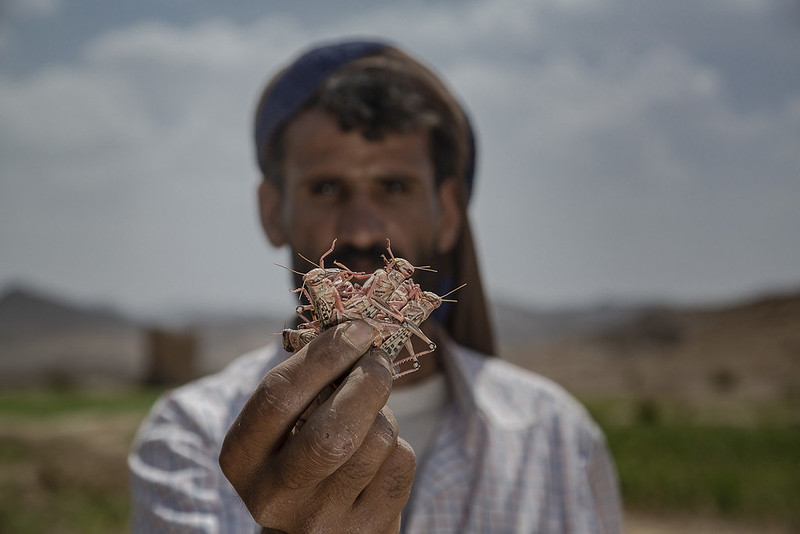 Swarms of locusts travel in groups of at least 80 million; a swarm can routinely eat what 35,000 humans can eat in the same time span. This article will highlight the destructive potential of locust swarms and the Yemen Desert Locust Response Project. The desert landscape of Yemen makes it the perfect breeding ground for locusts. Death could be the result of human beings in major cases of locust devastation (35-60% of crops) due to a lack of available crops.
Purpose of the Yemen Desert Locust Response Project
The purpose behind the creation of the Yemen Desert Locust Response Project was to kill desert locusts so they could not continue to swarm. This project sought to provide financing for activities that promoted food growth and healthy behaviors of citizens. Secondly, this project looked to collect data and archive information for future generations regarding strategies the government used to stop locust outbreaks.
Yemen Desert Locust Response Project led by Sandra Broka and Yashodhan Ghorpade was approved by the World Bank in June of 2020. The project specified remediation efforts of $25 million to take place throughout the Middle East and North Africa. The Republic of Yemen will benefit from this declaration, which is set to end December 29, 2023.
About the World Bank
The vision of the World Bank is to empower third world countries to reach the financial security and maturity of developed nations. Being able to transform dwindling institutions of academia, medicine, business and government is the end goal of the World Bank. Loans have terms that specify repayment barriers and deadlines; grants are met through the embodiment of criteria on a checklist, and countries will not need to pay these amounts back. During an attack of locusts, the World Bank quickly worked to funnel out available funds to citizens and organizations for agricultural revival.
The International Bank for Reconstruction and Development (IBRD) makes up the World Bank with other agencies like The International Development Association (IDA), corporations and centers. The two main players, IBRD and IDA, have donor countries. The IBRD has 189 donor countries and invests in the market to achieve financial capital benchmarks. The IBRD also has established credit that allows a profit margin between the loans it gives and the amounts it requires for repayment from clients.
International Development Association Financial Procurement
The IDA is overseen by 173 countries that make up the governing body. The governing body has agreed upon a set amount of money that it will donate to the IDA; this amount regenerates every three years. When this cash is dispersed, recipient countries improve the mitigation of environmental catastrophes. They are then able to locate economic interventions that reap the benefits of an enhanced quality of life.
Quick Locust Breeding; Quick Response
For countries to benefit from an increased quality of life, they must adhere to the warnings of the United Nations Food and Agriculture Organization (FOA) regarding the growth of locust populations. It is believed that in July, as swarms reach their adulthood, crops will also reach the peak of their growth; this also means they reach their highest risk of being eliminated by locusts. Farmers may be able to save July 2020 harvests. Ultimately, Failure to react will cause further distress to Yemen natives.
Preemptive warnings from the FOA are related to the travel destinations that locust swarms will navigate through during the month of July 2020. The FOA predicted African invasions of locusts in northern Somalia and northeast Ethiopia. With Yemen Desert Locust Response Project funds working in unison with FOA advisories, Yemen can better mitigate locust challenges than if it were acting as a stand-alone country not utilizing outside resources.
– DeAndre’ Robinson
Photo: Flickr
