As a British crown colony for more than 150 years, Hong Kong served as the gateway between the East and the West. With its unique position, this singular city rose and secured itself as the top trade hub of the Asian region. This resulted in Hong Kong’s GDP skyrocketing, topping 180 times the GDP of 1961 in 1997. This economic prosperity marked the birth of the first Asian Tiger. Moreover, as a British crown colony, the people of Hong Kong enjoyed basic human rights, such as freedom of speech, freedom of assembly and freedom of the press – to name a few. However, the colony’s lease, which it signed in 1842, expired. In 1997, the British returned Hong Kong to China under the strict “One Country, Two Systems” agreement, which proclaimed that Hong Kong shall retain its rights until at least 2047.
China’s recent legislation, the Hong Kong National Security Law, effectively ends the ‘“One Country, Two Systems” agreement that was codified in The Basic Law adopted in 1990. The Basic Law defined the relationship between China and the Hong Kong Special Administrative Region and included the protection of specific rights and freedoms of Hong Kong residents. Now, under the new National Security Law, these human rights in Hong Kong – along with Hong Kong’s political, social and economic autonomy – are all but dissolved.
What Led to the National Security Law?
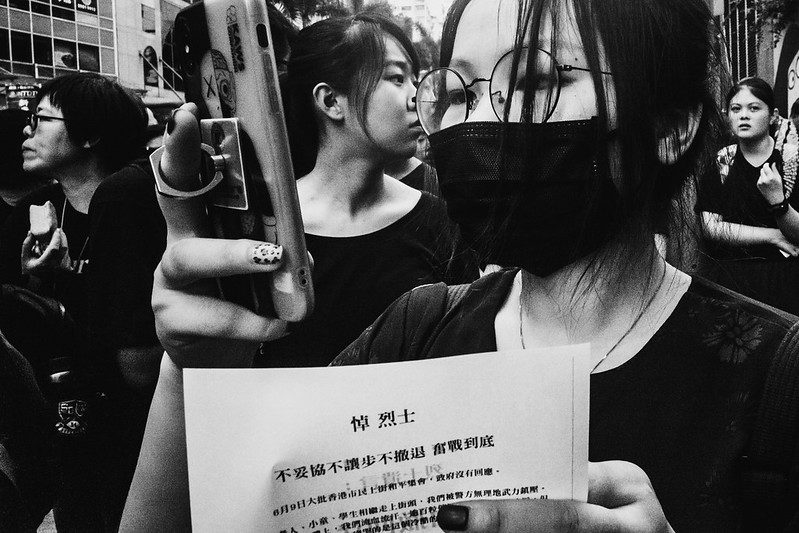
In February 2019, the Hong Kong Security Bureau proposed amendments to the then-current extradition laws, allowing extraditions from Hong Kong to mainland China and other countries. This proposal resulted in immediate social outrage. Protests erupted in Hong Kong, with tens of thousands taking to the streets, demanding the revoking of the bill. For months the conflict continued to worsen – protestors rampantly vandalized public property and government police increasingly brutalized the citizens.
It was not until October 23, 2019, that the bill was officially withdrawn. By then, Hong Kong plunged into a recession. The people continued their protests, now a pro-democracy movement, and Beijing became increasingly agitated. In response to the upheaval and the pro-democracy movement, China’s legislature unanimously passed the Hong Kong National Security Law on June 30, 2020, effectively taking complete control over Hong Kong.
What is the new Hong Kong National Security Law?
The Law of the People’s Republic of China on Safeguarding National Security in the Hong Kong Special Administrative Region is an ambiguously worded 66-article legislation that covers a broad spectrum of political crimes, some of which are punishable by imprisonment for life. The legislation is for political crimes such as collusion, separatism, subversion and terrorism. However, these crimes have such broad definitions that they cover most criticism of the Communist party.
For instance, on Monday, August 9, 2020, claiming “collusion with a foreign country,” the Hong Kong police arrested pro-democracy media tycoon Jimmy Lai. This arrest dispelled all hope that the law was only for rioters. Continuing their attack against the democracy movement, more than 200 police officers stormed the Apple Daily, Mr. Lai’s publication. The police arrested four executives of the company and then also arrested Mr. Lai’s two sons, who did not have an association with the publication.
On August 10, 2020, the Hong Kong police made its second prominent apprehension under the National Security Law, arresting Agnes Chow for “inciting succession.” Politician Agnes Chow’s pro-democracy views also disqualified her candidacy for running for election. According to the National Security Law, Hong Kong can hold the trials of those arrested in secret, without a jury or bail, and it can also extradite them to mainland China (Articles 41, 42, 46, and 56).
International and Local Responses
The people of Hong Kong are suffering. After enduring months of police brutality and civil unrest, they are now facing an economic recession and a totalitarian takeover. The adversity standing before the citizens of Hong Kong is truly overwhelming.
Countries are trying to help in the wake of this unprecedented violation of human rights in Hong Kong. The United Kingdom has pledged a path to citizenship for almost 3 million Hong Kong citizens. Those who were born before 1997 are receiving recognition as having British national overseas status. As a result, they can either enter and stay in the U.K. for five years, granting them “settled-status,” which allows them to apply for citizenship.
Taiwan has been helping Hong Kong citizens for months by offering asylum to pro-democracy activists. Furthermore, on July 1, 2020, the day after the passing of the National Security Law, Taiwan opened the Taiwan-Hong Kong Office for Exchanges and Services in Taipei city, which will provide relocation and humanitarian aid to Hong Kong refugees.
The United States responded to Beijing by passing the Hong Kong Autonomy Act, which imposes sanctions on Chinese officials who are crushing democracy in Hong Kong. Senator Chris Van Hollen (D-Md.), one of the act’s cosponsors, stated: “This legislation sends a strong, bipartisan message that the United States stands with the people of Hong Kong. We urge the Government of China to abandon their ongoing efforts to repress freedoms in Hong Kong. There will be a price to pay if they continue down that path.”
On August 9, 2020, Australia, Canada, New Zealand, the United Kingdom and the United States issued a Joint Statement on the Erosion of Rights in Hong Kong. Countries around the world are condemning the Hong Kong National Security Law and are urging the Chinese Communist Party to reconsider.
In response to the foreign criticism, senior Chinese official Zhang Xiaoming replied: “It’s none of your business.” However, hopefully, with both local and foreign pressure, human rights in Hong Kong will improve over time.
– Jacob Pugmire
Photo: Flickr

5 Facts About Poverty in Ecuador
Ecuador is a country located in Western South America that is home to the Amazon rainforest and the Galapagos Islands. Despite its abundance of natural resources, the country has struggled with political instability and economic crises throughout its history: as of 2022, approximately 25% of the population still lived below the poverty line. However, recent economic growth creates hope for the eventual alleviation of poverty in Ecuador. Below are five facts about poverty in Ecuador.
5 Facts About Poverty in Ecuador
A Positive Outlook
Despite the economic challenges that Ecuadorians have faced in the past, recent statistics reveal hope for the country in the years to come. The country’s GDP is recovering with the help of government reforms and the resilience of the Ecuadorian people, despite the economic instability that has characterized the past few decades. With the efforts of the local government and the international community’s continuous support in alleviating poverty in Ecuador, there may come a day when Ecuador can achieve freedom from its financial burdens and successfully combat poverty.
– San Sung Kim
Photo: Flickr
5 Innovations in Poverty Eradication in Chad
Chad is a land-locked country with sporadic rain patterns and regular droughts, but it has not given up its hope of ending poverty. With a population of approximately 15.5 million people, 66.2% of the population live in severe poverty with little access to clean water, healthcare and education. However, this has not stopped the Government of Chad or partnering organizations from aiding in the country’s advancement. Here are five innovations in poverty eradication in Chad.
5 Innovations in Poverty Eradication in Chad
Chad is working hard to lift its people out of poverty. This is evident in its unique approaches in important areas such as agriculture and livestock, education and technology access, life-saving vaccines and access to clean water. Increasing access to education and technological literacy along with high child vaccination rates in several areas should heavily aid in bringing a generation out of poverty. In addition, they should have opportunities in their adult lives to continue to work on even more innovations to further the success of their country.
– Madalyn Wright
Photo: Flickr
Innovations in Poverty Eradication in Haiti
Foreign Direct Investment
Digicel, a communications and entertainment company headquartered in Kingston, Jamaica, set up its mobile phone venture in Haiti in 2005. Until its arrival, operators Comcel-Voilà (now Voilà) and Haïtel controlled the mobile phone market. When Digicel entered the Haiti market, its economic impact was almost immediate. Within two years, Digicel contributed to more than 15% of the Haitian Gross Domestic Product (GDP). Meanwhile, paired with its two competitors, the contribution of all three was more than 25% of the GDP.
During the years 2005-2009, Digicel invested more than $250 million in Haiti’s economy which led to more than 60,000 jobs. Not only had Digicel poured into Haiti’s bottom line with job creation, in a market with two telecom competitors, but it was also able to account for almost 30% of tax revenue. The company has definitely been working on poverty eradication in Haiti.
In 2012, Digicel acquired Voilà, which substantially increased its market share penetration and helped maintain its presence. All of this occurred despite the fact that Haiti had experienced a major earthquake that displaced 5 million people and killed 250,000 people in 2010 on top of the devastation of Hurricanes Isaac and Sandy that occurred in 2012. Those setbacks have not derailed Digicel as of 2020. The company is still strong as it continues to provide innovations in poverty eradication in Haiti by keeping the country connected.
Education: Science Technology, Engineering and Mathematics (STEM)
Many have proven and echoed that children are the future and that they need to have exposure to science, technology, engineering and mathematics (STEM) to keep pace with the future innovative job market. Haiti’s challenge is that it lacks some capabilities and resources as an underdeveloped country.
Enter the NGO, Pennies for Haiti. This NGO’s long-term goal is to end Haiti’s series of poverty by providing sustenance and educating the country’s children. Meanwhile, its short-term objective is to equip Haiti’s children through education as a means to help them rise above their current situation. While Pennies for Haiti has several ongoing projects that serve 200 people a year, two of the projects focus on education.
The first is Haiti STEM Alliance, which is open to both boys and girls. The second is STEM 4 Girls, which places emphasis on girls. While both of these projects pour their energies into helping each participant achieve higher education and realize the vast employment opportunities in STEM, the difference is that STEM 4 Girls delves into personal growth and the benefits of higher learning. Pennies for Haiti hopes to instill in young women how STEM jobs can open the door to economic freedom.
In addition, the organization visualizes engaging an abundance of youth in the STEM industry as it will create more opportunities for technology and automation careers in Haiti. Pennies for Haiti is counting on the success of both of these programs with a focus on poverty eradication in Haiti and to boost Haiti’s image to the world and make them attractive to those companies who are looking to subcontract jobs as well as showing that they are a leader in gender equality and STEM careers.
Entrepreneurs
People may not know Haiti as a startup oasis, but over 75% of its residents operate some type of business to supplement their income. As a result, it is evident that Haiti is full of citizens who have demonstrated they can build, operate and sustain their own companies. Their startups range from fresh markets to tech platforms, and these enterprises are redefining the Haiti business culture.
One citizen, Christine Souffrant Ntim, who founded the Haiti Tech Summit (2017), has firsthand experience. She answered her entrepreneurial call as a youngster by helping her grandmother and mother sell goods in the streets of Haiti.
The Haiti Tech Summit brings together entrepreneurs, stakeholders, superstars and visionaries to address humanity’s extreme difficulties via tech and entrepreneurship. It has generated tangible results in its short existence such as helping an Airbnb sign a five-year multiple year contract with Haiti’s governmental branch that specializes in culture, tourism and the arts. Also, Facebook launched Haiti’s initial globally recognized grassroots pioneer group in 2017.
The Haiti Tech Summit’s success is based on the Ecosystem Map methodology, a vigorous arrangement of unified organizations that rely on each other for shared survival. As the Summit gains more energy and notoriety across the globe, Ntim’s focus is for the association to become the world’s next major tech innovation hub by 2030.
Poverty eradication in Haiti has made positive headway as it continues to rebuild its community and successfully learn how to navigate a technology-driven society. It has the existing tools to help bridge the gap with the main ingredient, being themselves. With the assistance of foreign aid, continued support of educational equality, especially among girls and entrepreneurs mobilizing the next generation, Haiti should be ready to move into the future with momentum.
– Kim L. Patterson
Photo: Pixabay
Innovations in Poverty Eradication in Egypt
Innovations in poverty eradication in Egypt have taken a sustainable and decentralized form in the last four years. Through local initiatives and collaboration with the United Nations Development Programme (UNDP), Egypt has incorporated social welfare and development programs aimed at improving the standard of living in its poorest governorates and providing a permanent path out of poverty for future generations.
With Egypt’s poverty rate rising to 5% in 2019, how exactly does Egypt plan to have a “competitive, balanced, diversified, and knowledge based economy” that would eliminate poverty by 2030?
UNDP Sustainable Development Strategies
One significant innovation in poverty eradication in Egypt is the UNDP’s adoption of a social entrepreneurial and minority centralized model. Through partnerships with Egypt’s public sector, private companies and civil society, the UNDP not only helped prioritize economic development but also made women, children and disabled people a focal point.
J-PAL’s (Abdul Latif Jamil Poverty Action Lab) Innovative Research
Despite these innovations in poverty eradication in Egypt, reports determined that there were 32.5% of Egyptian citizens living below the poverty line in 2019. According to J-PAL, a global research center aiming to reduce poverty, this extreme poverty figure of 32.5% indicates that the policies and programs designed to alleviate Egypt’s poverty are not as effective as they could be.
In order to achieve successful innovations in poverty eradication in Egypt, J-PAL’s MIT branch is launching a research center at the American University in Cairo. Through research and professional training to inform evidence-based policies and engage governments and relevant NGOs, Egypt will establish a culture of empirical policy making so that it can adequately evaluate the efficacy of its plans.
Institutionalizing Social Innovation and Sustainable Development
While international efforts facilitate innovations in poverty eradication in Egypt, government and grassroots organizations in Egypt have adopted technological and sustainable based solutions to economic problems through their own localized projects and findings.
Egypt’s ability to mitigate poverty across all demographics using sustainable, innovative and ethical practices is testimony to its economic and cultural prosperity. Egypt’s innovations in poverty eradication are unique in that they exemplify the duality of individual, entrepreneurial growth in the private sphere and collective, righteous leadership in the public sphere.
– Joy Arkeh
Photo: Flickr
The Process of Reducing Homelessness in Lithuania
Lithuania has experienced many issues with poverty and an increase in homelessness since its independence in the early 1990s. Its independence quickly led to high unemployment, low wages, poor state support in security housing, gaps in social housing provisions and an underdeveloped social services sector. This eventually resulted in a surge in homelessness in Lithuania.
Despite the overall increase in homelessness, Statistics Lithuania reported over 4,000 homeless people in 2017. While significant, the 4,000 homeless people in 2017 is actually a reduction since 2012 when reports determined that there were about 4,957 homeless people in Lithuania. The Lithuanian government has put some social policies in place in the case of unemployment; people who register with employment services can receive benefits while also using provided resources to look for another job.
With these policies, Lithuania has experienced a drop in unemployment from over 17% in 2010 to 6.35% in 2019. The Lithuanian government has stepped in over the past few years in response to the homelessness crisis and implemented provisions that promised public housing and services to those in need of assistance. The following key points will explain how Lithuania is combating the crisis and the challenges it is facing.
How Lithuania is Combating the Homelessness Crisis
According to the European Social Policy Network, the Lithuanian government put legislation and policies in place to help people experiencing homelessness:
The Challenges Lithuania Faces in the Fight Against Homelessness
The current programs and policies show the progress Lithuania has made since its independence. However, the country still faces challenges in its fight against homelessness:
Lithuania’s Ministry of Social Security and Labor has put into effect policies to help decrease the wait times for social housing. In 2024, wait times for social housing could decrease to five years. Meanwhile, in 2026, expectations determine that the wait times could decrease to about three years. If municipalities do not provide social housing by the deadline, they must compensate part of the rent to families in their current housing while they wait for social housing.
The policies the Lithuanian government has put in place have helped many homeless people get back on their feet. However, it is clear that Lithuania has a long way to go to resolve the issue of homelessness.
– Jackson Lebedun
Photo: Flickr
New Law Violates Human Rights in Hong Kong
As a British crown colony for more than 150 years, Hong Kong served as the gateway between the East and the West. With its unique position, this singular city rose and secured itself as the top trade hub of the Asian region. This resulted in Hong Kong’s GDP skyrocketing, topping 180 times the GDP of 1961 in 1997. This economic prosperity marked the birth of the first Asian Tiger. Moreover, as a British crown colony, the people of Hong Kong enjoyed basic human rights, such as freedom of speech, freedom of assembly and freedom of the press – to name a few. However, the colony’s lease, which it signed in 1842, expired. In 1997, the British returned Hong Kong to China under the strict “One Country, Two Systems” agreement, which proclaimed that Hong Kong shall retain its rights until at least 2047.
China’s recent legislation, the Hong Kong National Security Law, effectively ends the ‘“One Country, Two Systems” agreement that was codified in The Basic Law adopted in 1990. The Basic Law defined the relationship between China and the Hong Kong Special Administrative Region and included the protection of specific rights and freedoms of Hong Kong residents. Now, under the new National Security Law, these human rights in Hong Kong – along with Hong Kong’s political, social and economic autonomy – are all but dissolved.
What Led to the National Security Law?
In February 2019, the Hong Kong Security Bureau proposed amendments to the then-current extradition laws, allowing extraditions from Hong Kong to mainland China and other countries. This proposal resulted in immediate social outrage. Protests erupted in Hong Kong, with tens of thousands taking to the streets, demanding the revoking of the bill. For months the conflict continued to worsen – protestors rampantly vandalized public property and government police increasingly brutalized the citizens.
It was not until October 23, 2019, that the bill was officially withdrawn. By then, Hong Kong plunged into a recession. The people continued their protests, now a pro-democracy movement, and Beijing became increasingly agitated. In response to the upheaval and the pro-democracy movement, China’s legislature unanimously passed the Hong Kong National Security Law on June 30, 2020, effectively taking complete control over Hong Kong.
What is the new Hong Kong National Security Law?
The Law of the People’s Republic of China on Safeguarding National Security in the Hong Kong Special Administrative Region is an ambiguously worded 66-article legislation that covers a broad spectrum of political crimes, some of which are punishable by imprisonment for life. The legislation is for political crimes such as collusion, separatism, subversion and terrorism. However, these crimes have such broad definitions that they cover most criticism of the Communist party.
For instance, on Monday, August 9, 2020, claiming “collusion with a foreign country,” the Hong Kong police arrested pro-democracy media tycoon Jimmy Lai. This arrest dispelled all hope that the law was only for rioters. Continuing their attack against the democracy movement, more than 200 police officers stormed the Apple Daily, Mr. Lai’s publication. The police arrested four executives of the company and then also arrested Mr. Lai’s two sons, who did not have an association with the publication.
On August 10, 2020, the Hong Kong police made its second prominent apprehension under the National Security Law, arresting Agnes Chow for “inciting succession.” Politician Agnes Chow’s pro-democracy views also disqualified her candidacy for running for election. According to the National Security Law, Hong Kong can hold the trials of those arrested in secret, without a jury or bail, and it can also extradite them to mainland China (Articles 41, 42, 46, and 56).
International and Local Responses
The people of Hong Kong are suffering. After enduring months of police brutality and civil unrest, they are now facing an economic recession and a totalitarian takeover. The adversity standing before the citizens of Hong Kong is truly overwhelming.
Countries are trying to help in the wake of this unprecedented violation of human rights in Hong Kong. The United Kingdom has pledged a path to citizenship for almost 3 million Hong Kong citizens. Those who were born before 1997 are receiving recognition as having British national overseas status. As a result, they can either enter and stay in the U.K. for five years, granting them “settled-status,” which allows them to apply for citizenship.
Taiwan has been helping Hong Kong citizens for months by offering asylum to pro-democracy activists. Furthermore, on July 1, 2020, the day after the passing of the National Security Law, Taiwan opened the Taiwan-Hong Kong Office for Exchanges and Services in Taipei city, which will provide relocation and humanitarian aid to Hong Kong refugees.
The United States responded to Beijing by passing the Hong Kong Autonomy Act, which imposes sanctions on Chinese officials who are crushing democracy in Hong Kong. Senator Chris Van Hollen (D-Md.), one of the act’s cosponsors, stated: “This legislation sends a strong, bipartisan message that the United States stands with the people of Hong Kong. We urge the Government of China to abandon their ongoing efforts to repress freedoms in Hong Kong. There will be a price to pay if they continue down that path.”
On August 9, 2020, Australia, Canada, New Zealand, the United Kingdom and the United States issued a Joint Statement on the Erosion of Rights in Hong Kong. Countries around the world are condemning the Hong Kong National Security Law and are urging the Chinese Communist Party to reconsider.
In response to the foreign criticism, senior Chinese official Zhang Xiaoming replied: “It’s none of your business.” However, hopefully, with both local and foreign pressure, human rights in Hong Kong will improve over time.
– Jacob Pugmire
Photo: Flickr
Child Poverty in Ethiopia
Surviving on the Streets of Ethiopia
A native of Ethiopia, 20-year-old Mohamed Yimer has experienced the reality of child poverty in Ethiopia. In an interview with The Borgen Project, Yimer revealed that at only 6 years old, he lived in the streets of Ethiopia’s capital, Addis Ababa, where he had to survive with almost no access to basic necessities like food, water and shelter.
Yimer “would make money by throwing people’s garbage out and collecting metals such as nails and any scraps.” The money he collected would hopefully buy him enough food for the day. According to Yimer, restaurants would often give uneaten food or leftovers to him and other young kids who were unable to afford enough to eat.
While Yimer’s childhood experience was extremely challenging, he understood that there are millions of children experiencing the same situation. Estimates have determined that 36 million out of the 41 million children in Ethiopia live in severe poverty. Moreover, approximately 88% of the child population is unable to obtain necessary goods or access basic services.
In addition, rampant poverty, when parents have an obligation to send their children to full-time work rather than school, characterizes child poverty in Ethiopia. This allows children to contribute financially to the family at a very young age but deprives them of an education and a true childhood.
Inadequate Living Conditions
Shelter, a priority and basic need for child growth, is incredibly difficult for many children to find in Ethiopia. Yimer explained that “hundreds of children would sleep in tents, whether it be on the side of the road or under bridge ways.” While orphanages in Ethiopia allow children to receive education, shelter and food, the living conditions there are considered to be extremely poor and insufficient for child growth.
Yimer was able to stay in an orphanage for several years during his childhood. The orphanage provided meals such as bread and tea for breakfast and basic meals, which consisted of cooked vegetables. Yimer emphasizes that they “would only receive meals with meat on holidays such as Christmas.” He also describes inadequate and poor sanitation systems in orphanages. In an orphanage filled with hundreds of kids, there was only one bathroom for both boys and girls.
Poverty Reduction
Though child poverty in Ethiopia has been a severe problem, several studies have shown some progress throughout the last two decades. Research shows that the percentage of children living in poverty has decreased from 90% to 88%.
From 2000 to 2011, overall poverty has decreased from 44% to 30%, which many consider a remarkable improvement. A focus on agricultural and economic growth, as well as focused attention on helping children access necessary goods easily, have made this possible.
Many organizations have made several recommendations in the hopes of further reducing child poverty in Ethiopia. Some of those suggestions include speeding up certain investments toward reducing child poverty. Moreover, organizations hope to improve collaborations to reduce child poverty, whether it be to provide education, better sanitation services or basic everyday necessities to children.
Though child poverty is still evident in Ethiopia today, it is important to notice its slight but steady decline throughout the last two decades. By speeding up investment, garnering higher public recognition and improving non-profit collaboration, it is possible for child poverty in Ethiopia to decrease at a much faster rate in the future.
– Elisabeth Balicanta
Photo: Flickr
A Developing Industry: Technology in Ukraine
Ukraine, despite its successful farming and metal industries, still suffers from elevated unemployment and static poverty levels. Due to foreign aggression and weak infrastructure, Ukraine has not been able to rebound from many of its economic downturns. Additionally, outdated models of production have caused the metallurgy sector to fall behind the global pace, and low productivity alongside restrictive laws limit Ukraine’s agricultural sector. As Ukraine looks to develop further, it has turned its focus to technology, creating a robust field that is rapidly expanding around the world. What was once a developing industry in Ukraine is transforming into a successful business model worldwide. As Ukraine continues to recover from the conflict and corruption plaguing its history, the continued expansion of technology into its economy will be the greatest investment for the country’s development. These five facts about technology in Ukraine are integral to understanding the country’s shifting economic state and transition out of poverty.
5 Facts About Technology in Ukraine
Despite these advancements in technology in Ukraine, in its fight against poverty, Ukraine still has a long road ahead. Progress has occurred through the development of technology, but many other industries lag behind due to continued attacks on Ukrainian infrastructure. Though Ukraine does well with regard to foreign investment, there are many avenues to establish greater connectivity with the global market that remain unexplored, especially within the European Union. With continued government support and a strong start-up culture, Ukraine has the potential to become a country that provides prosperity to its population.
– Pratik Koppikar
Photo: Flickr
6 Facts About Technology in Ghana During the COVID-19 Pandemic
Ghana has been the hub for technology production in sub-Saharan Africa for decades. In terms of recent technology progression, Ghana stands out for its IT programs, sustainability training and more. Accra is one of the metropolitan cities in the country, known for its technological innovations. Throughout the COVID-19 pandemic, Accra has been working tirelessly to safely and efficiently produce technology that provides aid to sub-Saharan Africa. Here are six facts about technology in Ghana during the COVID-19 pandemic.
6 Facts About Technology in Ghana
Technology in Ghana during the COVID-19 pandemic relies on the good use of resources and accounting for cost and efforts. During the pandemic, Ghana and its neighboring nations have stepped up to the plate to prevent further spread and manage cases so that citizens can get back to work soon. Since March 2020, Ghana has cut down on costs for ventilators while reducing importation needs and sustaining the current quality of production. The sooner the case numbers fall, the sooner citizens and students of Accra can get back to working on more technology to sustain and grow the region. Technology in Ghana has only progressed during the COVID-19 era, and is working toward helping the nation get rid of the virus.
– Kim Elsey
Photo: Flickr
What to Know About Poverty in Tanzania
Many know Tanzania, located in East Africa, for its beautiful landscape and its coastline along the Arabian seashore. Three of the largest lakes on the African continent are in Tanzania. Though this country succeeds in attracting much tourism, it is one of the world’s least developed countries on the Human Development Index (HDI). Accordingly, poverty in Tanzania is a significant challenge.
Current Economy
Although the country’s economy is growing, it has had little impact on widespread poverty in Tanzania. Growth resulting in gold production and tourism has increased Tanzania’s wealth per capita by 92% over the last 20 years. According to the National Bureau of Statistics, the economy’s growth rate was 7% in 2018 and around 6.8% in 2019. Its real GDP growth rate fluctuates between 5% and 6% over the medium term. However, this steadily increasing GDP did not have a significant impact on Tanzania’s poverty reduction. Around 50% of the total Tanzanian population lives on less than $1.90 per day. Overall, Tanzania has only achieved a 2% poverty reduction over the last decade.
Currently, one out of three Tanzanians is self-employed. Around 80% of Tanzanians do not have access to a formal bank within 2 km of walking distance. Moreover, only 4% of the rural population has a bank account, while 70% of the population earns income through agriculture.
Food Insecurity and Agriculture
People in urban areas are 11 times more likely than those living in rural areas to have access to the minimum amount of food required for a living. Food insecurity is therefore common as another impact of poverty in Tanzania. In addition, around 35% of children in Tanzania suffer from chronic malnutrition. Poor utilization of the budget for agriculture is one reason for this widespread food insecurity. Furthermore, agricultural policy in Tanzania stands in the way of its growth. Though Tanzania’s growth depends a lot on agriculture, its lack of education, infrastructure and market access also cripples the country. However, the government is taking the necessary steps to address this conflicting policy problem in the hopes of improving food security in Tanzania in the future.
Environment and Health Changes
Despite 40% of the total Tanzanian land area being marked for parks and forests, deforestation is still a major concern in Tanzania. Deforestation rates have increased significantly since 2000. For example, a goldmine left 2,000 tons of toxic waste out in the surrounding environment without any regard for communities living there in 2009. This is yet another consequence of poverty in Tanzania.
The Road to Eradicating Poverty in Tanzania
Capital-intensive sectors concentrated in particular regions have driven growth in Tanzania. As a result, this contributes to uneven progress in the country’s economy, which is one of the key challenges in the land of Tanzania. By focusing attention on household income, labor and land productivity, the government can support the next generation of Tanzanians and help them get out of poverty. Tanzania’s government has already taken action to improve basic education in Tanzania, which will contribute to breaking the cycle of intergenerational poverty. Though the road to poverty eradication in Tanzania is likely long, a combination of policies focusing on equalizing economic growth, reducing food insecurity and protecting the environment will help the country get there in the future.
– Narasinga Moorthy V
Photo: Flickr