• Link to X
  • Link to Facebook
  • Link to Instagram
  • Link to TikTok
  • Link to Youtube
  • About
    • About Us
      • President
      • Board of Directors
      • Board of Advisors
      • Financials
      • Our Methodology
      • Success Tracker
      • Contact
  • Act Now
    • 30 Ways to Help
      • Email Congress
      • Call Congress
      • Volunteer
      • Courses & Certificates
      • Be a Donor
    • Internships
      • In-Office Internships
      • Remote Internships
    • Legislation
      • Politics 101
  • The Blog
  • The Podcast
  • Magazine
  • Donate
  • Click to open the search input field Click to open the search input field Search
  • Menu Menu
Blog - Latest News
Developing Countries, Development, Disease, Global Health, Global Poverty, Health, Human Rights

A Picture of Polio

polio_immunizations_developing_countries
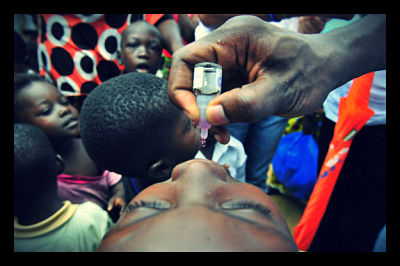
Since 1979 the United States has been free of the disease that at one point crippled 35,000 people per year. Although Polio has now been stopped in the United States, several countries continue to suffer from the Polio virus. This infectious disease spreads rapidly to the spinal cord and can ultimately lead to paralysis. Unfortunately there is no cure for the disease but thanks to the Polio vaccination, its spread is better controlled. Many are unaware of what causes Polio so an overview including symptoms will be presented. 

“Polio” is short for Poliomyelitis which is caused by a virus that infects the nervous system. Though the virus is usually transmitted through person to person contact, 95% of those infected don’t have any symptoms. The virus tends to remain inside the human body, reaching the environment through either a fecal or oral route. Infection is rampant in areas that are extremely unsanitary and where children are exposed to the fecal material of other infected people. Since the Poliovirus enters humans, for the most part, through the mouth or nose, it is inclined to spread easily. Once in the throat, the virus multiplies until reaching the bloodstream, possibly even infecting the nervous system. Complications that arise from the virus include the following:

  • Pneumonia
  • Shock
  • Urinary tract infections
  • Paralysis
  • Loss of intestinal function
  • Lack of movement
  • Muscle weakness

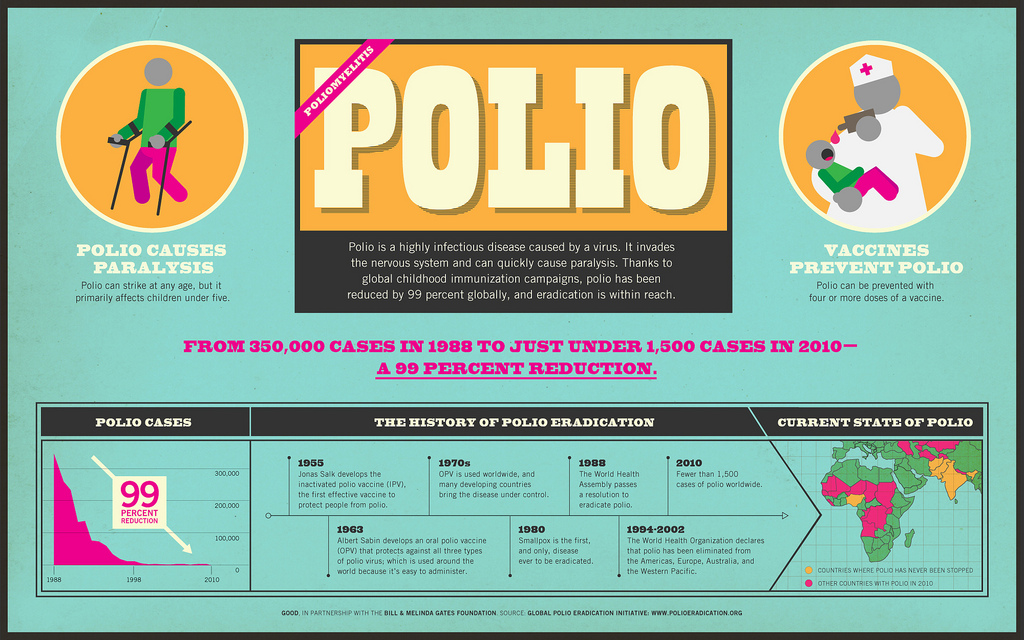
Several treatments in developing nations have been adopted to help counteract these symptoms including antibiotics for infections, painkillers for muscle pain, physical therapy and surgery for muscle complications. Additionally, the Polio immunization prevents the spread of the virus in over 90% of the population though cases in which the spinal cord and brain are not involved have a positive outlook from the start. This vaccination has proven to be extremely effective as illustrated through the fact that global immunization campaigns have diminished thousands of cases worldwide. Polio outbreaks are, however, still seen in Asia and Africa, but several organizations are continuing to campaign for vaccine accessibility.
Polio

– Maybelline Martez

Sources: Centers for Disease Control, Mayo Clinic, NIH,
Photo: Foreign Policy

January 27, 2014
Share this entry
  • Share on Facebook
  • Share on X
  • Share on WhatsApp
  • Share on Pinterest
  • Share on LinkedIn
  • Share on Tumblr
  • Share on Vk
  • Share on Reddit
  • Share by Mail
https://borgenproject.org/wp-content/uploads/borgen-project-logo.svg 0 0 Borgen Project https://borgenproject.org/wp-content/uploads/borgen-project-logo.svg Borgen Project2014-01-27 04:00:192024-05-26 23:03:44A Picture of Polio

Get Smarter

  • Global Poverty 101
  • Global Poverty… The Good News
  • Global Poverty & U.S. Jobs
  • Global Poverty and National Security
  • Innovative Solutions to Poverty
  • Global Poverty & Aid FAQ’s
Search Search

Take Action

  • Call Congress
  • Email Congress
  • Donate
  • 30 Ways to Help
  • Volunteer Ops
  • Internships
  • Courses & Certificates
  • The Podcast
Borgen Project

“The Borgen Project is an incredible nonprofit organization that is addressing poverty and hunger and working towards ending them.”

-The Huffington Post

Inside The Borgen Project

  • Contact
  • About
  • Financials
  • President
  • Board of Directors
  • Board of Advisors

International Links

  • UK Email Parliament
  • UK Donate
  • Canada Email Parliament

Get Smarter

  • Global Poverty 101
  • Global Poverty… The Good News
  • Global Poverty & U.S. Jobs
  • Global Poverty and National Security
  • Innovative Solutions to Poverty
  • Global Poverty & Aid FAQ’s

Ways to Help

  • Call Congress
  • Email Congress
  • Donate
  • 30 Ways to Help
  • Volunteer Ops
  • Internships
  • Courses & Certificates
  • The Podcast
Link to: Rwanda 20 Years Later: Genocide to Development Link to: Rwanda 20 Years Later: Genocide to Development Rwanda 20 Years Later: Genocide to Development Link to: The Knowledge Drive to Africa’s Future Link to: The Knowledge Drive to Africa’s Future The Knowledge Drive to Africa’s Future
Scroll to top Scroll to top Scroll to top