Bridging the Gap: Girls’ Education in Timor-Leste
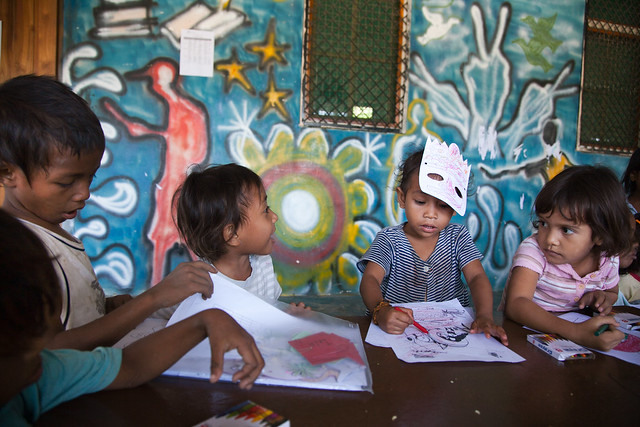
Timor-Leste, also known as East Timor, is a half-island nation located in Southeast Asia. With a lack of economic opportunities, Timor-Leste is known to be one of the poorest nations in Asia. Of the country’s population, 42 percent live below the national poverty line, making education a critical resource. Girls’ education in Timor-Leste is a complicated piece of this issue.
Education in Timor-Leste
The government of Timor-Leste recognizes the importance of school for young people as they want all individuals to have access to a quality education that will prepare them for life. In 2010, the Timorese government created a goal to achieve the nationwide completion of basic education in the country. As a result, the educational sector has made significant progress in the last five years, especially for young girls. For both boys and girls, the net enrollment rate grew from 67 percent to 83 percent in those five years. Also, gender disparity decreased substantially in early education.
Young Women are Being Left Behind
Although progress has been made in reaching gender equality, women and young girls are still disproportionately under-represented in undergraduate education. In regards to primary and secondary education in Timor-Leste, girls and boys are almost equal in enrollment. In primary school, 91.3 percent of boys and 90.6 percent of girls participated in their schooling.
However, the gender disparity in education increases as young people approach higher education. For instance, women become greatly outnumbered in higher education. For every 80 women, there are 100 men enrolled. Consequently, the literacy rate for adults 15 and older is 60 percent for women compared to 69 percent for men.
The Challenge of Rural Areas
Girls living in impoverished rural areas have a harder time accessing education in the country. Nearly 37 percent of people aged 15 to 24 are illiterate in rural regions compared to just six percent in urban areas.
Many poor families cannot afford schooling costs such as books, paper or pencils. Also, there is limited access to good facilities in rural areas. Many schools are aging, becoming dangerous for young children to be inside of. Of the basic education schools, 66 percent do not have functioning toilets and 40 percent do not have drinking water.
Timorese student Delfina explains her experience in her local schooling facility before it was renovated by UNICEF. “The building was falling apart. There weren’t enough chairs and the rooms were really crowded. They also flooded when it rained,” she said.
A Hidden Crisis
Young girls are subject to human trafficking and prostitution which interrupts their education but also places their lives in grave danger. Child sex-trafficking is widespread in Timor-Leste, but it specifically targets the girls in the country. There is little formal information available regarding the extent of human trafficking in the country because it is not easily traceable. However, it is still overwhelmingly prevalent. In some cases, poverty in certain remote villages is so severe, families send their daughters to more populated cities or towns to earn money as a prostitute. These girls can be as young as 10-years-old. Many times, girls will become pregnant and return to their villages. They will either have to take care of their baby or be forced back into prostitution.
Organizations Taking Action
Several organizations are helping the nation’s government improve girls’ education in Timor Leste. One, in particular, UNICEF, recognizes the importance of investing in the country’s education system in order to help girls and women receive an education and find their voice in society. The organization focuses on remote, rural areas where schooling facilities can be rare. So far they have helped to build 59 child-friendly schools while also supporting another 62 in the country. These schools are also equipped with learning materials and properly trained teachers.
The World Bank funded the Second Chance Education Project which was a national equivalency program in Timor-Leste. This project aimed to improve literacy rates in adults while also increasing community participation in education. Through this project, nine community educational facilities were created as well as a flexible curriculum that is appropriate for adult students. Because of this program, young adults were given the opportunity to complete parts of their education that they may have missed. This allowed young women to either further their education or pursue a career.
A Bright Future
There is a reason to be optimistic as girls’ education in Timor-Leste progresses with every passing year. Although there is still some work to be done, the status of female education in the country is becoming almost equal to that of their male counterparts. Because the Timorese government and many other organizations recognize the value of educating females in the country, more girls now are able to go to school and realize their full potential than ever before.
– Marissa Pekular
Photo: Flickr
