• Link to X
  • Link to Facebook
  • Link to Instagram
  • Link to TikTok
  • Link to Youtube
  • About
    • About Us
      • President
      • Board of Directors
      • Board of Advisors
      • Financials
      • Our Methodology
      • Success Tracker
      • Contact
  • Act Now
    • 30 Ways to Help
      • Email Congress
      • Call Congress
      • Volunteer
      • Courses & Certificates
      • Be a Donor
    • Internships
      • In-Office Internships
      • Remote Internships
    • Legislation
      • Politics 101
  • The Blog
  • The Podcast
  • Magazine
  • Donate
  • Click to open the search input field Click to open the search input field Search
  • Menu Menu
Blog - Latest News
Developing Countries, Development, Global Poverty, Health, Water, Water Sanitation

The Future of Water’s Role in Development
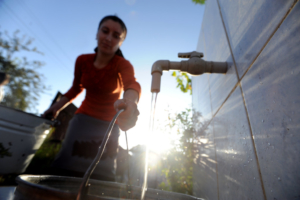
Water's Role in Development
To deny the necessity of clean and accessible water would be to deny the very thing that allows human civilization to exist, plants to grow and nourish people’s bodies and countries to foster globalization and connectivity across nations. According to the U.N., 785 million people lacked a safe and basic water source by 2015, and about a third of all countries reported being under some degree of water stress including low supply and hindered access to water. Water’s role in development has become the focus of ending poverty around the globe, and the efficient allocation and treatment of water still stand as major problems in developing countries.

Health Care and Sanitation

A lack of access to clean water often results in the spread of ailments such as malaria and diarrhea. Additionally, approximately 60 percent of people worldwide do not have access to adequate handwashing facilities. The effect of clean water on public health is staggering; the World Health Organization (WHO) estimates that access to water for safe drinking and sanitation could prevent 500,000 annual deaths from malaria. An organization called The Water Project aims to make handwashing and sanitation a fundamental part of mortality reduction and works to change behaviors imbedded in communities to stress the importance of water’s role in development and disease prevention.

Women’s Health and Childhood Development

The most vulnerable groups regarding limited clean water access are women and children; women spend almost 40 billion hours a year on transporting and accessing water in Sub-Saharan Africa alone, and about half of all girls in school drop out due to improper sanitation methods that prevent them from maintaining their personal hygiene needs during puberty. Women are therefore more prone to infection and violence, perpetuating a cycle of gender inequality in developing nations. Additionally, WHO projects that safe water and sanitation could prevent 1.4 million child deaths from diarrhea and dehydration a year; most of the diseases inflicting children are preventable and further emphasizes the crucial nature of clean water’s role in development.

Economic Success

For every $1 that someone invests in clean water resources, $8 goes back into economies to help with economic development. When people are no longer fighting waterborne diseases and are spending valuable time fetching water for themselves and their families instead, they are becoming educated and skilled. The manufacturing and agricultural industries suffer most greatly from this; a lack of a water sanitation system in a factory means that employees must leave work to use the restroom or find drinking water, and rural areas that often have a lot of farms depend on safe water for growing crops. The farmers provide the raw materials to the manufacturing sectors, but without clean water, both enter a cycle that mirrors the endless trap of poverty in which their workers often find themselves.

Societal Implications

Education of the public is a fundamentally indisputable part of ensuring that societies have what they need to function politically and economically. When resources, especially vital ones like water, are in short supply, citizens are more likely to fall into cycles of desperation that result in extractive institutions that take advantage of their vulnerability. Water’s role in development goes beyond health and the productivity of citizens; access to clean water results in communities that are free of the burden to prioritize their survival, and empowerment of these communities can lead to civil organization in which citizens have a say in their system of government and those who control it.

With growing recognition of the importance of water’s role in development, some have taken new stances on multisectoral impacts of the distribution and treatment of water. Simple solutions are proving to make the most effective impact on the lives of impoverished people with low access to clean water. Handwashing initiatives and environmental policies that eliminate the probability of unsafe standing water could lead to a decline in the number of deaths from preventable diseases. Also, in an increasingly globalized and changing world, countries must take into consideration changing weather patterns that alter the face of water-related policies. Water’s role in development stretches far beyond the goal of providing suitable water conditions for those in poverty; it sets the stage for more inclusive policies that ensure the protection of those that limited clean water made vulnerable.

– Jessica Ball
Photo: Creative Commons

March 7, 2020
Share this entry
  • Share on Facebook
  • Share on X
  • Share on WhatsApp
  • Share on Pinterest
  • Share on LinkedIn
  • Share on Tumblr
  • Share on Vk
  • Share on Reddit
  • Share by Mail
https://borgenproject.org/wp-content/uploads/borgen-project-logo.svg 0 0 Lynsey Alexander https://borgenproject.org/wp-content/uploads/borgen-project-logo.svg Lynsey Alexander2020-03-07 13:37:412024-06-12 07:49:36The Future of Water’s Role in Development

Get Smarter

  • Global Poverty 101
  • Global Poverty… The Good News
  • Global Poverty & U.S. Jobs
  • Global Poverty and National Security
  • Innovative Solutions to Poverty
  • Global Poverty & Aid FAQ’s
Search Search

Take Action

  • Call Congress
  • Email Congress
  • Donate
  • 30 Ways to Help
  • Volunteer Ops
  • Internships
  • Courses & Certificates
  • The Podcast
Borgen Project

“The Borgen Project is an incredible nonprofit organization that is addressing poverty and hunger and working towards ending them.”

-The Huffington Post

Inside The Borgen Project

  • Contact
  • About
  • Financials
  • President
  • Board of Directors
  • Board of Advisors

International Links

  • UK Email Parliament
  • UK Donate
  • Canada Email Parliament

Get Smarter

  • Global Poverty 101
  • Global Poverty… The Good News
  • Global Poverty & U.S. Jobs
  • Global Poverty and National Security
  • Innovative Solutions to Poverty
  • Global Poverty & Aid FAQ’s

Ways to Help

  • Call Congress
  • Email Congress
  • Donate
  • 30 Ways to Help
  • Volunteer Ops
  • Internships
  • Courses & Certificates
  • The Podcast
Link to: Uighur Muslims Face Religious Persecution In China Link to: Uighur Muslims Face Religious Persecution In China Uighur Muslims Face Religious Persecution In China Link to: Pushing for Gender Equality in Sudan Link to: Pushing for Gender Equality in Sudan Pushing for Gender Equality in Sudan
Scroll to top Scroll to top Scroll to top