Solving The Water Crisis in Iraq
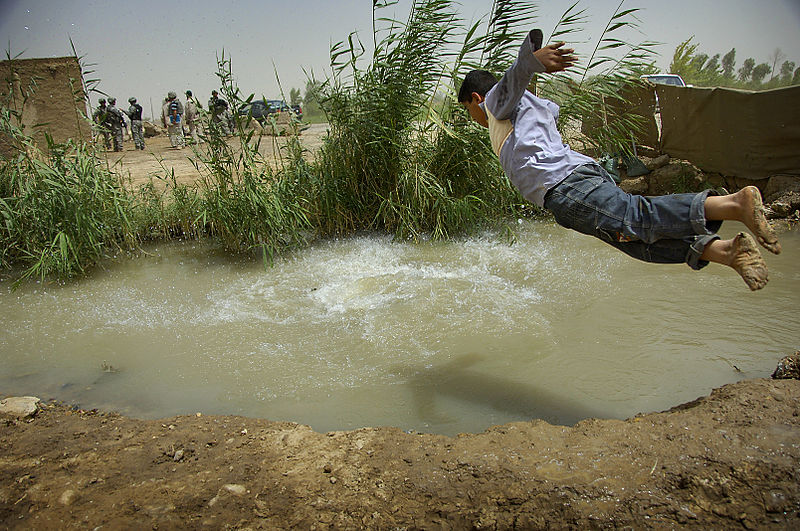
Historically, Iraq has been a particularly fertile region, containing both the Tigris and the Euphrates rivers. However, wars, economic sanctions, damming, pollution and decreased rainfall have together created a water crisis in Iraq.
Current Status
River levels in Iraq have dropped by 40 percent in the past two decades, according to the Ministry of Water Resources of Iraq. The drop has been partially caused by dams and reservoirs built by Turkey, Iraq’s northern neighbor, and decreased rain levels.
Canals branching out of the Tigris which are used to water rice, wheat and barley fields have run dry, leaving the fields barren. In a country where an estimated fifth of the population participates in agriculture, this has been particularly devastating. Some farmers have been reduced from cultivating 60 hectares of land to just five.
Basra, a governorate of approximately 4 million people, has been hit especially hard by the water crisis in Iraq. The region has suffered from a lack of reliable clean drinking water for the past 30 years. Basra relies mostly on the Shatt al-Arab river and its smaller canals for water. However, upstream damming has diverted river water for use on sugar plantations and other agricultural projects. This combined with decades of decreasing rainfall levels, predicted to only get worse with climate change, has created a severe lack of clean water in Basra.
Not only have water levels decreased, but the water available is also often contaminated. Iraqi water management plants suffer from a shortage of chlorine to treat contaminated water due to government regulation aimed at preventing armed groups from acquiring chlorine for use in weapons. However, even sufficient levels of chlorine would be unable to get rid of certain contaminates. The water of the Shatt al-Arab has been affected by seawater due to reduced river flow and by fecally contaminated groundwater which seeps in through cracks in pipes.
Contaminated water carries the risk of waterborne illnesses. In the summer of last year, 118,000 people in Basra were hospitalized to treat afflictions related to contaminated water. Additionally, highly salinized water damages soil and kills crops, a significant issue in Basra where agriculture is the primary method of sustenance. In the face of water shortages and contamination of the existing water sources, residents have been forced to purchase water at high prices. Those who cannot afford this are forced to rely on tap water which may carry diseases.
Efforts to Address the Water Crisis in Iraq
Although the water crisis in Iraq seems dire, steps are already being taken to rectify it. UNESCO is partnering with the Iraqi government to reform the water management sector and improve irrigation systems.
The agency is assisting the Ministry of Water Resources’ efforts to expand the capabilities of water management experts, strengthen the institutions which impact water resource management and create a national policy for water sustainability. Additionally, UNESCO works to facilitate agreements on water management between Iraq and its neighbors. Iraq depends on water from the Tigris and Euphrates rivers, water sources also shared by Turkey, Syria and Iran. Water security for all of these countries, therefore, depends on cooperation. UNESCO promotes dialogue between these countries in order to ensure the water is managed in a way that provides for all.
Additionally, UNESCO addressed the water crisis in Iraq through improvements to irrigation systems, often utilizing ancient methods that have existed in the region for millennia. In the northern Kurdish governorates, for instance, UNESCO has worked to restore the Kahrez system, an ancient method of providing drinking water and agricultural irrigation. Through this system, water is collected at the base of hills and transported to fields by a network of wells. Although the Kahrez systems have fallen into disrepair in past years, UNESCO is currently engaged in cleaning and restoring the wells in order to provide drinking water and irrigation for the surrounding communities.
The agency is also collaborating with officials in the Kurdistan Regional Government to train workers in the water management field and has provided hydrological testing equipment.
Through these efforts, the water crisis in Iraq may be alleviated. It’s yet another example of what can happen when nations work together and help each other out.
– Clarissa Cooney
Photo: Wikimedia Commons

_checkpoint_outside_of_Awad,_Iraq,_July_12,_2008,_while_Coalition_Forces,_background,_assess_canals_in_a_plan_to_bring_potable_080712-A-ZF234-054.jpg)