Fighting Back: Cholera Vaccine Shortages in Bangladesh
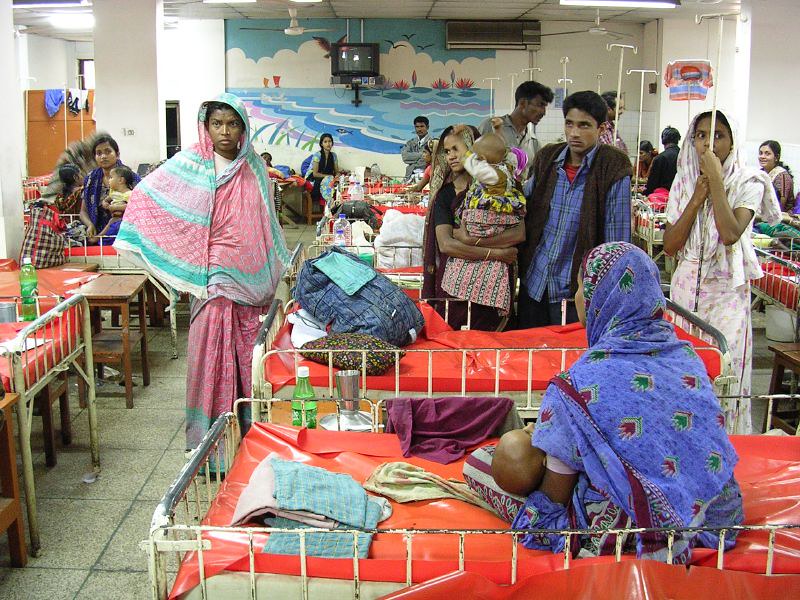 Bangladesh’s battle against cholera has been long-standing and complicated by various factors, including limited access to clean water and Bangladesh’s high population density. With the rise in funding cuts to global aid, there has been a significant increase in vaccine shortages in Bangladesh. However, with the implementation of certain countermeasures, the fight against cholera vaccine shortages shows promise.
The Cholera Cycle
The prevalence of cholera in Bangladesh has been estimated to be around 100,000 cases per year.
This is due to a number of different factors, including Bangladesh’s rainfall season, where there is an increase in floods and droughts.
As cholera is transmitted by consuming contaminated food and water, the increase in rainfall in Bangladesh every year creates a cycle of increasing and decreasing cholera infections. Typically, this is addressed with vaccination protocols such as the mass oral cholera vaccination (OCV) campaign that was put in place for Rohingya refugees in Bangladesh.
However, with continuous cuts to funding across the globe, the availability of vaccinations has been on a steady decrease, making vaccination campaigns like the mass OCV campaign for the Rohingya people a challenge to replicate.
In response to most cholera outbreaks, there is a two-dose protocol in vaccination schemes. Due to funding cuts, the number of doses usually provided in these schemes has been reduced by international organizations that provide vaccinations. This reduction to only one dose has been an attempt to mitigate the impact of the limited global supply.
The Global Response to Low Vaccination Stocks
The vaccine shortages in Bangladesh, as with other countries, have been slowly receiving pushback from global actors such as the World Health Organization (WHO) and Gavi, the Vaccine Alliance. As of February 2026, the global supply of cholera vaccinations has increased to sufficient levels for vaccination programs to resume. Bangladesh is set to receive 10.3 million doses.
Furthermore, the cholera vaccination shortages in Bangladesh have only provided incentives to promote secondary countermeasures against cholera outbreaks. Campaigns such as Water, Sanitation and Hygiene (WASH), which aim to provide safe water and sanitation, have already been in existence for more than a decade.
Cholera is spread by contaminated food and water. With a shift in focus to efforts that promote sanitation and clean water, alongside proper vaccination protocols, the battle against cholera in Bangladesh can continue.
Looking Ahead
The cholera endemic in Bangladesh has always been one of Bangladesh’s biggest health challenges, with around 3,000 deaths occurring annually. This is a problem that continues to persist, especially with the instability caused by vaccine shortages. Despite this, with vaccination campaigns in Bangladesh resuming, the fight against cholera outbreaks resumes with renewed momentum.
– Bernice Attawia
Bernice is based in London, UK and focuses on Global Health and Politics for The Borgen Project.
Photo: Flickr
