How Smart Irrigation in Morocco is Changing Agriculture
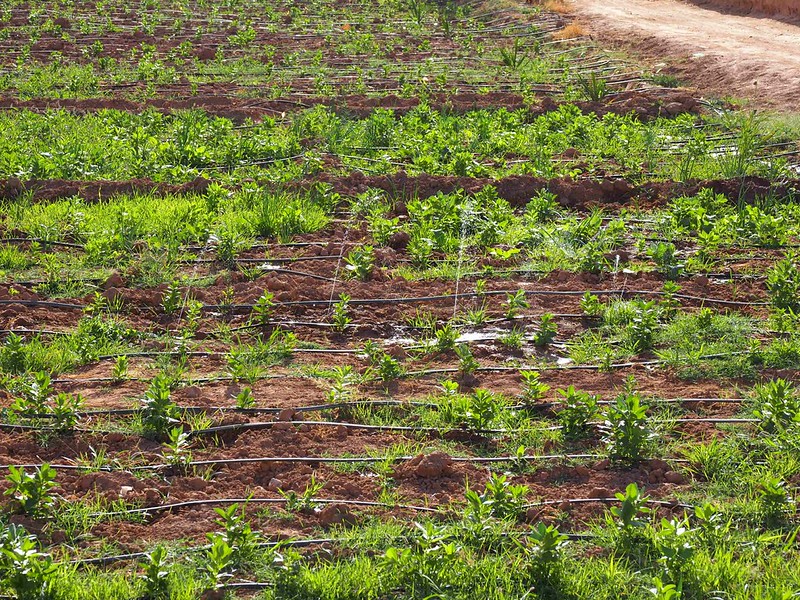 Morocco’s farms are running out of water. After years of recurring drought and rising temperatures, the country’s agricultural system is under mounting pressure and farmers are being pushed to adapt. In response, a new approach is gaining ground: the use of artificial intelligence to manage irrigation more efficiently, for a sector representing 15% of the nation’s GDP.
The Irrigation Challenge
Agriculture accounts for 85% of Morocco’s water consumption, yet much of it still relies on traditional irrigation practices inadequate to today’s climate realities. In many regions, farmers continue to use flood irrigation or fixed watering schedules, applying water regardless of soil conditions or weather forecasts.
This leads to significant inefficiencies. Large quantities of water are lost through evaporation, runoff and over-irrigation, particularly during hot and dry periods. As climate change intensifies, rainfall patterns have become more erratic, making it harder for farmers to rely on seasonal cycles. The result is a growing mismatch between water supply and agricultural demand.
In a country already facing structural water scarcity, these inefficiencies are no longer sustainable. They threaten not only agricultural productivity but also long-term food security.
Smart Irrigation in Morocco
AI-powered irrigation systems offer a way to move beyond approximation by introducing precision and adaptability. These technologies rely on real-time data to determine when and how much water crops actually need.
One of the key tools is soil moisture sensing. Sensors placed in the ground continuously monitor moisture levels, allowing farmers to irrigate based on actual conditions rather than assumptions. This prevents both under-watering, which stresses crops, and over-watering, which wastes resources.
Another important feature is the integration of weather forecasts. AI systems can analyze upcoming rainfall and adjust irrigation schedules accordingly. If rain is expected, watering can be delayed, reducing unnecessary water use.
Automation further enhances efficiency. Smart systems can operate independently, delivering water at optimal times — typically early morning or late evening — when evaporation is lower. This ensures that more water reaches plant roots, maximizing its impact.
Benefits of AI-Powered Irrigation
The advantages of these systems are both immediate and long-term. One of the most significant is water conservation. By aligning irrigation with actual crop needs, farmers can reduce water consumption substantially, in some cases by up to 70%. In Morocco’s water-scarce context, such reductions are significant.
Improved irrigation precision also boosts agricultural performance. Crops receive consistent and adequate hydration, leading to higher yields and better-quality produce. This can enhance farmers’ competitiveness in both domestic and export markets.
Cost savings are another key benefit. Using less water reduces expenses linked to pumping, storage and distribution. Over time, these savings can offset the cost of adopting new technologies.
Beyond these measurable gains, digitalization is reshaping daily farm management. Tasks that were once time-consuming and labor-intensive can now be automated. In Sefrou province, a farmer growing vegetables and olives described how this shift has affected his routine: “Automating and remotely managing my irrigation system has freed up time. I now dedicate one day each week to another business activity that generates additional income.” For many farmers, this flexibility opens the door to new economic opportunities.
Where AI Has the Greatest Impact
The potential for smart irrigation in Morocco is particularly high in traditional farming systems. These account for around 85% of cultivated land and consume roughly 70% of irrigation water.
Because these systems are often the least efficient, they offer the greatest scope for improvement. Precision irrigation technologies could reduce water use in this area, representing a significant shift in resource management. By contrast, more controlled systems such as greenhouse or urban agriculture, are already relatively efficient, leaving less room for substantial gains.
Startups and Digital Innovation
A growing number of startups and initiatives are driving the adoption of smart irrigation in Morocco. Agrilink, originally founded in Europe, has developed Internet of Things (IoT)-based solutions that connect soil sensors, irrigation systems and mobile applications. This allows farmers to monitor and control water use remotely, in real time.
SOWIT is another key player, combining climate data and agronomic expertise to deliver tailored recommendations. The initiative aims to bridge the gap between technology and sustainable employment by enabling young people in rural areas to gather actionable agricultural data, enhance production efficiency and support better outcomes for farmers. It targets two key groups: 280 women engaged in agriculture who are being trained in the use of precision farming technologies, and 100 independent field agents providing advisory support and expanding client networks across eight regions.
These initiatives are contributing to the emergence of a digital agricultural ecosystem, creating new opportunities for both efficiency and employment.
Looking Ahead
The expansion of AI in agriculture is closely aligned with Morocco’s Green Generation 2020–2030 strategy, which aims to modernize the sector and improve its resilience. A central objective is to connect up to 2 million farmers to digital platforms by the end of the decade.
As adoption increases, AI-powered irrigation could play a key role in conserving water, stabilizing yields and strengthening food security. Challenges remain, particularly in ensuring that smallholder farmers can access and effectively use these technologies. Addressing these barriers will require continued investment in infrastructure, training and digital literacy.
– Riccardo Chiaraluce
Riccardo is based in London, UK and focuses on Technology and Solutions for The Borgen Project.
Photo: Flickr
