• Link to X
  • Link to Facebook
  • Link to Instagram
  • Link to TikTok
  • Link to Youtube
  • About
    • About Us
      • President
      • Board of Directors
      • Board of Advisors
      • Financials
      • Our Methodology
      • Success Tracker
      • Contact
  • Act Now
    • 30 Ways to Help
      • Email Congress
      • Call Congress
      • Volunteer
      • Courses & Certificates
      • Be a Donor
    • Internships
      • In-Office Internships
      • Remote Internships
    • Legislation
      • Politics 101
  • The Blog
  • The Podcast
  • Magazine
  • Donate
  • Click to open the search input field Click to open the search input field Search
  • Menu Menu

Tag Archive for: Education in Ghana

Posts

Education, Global Poverty

Learning to Read in Ghana: Adult Literacy Programs

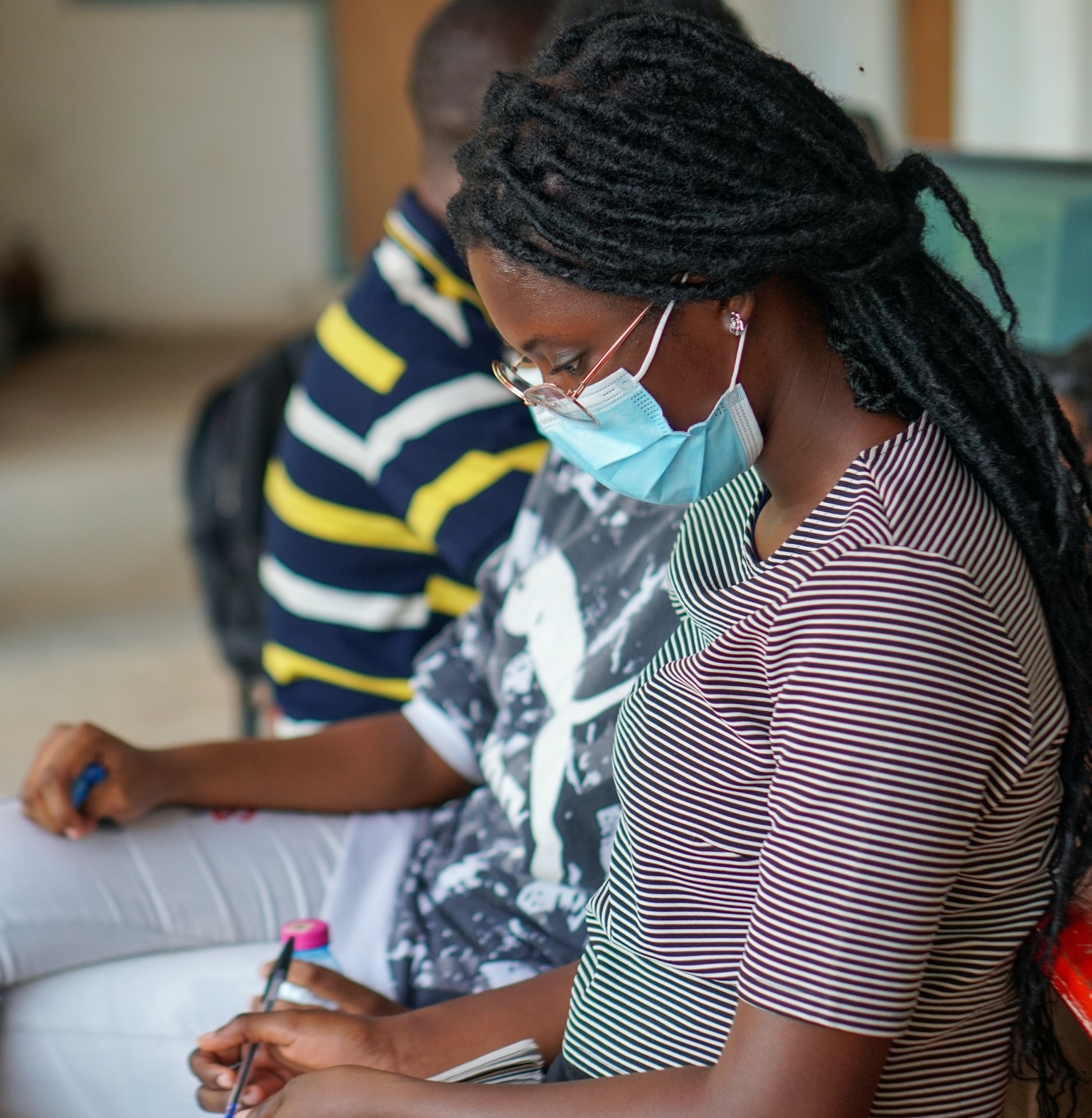
Adult Literacy Programs in GhanaGhana, a large West African country along the Atlantic Ocean coast, has long grappled with the challenge of illiteracy. An estimated 42% of the adult population in the country is illiterate, with women facing a higher rate of around 50%, compared to 33% among men. As a result, there is a pressing need for Adult Literacy Programs in Ghana.

ALPs and Education

Adult Literacy Programs, or ALPs, serve exactly the function the name suggests. These programs help adults learn how to read. However, literacy is much more than understanding words or numbers on a page. It serves an important societal function that allows people to interact with the world around them. ALPs can help increase skills among populations struggling with underdeveloped education, poor health and labor market participation.

These programs seek to provide adults with a well-rounded education that they may apply to their daily lives. Programs that utilize creative approaches rather than traditional classroom pedagogy are often more successful. For example, modern advances such as cell phones help adults retain new, relevant information.

History of ALPs in Ghana

Adult Literacy Programs in Ghana have a long history, stretching back to the time before the nation was independent. In the early 18th century, the Dutch Reformed Church introduced local language adult literacy work to Ghana, then the Gold Coast. After the Second World War, in 1948, the British Colonial Government officially adopted literacy as a component of the national education system and set out to establish similar programs. Since gaining independence in 1957, Ghana has embarked on several literacy-based initiatives beyond the scope of colonizing powers.

Within the past 50 years, the state has instituted a variety of educational acts, such as the Education Act of 1961 and the 1992 Constitution, which established education as a basic right for all citizens. Similarly, the state partnered with several NGOs and instituted programs such as the Free and Compulsory Universal Basic Education. Current estimates suggest that the youth and adult literacy rates are around 80% and 75% due to these programs.

Ghana’s National Functional Literacy Program (NFLP)

One such program is Ghana’s National Functional Literacy Program or the NFLP. It seeks to increase the national literacy rate, and defines a functionally literate person as “one who can engage in activities in which literacy is required for effective functioning of his/her…community and also for enabling him/her to continue to use reading, writing and calculation for his/her own and the community’s development.”

In classroom settings, adult Ghanaians learn reading, math and other complementary skills. Some classes are women or men only, while others are a mix of both. Studies have noted substantial gains in reading skills, but relatively weak writing and numeracy skills. Still, the NFLP has led to more labor market participation, greater income and generally more economic liberties for newly literate Ghanaians. One hypothesis for the NFLP’s notable success is its longer duration of 21 months, whereas many other ALPs tend to last for only nine.

The Literacy and Community Development Program

Another ALP in Ghana is the Literacy and Community Development Program, a literacy and socio-economic development program which targets adults 15 and above with little to no formal education. There are specific efforts that serve to accommodate vulnerable or marginalized groups such as women, youth, prison inmates, nomads and people living with disabilities. Pamoja Ghana launched this program officially, with financial and technical support from Action Aid Ghana (AAG).

Since its founding, numerous groups have been established across the entire country and currently, there are about 3,340 active participants. Adults and adolescents can learn basic literacy and life skills through this program, and many learners have even gone on to hold positions in district assemblies in their localities or have become elders in their various religions. Some younger participants who were forced out of school due to poverty or societal pressures were able to continue learning informally before eventually re-enrolling in formal school. Overall, this ALP has assisted many adult Ghanaians with learning to read, thus allowing them to interact with their communities in new and improved ways.

– Char Nieberding
Photo: Unsplash
July 25, 2023
https://borgenproject.org/wp-content/uploads/borgen-project-logo.svg 0 0 Lynsey Alexander https://borgenproject.org/wp-content/uploads/borgen-project-logo.svg Lynsey Alexander2023-07-25 07:30:582023-07-24 01:30:27Learning to Read in Ghana: Adult Literacy Programs
Education, Global Poverty

How Grian is Aiding Education in Ghana

Education in Ghana
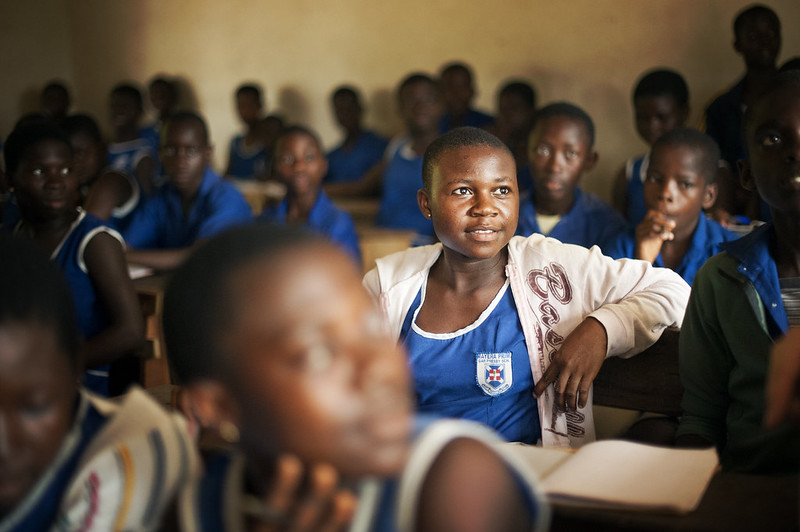
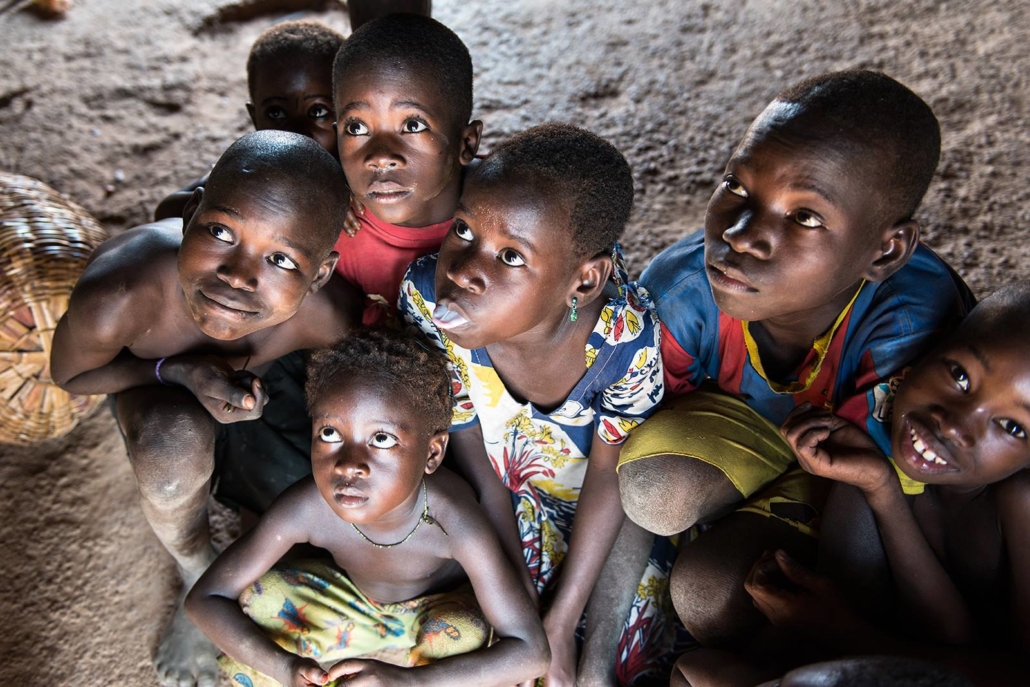
Education in Ghana is a consistent challenge, particularly in rural areas with “poor classroom conditions, inadequate textbooks and teaching materials and a high rate of female dropout after primary level.” The overall quality of education is low, with a child who has completed nearly 12 years of school having only learned the equivalent of fewer than six years of schooling. According to Cross Catholic Outreach, “nearly a third of students don’t complete primary school and only 47% complete secondary school.” Access to education aids the fight against poverty because receiving a high-quality education improves the likelihood of success for young children. Gender inequality is another issue for education in Ghana; child marriages, labor and the overarching stereotype that a female’s education is “less valuable” than a male’s.

Who is Grian?

Grian is a content creator, primarily publishing Minecraft videos on YouTube. Most known for being a prominent member of Minecraft’s Hermitcraft series, Grian has more than 8 million subscribers on YouTube meaning that he has the ability to reach and potentially influence a wide audience from all over the world. Over the course of 2021, Grian and his viewers worked on raising money to build a primary school in Ghana. Through various online events, they raised a total of more than £27,000 (almost $37,000), surpassing the sum needed to finish the project. While Grian raised this amount of money, credit also has to go to Nana A. Bonin III, Queen Mother of Denyase Traditional Area in the Ashanti Region of Ghana. She is the sole founder of this school and has worked to raise money since the project began in 2017.

The Denyaseman Village Pre-School

The Denyaseman Village Pre-School is located in the Ashanti Region of Ghana. In July 2022, the “official ceremony to commission the school took place.” In addition to the financial support from Grian’s efforts, there were demonstrations of generosity from the community, with a local tailor offering to “make the school uniforms if the parents provided fabric.” This project reflects the need for educational development in rural areas of Ghana. The Denyaseman Village Pre-School is just one example of work people do to boost education in Ghana.

The completion of Grian’s project will undoubtedly increase the quality of life of local children, both now and in the future. When looking at education in Ghana, the statistics are telling enough that work is necessary to boost accessibility to learning resources. The education system faces “a fragmented and overloaded curriculum, unequal access and weak and incoherent administrative control.” In Ghana, it is common for students to “miss educational milestones” and drop out of school early and particularly for girls, educational outcomes beyond the secondary level are low, according to Cross Catholic Outreach.

The work of Grian is a prime example of someone utilizing their platform to advocate for the less fortunate. With more attention moving to the subject matter of extreme poverty, more influential figures could help the fight and aim to reduce poverty.

– Ruby Wallace
Photo: Flickr

February 16, 2023
https://borgenproject.org/wp-content/uploads/borgen-project-logo.svg 0 0 Jennifer Philipp https://borgenproject.org/wp-content/uploads/borgen-project-logo.svg Jennifer Philipp2023-02-16 01:30:492023-02-14 06:02:12How Grian is Aiding Education in Ghana
Global Poverty

Poverty Reduction Efforts by USAID In Ghana  

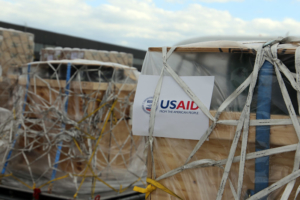
USAID In GhanaIn Ghana, despite poverty reduction efforts throughout the years, around 24.2% of the population lives below the poverty line due to a variety of issues: low literacy rates, disparities in agriculture and failing health. To help address these issues, USAID assists in 22 different issues or sectors, funds 136 activities and partners with 48 partners in Ghana, diligently providing financial assistance to accelerate the country’s trend of poverty reduction. 

Education

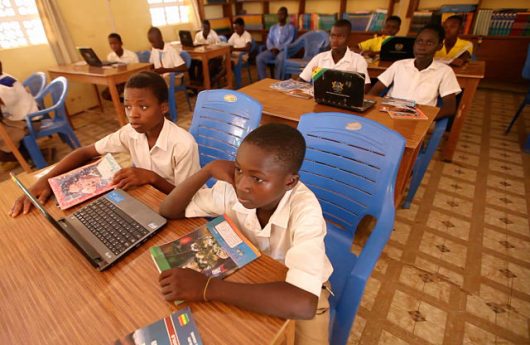
Education is one of the top five focuses of USAID in Ghana. This investment is critical because although Ghana reached a 100% primary school completion rate in 2020, many Ghanaian children reached the end of their primary education without basic literacy skills. For eight years and counting, the USAID Partnership for Education implements teacher-supported training for school officials, equipping them with tools to improve the quality of education. USAID also develops instructional materials that strike a balance between literacy in English and the 11 local languages spoken in Ghana. 

Since 2014, USAID has provided learning materials for Ghanaian schools including teacher guides, alphabet cards and more all in hopes of crafting a new engaging curriculum and improving literacy rates. Most recently, in August 2022, USAID partnered with Ghana’s Ministry of Education to provide 3.7 million books to over 11,000 schools across Ghana. USAID chose material specifically designed to deliver interactive reading lessons to students. All the books selected were written, illustrated, edited and designed by Ghanaians to maintain a sense of relevancy and relatability to capture the attention of the students reading the material.

Overall, USAID’s partnership with the Government of Ghana resulted in the training of over 70,000 teachers, benefitting 750,000 students in some 16,000 schools across the country.

Agricultural and Food Security

Despite being one of the fast-growing economies in the world, low agricultural productivity negatively impacts Ghana’s long-term growth prospects. In response, USAID has provided $425 million to support Ghanaian farmers over the span of 10 years. USAID intervenes mainly in northern Ghana by promoting the production of diverse crop groups, improving storage and crop preservation and partnering with private firms to expand businesses. 

Given ongoing global food security threats in 2022, USAID most recently provided emergency fertilizer assistance to smallholder farmers. The $2.5 million aid package ensures 100,000 smallholder farmers in Ghana have affordable fertilizer this planting season. In partnership with three other organizations, USAID delivered 360,000 bags of fertilizer, lifting the financial burden off the backs of these smallholder farmers who make up 70% of Ghanaian farmers. 

Health

Despite advancements in health, northern Ghana struggles with high malnutrition rates in children under 5 and higher rates of child mortality. In response, USAID launched a five-year $29 million partnership with Ghana Health Services with the goal of improving maternal and newborn health. Through this effort, USAID focuses on best practices to help reduce preventable deaths. These include “sleeping under a treated bed net, delivering babies at health facilities, encouraging breastfeeding,” and more.

In the Future

According to the World Bank, Ghana’s poverty rate slightly increased to 25.5% in 2020 from 25% in 2019, reflecting the impact of the COVID-19 pandemic. However, thanks to efforts by USAID and others, the goal is to aid as many vulnerable Ghanaians as possible to ensure prosperity for future generations.

– Blanly Rodriguez
Photo: Flickr

November 19, 2022
https://borgenproject.org/wp-content/uploads/borgen-project-logo.svg 0 0 Jennifer Philipp https://borgenproject.org/wp-content/uploads/borgen-project-logo.svg Jennifer Philipp2022-11-19 01:30:592024-05-30 22:30:32Poverty Reduction Efforts by USAID In Ghana  
Education, Global Poverty

Education in Ghana: the North and South Divide

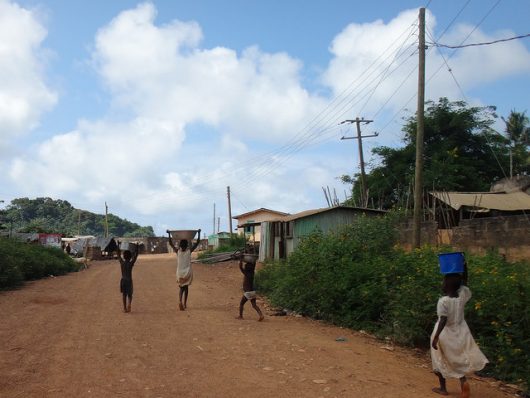
Education in GhanaThere is a stark difference in education in Ghana between the northern and southern regions. 18-year-old Kelvin Odartei lives in Southern Ghana and recently became the first car-owner in his community. However, Odartei’s kinfolk in the northern regions of Ghana had no such chances. Despite a renowned ranking in Africa due to its natural wealth, Ghana struggles with educational infrastructure in the northern regions. Politics in northern regions have restricted learning possibilities. But today, things have changed.

History of the North and South Divide

Ghana was the first African country to gain its independence from British colonial rule. Kwame Nkrumah led the country to independence on March 6, 1957, while he formed Pan-African organizations across the continent. Nkrumah led successful efforts to expand literacy in Ghana. His administration built and funded multiple schools across the southern regions. As a result, many southern regions have an educated population of young adults.

However, that was not the case in Northern Ghana. Sources indicate that the Nkrumah administrations neglected the northern regions’ educational system in the 1960s due to tribal-nationalist conflicts that emerged alongside the post-colonial governing efforts. As quoted by President Nkrumah’s critics, “We were hoping that when Ghana was independent the newly all-African Government would provide the North with all that was required to free the North from ignorance… [I]nstead this the Government dominated by Southerners, are doing all they can to keep the Northerners down so that they can use them as servants.” Since then, not many governments have made efforts to increase the quality of education in the northern regions.

For instance, the Sanguli schools in the northern region, founded in 1961, had 500 students with only four teachers. The school’s quality and infrastructure were reported to include “inadequate infrastructure, insufficient teaching staff and lack of information, communication technology, ICT laboratories, as well as libraries.” As a result, the poverty rate has remained alarmingly high, according to concerned residents.

Lack of resources and budgets has also resulted in poor educational settings — students were forced to sit on the floor, potholes inside the classroom had issued health and safety concerns and parents reported students experiencing forced labor in teachers’ farms in exchange for school fees.

2017 and Beyond

Things took a turn in 2017 as Ghana’s current president Akufo-Addo ensured that all regions will have newly constructed schools and supplies. “There will be no admission fees, no library fees … no examination fees…. There will be free textbooks, free boarding and free meals.” You can learn more about recent reforms for education in Ghana here.

U.S.-founded Millenium Change Corporation (MCC) has funded over $9 million for Ghana’s educational sector. This includes money for the construction of 221 schools in Northern and Southern Ghana. Furthermore, since 2007, MCC has made groundbreaking “investments in education infrastructure [which] would lead to improved school access. Improved school outcomes would lead to poverty reduction through economic growth.”

Today, Ghana has one of the highest investments in education with “30% of the government budget on the educational sector” and 11% of the country’s GDP invested in public schools. Because of the increased educational infrastructure, young students like Odartei can feel confident that Ghana can carry their future dreams.

– Ayesha Swaray 
Photo: Flickr

June 9, 2021
https://borgenproject.org/wp-content/uploads/borgen-project-logo.svg 0 0 Kim Thelwell https://borgenproject.org/wp-content/uploads/borgen-project-logo.svg Kim Thelwell2021-06-09 01:31:462021-06-09 16:01:20Education in Ghana: the North and South Divide
Education, Global Poverty, Women and Female Empowerment, Women's Empowerment

Strengthening Women’s Education in Ghana

Strengthening Women’s Education in Ghana
Several steps are being taken to strengthen women’s education in Ghana and to also narrow the gender gap in schools throughout the country. The country is very close to achieving gender equality in primary school enrollment, which is a significant milestone. Women’s access to education in Ghana past primary school, however, still has room for improvement.

Different approaches are being enacted to promote empowerment and women’s education in Ghana. While some approaches are traditional and in correlation with poverty reduction and Millenium Development Goals, others are led by individuals and women trying to make a difference in their own communities.

One such individual is Adeline Nyabu. Nyabu created the Girls Empowerment League, aiming to increase attendance and boost the academic performance of young girls. This league connects girls to female role models and teaches leadership, passion for education and achievement, and shows the realistic and positive outcomes for a woman who completes continuing education. In addition, the program is designed to boost the self-esteem, confidence, aspirations, determination and self-worth of girls in an unequal society.

Another program in place is the Campaign for Female Education. This program partners with MasterCard to provide scholarships to pay for examination registration fees, uniform costs, educational materials and financial packages for girls in rural communities in Ghana. Since 2012, more than 4,000 girls have been awarded the scholarship to continue their education and are equipped to become influential leaders and scholars, in hopes that they will pave the way and be role models for other girls in situations that seem impossible to get out of.

A traditional approach to improving women’s education in Ghana and narrowing the educational gender gap throughout the country is through the Girls Education Unit (GEU), part of the Ghana Education Service under the Ministry of Education. Since its establishment in 1997, GEU has made it possible to have a Girls Education Officer in every district and region of the country.

The Ministry of Education also provides training for female teachers in male-dominated rural areas and promotes girls’ clubs and camps teaching empowerment, self-worth, leadership and teamwork in a female-dominated environment.

These initiatives and programs have resulted in progress towards the goal to increase women’s education in Ghana, created greater access for girls and narrowed the gender gap within schools. Enrollment in both primary and secondary education has increased by around 10 percent, with a significantly greater increase in enrollment for girls. As a result, Ghana’s gender parity index has improved from 0.93 to 0.95. The country can continue to build on this success to achieve complete gender parity and empower its women and girls to reach their full potential.

– Lydia Lamm

Photo: Flickr

April 4, 2018
https://borgenproject.org/wp-content/uploads/borgen-project-logo.svg 0 0 Borgen Project https://borgenproject.org/wp-content/uploads/borgen-project-logo.svg Borgen Project2018-04-04 07:30:382024-05-29 22:40:06Strengthening Women’s Education in Ghana
Children, Education, Global Poverty

Educational Reform in Ghana Providing Opportunities for Children

educational reform in Ghana

In 1993, the Republic of Ghana established the Ministry of Education to provide easier educational access to Ghanaian citizens. The ministry focuses on academic, technical and vocational programs. The Ministry of Education also concentrates on infrastructure, the refurbishing of schools and bringing in newly trained teachers and academic scholars.

Seven years later, in 2000, Ghana incorporated a new educational reform program, called the Ghana Education Trust Fund. The fund was installed to provide quality education from basic (elementary) schooling to tertiary (college; trade schools).

Educational reform in Ghana finally began with Ghana’s Vision 2020 Act, which started in 1996. The plan was broken down into four parts: The First Step (1996-2000), Ghana Poverty and Reduction Strategy (2003-2005), Growth and Poverty Reduction Strategy (2006-2009) and the Ghana Shared Growth and Development Agenda (2010-2013).

The 2020 date was set to give the Ghanaian government enough time to accomplish all of its goals, with hopes that the government will go above and beyond to exceed all of its expectations in time. Ghana finished the project in 2015, accomplishing a great deal five years before the deadline.

Education has been free for primary school (elementary) and middle school. However, high school was optional, with most high schools being privately owned, making it difficult for many families to afford higher education for their children and causing students to drop out at a young age.

In 2014, Ghana’s president partnered with the World Bank to announce a new project called the Ghana Secondary Education Improvement Project, which launched free public education at the high school level in 2017, giving children a chance to stay in school to further their education in the hope that free education will lower the dropout rate in Ghana.

The financing provides $156 million over five years, between 2014 and 2019. The plan will help the Ghanaian government improve its educational reform plan, provide educational access to underserved children, improve the quality of education and provide technical assistance. Students and teenagers are welcoming educational reform in Ghana and the chance to attend free higher-level educational institutions, and are hopeful that this program will give them the opportunity for a better life not only for themselves, but for their families too.

Promoting educational reform in Ghana will not only provide children with better academic opportunities and skills, but will also help fight against child labor. Although Ghana has set up many laws and acts against child labor, such as the Child Protection Compact and the Worst Forms of Labor acts, many children still find themselves forced into harsh labor conditions rather than attending school and receiving a proper education.

The Child Labor Coalition website tells a story of a young boy whose father sold him to human traffickers because there was no money for his education. Lake Volta, the area the child was sold into, is known for forced child labor and actively ignoring Ghana’s current laws against such dreadful circumstances. The children are usually made to work anywhere between 10-20 hours per day, are terribly abused and fed very little.

As terrifying as this is, educational reform in Ghana is the key to a brighter future for these children. It is the answer to ending child labor and lowering dropout rates. Ensuring that Ghanaian children are provided with more opportunities and prospects will allow the country of Ghana to flourish, keeping children and their families happier and healthier while providing a safer environment for all of Ghana.

– Rebecca Lee

Photo: Flickr

February 17, 2018
https://borgenproject.org/wp-content/uploads/borgen-project-logo.svg 0 0 Borgen Project https://borgenproject.org/wp-content/uploads/borgen-project-logo.svg Borgen Project2018-02-17 07:30:332024-05-29 22:39:21Educational Reform in Ghana Providing Opportunities for Children

Get Smarter

  • Global Poverty 101
  • Global Poverty… The Good News
  • Global Poverty & U.S. Jobs
  • Global Poverty and National Security
  • Innovative Solutions to Poverty
  • Global Poverty & Aid FAQ’s
Search Search

Take Action

  • Call Congress
  • Email Congress
  • Donate
  • 30 Ways to Help
  • Volunteer Ops
  • Internships
  • Courses & Certificates
  • The Podcast
Borgen Project

“The Borgen Project is an incredible nonprofit organization that is addressing poverty and hunger and working towards ending them.”

-The Huffington Post

Inside The Borgen Project

  • Contact
  • About
  • Financials
  • President
  • Board of Directors
  • Board of Advisors

International Links

  • UK Email Parliament
  • UK Donate
  • Canada Email Parliament

Get Smarter

  • Global Poverty 101
  • Global Poverty… The Good News
  • Global Poverty & U.S. Jobs
  • Global Poverty and National Security
  • Innovative Solutions to Poverty
  • Global Poverty & Aid FAQ’s

Ways to Help

  • Call Congress
  • Email Congress
  • Donate
  • 30 Ways to Help
  • Volunteer Ops
  • Internships
  • Courses & Certificates
  • The Podcast
Scroll to top Scroll to top Scroll to top