Why the Monaco Poverty Rate is Zero
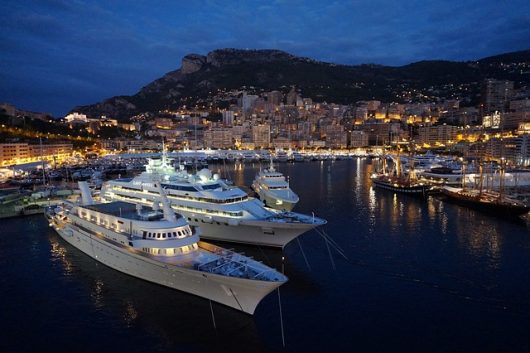 Home to millionaires, a renowned casino and a prestigious Formula One Grand Prix, Monaco claims another headlining reality: the Monaco poverty rate is zero.
In order for any country to have a zero percent poverty rate, there must be zero percent of the population living under the international poverty line of U.S. $1.25 a day. So, why is the Monaco poverty rate zero? This feat is not accomplished easily; it is a combination of ideal conditions that have propelled Monaco to achieve its flawless poverty rate.
The Principality of Monaco is situated in the west of Europe along the French Riviera and bordered by France and the Mediterranean Sea. Monaco is aptly named a principality because its monarch takes the title of prince or princess. The current Prince of Monaco is Prince Albert III, who continues the Grimaldi family reign of more than 700 years.
This country is known for its beautiful surroundings and coastline, which helps draw a wealthy population, but its size plays an important role in the economy as well. Monaco is the second-smallest country in the world, after the Vatican City. It is a tiny two-square kilometers in size and the most densely-populated country in the world.
The number of residents this country can support is limited and its picturesque landscape draws people from around the world. Monaco is home to 30,645 residents. Only 16 percent of the residents are Monegasque (natives of Monaco), the majority is French and the rest come from nearby countries and outside. While Monaco’s size tightens the population, its economic strength adds additional incentives for residents.
Monaco’s current economy was strengthened by the historic decisions of Prince Charles III, known as the founder of Monte Carlo. Charles III ensured Monaco’s economic strength by taking advantage of gambling laws to build the Socièté des Bains de Mer, a company of a few hotels, a theater and a casino in 1863. The Monte Carlo casino became the most famous of these assets.
When gambling was banned elsewhere, the casino became a vacation of choice for the worlds wealthy, drawing in thousands of tourists. Charles the III also forged an agreement with France to install the first railroad across the principality as infrastructure to support the growing tourism market. Charles III attracted additional foreign investments when he established a zero income tax.
Why is the Monaco poverty rate zero? Tax incentives, location and the international popularity of Monte Carlo secured Monaco’s popularity with the wealthy and ignited the country’s tourism industry. Today, one-third of Monaco’s population makes more than $1 million to the point that Monaco’s GNI per capita is $186,080, the highest in the world.
Interestingly much of the working class in Monaco does not actually live there. Daily, more than 30,000 French and 5,800 Italian nationals travel to Monaco to work. This lends to the enormity of the private sector industries, which account for 86 percent of the labor force in Monaco. Monaco has developed into a destination for research centers, and 22 percent of the labor force works in scientific and technical activities, including administration and support services. The tourism industry accounts for 11 percent of the country’s economy, and the gaming industry 4 percent. The prince also guarantees all of the residents life-long employment, so there is nearly zero unemployment.
Monaco has the ideal combination of geographic, economic and residential dynamics to allow and support a zero percent poverty rate. The size of the country limits the amount of habitable space the country can offer and the landscape and world-renowned events like the Grand Prix give rise to millionaire inhabitants. The fiscal qualifications for residents in Monaco are set by the real estate prices while tax incentives provide a desirable buffer. Monaco builds its wealth on the investment of the worlds wealthy and maintains it through value-added tax revenues from established businesses. These factors have propelled Monaco’s reputation as the land of the millionaires and give insight into the Monaco poverty rate being zero.
– Eliza Gresh
Photo: Pixabay
