7 Innovations to Increase Access to Clean Water
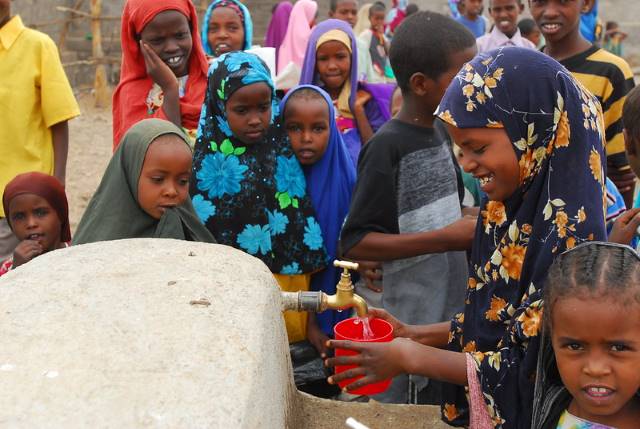 Access to clean water is a basic human right, but as of 2017, 884 million people do not have access to safe drinking water and more than two billion people do not have access to fundamental sanitation facilities. These issues have become more pressing as the COVID-19 pandemic pushed many into poverty and increased the world’s need for adequate sanitation to prevent the spread of th virus. The sixth Sustainable Development Goal is to “ensure availability and sustainable management of water and sanitation for all” by 2030. Organizations are working together in a greater effort to increase access to clean water.
7 Innovations for Water Access
- Majik Water. Founded by Beth Koigi, Anastasia Kaschenko and Clare Sewell, Majik Water is a Kenyan company that engineers solar-powered filters capable of harvesting drinking water from the air. Koigi was the victim of water scarcity while at university and sought to create a device that would reduce water scarcity in Kenya and beyond. The device has the potential to provide water to the 1.8 billion people globally who may be without reliable access to water by 2025.
- Gravity Water. A majority of the people in the world who do not have access to clean drinking water live in tropical and subtropical areas where fresh water is plentiful. Gravity Water wanted to create a system that would allow people in these areas to take advantage of the water they have access to but are unable to drink because of pollution and contamination. “Through harvesting rainwater and storing it above ground, Gravity Water systems provide pressure for filtration without the dependency of electricity, which is commonly lacking in rural areas.”
- Ashok Gadgil and Vikas Garud. While UV water filtration is a proven way to purify water, these systems are expensive due to the materials needed to build them. Ashok Gadgil and Vikas Garud have developed a modified version of these devices. UV lamps placed above water tanks filter the water and then use gravity to separate the drinkable water from residue inside. The device is smaller than traditional underwater UV devices and is able to disinfect 1,000 liters of water an hour.
- Guihua Yu (University of Texas). Guihua Yu and his team of researchers at the University of Texas at Austin created a device that can be used in disaster situations and areas without access to clean water. The device uses water-absorbent hydrogels that release water when heated and work in both humid and dry climates. The water comes from the air, and when the hydrogels are exposed to sunlight, the water is released. The device also runs on solar energy, making it affordable and sustainable.
- Innovative Water Technologies (IWT). Jack E. Barker founded Innovative Water Technologies (IWT) to develop global water treatment facilities to be used in humanitarian and disaster relief efforts. These solar and wind-powered water filtration systems can process 5,000-250,000 gallons of water a day. IWT has four different products, all of which bring clean water to those in need,
- Dar Si Hmad. Dar Si Hmad is a female-run nonprofit organization based in Morocco. Its water project makes use of fog collectors, also known as the “cloud fishing” technique. A fine mesh gathers droplets of water in areas with thick fog such as Southwest Morocco. Once enough water is gathered, the water falls into a basin and is filtered using solar-powered filters. The water is then piped to 140 nearby households. The fog-catching system is able to provide 6,000 liters of water daily.
- The Drinkable Book. WATERisLIFE and Dr. Teri Dankovich developed the Drinkable Book to provide easy water filtration options to those in need. One page from the perforated book can filter 100 liters of water. One book can secure a person’s drinking water needs for up to four years. The pages are made up of cellulose and silver nanoparticles that can filter out “99.99% of the bacteria found in cholera, E. coli and typhoid.”
Access to Clean Water
The COVID-19 pandemic has heightened the need for universal water access, showing the broader impacts of lacking water access during times of crisis. Since poverty and water access are linked, innovations that increase access to clean water contribute to reducing global poverty.
– Harriet Sinclair
Photo: Flickr
