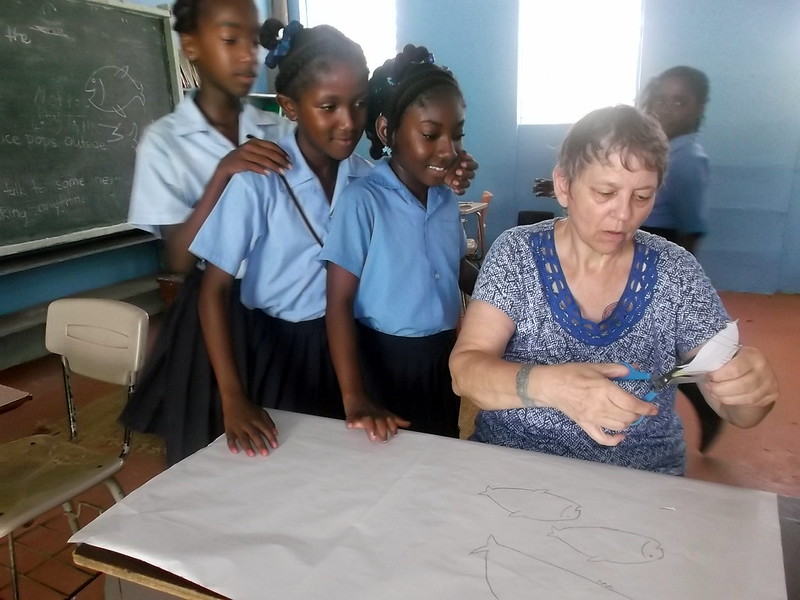
In the Eastern Caribbean, the Commonwealth of Dominica is a small island country along the Lesser Antilles. Originally inhabited by the Kalinga, and then colonized by Europeans, the country gained national independence in 1978. As a middle-income developing country, Dominica has taken great strides toward promoting girls’ education and the prosperity of all its citizens. Fundamental to the government’s stance that education is essential to securing political, social and economic prosperity, the conviction prevails that all citizens, regardless of ethnicity, gender or class have a right to an education.
Investing in girls’ education in Dominica is one of the best investments the country can make. Educated girls are healthier, participate more in the formal labor market with higher wages, have fewer children and provide a better life for future generations of the community as a whole. Traditionally, girls faced multiple disadvantages including extreme poverty, being in an underserved locality and belonging to a minority ethnic group, which made completing their education even more of a challenge. However, the expansion of roadways and the introduction of free, universal public education – replacing a historically exclusive, religious-based system – have significantly advanced girls’ education in Dominica.
Educational Opportunities
Girls’ education in Dominica is a success story among the broader educational initiatives enacted in the country. Girls face no barrier to educational opportunities in terms of gender discrimination. All children between the ages of 5 and 16 are required to attend school according to the Education Act of 1997. The government provides both primary and secondary education in Dominica with minimal charges for students and their families. This includes free textbooks and special assistance for poor students, as well as grant money available for those seeking tertiary programs.
While primary enrollment reached 90% of the youth population in 2023, gender disparities persist. In 2021, the ratio of female and male students in primary school was 0.95, rising to 0.99 at the secondary level. Both figures remain slightly below the global average, indicating that further efforts are needed to boost female enrollment in Dominica.
Gender Gap in Education
Given the 2022 results of Dominica’s Grade 6 National Assessment, girls outperformed boys across the curriculum, actually necessitating an effort to ensure that boys would not continue to fall behind too much. Girls outperformed boys across the board, earning better grades in both Language Arts and Mathematics. Therefore, girls who attend school are absorbing the curricular material quite well. However, as stated above, girls’ overall enrollment is still a bit lower, which must be addressed.
Dominica’s Ministry of Education, Human Resource Planning, Vocational Training and National Excellence collaborated with the Global Partnership of Education to establish a Partnership Compact detailing how Dominica should improve its education system. In regard to gender parity specifically, as of May 2024, Dominica’s Ministry of Education had no department dedicated to ensuring gender parity, yet it still appeared confident that its current policies would help improve gender equality in education. Nevertheless, the Ministry has agreed to develop a “focal point” to further centralize gender equality efforts, support new policy in Special Education Needs and Technical Vocational Education and Training (as both relate to gender), and develop an up-to-date diagnosis of gender in education, something that is currently lacking. Hopefully, these policies will help deliver substantive improvements in Dominica’s efforts to address gender inequality in the education system.
In the 1980’s, there were no laws in Dominica requiring children to attend school. Since taking initiatives like the Education Act, education has been a successful path for girls to advance themselves socially and economically. With an economy predominantly in agriculture and marked by men, by investing in girls’ education, Dominica not only combats social stigmas limiting girls’ lifelong opportunities but also opens up new doors in the service sector for the country as a whole.
– Joseph Ventura
Photo: Flickr
