Child Displacement in Developing Countries
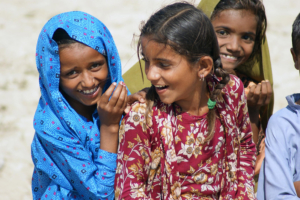
Child displacement impacts children across all sectors and nations. As of 2020, more than 33 million children are living in forced displacement. This includes 11.8 million child refugees, 1.3 million asylum-seeking children, 20.4 million children displaced within their own country and 2.9 million children living in internal displacement as a result of natural disasters. Here is some information about child displacement in developing nations.
The Types of Child Displacement
A few types of child displacement exist. These include:
- Internal Displacement: According to the Guiding Principles on Internal Displacement, the definition of an internally displaced individual is “persons or groups of persons who have been forced or obliged to flee or to leave their homes or places of habitual residence, in particular as a result of or in order to avoid the effects of armed conflict, situations of generalized violence, violations of human rights or natural or human-made disasters and who have not crossed an internationally recognized border.”
- Displacement on a Large Scale: An example of this is the Palestinian exodus in 1948 which resulted in the displacement of more than 750,000 people.
- Separation From Family: This type of displacement uniquely relates to children in developing nations. When children are working away from family, they are susceptible to kidnapping, human trafficking and violence. For example, there are 10.1 million child laborers in India and one child is declared missing every 8 minutes.
Cognitive Harm
A study that Child Development published tested executive functions, which are the higher-order cognitive skills needed for decision making and complex thought, among Syrian refugees. The study found that the burden of house poverty affected displaced children’s working memory. This has a long-term impact on the ability to succeed in school and make correct decisions. These findings align and have a serious impact on the refugee crisis in Syria where 45% of Syrian refugees are children with more than a third without access to education.
Child Labor and Violence
Children comprise 25% of all human trafficking victims and are at higher risk for forced labor. After displacement, they can experience separation from family and traffickers can force them to work in fields such as agriculture, domestic services or factories. To date, an estimated 168 million children are in forced labor and more than 50% complete dangerous work.
Children who do not have access to safe and regular migration pathways often turn to irregular and dangerous routes, which further puts them at risk for violence and exploitation. According to the U.N., “around 1,600 migrant children between 2016 and 2018 were reported dead or missing, an average of almost one a day.”
A Lack of Data on Child Displacement
There is simply not enough data on child displacement which translates to inadequate information on the causes and long-term effects. For example, only 20% of countries with data on conflict-related internally displaced persons (IDP) break the statistics down by age.
Data disaggregation by age, sex and origin are essential as it will inform policymakers in the regions most directly impacted by child displacement on how severe the issue is. This will allow them to begin to construct resources to support all children. For example, children who cross borders may not receive services such as education and health care because the statistics regarding how many children are out of school and the long-lasting impact on child displacement are insufficient.
The Global Refugee Compact
In December 2018, the U.N. General Assembly adopted the Global Refugee Compact. This is an international agreement amongst nonprofits, the private sector and international organizations to provide objectives to better include refugees in national systems, societies and economies and provide equal opportunity for them to contribute to communities. Through updated guidelines, the U.N. and partner organizations can craft effective modern solutions.
One of the unique features is the digital platform where partners and practitioners can share effective techniques, or Good Practices, to allow others to implement them in another location. The platform also builds a repository of overcoming humanitarian crises through good work that can be studied and implemented across a multitude of sectors.
There are various good practices targeting child displacement shared on the platform. For example, The BrightBox Initiative by the Simbi Foundation began in Uganda in July 2019 with the goal “to enhance access to education for students in UNHCR refugee settlements.” It transforms shipping containers into solar-powered classrooms to“provide access to literacy resources for a community of 6,000 simultaneous learners.” These types of resources are essential as Uganda hosts the largest number of refugees in Africa at about 1.5 million. Additionally, 60% of them are children.
Child displacement across the world exists for various humanitarian issues all rooted in poverty and are detrimental to the well-being of the world’s most vulnerable population. However, through large-scale global action, the world can address the causes of child displacement and begin crafting effective solutions.
– Imaan Chaudry
Photo: Flickr
