• Link to X
  • Link to Facebook
  • Link to Instagram
  • Link to TikTok
  • Link to Youtube
  • About
    • About Us
      • President
      • Board of Directors
      • Board of Advisors
      • Financials
      • Our Methodology
      • Success Tracker
      • Contact
  • Act Now
    • 30 Ways to Help
      • Email Congress
      • Call Congress
      • Volunteer
      • Courses & Certificates
      • Be a Donor
    • Internships
      • In-Office Internships
      • Remote Internships
    • Legislation
      • Politics 101
  • The Blog
  • The Podcast
  • Magazine
  • Donate
  • Click to open the search input field Click to open the search input field Search
  • Menu Menu

Archive for category: United Nations

Information and stories about United Nations.

Global Poverty, Sustainable Development Goals, United Nations

“Small Smurfs, Big Goals” and US Sustainable Development Goals

Sustainable Development Goals
“Smurfs: The Lost Village” and the U.N. are working together on the Small Smurfs, Big Goals campaign. The campaign aims to promote the United Nation’s Sustainable Development Goals for 2030. The International Day of Happiness, which the U.N. has celebrated since 2013 on March 20, was central to this campaign.

Demi Lovato, Joe Manganeilio and Mandy Patinkin, three of the main voice actors from the “Smurfs: The Lost Village” movie, came to the International Model U.N. Conference to honor a few students for their projects to help achieve the Sustainable Development Goals (SDGs).

Karan Jerath, a 20-year-old, created a device to protect marine life from oil spills. Sarina Davin, a 17-year-old, helped with a U.N. girl empowerment program. Noor Samee, also 17, blogs for UNICEF about social justice issues.

Patinkin, who plays Papa Smurf in the film, congratulated the students at the conference.

“On behalf of all Smurfdom,” he said, “thank you for your work in awakening everything, in your community, through your social media, all over the world, in the ways that you have chosen to encourage people everywhere to make this world a better place for those who are so vulnerable in every way imaginable.”

Each of the students received a symbolic key to Smurf Village.

The visit to the International Model U.N. Conference was one way the Small Smurfs, Big Goals campaign honored the International Day of Happiness and the SDGs. On March 20, the Smurf cast and the U.N. lit the Empire State building blue.

On the Small Smurfs, Big Goals website, visitors can take a quiz to find which Smurf they are most like based on the issues they care about. Then, they can share their smurfs and support or learn more about what they can do to support these issues.

The campaign also has a lesson plan for elementary school teachers to use “Smurfs: Lost Village” to teach children about SDGs.

World leaders in September 2015 adopted the SDGs for 2030 and implemented them in January 2016. The SDGs build on the Millennium Development Goals (MDGs.) The goals focus on education, equality, access to jobs and other key issues.

– Jennifer Taggart

Photo: Flickr

March 28, 2017
https://borgenproject.org/wp-content/uploads/borgen-project-logo.svg 0 0 Borgen Project https://borgenproject.org/wp-content/uploads/borgen-project-logo.svg Borgen Project2017-03-28 16:49:112024-12-13 17:57:43“Small Smurfs, Big Goals” and US Sustainable Development Goals
Food Security, Global Poverty, United Nations

UN Helps Battle Food Insecurity in South Sudan

South Sudan_Food
A recent report from the U.N. indicates 5.5 million South Sudanese people are facing food insecurity. Approximately 100,000 of those are in immediate danger of starving.

The U.N. Food and Agriculture Organization (FAO) is stepping up to address the crisis. It is fast-tracking plans to deliver more than 150,000 fishing kits, consisting of lines, hooks and nets, to those in need.

A Multi-Faceted Problem

Nearly 95 percent of South Sudan’s population depends on farming, fishing or herding to meet their needs. Unfortunately, a drought plunged multiple parts of the country, already torn by a civil war that started in 2013, into famine and food insecurity.

The conflict forced approximately 2.4 million people to move from their homes. It has also prevented many farmers from harvesting their crops. Some were able to shelter in neighboring countries, but other families were not so lucky. Driven into the bush, those unable to flee the country resorted to eating weeds and water lily roots.

To complicate matters even more, poor roads are disrupting some routes in South Sudan and negatively affecting critical supply lines. Coupled with an 800 percent hyperinflation rate, the supply chain issues are making it impossible for many to purchase food.

Life-Saving Equipment

FAO representative Serge Tissot knows the virtues of the simple hooks, lines and nets in mitigating food insecurity. “Fishery equipment is the best tool for them to catch something to eat quickly,” he said.

Terekeka state, near South Sudan’s capital city of Juba, shows promise for the hungry people. The region lies close to the Nile and includes five lakes that are home to Nile Perch, Tilapia, Catfish and Mudfish.

Terekeka Fishing Cooperative Chairman, Clement Sebit, reports that previously distributed fishing kits are have already been put to good use in the stocked waters. “We have had more people come to this area seeking safety…they are now fishing together with the other fisher folk.”

The fishing kits are part of the Emergency Livelihood Response Program, which receives its funding through the Common Humanitarian Fund Norway, UKAID and USAID.

– Gisele Dunn

Photo: Flickr

March 23, 2017
https://borgenproject.org/wp-content/uploads/borgen-project-logo.svg 0 0 Borgen Project https://borgenproject.org/wp-content/uploads/borgen-project-logo.svg Borgen Project2017-03-23 01:30:422024-12-13 17:57:40UN Helps Battle Food Insecurity in South Sudan
Global Poverty, United Nations

Child Marriage in Trinidad and Tobago Under Spotlight

Child Marriage in Trinidad and Tobago
There was a total of 17 13-year-old girls who were legally married in Trinidad and Tobago in 2010. In fact, eight% of girls in Trinidad and Tobago are married before the age of 18.

Child marriage is a dire problem that exists across countries, cultures, religions and ethnicities. Although there is great public opposition, at least 117 countries in the world allow it to happen, according to the Pew Research Center.

The Marriage Act of 1923, which states that the youngest legal age of marriage is 12 for girls and 14 for boys if there is parental consent, gives legality to child marriage in Trinidad and Tobago. The irony is that the Children Act, which was declared in 2015 and raised the age of sexual consent from 16 to 18, did not repeal the Marriage Act.

The country’s Muslim and Hindu communities, including some religious leaders, seem intent on holding onto child marriage laws. Back in May 2016, the leader of the Inter-Religious Organization (IRO), which represents the country’s diverse religious groups, declared that the government should not amend the Marriage Act because “age does not determine maturity.” The IRO also stated that it would vigorously fight government interference in the Muslim and Hindu Marriage Acts.

This declaration shed a necessary spotlight on the issue and raised the significant public pressure to repeal the law. The government stated that “the time has come for the age of marriage to be the same [as the age of sexual consent] to protect a child’s right to enjoy life.”

This is exactly what was done when the country’s attorney general, Faris Al-Rawi, presented the Miscellaneous Provisions Marriage Bill to the country’s senate. The bill ensures that the age of marriage is in line with the age of sexual consent and will hopefully pave the way to ending child marriage in Trinidad and Tobago.

The recent resurgence of the debate on child marriage by the United Nations System in Trinidad and Tobago (UNTT) and the support for all efforts to end this practice are the perfect platform to meet the intended goal.

The U.N. office recognizes that the marriage of a person under the age of 18 violates human rights and threatens the health and prospects of young persons, particularly girls. On a global scale, child marriage slows down the fight for gender equality.

With public opposition rising, the fight against child marriage is gaining strength. Hopefully, the world will see its end soon — at least in Trinidad and Tobago.

– Mayan Derhy

Photo: Flickr

February 23, 2017
https://borgenproject.org/wp-content/uploads/borgen-project-logo.svg 0 0 Borgen Project https://borgenproject.org/wp-content/uploads/borgen-project-logo.svg Borgen Project2017-02-23 01:30:132024-12-13 17:56:39Child Marriage in Trinidad and Tobago Under Spotlight
Developing Countries, Global Poverty, Sustainable Development Goals, United Nations

Sustainable Development Goals: Create Economic Opportunities

 Economic OpportunitiesThe United Nations Sustainable Development Goals (SDGs), adopted in 2015, intend to end poverty, protect the planet and ensure prosperity for all. The 17 interrelated goals aim to work towards an economic model which is not only environmentally sustainable but also turns poverty, inequality and lack of financial access into new opportunities for businesses, especially in developing countries.

The Business and Sustainable Development Commission recently released a report on the role of business in working towards the SDGs and how the goals create economic opportunities in developing countries. According to this report, by seizing opportunities in high growth sectors (like food and agriculture, cities, energy and materials, and health and wellbeing), achieving the Sustainable Development Goals will create an estimated $12 trillion in economic growth. Over half of this growth will be in developing countries. The goals also offer an opportunity to create up to 340 million new jobs in developing countries by 2030.

To capture these opportunities, companies and entrepreneurs will have to use innovative and game-changing business models. One of these is the circular economy business model. A circular economy is an alternative to the traditional linear economy (make, use, dispose) in which resources are kept in use for as long as possible by recovering and reusing spent materials and products. This model aligns to SDG12 – responsible consumption and production.

Another market that could benefit greatly from the circular economy business model and offer substantial growth opportunities in developing countries (an estimated $810 billion by 2030) is the automotive industry. While collection rates for vehicles at the end of their life in Europe and elsewhere in the industrialized world are generally very high, it is not an effective process. Most collected vehicles are recycled into their base materials, a process which is energy-intensive and results in loss of value.

Many developing countries, however, have developed robust car repair and refurbishing industries because they cannot afford new cars. Rather, these countries import used vehicles from industrialized countries. In Nigeria, for example, 95 percent of cars are second-hand.

Ghana is another such an example. In a neighborhood called Suame Magazine, an estimated 200,000 artisans take discarded western cars and use the parts to build easily repairable vehicles that are more suitable for African roads. Car parts are also used to build anything from fences and swings to water pumps and welding machines.

These are just some of the ways that illustrate that by rethinking the approach to consumption and production, the Sustainable Development Goals create economic opportunities in developing countries while also addressing the issues of poverty and environmental sustainability.

– Helena Jacobs

Photo: Flickr

February 12, 2017
https://borgenproject.org/wp-content/uploads/borgen-project-logo.svg 0 0 Borgen Project https://borgenproject.org/wp-content/uploads/borgen-project-logo.svg Borgen Project2017-02-12 01:30:162024-06-05 03:02:24Sustainable Development Goals: Create Economic Opportunities
Aid, Global Poverty, United Nations

The United Nations Seeks Greater Aid for Afghanistan

In recent days, the United Nations has sought greater aid for Afghanistan’s most vulnerable population.
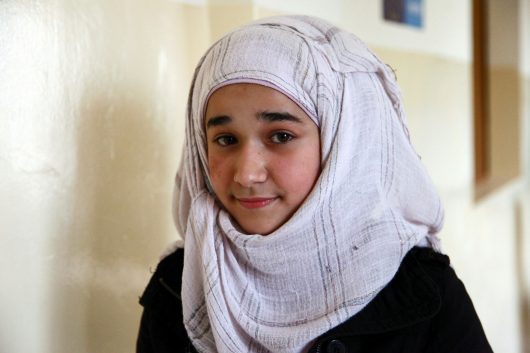
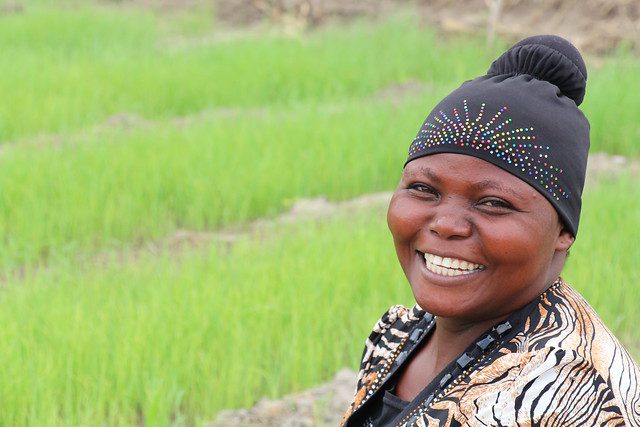
Those who qualify for humanitarian assistance in 2017 number at least 9.3 million—13 percent higher than last year and almost a third of its population. As Afghani people are displaced daily by the fighting between the Taliban and military groups, and thousands of refugees return from Pakistan and Iran, the government struggles to provide routine necessities for its people. A record of 8,397 civilians lost their lives due to the fighting in the first nine months of 2016, while another half a million people were displaced by last November. And so far, this trend is predicted to only grow.

But this wasn’t always the case. In fact, in 2014, it was believed that Afghanistan’s GDP would grow around 12 percent per year. This was prior to the international military force withdrawing from the country before it realized how fully Afghanistan’s economics depended on the foreign troops. Since 2002, foreign troops filled 800 bases, brought in hundreds of millions of dollars into their economy, and thus stood as Afghanistan’s single largest source of revenue. Their departure, then, was devastating. Annual GDP growth is now around one percent.

Afghan analyst Helena Malikyar wrote on the matter, “Projects attached to international aid – one of the largest sources of employment in the past decade – have for the most part shut down or placed in hibernation.”

The U.N.’s aid for Afghanistan, should it be received, will number 500 million dollars and will be given to the country’s 5.7 million most vulnerable population. Afghanistan currently carries malnutrition rates of about 15 percent in over a quarter of its provinces. Of the total 1.8 million people this affects, 1.3 million are children under the age of 5. Of the 9.3 million people in need of general aid, more than half are children. Not only facing malnutrition, the U.N. has reported abuse and exploitation, specifically through “forced marriage, sexual abuse and harmful child labor”.

While the U.N.’s aid for Afghanistan will assist a select group, it still will not be enough to end their plight. Until the Taliban’s insurgency ends and the economy is able to stand on its own, Afghanistan’s crisis must be watched carefully and tended to fervently.

– Brenna Yowell

Photo: Flickr

February 6, 2017
https://borgenproject.org/wp-content/uploads/borgen-project-logo.svg 0 0 Borgen Project https://borgenproject.org/wp-content/uploads/borgen-project-logo.svg Borgen Project2017-02-06 01:30:112024-06-11 02:48:26The United Nations Seeks Greater Aid for Afghanistan
Refugees, United Nations

Helping Refugees Worldwide: Three Simple Ways

Helping Refugees Worldwide
According to the U.N. High Commissioner for Refugees, humanity is facing its largest displacement crisis on record. Violence, persecution and regional instability have caused more than 65 million people to abandon their homes and seek refuge in other lands. These numbers are devastating, and they leave citizens of stable countries wondering what they can do as individuals in helping refugees worldwide.

The White House website states that the U.S. has been active alongside many countries offering sanctuary and assistance to refugees, providing shelter, medical care, and basic services “But the need remains great. Helping refugees isn’t just up to governments — every American can play a role, too.”

Here are three simple ways Americans can begin helping refugees worldwide:

  1. Make a donation.
    The U.N. Refugee Agency states that every donation it receives goes toward worldwide field operations. Currently, the organization is making an urgent appeal for donations that will go toward the crisis in Iraq. Fighting in Mosul and Northern Iraq has resulted in a humanitarian crisis. The website lists what each amount of money will accomplish. As little as $50 will provide five people with sleeping mats and keep them off the ground at night; $200 will provide emergency shelter for two whole families.The International Rescue Committee (IRC) is another organization that, for every dollar donated, spends 90 cents on programs and services that directly benefit refugees. This organization consistently receives high marks from charity watchdog organizations. When making a donation, research where the money will go. Decide what organization is doing an effective job in helping refugees; information about their finances should be available on their website.

    One might wonder how to support refugees on an ongoing basis. The IRC, for example, encourages monthly donations as a Rescue Partner. This steady support allows them to, “respond swiftly and effectively when conflict strikes, to rescue lives in the midst of chaos and to help fragile communities rebuild and move toward a more stable future.”

  2. Fundraise.
    One individual is only able to give so much financially. Another option to help refugees is to become a fundraising partner. By mobilizing others in the surrounding community, one person can have an even greater impact than would have been possible with a single wallet.The organization Help Refugees will launch its “Choose Love” campaign this month, a series of events designed to encourage empathy, promote awareness and expand the organization’s reach on the frontlines of this crisis. Help Refugees encourages people to raise money with t-shirts, bake sales, events and more.
  3. Keep asking questions.
    The displacement of 65 million people is devastating, but lives can be saved through the collaborative efforts of millions of individuals willing to help. By simply asking the question ‘What can I do to help refugees?’, you are the beginning of the solution.

    Continue searching for organizations fighting against silence in the face of tragedy. Have open conversations with people seeking to discover new ideas and viewpoints concerning how to help refugees.

Help Refugees says, “As a brutal winter approach, we need you now more than ever. This is still a crisis, but we are not powerless.”

– Rebecca Causey

Photo: Flickr

December 17, 2016
https://borgenproject.org/wp-content/uploads/borgen-project-logo.svg 0 0 Borgen Project https://borgenproject.org/wp-content/uploads/borgen-project-logo.svg Borgen Project2016-12-17 01:30:172024-12-13 17:56:21Helping Refugees Worldwide: Three Simple Ways
Global Poverty, Refugees, United Nations

Opening Doors: UN Secretary-General Advocates for Refugees

Advocates for Refugees
Last month, U.N. Secretary-General Ban Ki-moon appealed to world leaders to make a greater effort to become advocates for refugees. The secretary-general called helping refugees a “moral obligation.”

His comments came after the conclusion of the Sept. 19 U.N. Summit for Refugees and Migrants.

U.N. member states unanimously adopted the New York Declaration, which expresses the “political will” of world leaders to protect the rights and dignity of refugees, hence becoming advocates for refugees.

U.N. leaders urged world leaders to ensure all refugee children receive education within months of arrival in Europe. The declaration also called for an expansion of economic opportunities for refugees.

The declaration also petitioned leaders to support countries rescuing, receiving and hosting large numbers of refugees and migrants. Turkey, Greece, Germany and France have taken in large numbers of refugees, while other European nations and the U.S. have resisted relocation efforts.

Civil unrest and Islamic extremism in the Middle East drove 1.3 million from their homes, most of these people have found political asylum in Europe. However, asylum does not always entail adequate living conditions.

Around 60,000 Middle Eastern refugees are currently stranded in Greece awaiting processing and relocation in Europe. The refugees are held in a massive tent city under appalling inhumane conditions.

In France over 1,000 unaccompanied minors live in squatter camps in and around the coastal town of Calais. The camp, which is called “The Jungle” by locals, is home to thousands of refugees hoping for a better life in the United Kingdom.

The U.N. Summit for Refugees and Migrants addressed the question of refugee food security. Ki-moon urged leaders to make policy decisions which would empower immigrants to seek and hold employment. To become sustainable, migrants need to have access to land, banking services and freedom of movement.

World leaders at the U.N. summit did more than just craft a paper promise. Under the U.N. directive, more children will be able to attend school and get an education. More immigrants will be able to seek safe, sustainable employment. By making poverty alleviation a top priority, the U.N. has opened a door to opportunity for some of the world’s most vulnerable people.

– Peter Nilson

Photo: Flickr

November 28, 2016
https://borgenproject.org/wp-content/uploads/borgen-project-logo.svg 0 0 Borgen Project https://borgenproject.org/wp-content/uploads/borgen-project-logo.svg Borgen Project2016-11-28 01:30:002024-12-13 17:55:54Opening Doors: UN Secretary-General Advocates for Refugees
Global Poverty, Sustainable Development Goals, United Nations

Power to The People: Reaching Sustainable Development Goals

Power to The People: Reaching Sustainable Development GoalsSustainable development goals, also known as Transforming Our World: the 2030 Agenda for Sustainable Development, is comprised of 17 global goals that elucidates 169 targets. The goals were founded by the U.N., and are listed as follows:

  1. End global poverty
  2. Achieve food security, thereby ending world hunger
  3. Ensure healthcare for everyone
  4. Make education accessible to all
  5. Achieve gender equality
  6. Ensure availability to sanitary water for all
  7. Provide jobs and sustainable economic growth
  8. Build resilient infrastructure and foster innovation
  9. Make cities and other dense human settlements inclusive and safe
  10. Ensure sustainable consumption and production patterns
  11. Take urgent action to combat climate change by regulating emissions
  12. Conserve and use marine resources sustainably
  13. Switch to affordable and clean energy
  14. Reduce income inequalities
  15. Protect and conserve the biodiversity of terrestrial ecosystems
  16. Provide access to justice for all
  17. Strengthen global partnership

While it is important for the global community to focus on the macro-cosmic picture of tackling these issues, having local governments and citizens face these issues is equally vital. Beneficiaries are often the last group to be consulted about the efforts that are being implemented to help their lives. Problem solving that addresses the specific needs of different communities is so beneficial because it does not focus on one overarching idea, but rather the specific needs of the people within the community.

With the global community and local communities working simultaneously, there is a greater chance for more widespread empathetic progress being made in terms of achieving sustainable development goals worldwide. One of the largest problems is that those who have political power are not impoverished and those who are impoverished do not have political power.

Thus, poverty is often overlooked by those in seats of power. This starts with education. If education is made available to those people who are impoverished, then they are being given an effective say in their communities, and therefore some degree of power.

Eradication of global poverty will not happen unless we are able to give power over to the people who are impoverished and thereby have a more nuanced understanding of the situations that they themselves face. This empowers people in lower income communities to receive an education, making it possible for them to impart the change they want to see in their communities.

However, this is still a tandem effort. By supporting the Education for All Act, a bipartisan initiative that would advance basic education worldwide while protecting U.S. security interests, even those who are citizens of developed nations can help to empower individuals to reach sustainable development goals in developing nations to help themselves and their communities.

– Kayla Provencher

Photo: Flickr

November 10, 2016
https://borgenproject.org/wp-content/uploads/borgen-project-logo.svg 0 0 Borgen Project https://borgenproject.org/wp-content/uploads/borgen-project-logo.svg Borgen Project2016-11-10 07:53:112024-12-13 17:55:58Power to The People: Reaching Sustainable Development Goals
Global Poverty, United Nations

António Guterres Named U.N. Secretary-General

António Guterres, Former Head of UNHCR, Named New U.N. Secretary General
In early October, the 15 ambassadors that make up the U.N.’s Security Council were presented with the challenging decision of choosing a new secretary-general. The vote was characterized as the most important decision from the U.N. this year. In the end, António Guterres, the former socialist prime minister of Portugal, was nominated as the new U.N. secretary-general.

Guterres was favored for the position for many months leading up to the actual vote. He accepted the nomination from Lisbon after the Council’s decision and did so with “gratitude and humility.”

He will replace current Secretary-General Ban Ki-moon in January. Historically, the Security Council has been polarized in their decision-making, so the consensual conclusion to choose Guterres was met with his resounding agreement. Guterres described the decision as an “exemplary process of transparency and openness.”

The decision to choose António Guterres ignored the Council’s traditions of rotating the presidency based on region. The only region that hasn’t held the presidency is Eastern Europe, which is one reason why Danilo Turk, a former Slovenian president, and Irina Bokova, a Bulgarian director-general of the United Nations Educational, Scientific and Cultural Organization (UNESCO), finished closely behind Guterres in the vote.

The Council also ignored external pressures to elect a woman secretary-general, despite seven of the 13 candidates begin female. Well aware of this, Guterres has pledged to exercise gender equity as he moves forward with his new position.

After acting as the prime minister of Portugal from 1995 to 2002, Guterres was elected to serve as the head of the U.N.’s High Commission for Refugees. While serving in this position, Guterres repeatedly called for humanitarian action from countries with appropriate resources.

In particular, after U.N. agencies failed to meet funding goals that would provide humanitarian aid for displaced peoples in Jordan, Lebanon and Turkey, Guterres called for financial commitment from Western countries.

His experience leading a major U.N. institution was looked at as a huge strength in the voting process. He has promised to demonstrate “the humility that is needed to serve especially those that are most vulnerable.”

Guterres will have to face many difficult challenges as he moves forward with his new position of leadership, like maintaining and negotiating support from Russia and the U.S. and facing the impacts of the global refugee crisis.

Despite these inevitable challenges, the ambassadors of the Security Council are confident that Guterres will be able to act justly and level-headedly as the new U.N. secretary-general.

– Peyton Jacobsen

Photo: Flickr

November 10, 2016
https://borgenproject.org/wp-content/uploads/borgen-project-logo.svg 0 0 Borgen Project https://borgenproject.org/wp-content/uploads/borgen-project-logo.svg Borgen Project2016-11-10 05:29:282024-12-13 17:55:59António Guterres Named U.N. Secretary-General
United Nations, Water

Scientist Joan Rose: World Water Week’s Champion

Joan Rose: World Water Week's Champion
The 2016 World Water Week, attended by 3,100 people from more than 120 countries, was held in Stockholm, Sweden, where the theme was “Water for Sustainable Growth.” While this year’s World Water Week was primarily focused on water as it relates to the new Sustainable Development Goals (SDG) of the U.N. General Assembly and last year’s COP 21 climate agreement, many issues, such as pollution and sanitation, were raised.

The worldwide contamination of water is one of the greatest health threats of our time, as many experts believe that our oceans, rivers, lakes and wetlands are more polluted now than at any other time in history.

A recent report released by the United Nations Environment Program (UNEP) found that as many as 323 million people in Africa, Asia and Latin America are at risk of contracting infections from pathogen-ridden water. Apart from being a health issue, polluted water in these continents negatively affects food supplies, economies and inequality experienced by women, children and the poor.

Professor Joan Rose, a microbiologist and the Homer Nowlin Chair in Water Research at Michigan State University, is one of the foremost scientists working to end worldwide water pollution. At this year’s World Water Week, Rose won the 2016 Stockholm Water Prize, the greatest honor that an individual working in water research or development can receive.

Rose has dedicated most of her life to this field, working in countries such as Malawi, Kenya and Singapore, as well as numerous organizations including the World Health Organization, the International Water Association and the United Nations Educational, Scientific and Cultural Organization.

Throughout her career, Joan Rose has led research, set standards and educated the public about water pollution. While the issue may seem overwhelming, Rose believes that the future is bright, stating in an article published by the Guardian that, “There is more public support, more money, more political will to clean up water. We have more knowledge and more willingness to pay.”

– Liam Travers

Photo: Flickr

November 9, 2016
https://borgenproject.org/wp-content/uploads/borgen-project-logo.svg 0 0 Borgen Project https://borgenproject.org/wp-content/uploads/borgen-project-logo.svg Borgen Project2016-11-09 01:30:262024-12-13 17:55:47Scientist Joan Rose: World Water Week’s Champion
Page 19 of 35«‹1718192021›»

Get Smarter

  • Global Poverty 101
  • Global Poverty… The Good News
  • Global Poverty & U.S. Jobs
  • Global Poverty and National Security
  • Innovative Solutions to Poverty
  • Global Poverty & Aid FAQ’s
Search Search

Take Action

  • Call Congress
  • Email Congress
  • Donate
  • 30 Ways to Help
  • Volunteer Ops
  • Internships
  • Courses & Certificates
  • The Podcast
Borgen Project

“The Borgen Project is an incredible nonprofit organization that is addressing poverty and hunger and working towards ending them.”

-The Huffington Post

Inside The Borgen Project

  • Contact
  • About
  • Financials
  • President
  • Board of Directors
  • Board of Advisors

International Links

  • UK Email Parliament
  • UK Donate
  • Canada Email Parliament

Get Smarter

  • Global Poverty 101
  • Global Poverty… The Good News
  • Global Poverty & U.S. Jobs
  • Global Poverty and National Security
  • Innovative Solutions to Poverty
  • Global Poverty & Aid FAQ’s

Ways to Help

  • Call Congress
  • Email Congress
  • Donate
  • 30 Ways to Help
  • Volunteer Ops
  • Internships
  • Courses & Certificates
  • The Podcast
Scroll to top Scroll to top Scroll to top