• Link to X
  • Link to Facebook
  • Link to Instagram
  • Link to TikTok
  • Link to Youtube
  • About
    • About Us
      • President
      • Board of Directors
      • Board of Advisors
      • Financials
      • Our Methodology
      • Success Tracker
      • Contact
  • Act Now
    • 30 Ways to Help
      • Email Congress
      • Call Congress
      • Volunteer
      • Courses & Certificates
      • Be a Donor
    • Internships
      • In-Office Internships
      • Remote Internships
    • Legislation
      • Politics 101
  • The Blog
  • The Podcast
  • Magazine
  • Donate
  • Click to open the search input field Click to open the search input field Search
  • Menu Menu

Archive for category: Technology

Information and stories about technology news.

Global Poverty, Technology

Can Software Piracy Alleviate Poverty?

A new study from the Balkan Journal of Social Sciences suggests that software piracy can actually assist in relieving poverty. The implications of the study contribute to a broader conversation regarding barriers to access in tech-based fields. Specifically, for those who cannot afford to purchase expensive software, there are fewer opportunities to hone skills and find professional work.  On the other hand, access to software to help master coding or editing skills leads people to jobs or the ability to launch a business.

The Balkan Journal of Social Sciences Study

Co-authors, Mustafa Ünver and Jülide Yalçinkaya Koyuncu released the study, “Does Software Piracy Mitigate Poverty? “Evidence from Developing and Latin American Countries” earlier this year. The study examines Latin American and developing countries between the years 2003 and 2017. It compares rates of piracy with several poverty indicators. Additionally, Ünver and Yalçinkaya Koyuncu ultimately controlled for three possibly intervening variables. They took unemployment, health expenditure and human capital into account, and found that those variables do not affect the results of this study.

Significantly, in all their models for developing and Latin American countries, as piracy increased, poverty decreased. As Ünver and Yalçinkaya Koyuncu explain in their abstract, “usage of pirated software maintains its negative significant effect on poverty in all models for both developing and Latin America countries samples.”

Earlier Study in Africa

The Balkan Journal of Social Science’s study is not the only study to suggest this relationship. In a report published in 2012 in the SSRN Electronic Journal, Simplice Asongu finds a similar relationship in his study of African countries. Asongu’s study is the first to examine the effects of piracy on inequality in Africa. He finds that “software piracy is good for the poor as it has a positive income-redistributive effect.”

Interpretations of Findings

One explanation for these findings is that software piracy can act as a gateway to more profitable professional work. For those who cannot afford the often expensive fees to properly access much high-end software, pirated versions may provide an easy way for those in poverty to learn a new set of skills that they can then apply to the professional market.

Torrentfreak, a website dedicated to covering technological issues, suggests that there could be an alternative explanation to these findings. While Torrentfreak does recognize piracy as a career gateway as a viable theory, it also suggests that the relationship could also work in reverse. Essentially, as poverty decreases, people in the country have more access to pirated software and the technology needed to run it.

Ethical Considerations

How should ethics come into play with regard to the study findings? In reviewing the Balkan study results, Sovan Mandal points out in Good E Reader that while an increase in piracy may decrease poverty, promoting piracy, of course, may not be ethical.  or one thing, it hurts the original software providers by depriving them of legitimate earnings.  That, in turn, could lead to less innovation because developers would have less funding for research and development. Mandal postures that there will be an ongoing debate about the pros and cons of software piracy:  “…someone somewhere is downloading pirated versions of software or an e-book in an attempt to acquire the skills needed to break free from poverty. But how about those who use the same means to acquire skills meant for use in negative fields, like hacking, and such?”

Providing Access Without Using Pirated Software

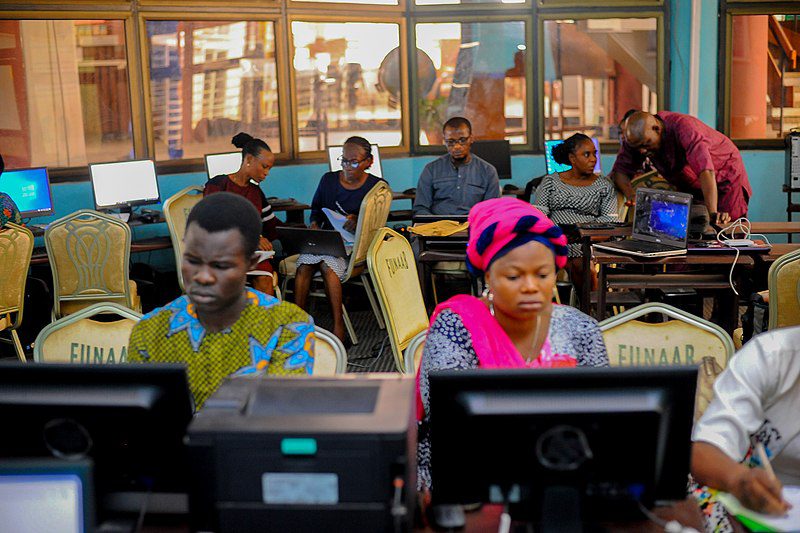
A win-win scenario could be to provide greater access to software that is not pirated.  That is what a non-profit out of Atlanta, Georgia is doing.  The City of Refuge earned a $5.4 million grant from the U.S. Department of Labor to provide free tech training in two high-poverty Atlanta neighborhoods. City of Refuge plans to train 280 people in four years. Its training will instruct participants to work in web development and cybersecurity. The project additionally has several corporate sponsors such as Cox Enterprises, Elavon, EY and UPS.

The City of Refuge will place graduates as web designers or software engineers with a starting salary of $55,000. Alternatively, graduates can choose to take a $36,000 paid internship at one of the corporate sponsors. Further, City of Refuge promises to actively work on placement for any intern who doesn’t get a job at the end of the internship.

Using Software Piracy Studies to Eradicate Poverty

Both the study released this year and Asongu’s 2012 study conclusively underline that access to software piracy can have an inverse effect on the rate of poverty. The City of Refuge demonstrates the ways to mobilize the findings of the studies. The combination of corporate support and government funding allows training so more people can enter the workforce and leave poverty. And while the City of Refuge is in the United States, similar collaborations between governments, non-profits and tech corporations could run in low- and middle-income nations throughout the globe.

– Eleanor Corbin
Photo: Flickr

September 6, 2022
https://borgenproject.org/wp-content/uploads/borgen-project-logo.svg 0 0 Naida Jahic https://borgenproject.org/wp-content/uploads/borgen-project-logo.svg Naida Jahic2022-09-06 01:30:082022-09-06 05:35:17Can Software Piracy Alleviate Poverty?
Global Poverty, Technology

Digitization in India

digitization-in-indiaWith the highest 10% of the population holding 57% of India’s national income as of 2021, India stands as one of the poorest and most unequal countries in the world. Governments and businesses remain in search of the most effective methods to lift Indians out of poverty. Recent research has explored the benefits of demonetization and digitization in India at the individual and government level.

India has come full swing in embracing the digital age, with Aadhaar – the national biometric digital identity program – covering 99.7% of the nation’s adult population as of December 2021. The COVID-19 pandemic has further strengthened the drive to go online, with an increase in sellers on almost all e-commerce platforms. Digitization in India will help the nation make strides in poverty reduction.

Digitization and Improving the Economy

According to McKinsey, “60 million to 65 million [jobs] could be created through the direct impact of productivity-boosting digital applications” by 2025. Furthermore, with more than 10 million businesses brought to a common digital platform through the 2013 Goods and Services Tax Network, digitization is incentivizing businesses to go online, thus, enhancing cooperation and streamlining India’s fragmented and informal marketplace. Outside the commercial world, digitizing sectors such as agriculture, education and health care can create up to $150 billion of incremental economic value by 2025 as it can raise output and save on costs and time.

Digitization and Improving Government Services

Not only can digitization help boost the economy and provide jobs to millions but it can also improve the government services essential to the positive well-being of citizens. To improve urban service deliveries in Andhra Pradesh, the government and World Bank designed AI platforms to monitor municipal services. By using drones and Geographic Information System mapping, the World Bank updated town plans and geo-tagged citizens’ issues with “online visibility” to enhance transparency and hold municipal engineers accountable for resolving issues within a certain time period.

By linking applications for piped water supply to AI, the project also provided new water connections to more than 200,000 homes in 110 municipalities between 2015 and 2019. In this same time period, “revenue from property taxes and water charges more than doubled,” enabling the government to collect sufficient resources for civil projects.

The Downside of Digitization

Despite its promise for socio-economic transformation, digitization has a long way to go in lifting all classes of Indians out of poverty. As access to digital services is still largely reserved for the upper class, those living in poverty remain excluded from the advantages of e-commerce. Therefore, in some ways, digitization may be entrenching poverty instead of reducing it. This problem proves even more serious for Indian women, only about a third of whom have internet access and rely on education as their primary form of social security in 2022.

Hope for the Future

While many Indians are yet to experience the benefits of digitization, Prime Minister Narendra Modi’s Digital India program, launched in 2015, centers around the internet as a utility for all citizens. The program’s goals include “universal digital literacy” and “easy access to a Common Service Centre” for all.

With more efficient government services and more Indians gaining access to the formal marketplace, digitization in India promises a future of reduced poverty.

– Imogen Scott
Photo: Flickr

August 20, 2022
https://borgenproject.org/wp-content/uploads/borgen-project-logo.svg 0 0 Kim Thelwell https://borgenproject.org/wp-content/uploads/borgen-project-logo.svg Kim Thelwell2022-08-20 07:30:312024-06-04 01:18:03Digitization in India
Global Poverty, Technology

Vision 2030: Poverty Eradication in Saudi Arabia

Poverty Eradication in Saudi Arabia
Vision 2030 is an ambitious Saudi government project to overhaul Saudi Arabia’s economy and society by the year 2030. Launched in 2016, its reforms include ambitious goals regarding poverty eradication in Saudi Arabia. Also and importantly, it hopes to transition Saudi Arabia from an oil-dependent economy to a diversified modern one. Together, the innovations in poverty eradication in Saudi Arabia and the transition to a more diversified economy should position Saudi Arabia as an economic leader in the Middle East. In fact, Vision 2030 has gained acclaim as a model for rapid modernization and innovative poverty eradication in middle-income and developing countries.

Renewable Energy Revolution

Two hallmarks of Saudi Arabia’s Vision 2030 are expanding job opportunities for young Saudis in non-oil sectors of the economy and reducing poverty by raising living standards. In 2016, the government announced its ambitious goal to acquire 50% of its energy from renewable energy by 2030. For this reason, it pledged a $400 billion investment to expand the renewable energy sector. In turn, this investment embraces new technologies that will expand economic opportunities for Saudi citizens in the renewable energy sector, and that leads to poverty eradication that can raise living standards in the country. The program will also reduce pollution and promote human health, important for poverty reduction. The Saudi move to renewable energy is also meant to curb Saudi carbon emissions that account for 4% of the total global output. 

Futuristic Commercial Hubs Could Make Saudi Arabia a Global Business Center

As part of Vision 2030, Saudi Arabia announced its intention to build Neom, a futuristic city in the northwest region of the country on the Red Sea coast. This $500 billion project positions Neom as a center for trade, investment, tourism and technology. The Neom project embodies the overarching Vision 2030 goals because renewable energy sources will power Noem entirely. Further, the project underscores the diversification policies of Vision 2030 because Noem will heavily on foreign investment to drive tourism and the use of Neom as a cargo hub.

Since the Saudi government launched Vision 2030 in 2016 foreign direct investment (FDI) in the country has skyrocketed from $5.321 billion to $17.625 billion as of Fall 2021. This increase in investment and trade is an indicator of modernization measures and accomplishments of Vision 2030.

Investments in Smart Technology to Drive Entrepreneurship

Saudi Arabia’s government pledged unprecedented levels of investment in developing the country’s technology sector. The hope is to become a knowledge-driven economy. The Saudi government pledged $6.4 billion for investments in smart technologies as part of Vision 2030 to make the country a center of the global technology industry. Part of this program has included a $1.2 billion investment in training 100,000 Saudi youths for careers in the smart technology sector. This will occur by improving digital skills including familiarity with AI, 5G and cybersecurity. For example, The Garage Start-Up District program encourages start-up companies and other entrepreneurs by providing grants, marketing and training support and full-service workspaces. By creating job opportunities for Saudis in a modern economy, these programs should reduce poverty rates for Saudis entering this emerging technology sector.

Smart Technologies to Promote Health Care Access

Just as much of Vision 2030 focuses heavily on the growth of the technology sector, the Saudi government also is using smart technology to promote quality health care access through mobile apps. One app called Sehha offers remote medical and preventative care. Launched in 2017, Sehha provided 2.1 million consultations by 2020.

Mawid, another health app, allowed 14.3 million Saudis to book 67 million medical appointments from 2018-2020. The Tabaud app was also one of the first of its kind in the world to provide its 3 million users with Bluetooth notifications of contact with someone who tested positive for COVID-19. This enabled users to quarantine and the government to effectively contact trace to contain outbreaks. This smart technology is particularly important for rural communities living further away from hospital infrastructure. These new innovations that safeguard human health boost the goal of eradicating poverty through having a labor force healthy enough to contribute to a modernizing economy.

Vision 2030 presents innovation in poverty eradication in Saudi Arabia while also striking a balance between development and environmental concerns. All of this is also important for reducing poverty by diversifying the economy and maintaining human health. If Saudi Arabia continues its ambitious economic reforms, it can present an appealing model for other middle-income and developing countries to replicate. Finally, modernization and poverty eradication would foster a more prosperous and stable world.

– John Zak
Photo: Flickr
July 2, 2022
https://borgenproject.org/wp-content/uploads/borgen-project-logo.svg 0 0 Jennifer Philipp https://borgenproject.org/wp-content/uploads/borgen-project-logo.svg Jennifer Philipp2022-07-02 01:30:572022-06-27 11:12:41Vision 2030: Poverty Eradication in Saudi Arabia
Global Poverty, Technology

M-PESA App in Kenya Alleviates Poverty

M-PESA App in Kenya
In 2007, Safaricom developed the M-PESA app in Kenya, Africa. The mobile money platform aims to increase financial inclusion by allowing the impoverished access to financial services without the need to visit a bank or have a bank account. The introduction of the M-PESA mobile money app has improved the economy in a nation with about 16% of the population surviving on less than $1.90 per day in 2021.

The M-PESA App

Accessibility is one of the benefits M-PESA offers. The app is accessible to both individuals and businesses and even those living in rural villages can easily access it as long as there is mobile connection coverage. Through the app, users can send and receive money, purchase airtime and pay bills, among other services. M-PESA also “facilitates the safe storage and transfer of money.”

A study conducted by an economics professor from Georgetown University and a colleague from MIT shows that 96% of the Kenyan population used the M-PESA app in Kenya in 2016. By 2021, the app had roughly 30 million users in Kenya alone. The M-PESA app expanded to six other African countries and served 50 million users across the African continent by September 2021, making it the largest fintech in Africa.

Benefits of the M-PESA App

M-PESA is able to improve a country’s financial outlook by reducing poverty. The app allows users to take control of their finances and increase consumption levels of goods and services. A research article, “The Long-Run Poverty and Gender Impacts of Mobile Money,” published in Science magazine in December 2016, indicates that over six years M-PESA “increased consumption levels,” which allowed about 186,000 Kenyan families (2% of Kenyan households) to rise out of poverty.

The researchers conducted a study from 2008 to 2014 to compare households with easy access to M-PESA agents to “those without such easy access to mobile money.” The result showed that households with easy access to M-PESA agents “fared better and received more remittances from a larger network of people.” Highlighting this, when Kenyan households endured a financial shock, “there was a 12[%] difference in per capita consumption between the two groups, with consumption rising for those households near to an M-PESA agent.”

In Kenya, about 25% of the $44 billion economy goes through M-PESA, according to a 2014 article by Mobile Transaction. Furthermore, by the end of 2013, more than 79,000 people received opportunities to work as M-PESA agents. By 2018, the World Bank noted more than 110,000 M-PESA agents in Kenya.

Mr. Mungai, who operates two M-PESA shops in Kenya, told the Mobile Transaction that the app had made his life much easier and provided him with a stable job. “M-PESA has changed my life; it helps me make savings. I don’t need to travel to and from the bank every now and then because I can now deposit and withdraw from my bank account using the M-PESA platform,” Mungai added.

Evolution of the M-PESA App

The functions of M-PESA have been evolving. In 2021, M-PESA Africa launched the M-PESA Super App, which allows users access to “services they need in a typical day including shopping, restaurants and food delivery, transport services, government services” and more, without the need to install several apps. By March 2022, more than 9 million individuals and 320,000 businesses had downloaded the M-PESA Super App.

In addition, M-PESA has grown from peer-to-peer money transfers to international payments. M-PESA has partnered with MoneyGram on International Money Transfer, allowing users in more than 90 countries to transfer money across borders. Now people are able to enjoy the services and updates of the app without a SIM card. M-PESA is also collaborating with PayPal, and soon, the mobile money app intends to expand further through partnerships with other global brands.

Looking Ahead

With the M-PESA app in Kenya, Kenyans can look to a brighter future and an improved economy through easy access to financial services and increased job opportunities. Overall, M-PESA increases financial inclusion, ensuring that the impoverished in developing countries in Africa have access to the resources and services to break the cycle of poverty. M-PESA will continue to bring innovations and enable individuals to make transactions more efficiently and securely.

– Jiaying Guo
Photo: Wikimedia Commons

June 8, 2022
https://borgenproject.org/wp-content/uploads/borgen-project-logo.svg 0 0 Kim Thelwell https://borgenproject.org/wp-content/uploads/borgen-project-logo.svg Kim Thelwell2022-06-08 07:30:072022-06-01 06:21:56M-PESA App in Kenya Alleviates Poverty
Global Poverty, Technology

How The Awareness Company Can Help Farmers

Helps Farmers
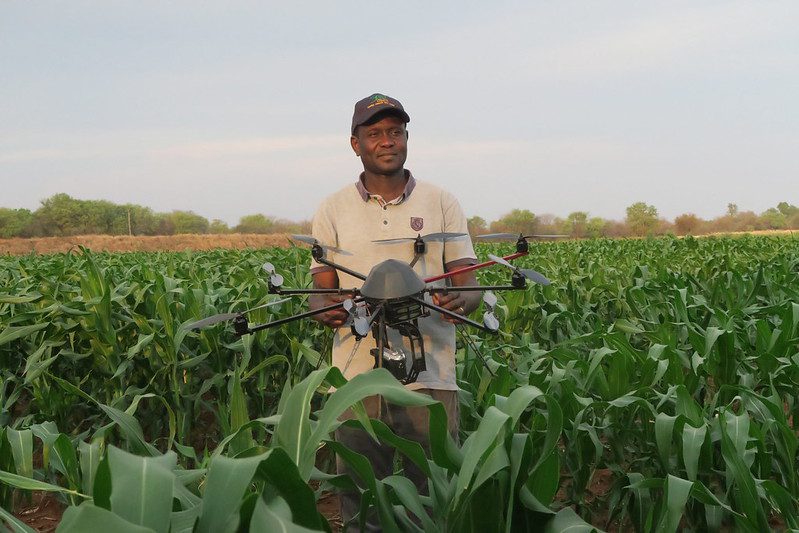
The Awareness Company develops information technology by using satellites, sensors, trackers, fusion engines and camera traps to improve and structure businesses globally. This technology can also help farmers be successful, subsequently improving food security and reducing food shortages globally.

What is Agritech?

Agritech is the use of technology while farming, most commonly to ensure proper growth and efficient profit for the farmers involved. People mostly use the umbrella term Agritech to refer to agriculture ranging from weather forecasting, photography by satellite, irrigation and heat and light control.

What is The Awareness Company?

The Awareness Company started in 2018 with co-founders Praiaash Ramadeen, Estelle Lubbe and Shazia Vawda in Johannesburg, South Africa. Upon its start, the Awareness Company produces HYDRA Intelligent Places, Smart Mining, Agriculture and Conservation for global use. Ecological employees and businesses can use the programs about local security, safety awareness, maintenance and conservation to inform and educate community members.

The Awareness Company has four projects they are working on with the help of technology to improve agriculture globally including FarmSecurity, FarmAwareness, AgriOne and AgriInsights. The programs give real-time data management about livestock location, water and soil analysis and insights for selling products that are otherwise unavailable for farmers working without Agritech. The technology can ensure a proper harvest and indicate if plants need more attention or focus.

How Agriculture and Technology Can Reduce Global Poverty

Technology can help improve food security and help farmers protect their land, animals and communities. The assistance of satellites, drones and automatic equipment can drastically change the crop yield and sustainability of a farm. The global use of this equipment will provide more food for low-income countries whose communities would benefit from the additional food without the hassle of possible future mistakes that could lead to the destruction of a farm. Reduced prices, higher crop productivity and worker safety are all important parts of building a safe and healthy environment that ensures the growth of a country regarding its food supply for citizens.

Food security is essential for stopping global poverty. With the help of technology, agriculture receives more jobs and a boost in the economy. As a result, fewer people will starve and food shortages both locally and globally will decrease. According to the USDA, positive impacts include poverty reduction, trade and export opportunities, global security and improved citizen health and health care. The help of technology can strengthen and prevent any future disasters that may arise. By alerting the farmer with the knowledge of the new technologies and introducing the machinery/software, the farmer will be able to accomplish more knowing what was unavailable before is now available for the enrichment of their work.

The Future of Agritech with The Awareness Company

The Awareness Company won Microsoft’s AgriChallenge, where Microsoft announced and invited different technology companies to show what the companies could do in August 2020. After the investment from Microsoft in December 2021, The Awareness Company’s Co-Founder and CEO Praiaash Ramadeen said “That’s why Microsoft’s support and investment in helping us as a local, homegrown business to grow and develop solutions that focus on solving real-world problems is so meaningful… we have already done in the agricultural space to promote sustainable agriculture and food security through intelligent data.”

The Awareness Company can help farmers find reliable solutions to arising problems globally through the use of technology. With 2 to 4 million small farmers in South Africa, the use of artificial intelligence can provide a helpful boost in the daily lives of both farmers and consumers.

– Kyle Swingle
Photo: Flickr

March 18, 2022
https://borgenproject.org/wp-content/uploads/borgen-project-logo.svg 0 0 Jennifer Philipp https://borgenproject.org/wp-content/uploads/borgen-project-logo.svg Jennifer Philipp2022-03-18 01:30:562024-05-30 22:25:50How The Awareness Company Can Help Farmers
Global Poverty, Technology

How Smart Cities in Latin America Alleviate Poverty

Smart Cities in Latin America
According to TWI, “a smart city uses information and communication technology (ICT) to improve operational efficiency, share information with the public and provide a better quality of government service and citizen welfare.” The primary purpose of a smart city is to improve the lives of its citizens by using innovative technology “to optimize city functions and promote economic growth.” According to the Inter-American Development Bank, “a Smart City is one that places people at the center of development,” highlighting the value of smart cities in addressing issues that impact a city’s most marginalized population. In particular, smart cities in Latin America have the potential to lift the region out of poverty.

Addressing Poverty with Information and Communication Technology

In Latin America, smart cities are gaining more traction as nations look for innovative ways to address poverty and improve the lives of their citizens. Across the region, developing nations are embracing information and communication technology to address environmental concerns, improve energy efficiency and provide people with essential resources such as running water.

Investment in smart city infrastructure allows for the opportunity “to build more reliable power grids or expand the Internet” to stimulate economic growth in low-income communities. In addition, technological advancements in public transportation have the potential to create an equitable and accessible city, providing people on the periphery the opportunity to access urban centers unlike ever before. More than half of the world’s population live in cities with a projected increase to 66% by 2050. As rural communities continue to seek economic opportunities in the urban landscape, it is more important than ever for cities to implement the people-centered model of smart cities.

4 Smart Cities in Latin America

  1. Santiago, Chile: According to IESE Business School, the Chilean city of Santiago “is the smartest city in Latin America,” with initiatives in “mobility, environmental control and citizen safety.” To prevent water wastage, the city has developed a sensor data collecting method in which parks and other public green spaces undergo irrigation based on the amount of moisture necessary. The city has also implemented an advanced electric transit system.
  2. La Paz, Bolivia: This Bolivian city overcame its geographic challenges by creating an extensive cable car system to serve the population living in the steep Andean hills rising 500 meters above the city center. The cable car system has now become the main mode of public transportation in the city, allowing residents on the outskirts access to the main areas of commerce and employment.
  3. Guadalajara, Mexico: Guadalajara is the first Mexican city to receive designation as a smart city. Through the city’s Digital Creative City (DCC) initiative, Guadalajara is revitalizing its city center by emphasizing historical and cultural preservation while relying on technology to improve the city’s infrastructure and accommodate its population growth. The city is also relying on various technologies, such as the Internet of Things (IoT) and a smart grid, to provide its citizens with clean water, efficient transportation and affordable electricity. The city relies on a participatory model to engage residents in the city planning process.
  4. Montería, Colombia: Montería is one of the first Colombian cities to establish a sustainable infrastructure plan aimed at tackling extreme weather patterns and emissions. It intends to reduce emissions by declaring city-wide car-free days and improving public mobility. The city is also home to an innovation lab, which focuses on developing digital technologies and training individuals to work with these technologies. Montería is also tackling public health issues through its e-health initiatives and is installing solar panels in its public schools.

Rising Smart Cities in Latin America Alleviate Poverty

Cities throughout Latin America are alleviating poverty by integrating smart technology into their frameworks. Urban areas that focus on creating smart and connected systems of living offer numerous benefits for their people, including improving the quality of life and ensuring the sustainable application of resources. With an urbanization rate of 80% in 2017, Latin America stands as the world’s most urbanized region, which means there is ample opportunity for smart city implementation.

– Jennifer Hendricks
Photo: Flickr

February 20, 2022
https://borgenproject.org/wp-content/uploads/borgen-project-logo.svg 0 0 Kim Thelwell https://borgenproject.org/wp-content/uploads/borgen-project-logo.svg Kim Thelwell2022-02-20 01:30:022022-02-10 02:03:54How Smart Cities in Latin America Alleviate Poverty
Global Poverty, Technology

Information Technology in South Sudan

Technology in South Sudan
South Sudan is a small country in northeastern Africa that achieved independence from Sudan in 2011 and is the world’s newest country. Following its independence, a civil war broke out between the two largest ethnic groups in South Sudan, the Dinka and Nuer tribes. Since the resolution of the conflict in 2018, South Sudan has been working hard to improve technology within its information and communication systems in order to revitalize its economy, advance foreign relations and expand networks to all citizens in South Sudan.

The Need for Technology

Information and communication technology (ICT) is a “diverse set of technological tools and resources used to communicate, and to create, disseminate, store, and manage information.” ICT includes any mechanism which facilitates communication and the transfer of information including the internet, computers, cellular devices, radio and television. From education and health care to business, the development of ICT has had a huge impact on nearly every aspect of modern society.

In South Sudan, nearly 80% of the population resides in rural areas with extremely limited access to the internet or mobile services. In 2021, only 8% of South Sudan had internet access, severely limiting the population’s access to the global market as well as valuable international and regional information.

Prior to COVID-19, South Sudan had been experiencing economic growth with a 9.5% GDP between 2019 and 2020. While much of the world transitioned to virtual methods of business and communication as the pandemic progressed, the lack of technology in South Sudan’s rural areas resulted in most of the country experiencing isolation from the world. Without sufficient ICT outside of South Sudan’s capital, Juba, rural populations lost access to even more valuable resources.

The Development of ICT in South Sudan

Despite the obstacles of the pandemic, the development of technology in South Sudan is still underway. In the past, the only way to access the internet was through very expensive satellite-based and mobile phone providers. However, the country has been working since 2018 to lower the price of communication by extending its fiber-optics infrastructure. As a land-locked nation, the quickest way for South Sudan to do that was to negotiate plans to tap into the existing fiber-optic networks of Uganda and Sudan.

Since its onset, the project has seen great success. Between 2020 and 2021, the percentage of internet users in South Sudan rose by 1.5%, and the number of people with mobile connections increased by 17%. In July 2021, President Salva Kir proudly inaugurated the first-ever South Sudanese-owned mobile telecom company, an operation that intends to expand ICT services to citizens in rural areas while simultaneously boosting the economy. 

Looking Ahead

While there is still room for progress, South Sudan continues to show resilience in the face of COVID-19. A large majority of the country still lacks access to ICT and each new broadband network connects those who experienced isolation. There is great potential for the continued development of information and communication technology in South Sudan in the future.

– Hannah Gage
Photo: Flickr

February 14, 2022
https://borgenproject.org/wp-content/uploads/borgen-project-logo.svg 0 0 Jennifer Philipp https://borgenproject.org/wp-content/uploads/borgen-project-logo.svg Jennifer Philipp2022-02-14 01:30:392024-06-10 03:16:10Information Technology in South Sudan
Global Poverty, Technology

Victory for Finland’s Tech Workers

Finland’s Tech Workers
The electronics and technology development industry is one of the largest employers of the Finnish workforce. Finland’s tech workers are fighting for higher wages and in December 2021, they got their guaranteed wage increase after threatening a strike.

The Importance of Finland’s Tech Industry

Finland’s tech industry is the country’s largest and most profitable export industry. It also has the biggest workforce for Finland too. The information and technology sector alone employs 6.8% of the workforce, making it the largest tech industry in the European Union. Directly and indirectly, up to 27% of Finland’s workers receive their income from the tech industry.

Finland’s tech industry also brings in €18 billion in taxes and earns €5 billion annually in investments for private and public technology companies. In 2020, the lowest amount that the tech industry earned, which was in the consulting sector, was €5 billion. The highest amount earned and contributed to the Finnish economy was €33 billion from the mechanical engineering sector.

Production and work in Finland’s tech industry slowed as a result of the COVID-19 pandemic and the unemployment rate in 2020 peaked at just above 11.2% but has since declined and dropped to 9%. As the tech workers have realized their importance, they have begun a fight for better wages to increase their pay and move away from being at risk of poverty.

A Finnish Tech Worker’s Need for Higher Wages

Finland’s tech industry workers earn around €3,900 per month. The starting salary is approximately €3,000 in the tech industry, with a slightly higher starting pay for those who graduate with a degree relating to the tech industry in any way. The lowest-paid industry workers in Finland are data professionals.

The cost of living has been rising dramatically in Finland since 2015. Making Finland an often expensive place to live, Finland’s tech workers feel their wages should increase as well to accommodate the rising costs. Finland’s tech industry employees felt their employers undervalued their work and as a result, felt underpaid. Salaries began to slowly rise in 2018, but the increase in wages has not kept pace with rising prices and the necessity for increased wages in 2021 and 2022. The need for higher salaries has caused Finland’s tech industry workers to formally organize a potential 10-day strike to force their employers to provide raises.

Impacts of the Workers’ Victory

At the end of 2021, more than 40,000 Finnish tech workers agreed to a formal strike if they were not assured of a “significant” increase in wages. The Finnish Industrial Union, which covers the tech industry workers, promised the strike and announced the withdrawal of the formal strike within a week.

According to Yle, the agreement reached includes an increase of 2% across the union for all workers. The union covers 90,000 workers at least. The increase must be agreed to by the end of November 2022 and swiftly enacted before 2023.

When Finland’s tech industry workers have fought for wage increases in the past, they have almost always won. Their victories have led workers in other business sectors to push for their wage increases with similar successes.

The service sector is one of the more underpaid sectors in Finland, with the industry workers earning between a third and a half of the average salary that workers in the tech industry do. The significant gap in wages and the victory for Finland’s tech industry workers could lead other groups to push for increased wages so that they can keep pace with rising prices and the costs of the standard of living. Finland’s tech industry workers started a movement for higher wages and more strikes are bound to take place in the coming months.

As long as more Finnish workers begin fighting for higher wages, the poverty and at-risk-of-poverty rates can drop. Increased wages across industries can increase general demand for services and goods and generate economic growth nationwide.

– Clara Mulvihill
Photo: Flickr

February 1, 2022
https://borgenproject.org/wp-content/uploads/borgen-project-logo.svg 0 0 Jennifer Philipp https://borgenproject.org/wp-content/uploads/borgen-project-logo.svg Jennifer Philipp2022-02-01 01:30:012024-05-30 22:25:41Victory for Finland’s Tech Workers
COVID-19, Education, Global Poverty, Technology

Computers Can Reduce Learning Poverty In LMICs

Computers Can Reduce Learning Poverty
The World Bank has predicted that 70% of children in low- and middle-income countries (LMICs) could face learning poverty because of COVID-19. Prior to the COVID-19 pandemic, many children without access to technology were already at an educational disadvantage. The surge in digital learning during COVID-19 made educational inequalities worse. Computers can reduce learning poverty when children in low-income communities receive them. Also, access to computers helps children develop the skills they need to succeed in school and beyond.

The “Homework Gap”

Even if students access technology during school, a lack of access outside of school hinders many. Students may be at an additional disadvantage if they live in areas without libraries, churches or other community organizations. These places often have computers that students use. Without a personal computer or a local public facility that offers one, students may have difficulties studying and completing homework and assignments.

Access to computers can reduce learning poverty by bridging the gap between students who can readily complete homework and those who cannot. As digital learning becomes increasingly popular, unequal access to digital learning tools becomes a more urgent problem to address.

COVID-19’s Devastation on Technological Learning Gaps

Technological learning gaps became more damaging during the COVID-19 pandemic. Some schools taught classes online. However, others had to shut down completely due to a lack of resources and funding. The World Bank found that some schools in LMICs have been closed for up to 250 days since the pandemic began. Some are unable to reopen. As a result, hundreds of millions of children around the world have lost a full year or more of schooling.

Girls in low-income communities are at a heightened disadvantage because school closures can perpetuate inequality and poverty. Access to computers can reduce learning poverty by giving children and teachers the opportunity to continue their courses online, especially amid the COVID-19 pandemic.

According to the World Bank, studies in Brazil, South Africa and India concur that a month of school closure translates into a month of learning loss. These learning losses then translate into a 10% lifetime earning loss for children in countries where school closures are long.

Camara Education

Camara Education is a charity that provides computers, learning programs and teacher training to schools in Africa. The charity, founded in Ireland in 2005, receives donations of computer equipment from companies that no longer need them. Camara works with specialist partners to wipe the technology and remarket it. This raises money for refurbished computers. Then, the charity sends the refurbished computers to schools in Africa. “Hubs” of Camara staff in Africa help schools install the computer equipment and download software. These hubs also train teachers on the technology. Overall, Camara has provided more than 3.7 million children with computer access since 2005.

Camara as a Model for Decreasing Learning Poverty

Access to computers can reduce learning poverty by closing the “homework gap.” Technology allows children to continue their education online until COVID-19 no longer poses health risks for in-person attendance. Organizations like Camara Education are working to help provide low-income students with the technological resources necessary to escape learning poverty. As the pandemic continues to close schools and forces educators to teach online, millions more children could benefit from access to digital learning resources.

– Cleo Hudson
Photo: Flickr

January 18, 2022
https://borgenproject.org/wp-content/uploads/borgen-project-logo.svg 0 0 Jennifer Philipp https://borgenproject.org/wp-content/uploads/borgen-project-logo.svg Jennifer Philipp2022-01-18 07:30:092022-03-22 07:51:49Computers Can Reduce Learning Poverty In LMICs
Development, Global Poverty, Technology, United Nations

Geospatial Mapping to Help End Poverty

Geospatial Mapping
Without the help of development agencies, peacekeepers may always have to participate in the never-ending cycle of peacekeeping. With 50% of the world’s poor projected to live in counties where violence casts its constant shadow, peacekeeping efforts can only stand to scale, but at what cost, and to what end? Fortunately, technological advancements, such as geospatial mapping, can allow peacekeepers to help expand options for development agencies that danger constantly repels.

Accessibility to Hostile Territory

Lack of security defines development agencies’ diminishing hopes of lasting presence, demanding the perpetual presence of peacekeepers. Development projects thus deal with constant mission suspensions, limits on the number of authorized personnel and the inability to conduct crucial work. A review of relief operations in Afghanistan, Somalia, South Sudan and Syria have recorded a multitude of resources in safer areas that are not in need due to reluctance to transgress into “red zones.”

Access limitations are not a characteristic of peacekeeping efforts for obvious reasons. Without development agencies in the arena of conflict, peacekeepers merely provide greater tolerance for conflict since development is not within their capacity, serving to encourage scaling conflict which exposes more poor people to violence.

The World Bank’s Geo-Enabling for Monitoring and Supervision Initiative (GEMS)

The World Bank’s Geo-Enabling for Monitoring and Supervision initiative (GEMS) facilitates for government agencies the ability to use tech innovations such as KoBoToolbox, an open-source data collection software that the Harvard Humanitarian Initiative developed, to amass data and analysis in states defined, at least in part, by conflict to improve monitoring and evaluation. Government representatives and partner organizations receive training to develop and mete out a platform for data collection that usually takes place during field visits and undergoes acquisition with the assistance of mobile devices and can cover any topic relevant to the goals of a project. Such a process helps developers monitor a project’s progress while maintaining safety.

How Geospatial Mapping Tools for Peacekeepers Works

Geospatial mapping tools for peacekeepers serve the relevant function of sharing categorized data regarding violence and insecurity to apprise development experts. These sorts of data collection efforts include identifying the number, type and intensity of violent occurrences in conflicted areas where peacekeepers often work.

Security maps in conjunction with poverty can provide development agencies the ability to develop access strategies for projects that specialize in the delivery of commodities to the poor who are in conflict. Because security administration is a public service, data that peacekeepers amass can help governments measure the degree of necessity regarding providing accountable and effective security services. Allowing peacekeepers of the U.N. the capability of strengthening their data-gathering capabilities aid the U.N. in determining its efficacy regarding deployments.

U.N. peacekeepers have made progress regarding the protection of civilians policy (POC) in recent years. Notwithstanding, peacekeepers will linger in a state of perpetual peacekeeping if systems that can monitor and evaluate progress fail to undergo initiation. These maps, which initiatives like GEMS are implementing, provide an advantage for peacemaking and development efforts.

– Mohamed Makalou
Photo: Rawpixel

January 1, 2022
https://borgenproject.org/wp-content/uploads/borgen-project-logo.svg 0 0 Jennifer Philipp https://borgenproject.org/wp-content/uploads/borgen-project-logo.svg Jennifer Philipp2022-01-01 01:30:412021-12-13 09:06:53Geospatial Mapping to Help End Poverty
Page 26 of 89«‹2425262728›»

Get Smarter

  • Global Poverty 101
  • Global Poverty… The Good News
  • Global Poverty & U.S. Jobs
  • Global Poverty and National Security
  • Innovative Solutions to Poverty
  • Global Poverty & Aid FAQ’s
Search Search

Take Action

  • Call Congress
  • Email Congress
  • Donate
  • 30 Ways to Help
  • Volunteer Ops
  • Internships
  • Courses & Certificates
  • The Podcast
Borgen Project

“The Borgen Project is an incredible nonprofit organization that is addressing poverty and hunger and working towards ending them.”

-The Huffington Post

Inside The Borgen Project

  • Contact
  • About
  • Financials
  • President
  • Board of Directors
  • Board of Advisors

International Links

  • UK Email Parliament
  • UK Donate
  • Canada Email Parliament

Get Smarter

  • Global Poverty 101
  • Global Poverty… The Good News
  • Global Poverty & U.S. Jobs
  • Global Poverty and National Security
  • Innovative Solutions to Poverty
  • Global Poverty & Aid FAQ’s

Ways to Help

  • Call Congress
  • Email Congress
  • Donate
  • 30 Ways to Help
  • Volunteer Ops
  • Internships
  • Courses & Certificates
  • The Podcast
Scroll to top Scroll to top Scroll to top