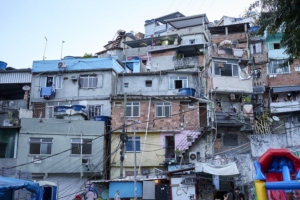
Food Insecurity in Urban Slums
Within the bustling landscapes of urban centers, where towering skyscrapers stand as symbols of progress, lies a stark reality that often goes unnoticed: the prevalence of food insecurity within urban slums. While cities may represent economic growth and technological advancements, they also encapsulate the struggles of marginalized populations residing in the shadows of affluence. This article aims to shed light on the complex issue of food insecurity in urban slums, exploring the challenges faced by these communities and examining innovative strategies aimed at providing sustenance and hope.

Food Insecurity in Urban Slums

  1. Limited Resources: Urban slums are characterized by densely populated areas with inadequate infrastructure and services. Access to essential resources, including nutritious food, remains a constant challenge for slum dwellers. Many families end up having to allocate a significant portion of their meager income to securing basic sustenance.
  2. High Food Prices: The cost of food within urban areas often surpasses the financial capacity of slum residents. The disparity between income and food prices leaves families with difficult choices, often sacrificing nutritional quality in favor of affordability.
  3. Inadequate Nutritional Intake: Food insecurity extends beyond the lack of quantity; it encompasses the lack of nutritional quality. Many urban slum residents struggle to access a diverse range of fresh and nutritious foods, leading to malnutrition and health issues, particularly among children.
  4. Unstable Livelihoods: Informal and irregular employment is common in urban slums. These unstable livelihoods lead to uncertain income streams, making it difficult to consistently secure food for families, further exacerbating food insecurity.

Innovative Strategies for Addressing Food Insecurity

  1. Urban Agriculture: Initiatives promoting urban agriculture empower slum communities to cultivate their own food. Rooftop gardens, community plots and vertical farming offer solutions for growing fresh produce within limited urban spaces, increasing food access and dietary diversity.
  2. Mobile Markets and Food Vans: Mobile markets and food vans can act as lifelines, bringing affordable and nutritious food directly to urban slums. These mobile units eliminate the need for residents to travel long distances, bridging the gap between food sources and consumers.
  3. Community Kitchens: Establishing communal kitchens or community-based food cooperatives can enable cost-effective bulk purchasing of ingredients and shared cooking facilities. This approach ensures that even those without cooking facilities can access cooked meals.
  4. Food Banks and Surplus Redistribution: Collaborations with food banks and surplus food redistribution programs redirect excess food from businesses and markets to vulnerable urban slum populations. This not only reduces food waste but also addresses food insecurity.
  5. Nutrition Education: Providing nutrition education workshops equips slum residents with essential knowledge on making nutritious choices with limited resources. Education empowers individuals to maximize the impact of the available food on their health.
  6. Social Safety Nets: Government-funded social safety net programs, such as conditional cash transfers or food vouchers, offer financial assistance to slum dwellers. These programs bridge the economic gap, allowing families to afford essential food items.

Conclusion

The specter of food insecurity looms large within urban slums, casting a shadow over the aspirations and dreams of countless individuals and families. Yet, innovative strategies can dispel the darkness. Urban agriculture, mobile markets, community kitchens, surplus redistribution, nutrition education and social safety nets offer rays of hope to those living in the shadows.

Food security is not only a basic human right but a fundamental building block for healthy lives and thriving communities. Collaborative efforts between local governments, non-profit organizations, businesses and empowered communities are crucial in implementing and sustaining these strategies. By collectively working towards addressing food insecurity, we can illuminate the path to a future where urban slum residents can step out of the shadows and into a life filled with sustenance, dignity and opportunity.

– Mihir Naik
Photo: Flickr

biggest slum in TokyoLocated within the bustling city of Tokyo is a hidden slum called Sanya — a place of hostels, displaced individuals and a dark past that lingers. During Japan’s Edo Period, many people flocked to Sanya to take advantage of the low costs of living, but when World War II hit, Sanya was converted into a makeshift town of tents for those displaced by bombings. Eventually, these tents were traded in for wooden hostels, which still remain today.
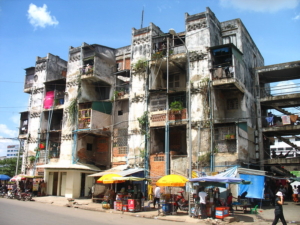
If one were to try to locate Sanya on a modern map, it would be impossible, having been erased 50 years ago in an attempt to keep the slum’s violence, homelessness and poverty from tainting the image of Tokyo. Sanya is not even located in a single district; it has been divided between the districts of Kiyokawa and Zutsumi. The biggest slum in Tokyo remains officially unnamed, but the name Sanya is kept alive by local residents.

The Population of Sanya

About 1,500 individuals of the Sanya population are low-income workers as well as retired laborers — many of whom were responsible for rebuilding Japan after World War II. Most of these people are between the ages of 60 and 70, and because of this, the once-active hostels are now being transformed into slow retirement homes. The elderly population is isolated in Tokyo’s hidden slum; poverty and age push them farther away from regular, Japanese society — outside of Sanya as well as internally. Because the average age in Sanya is so high, many of the people who reside here are only living off of pensions — contributing to the growing impoverished population in Sanya.

Gentrification Attempts Are Hurting Longtime Residents

To those who have lived in Sanya for decades and are part of the largely impoverished population in the district, gentrification is not the answer to financial problems, but the problem itself. Local authorities fight to resist commercial developments, but are no match for private landowners set on tearing down pre-existing buildings—such as hostels and other lodging facilities—to build more efficient housing. The retired, senior residents living off of mere pensions find this particularly frustrating because, with such little income, it would be incredibly difficult to relocate out of these hostels and start anew elsewhere. 

Hotels, apartments and stores are being built as tourism flourishes — completely changing Sanya’s ambiance. Many residents claim that Tokyo’s hidden slum is not only losing living opportunities for the impoverished due to gentrification but also its culture. Old and original stores are being torn down for new ones, and this irks many residents. 

Hope in the Forgotten District 

Japan is actively working to combat poverty and provide assistance to the impoverished through The Japan Fund for Poverty Reduction (JFPR). Currently, there are hundreds of millions being poured into vital components of the economy, such as health, transport, agriculture and technical assistance. This project was established in 2000 but is geared more toward the international population of Asian countries located near Japan. But Sanya, Tokyo’s hidden slum, has its own prominent business working to combat the struggles of the local impoverished. 

YUI Associates is a community building project based in Sanya and works to help the displaced population through a myriad of initiatives as well as bringing awareness to the issues within Sanya. This social enterprise additionally owns a couple of hotels for both travelers and Sanya residents struggling to get by. 

YUI Associates also owns the Sanya Cafe, a cafe determined to serve affordable items and provide retired laborers with meals in exchange for collected trash. This cafe was also named in an attempt to unofficially emphasize and declare that Sanya is the true name of this district — expunged or not. Not only does YUI Associates work firsthand with the impoverished population of Sanya, but workers also take to the streets on Mondays to clean the community and converse with residents and listen to any that want to talk. 

In a place nicknamed “The Lost District” and the “Place Where People Come to Disappear,” hope prevails in Sanya. Resilience is seen in the strong spirit of the residents, and with businesses like YUI Associates, Sanya improves constantly.

– Nina Argel
Photo: Unsplash

Cambodia has made remarkable strides in rebuilding its economy since the Khmer Rouge regime ended. However, amid this progress, the issue of urban poverty and slums, characterized by a highly concentrated urban area consisting of densely packed, dilapidated housing units, persists. Communities in Cambodia’s slums often suffer from impoverishment, overcrowding and unsanitary conditions. Residents in these slums endure dire living situations and poor infrastructure with limited access to resources and support. 

Populations Living in Slums

Data from the World Bank indicates a drastic decline in the population living in Cambodia’s slums, decreasing from 85% of the urban population in 2000 to 40% in 2020. Unfortunately, urban poverty and slums continue to pose significant economic and social challenges for the country.

Living Conditions in Slums 

The Taramana Magdalena Center, an organization supporting marginalized communities in major Cambodian cities, describes Phnom Penh’s slums as “overcrowded, non-isolated and flood-prone”, which increases the risk of spreading diseases and bacterial growth. Families in slums often encounter land insecurity, unsafe housing, limited access to clean water and sanitation and high unemployment. Unfortunately, impoverished living conditions can lead to detrimental problems, such as water-related diseases, alcohol, drug and gambling addiction and domestic violence.

Typically, Cambodia’s slums experience poor sanitation & hygiene as well as high rates of diarrhea and malnutrition. Lack of toilets, proper drainage, garbage disposal system and overcrowded dwellings are common problems exacerbating health issues in vulnerable communities. 

Drug Epidemic 

The severity of substance abuse in urban slums prompted the Cambodian government to launch a major drug crackdown. A 2023 article by the Khmer Times, “Cambodia’s slums, a haven for drug abuse,” highlights the increasingly rampant drug use and sales in slum dwellings, mostly populated by homeless people and beggars.

Children’s Health and Education 

As of today, The Taramana Magdalena Center determines that, due to the lack of access to vaccination and medical care, 37% of children under 5 in Cambodia face chronic malnutrition, which may reach 70% in some vulnerable areas, including slums. 

A 2018 UNICEF Cambodia study, “Child Protection and Education Needs for the Children and Adolescents of Phnom Penh’s Urban Poor Communities,” found that children and adolescents living in urban poor communities face multiple risks and deprivations due to urban poverty. Parents or caregivers often prioritize earning income and have limited time to care for their children adequately. Their lack of knowledge about proper childcare also contributes to the family’s diminished capacity to protect children from risks, provide education, ensure proper nutrition and access essential services.

Solutions and Initiatives

Since 1996, U.N.-Habitat has actively supported Cambodia’s national and provincial governments, city authorities and communities to improve living standards. The organization provides technical assistance in Cambodia, covering water and sanitation, affordable housing, disaster risk reduction, slum upgrading, poverty reduction and urban planning.

Habitat for Humanity Cambodia collaborates with various organizations and authorities to provide safe and affordable housing, water and sanitation interventions and welfare support. Their approach includes reducing disaster risk, influencing housing policies and regulations and promoting financial stability among populations living in Cambodia’s slums.

On the other hand, Planète Enfants & Développement (PE&D) focuses on family dynamics and social issues. The organization provides social workers to help communities in Phnom Penh’s slums address domestic violence, gender equality and parenting. Families are also taught about budgeting and financial management to tackle financial issues related to addiction and gambling. Moreover, savings and microcredit groups are established in each neighborhood, enabling residents to finance immediate needs and small housing projects.

A Look Ahead

Multilateral and community organizations continue to empower communities and improve living conditions for vulnerable urban populations in Cambodia’s slums. Through collaborative efforts, these organizations provide technical assistance, safe housing, water and sanitation interventions, address social issues and promote financial stability. These efforts aim to create positive and sustainable changes in the lives of those living in Cambodia’s slums.

Freya Ngo
Photo: Flickr

Slums of MumbaiDharavi, one of the slums of Mumbai, ranks alongside the world’s biggest slums. It is home to around 1 million people. The area is overcrowded, unhygienic and a generally difficult place to live. Concerns over living conditions, however, seem not to bother the residents. This area also happens to be home to several innovative individuals. From trade and business, just as complex as the real world, to cricket leagues and entertainment, the Mumbai slums are an intriguing place once there are no stereotypes. Here is a story of the slums of Mumbai: a world inside a world.

Trade and Business

Dharavi, Mumbai’s largest slum settlement, has a remarkably diverse and active business sector. Hundreds of thousands of people engage in this thriving world of trade from innovative producers to keen buyers. There are around 5,000 businesses that generate over $1 billion in total revenue. The successes of these businesses ensure a stable, healthy and happy lifestyle not just for slum residents, but for the poorer Indian community as a whole.

The innovative trade of recycling, specifically talented craftsmen turning recycled goods into all manner of things, plays a significant role in the slums thriving business sector. Dharavi recycles around 60% of Mumbai’s plastic waste and this business employs up to 12,000 people. From the manufacturing process to product making, the recycling business in Dharavi provides jobs and opportunities for people of all skill sets.

Other industries such as leather and textiles enable further trade both externally and within the borders of the slums. From goat and sheep skin, talented textile artists are able to make various leather products that find use locally and all the way up to high-end fashion, with global brands like Giorgio Armani utilizing the leather goods!

There are around 300 bakeries in Dharavi that mainly specialize in papadom making. This provides both stable incomes for the bakers (women can earn up to 100 rupees) and food for local residents. The benefit of providing food is particularly important as food can be scarce in the Mumbai slums, as reported by Global Citizen.

Art

Art acts as an important contributor to the cultural influence the slums have. Amazing street art is littered all around the slums of Mumbai that depict the realities of slum living. Sassoon Docks, for example, is a thriving street art center known for the artists’ collaboration with local fishermen, their environmental activism and their embodiment of Mumbai’s fishing traditions. Artwork like this has attracted tourists, writers and photographers from all over the world, enriching the slum’s cultural impact.

The Mumbai slums are also a musically gifted place. A Hip-Hop culture that has now been present for more than a decade has dominated the music scene in the slums of Mumbai. Hip-Hop artists such as Dopeadelicz and SlumGods have all had success in India’s rap scene. Artists like these have helped Indian Hip-Hop grow and expand the cultural influence of the Mumbai slum music scene.

Sport

Slum golf is a recent phenomenon that has taken hold in the slums of Mumbai. As the name suggests, it is golf that people play within the narrow alleys and pathways of the Mumbai slums. Golf would usually be an inaccessible, “rich” sport in the eyes of slum residents but with just clubs and a ball, golf enthusiasts are able to play the game they love.

Cricket, as with most of India, is an integral part of the day-to-day life of slum residents. And their love for the sport has created a vibrant culture of cricket. Many leagues within the slums have been set up, and this has given access to people with varying abilities to play. Street cricket (with improvised rules) is also massive in the slums. For instance, hitting out of the playing area means you are out as you have lost the ball!

Looking Ahead

Despite the challenging living conditions in Mumbai’s slums, a vibrant world exists within, filled with innovative businesses, captivating art and a passion for sports. The bustling trade sector generates significant revenue, employing thousands and benefiting the entire community. Art and music add cultural richness to the slums, attracting global attention. Additionally, slum residents find joy in unique sports like slum golf and cricket, fostering a sense of community and providing opportunities for all skill levels. The slums of Mumbai defy stereotypes, showcasing resilience, creativity and a spirit of determination.

– Max Steventon
Photo: Flickr

Chess in Slums
According to the World Bank, in 2019 Nigeria ranked second of the five countries with the highest number of extremely poor people. The 2022 Nigeria Multidimensional Poverty Index (MPI) survey noted that 63% of residents of Nigeria and 67.5% of the children are multidimensionally poor. Lack of education contributes to poverty likelihood, and increasing and improving education is a poverty-reduction strategy. Ironically, in Nigeria, playing chess in slums by out-of-school slum kids is also contributing to poverty reduction.

Effect of Poverty in Nigeria: Out-of-School Children Turned “Agberos”

According to 2020 United Nations Children’s Fund (UNICEF) estimates, about 10.5 million Nigerian five-to-14-year-old children were out-of-school. In 2022, that figure increased to 18.5 million due to a high rate of attacks from jihadists. About 60% of the out-of-school students are girls. In addition, only 35% of Nigerian children attend early childhood classes and only 61% of six-to-ll-year-olds regularly attend primary school classes.  This is despite the fact that primary school is free and compulsory in Nigeria.

Some of the out-of-school students live with their parents who do not enroll them so they can help them beg on the street. Others have run away from home or are orphans whose home is on the streets. Left to roam the streets, these children get involved in mischief that gets them into trouble in the community. They are usually called “agberos,” a Yoruba word for “thugs,” “hoodlums” or “street boys” who wind up increasing the level of criminal activities and insecurity in the country, which is an effect of poverty in Nigeria.

Chess in Slums: Keeping Out-of-School Students Off the Streets

Babatunde Onakoya founded Chess in Slums Africa (CISA) in 2018. This nonprofit organization’s goal is to teach underprivileged children how to play chess to keep them off the street. The founder uses the metaphor that just like the pawn can become a queen, underprivileged children can also become kings and queens.

For someone who lived in one of the Nigerian slums, Onakoya could relate to the out-of-school children. His parents could not afford his secondary school fees and so could not enroll in one. Luckily, a year later,  his mother got to work in a school for free in exchange for his education. By this time, he had learned to play chess by watching a barber and his opponent play several times. He got better at it, won tournaments, played in university and eventually became a professional chess tutor.

When Babatunde graduated from university and did not have a job, he and his chess friends began teaching chess to children in the community of Majidun in Lagos. The team began to teach children how to play chess, by visiting them on specific days, like Saturdays and Sundays in Majidun, to teach them basic rules, movements and tricks of the board game that people often perceive to be only for elites.

CISA Training and Success

CISA organizes its training into three phases: beginner,  intermediate and master. It monitors and evaluates students as they progress through the “chess-kid curriculum” that Onakoya chose because of its strength elsewhere in both teaching and competition coaching.

As Onakoya noted, “For me, education is more like the capacity for thought, for the children to be able to think independently. That is why we are giving them chess as a way for them to be educated in a different way, to learn how to think for themselves, not teach them what exactly to think but how to think for themselves, to come up with solutions for problems.”

In an interview with the International Olympic Committee (IOC), Onakoya said, “The process of learning chess and trying to understand some of these complex things builds mental capacity over time. These children don’t speak any English words but over time, you see them using words like prophylaxis whenever we do group analysis together. Research has proven this time and time again that chess is a perfect game for mental development.”

Chess in Slums Reach and Success

CISA now works in several communities in Nigeria and even has started a chess academy in Burkino Faso. With more than 1,000 children enrolled, 500 of them have reached the intermediate level. Students have earned more than $400,000 in 200 academic scholarships. Future goals include enrolling 5,000 students, raising a million dollars to sponsor $1,000 a student to attend school and establishing programs across Africa.

– Oluwagbohunmi Bajela
Photo: Wikipedia Commons

Poverty in DelhiIndia is one of the fastest-growing economies, with a population of more than 1.2 billion people, 30.7 million of whom live in the capital city of Delhi. People frequently view Delhi as an exceptionally wealthy area due to its abundance of posh communities like Vasant Vihar, Jor Bagh and Green Park. However, within India, in its own capital city, people are battling to survive without bare necessities. In Delhi, impoverished people are isolated from the rich. Opulent retail centers and cafés surround slums and some slums are wedged between rich neighborhoods. Poverty in Delhi, concealed in the cracks of luxury, is vastly different from the overall picture of the city as a whole.

Delhi’s Dichotomy

Delhi is one of India’s most economically prosperous cities with an estimated GDP of approximately $293.6 billion. The typical Delhi resident “earns three times more than the average Indian.” Within one of the most affluent communities in Delhi, Vasant Vihar, however, is Kusumpur Pahari, a quagmire of poverty and home to 10,000 slums. Its inhabitants cram themselves into close quarters, deprived of the necessary elements of a stable life. Only miles away is Delhi’s biggest shopping mall and its 102-meter-high civic center. This lopsided situation leaves slum residents working tirelessly to survive as servants to the rich residents of Vasant Vihar. Poverty in Delhi is visible within the city’s slums.

Delhi’s Slums: Kusumpur Pahari and Madanpur Khadar

Kusumpur Pahari is home to mostly migrants from “UP, Bihar, Orissa and Assam.” Slum-dwellers labor as drivers, gardeners and housekeepers for their wealthy neighbors. Kusumpur Pahari residents often live in one-room shacks that have no running water. However, circumstances have substantially advanced in the previous decade as a result of hard work by a women’s association. In 2016, there was no flowing water in Kusumpur Pahari, but owing to the efforts of the women ‘s association, a truck now brings freshwater to the neighborhood every several days.

Madanpur Khadar is another slum in the suburbs of Delhi. With narrow streets and a sewage line that runs right through it, these slums’ residents suffer.  In 2000, the government chose it as the area for relocating vast numbers of slum families from other locations of the city. The bulk of the people that live in Madanpur Khadar collect and sell rags. Inhabitants suffer from polluted drinking water and sanitation issues. Though they experience less than desirable conditions, NGOs have taken notice of this area. Madanpur Khadar’s women and HIV-affected dwellers are receiving help from these organizations, as reported by So City. Additionally, the slum is now on the map after 15 female residents collaborated with local nonprofit organizations in 2018 to help their community benefit from increased internet visibility of their location.

Sangam Vihar, Kathputli Colony and Seemapuri Slum

Sangam Vihar is a slum community that houses people moving from surrounding states, primarily Uttar Pradesh and Bihar, according to So City. It has no freshwater access and a lack of community toilets, which leads to exposed defecation, producing sanitary concerns in the area. Poverty in Delhi and water shortages have transformed Sangam Vihar into a refuge for thieves and brought rise to gangs whose members are willing to murder for water. Fights and killings are commonplace in Sangam Vihar, where water is limited.

Kathputli Colony is the most interesting slum in Delhi with illusionists, puppet masters and many different types of entertainers living in the area, according to So City. People recognize Kathputli Colony for its colorful buildings and roads bustling with street performers. Due to the prevalence of poverty in Delhi, India tries to hide its slums. However, whenever it wants to demonstrate its cultural prowess, India showcases this particular slum. Though a sluggish source of money and transformation, slum walk tours through Kathputli Colony appear to be creating more financial opportunities for the dwellers. Slum walk tours are helping to fund a school and provide the residents with a quality of better life.

Seemapuri slum is home to around “800 of the locality’s 1,700-odd residents.” The slum-dwellers battle to secure basic sanitation, water and electricity because the area is an unofficial community that is cut off from the city’s essential utilities. According to So City, Seemapuri serves as an example of poverty in Delhi with exposed sewers where women fetch contaminated drinking water and reside in mud dwellings where it is normal for seven to eight people to occupy only one small room.

Addressing the Problems of the Slums

Dr. Kiran Martin, the founder of the Asha India organization, is a well-known name in the domain of poverty reduction. Asha’s programs aid more than 700,000 people in more than 91 Delhi slum colonies. Martin’s efforts have earned her the Padma Shri, one of the country’s highest civilian honors. The Asha India organization dedicates its time to reducing poverty in Delhi, particularly within the slums. It aims to empower residents, provide better health care, increase educational opportunities and make environmental improvements. In 2018, the organization celebrated its 30th birthday and continues to push toward its goals today.

With the ongoing efforts of organizations, hope is on the horizon for the divide between the wealthy and the impoverished in Delhi to one day come to a close.

– Tiffany Lewallyn
Photo: Flickr

3D printed homesAn important part of fighting global poverty is providing people a safe place to live. 3D printed homes offers a new solution, as this new method allows for fast and cheap mass-production of affordable housing.

What is the Current Demand for Affordable Housing?

Before the pandemic, approximately 2% of the world’s population was classified as homeless. In addition, over 20% of the world’s population lacked adequate housing. Demographic trends point to an acceleration in population growth worldwide, coupled with the decline of average household size, the global need for affordable housing is increasing rapidly.

The UN estimates—with ‘medium growth’—the world’s population will reach over 11 billion people by the end of this century. Furthermore, environmental instances have displaced millions of people around the world, make it harder to live in some places. The need for affordable housing is clear, however, new 3D printing homes could be the answer to producing quality affordable housing around the world.

What does 3D Printed Housing Offer?

Compared to traditional housing methods, 3D printing is faster and cheaper. Moreover, 3D printing offers environmental benefits. By limiting construction and waste the method is carbon neutral or even negative. With millions of people living in poorly constructed homes made with scrap metal and dirt floors, 3D printed homes promise a safer and better-quality living environment. Living in slum housing can not only make it harder to succeed in school or at work, but the dangerous living conditions can present physical health risks.

3D printed homes are made to last. 3D printing creates a hybrid concrete mortar that hardens while printing. As a result, the tool can mass-produce ‘housing kits’ with the structures needed to build a home.

Current 3D Printing Examples

In the city of Chennai, India, the country is seeing its first 3D printed homes thanks to NGO Tvasta. “Traditional construction is tedious and time-consuming. People are increasingly getting left out as affordability is limited, or settling for low-quality homes,” said Adithya Jain, the company’s CEO. They built the first house in five days. Additionally, they used 30% less of the budget than planned and produced less environmental waste in the process.

In El Salvador, an American company ICON has successfully replaced slums with 3D-printed housing. They have designed a 350-square foot home which was assembled in approximately two days. “Something that sounds like science fiction is real… This is meant to be long-term sustainable housing,” said Jason Ballard the co-founder of ICON.

3D Printing’s Promising Future

As the demand for affordable housing continues to increase, there will be a need to invest in technology that allows us to keep up with the demand, giving everyone the opportunity to live in safe and quality housing. 3D printed homes have the potential to help end global poverty and the worldwide housing crisis.

– Alex Muckenfuss
Photo: Flickr

lunik IXAn uncomfortable reality is that there are many children in the world who do not have essentials such as food, water, electricity and a safe, sheltered home. This is the reality for the people living in Lunik IX in Slovakia.
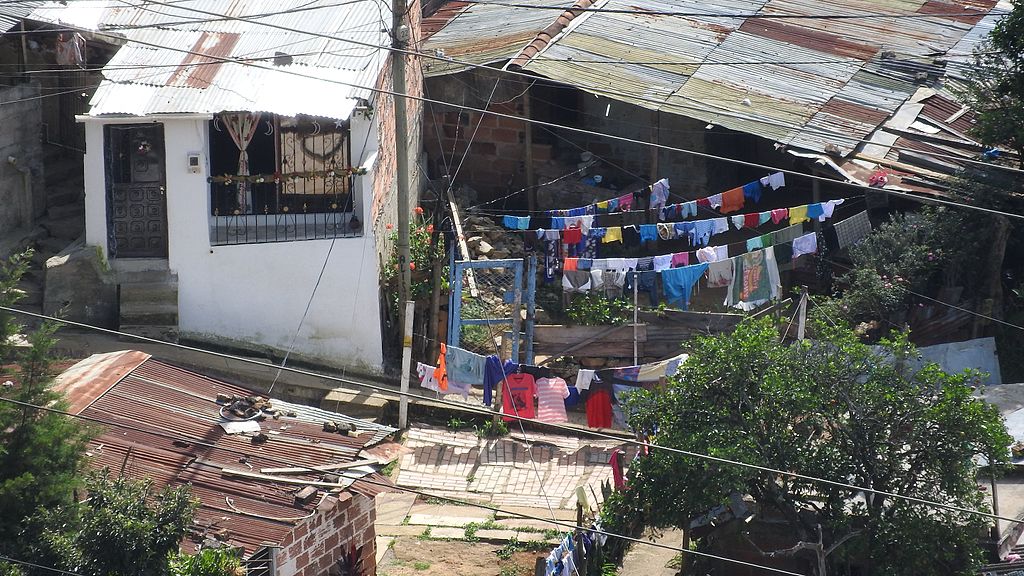
Roma People in Lunik IX

There a several reasons why Lunik IX is an area that is neglected and overlooked by Slovakia. One is due to the large population of Roma people, a minority group unfairly discriminated against and long labeled as a reason for many problems in the country. The slum mostly consists of Roma people who lack the very things they need to rise out of poverty. The Roma population’s 97% unemployment rate is the biggest reason for poverty in the area. Many try to get jobs but are denied them purely based on their ethnicity.

This, as a result, heavily impacts children in Lunik IX. Their parents cannot provide for them, forcing them to live in a rundown area where there is little to no electricity and basic needs go unfulfilled. There is also little opportunity for them to break the cycle of poverty. All these issues have made the area a seemingly hopeless place for many of the children who live there.

Recreational Developments in Lunik IX

In the past few years, significant progress has been made in Lunik IX to improve living conditions for people. For one, there have been a lot of projects built purely for the purpose of giving children safe spaces to play in instead of playing in garbage and rubble. A gym, ping pong tables, a playground and a park have all been built, giving the residents safe recreational spaces. While these seem like small solutions to big problems, these spaces allow kids to be kids. The children of Lunik IX do not live typical childhoods and these projects allow them to engage in children’s play activities.

Other Key Developments in Lunik IX

Three important new developments in the area are the implementation of regular garbage disposal, the establishment of clean drinking water facilities and new construction projects. Lunik IX has been long plagued with poorly disposed of trash and a regular garbage disposal system eliminates this problem entirely. This alone can improve the health of people tenfold, as many of the diseases they face arise from unsanitary living conditions.

Clean drinking water is a necessity and it is something that Lunik IX lacks. There are plans for the reconstruction of water pipes with a prepaid system, which will ensure nobody accumulates debt from water payments.

Newer construction efforts are on track to solve the decay of many buildings and the lack of employment opportunities. Many of the newer buildings can be worked by residents, allowing them to have jobs they have previously been denied based on ethnicity.

Despite Lunik IX’s reputation as on of Europe’s worst slums, efforts are being made to change this and improve living conditions for the people.

– Remy Desai-Patel
Photo: Flickr

Slum Reform in ColombiaIn Colombia, guerrilla wars that started in 1964 displaced thousands of people. The result was that many settled into slums. One of these slums, Comuna 13, lies in the city of Medellín, Colombia. During the next 40 years, the population in Medellín grew from 350,000 to 3 million, vastly decreasing the available living space. Poverty emerged in the cramped quarters of the Comuna 13 slum. Unfortunately, the cycle only continued due to a lack of transportation, public services and education. Poverty paved the way for drug cartels to emerge, but Medellín had committed to change. Below are three ways in which Medellín has reformed its slums, becoming an example of slum reform in Colombia and Latin America:

3 Ways Medellín Reformed Its Slums

  1. Transportation. Medellín created transportation in the slums to make life easier. Comuna 13 sits on the side of a hill and therefore, previously, many residents had to climb the equivalent of 28 stories to reach their homes. As a solution, Medellín invested $7 million in an escalator which provides a five-minute ride. This makes transportation to the main city much easier. In 2004, the installation of cable cars reduced a two-hour commute from the slums to the city, to a 45-minute commute. Today, 20,000 people use the cable cars (which end next to the subway station) per day.
  2. Promoting Education and Discouraging Drug Activity. Medellín installed community resources as part of its slum reform to promote education and discourage drug cartels. With education, people can get higher-paying jobs and break the cycle of poverty. But when people live in poverty, drug cartels try to recruit them with the promise of money and security. To address this, Medellín constructed art galleries, libraries (with free computer use), auditoriums and community centers, in 2007. These are easily accessible thanks to the installation of cable cars. Education, a key factor of slum reform in Colombia, can break the cycle of poverty by helping those in the slums obtain higher-paying jobs.
  3. Hiring. Medellín also hired residents for projects to create slum reform. One key example was the installation of paved paths, vegetable gardens and drainage canals. These projects beautified Comuna 13 and also gave back to the community in other ways. For instance, 2,500 previously unemployed people worked on the projects, earned money and created a better space to live in.

A Model for Success

Medellín is an example of successful slum reform in Colombia. The property prices of homes in the slums have risen and tourism has surged as a result of the new transportation and beautification measures. Also, as the former murder capital of the world, Medellín’s key goal was to reduce homicide. By 2012, in just eight short years, the murder rate reduced 50% to 0.05%. For comparison, this figure is less than New Orleans’s at 0.075% murder rate. Medellín is an example for many other communities around the world. In Latin America, for example, more than 80% of the population lives in cities and as the population grows, space per person reduces. This translates into growing slums. With the help of innovative ideas such as those from Medellín — communities can reform their slums and help improve the lives of those living in poverty.

Seona Maskara
Photo: Wikimedia

Sub-Saharan African SlumsSub-Saharan Africa is experiencing a housing crisis. While around one billion people live in slums around the globe, 200 million of those live in sub-Saharan African slums. This number represents “61.7% of the region’s urban population,” making sub-Saharan Africa the highest in the world for urban poverty.

Sub-Saharan African Slums and Urban Poverty

Singumbe Muyeba, assistant professor of African Studies at the University of Denver, spoke with The Borgen Project about development intervention and sub-Saharan African slums. Muyeba’s expertise in these areas stems from his academic work but also from his work for the United Nations’ High Commission for Refugees and Development Program.

According to Muyeba, sub-Saharan African slums began when African countries gained independence from colonialist rule from the 1960s through the ‘80s. Since colonialists always reserved major cities for themselves, Africans everywhere migrated from rural to urban areas after independence. However, that meant infant governments had to keep up with increasing urban populations. They were unable to do so due to the skyrocketing rates of urbanization.

With housing rapidly diminishing as Africans moved into cities, they began settling onto common land, eventually creating the sprawling slums that still exist today. Even now, the sub-Saharan African urban population is annually growing at 4%. A projection from the U.N. reveals that “the world’s 10 fastest growing cities, between 2018 and 2035, will all be in Africa.” In addition, there is a backlog of 51 million housing units in Africa. The region’s supply of housing is “about nine years behind current demand,” according to Muyeba.

Slum Upgrading Programs

The World Bank has funded slum upgrading programs to combat rising urban poverty in sub-Saharan Africa. These programs assigned property rights and provided access to services in hopes to empower slum residents with their own land. However, as Muyeba explained, these programs were largely “self-help” models. The World Bank simply gave impoverished individuals property rights and no means to build their own housing.

Since “about 97% to 99% of people in sub-Saharan Africa do not have access to formal financing” that allows them to build or buy a home, people haphazardly build their own informal housing or remain in slums. Formal and sustainable housing only accounts for 10% of all urban African housing. While handing out free titles and property rights looks good on paper, this “slum upgrading” has not improved slums.

Ongoing Problems in Slums

While sub-Saharan Africa housing conditions improved by 11% from 2000-2015,  this improvement was “twice as likely in the wealthiest households” and “80% more likely among more educated households.” The reality is that 80-90% of Africans work in the informal sector, and the majority of people living in sub-Saharan African cities live in slums. Therefore, this housing improvement did not occur in the slums, which many people cannot escape.

George Compound, a slum in Lusaka, Zambia, serves as a perfect example of a poorly executed upgrade program. It is a major slum with 400,000 inhabitants, but it does not have adequate running water. The water it does have from makeshift wells is contaminated with nearby ground toilets.

In Muyeba’s opinion, government involvement is necessary to fix the African housing crisis. While he is not against privatization, he believes the neoliberal model is not working to improve sub-Saharan African slums.

Can Governments Fix the Housing Crisis?

However, even if African governments want to get involved in building housing, they cannot. This is because of the World Bank’s international economic rulings on aid and upgrade programs. “The system is set up in such a way that the World Bank advocates for less involvement of the government following the Structural Adjustment Programs implemented in the 80s and 90s,” stated Muyeba.

In order to receive aid through the World Bank’s structural adjustment programs, governments often have to delegate building to the private sector. However, the private sector cannot make a real profit from low-income housing because so many Africans and slum-dwellers are part of the informal sector. People in poverty cannot get mortgages because they lack access to credit or insurance. This prevents the private sector from serving poor Africans.

Muyeba firmly believes “there are wins everywhere” if governments (with the help of communities and the private sector) build housing. The construction sector can benefit from large-scale projects, while infrastructure creates jobs. Individuals in slums can focus their attention on making income rather than worrying about basic housing needs.

Muyeba offered Kenya as an example of combined state, private and community partnerships to combat urban poverty. Currently, the country has implemented its own kind of slum upgrading program in which the government builds housing and guarantees mortgages.

Organizations Helping People in Sub-Saharan African Slums

Outside organizations and NGOs are actively working to help housing poverty in sub-Saharan African slums. Habitat for Humanity completed a six-year program in 2018 called “Building Assets, Unlocking Access.” This program worked in Uganda and Kenya to offer technical help and “develop housing microfinance products and services.” Habitat for Humanity’s approach allowed Africans to progressively build their own housing, access small-scale loans and set up small payments.

More than 42,000 individuals accessed microfinance loans through the program, which impacted more than 210,000 people in total. In addition, 32.9% of loan recipients built entire houses for themselves and their families.

A report from the project found that recipients also upgraded their housing with improved roofing, walls, sanitation and electricity. Additionally, the program caused trickle-down effects in health. Fewer people reported common ailments like “sore throats, shortness of breath, itchy eyes, blocked noses, vomiting and rashes” due to healthier housing. The most improved group was children under six.

Hopefully, all African cities struggling with urban poverty can create domestic housing projects or find new, inventive ways to help the housing crisis. All in all, the solution to sub-Saharan African slums is housing. According to Muyeba, “It’s a no brainer.”

Grace Ganz
Photo: Flickr