• Link to X
  • Link to Facebook
  • Link to Instagram
  • Link to TikTok
  • Link to Youtube
  • About
    • About Us
      • President
      • Board of Directors
      • Board of Advisors
      • Financials
      • Our Methodology
      • Success Tracker
      • Contact
  • Act Now
    • 30 Ways to Help
      • Email Congress
      • Call Congress
      • Volunteer
      • Courses & Certificates
      • Be a Donor
    • Internships
      • In-Office Internships
      • Remote Internships
    • Legislation
      • Politics 101
  • The Blog
  • The Podcast
  • Magazine
  • Donate
  • Click to open the search input field Click to open the search input field Search
  • Menu Menu

Archive for category: Global Poverty

Key articles and information on global poverty.

Children, Development, Education, Global Poverty, Health

Impact of COVID-19 on Poverty in Malaysia

Impact of COVID-19 on Poverty in MalaysiaMalaysia saw its first confirmed case of COVID-19 on January 24, 2020. The Malaysian government implemented the Movement Control Order (MCO or PKP) around two months later in response. This mandate restricted travel, work, assembly and established quarantine measures jeopardizing the financial integrity of Malaysian households. Here is some information about the impact of COVID-19 on poverty in Malaysia as well as the country as a whole.

The World on Pause

For fully vaccinated individuals, the MCO ended in November 2021. However, under the mandate, conditional and variable ordinances ultimately played a part in the impact of COVID-19 on poverty in Malaysia.

Working in multiple phases, the MCO developed into the Conditional Movement Control Order (CMCO/PKPB), Recovery Movement Control Order (RMCO/PKPP) and the National Recovery Plan (NRP/PPN). These restrictions prevented movement between states, travel to and from Malaysia and mass gatherings in addition to the closure of schools, government and private premises except those considered essential. Those who violated the MCO were at risk of receiving fines or facing jail time.

Hurting Those Already Struggling the Most

Three-quarters of the Malaysian population live in urban areas, with the majority of individuals falling into the 15-64 age group. A four-part research study that UNICEF and UNFPA conducted titled “Families on the Edge” found that a typical Malaysian household has an average of 5.5 members.

The head of these households are mostly married Malay males around 46 years old with low educational attainment. These workers face a high risk of unemployment, pay cuts or other stresses to household income as they were in jeopardy before the pandemic.

Reports have indicated that a 5% increase in employment occurred between March 2020 and June 2021. Despite the rise, a third of those employed before the crisis experienced work disruptions and 27% faced income reduction.

The World Bank found that around 65% of jobs in Malaysia cannot occur remotely even after modifying them so that they were in an online format. This is because approximately 51% of jobs require close physical proximity. With the MCO restrictions, these jobs were most vulnerable with one-fourth of heads of households experiencing unemployment during this time.

The Impact of COVID-19 on Food and Education

The impact of COVID-19 on poverty in Malaysia consequently affected access to food and quality of education. With little to no income, households spent around 84% less on education and 4% less on food between December 2019 and June 2020. While expenditure on food reduced, approximately 30% reduced food intake itself to cope with financial difficulties.

While employees adjusted to remote working, children needed to transition to online learning. Two-fifths of children do not have access to the required equipment (such as a computer) or internet connection to resume their education.

Closures have also prevented children from impoverished families from accessing meals provided at school-distributed supplemental food programs. This food insecurity pushed households to adopt cheaper and less healthy diets, further threatening the country’s child malnutrition crisis.

A Citizen’s Surrender

Some low-income residents resorted to waving white flags from their flats during the government-mandated lockdown to express the financial stress they were experiencing. This Bendera Putih, or “White Flag” movement emerged to help families ask for assistance. The white cloth outside their homes would encourage others to donate food.

In response, three computer science students from Multimedia University Cyberjaya urgently developed and released the “Sambal SOS” app within the same month the White Flag Movement gained traction. More than 7,000 users registered on the site just two days after its launch.

Here, users could digitally and anonymously report that they needed help. They then could connect with other users ready and able to provide aid.

An Economic Recovery Plan

Prime minister Tan Sri Muhyiddin Yassin announced the Pelan Jana Semula Ekonomi Negara (PENJANA), also known as the Economic Recovery Plan, in June of 2020. This stimulus package totaled RM35 billion (more than $7 billion) allocated to 40 initiatives organized into “three key thrusts:”

  • Empower People
  • Propel Businesses
  • Stimulate the Economy

Some initiatives to empower people included a wage subsidy program, social protection for the gig economy workforce and the internet for education and productivity. PENJANA funded entrepreneurship financing to propel businesses while supporting small enterprises through e-commerce and tourism financing. Initiatives to stimulate the economy included a campaign to buy Malaysian products and financial relief for those working in the agriculture/food sector.

Although poverty rates are still higher than before the COVID-19 pandemic, poverty levels have decreased by 16% between May 2020 and March 2021. Government assistance increased overall average household income since 2019, including disabled-headed households.

Households rely on savings, government and Zakat assistance for financial support as the labor market recovers. While PENJANA has proven to help boost the economy temporarily, many families still do not receive registered business-related aid and do not have social protection or insurance. The impact of COVID-19 on poverty in Malaysia emphasized that social protection assistance still needs to improve its scope of coverage to help the urban poor rebuild post-crisis.

– Aishah French
Photo: Flickr

August 29, 2022
https://borgenproject.org/wp-content/uploads/borgen-project-logo.svg 0 0 Jennifer Philipp https://borgenproject.org/wp-content/uploads/borgen-project-logo.svg Jennifer Philipp2022-08-29 07:30:472024-06-06 01:11:43Impact of COVID-19 on Poverty in Malaysia
Children, Development, Global Poverty, Health

Life After Escape for North Korean Defectors 

North Korean defectorsNorth Korea ranks among the poorest countries on Earth, with an absolute poverty rate estimated at 60% as of 2020. As a result, more than 30,000 people have made the harrowing journey to escape from the country to seek refuge in South Korea. Many choose to escape as a last resort, feeling that they are facing a choice between certain death and possible survival. The oppressive nature of the North Korean regime and the risk of starvation as a result of food shortages are the most cited reasons given by defectors who made the decision to escape from the North. No matter their reasons for fleeing, the trek from the North to the South is a daunting experience for North Korean defectors, even after they have successfully escaped.

The Escape

North Koreans have two options for managing escape from the country. Defectors can attempt to cross through the long, northern border with China, patrolled by both Chinese and Korean military. Once in China, escapees face the fact that it is illegal for Chinese citizens to assist North Korean defectors. Managing to covertly make it out of China and secure refuge in South Korea can therefore be extremely challenging.

However, the other option is notorious for its difficulty and risk—attempting to cross the Demilitarized Zone between North and South Korea. This is the most heavily guarded and fortified border on Earth, with guards patrolling both sides 24/7, barbed-wire fences, minefields, sensors and a 19-meter-thick concrete wall. The crossing has been even more impossible Since Kim Jung-Un closed the border completely in 2020 to stem the flow of COVID-19, according to CNN.

Therefore, the majority of defectors flee North across the Chinese border. However, no matter which route defectors choose to take, they risk life and limb in pursuit of a better life. The journey is extremely risky.

Arrival in a New World

For those who make it to the South, the struggle is unfortunately not over. North Korea has been insulated from the world and its political and technological progress for more than 50 years. The complete isolation from modernity that North Korean citizens face, in conjunction with distorted propaganda about the outside world, leads to confusion and overwhelm for those who make it out.

North Korean defectors describe bewilderment at things like brightly colored street signs, CNN reports. They have never used a cell phone, utilized public transportation, or had a bank card. The bits and bobs of advanced capitalism and democracy are completely alien to those who escape. As such, the relief they experience upon making it across the border lasts short for many, who realize they still have much to overcome.

However, the South Korean government provides comprehensive integration services for arriving refugees. “Hanawon” and is a three-month resettlement and training school, according to BBC. The program teaches refugees how to use an ATM, ride a bus and use a computer. They receive instructions on democracy and citizenship and advise on how to secure a job. Essentially, they also receive training to adapt to their community.

Afterward, the program provides refugees with a public housing unit, a housing subsidy, settlement benefits and an assigned police officer to check in on them every now and then. Beyond that, they are on their own, BBC reports.

Unexpected Struggles

Once left to fend for themselves, many refugees find that the things they learned in the classroom are inadequate or non-transferrable to the new world around them.

The difficulty and overwhelm can get to be so much that a significant fraction of refugees, a staggering 18.5%, report regretting making the journey to the South at all. They cite cultural differences, isolation, and economic problems as the cause.

This feeling of difference and isolation is largely the result of discrimination toward North Koreans. Identified by their accents, they are actively passed up on job opportunities and are treated with suspicion and contempt.  One defector described their treatment as akin to that of “cigarette ashes thrown away on the street,” The Conversation reports.

Further, refugees have almost universally experienced extreme trauma through their ordeals. Nine out of 10 refugees arrive with PTSD. However, counseling services through Hanawon are limited and need improvement, according to the BBC.

Mental health issues— exacerbated by feelings of isolation and lack of belonging— can blossom in these populations if left unaddressed.

The Fight for Change

Koreans are not content to allow discrimination and a lack of mental health care to fester among these extremely vulnerable refugees. Saejowi is a nonprofit in South Korea that is working to supplement the services of Hanawon and make the transition into the South more successful and painless for refugees.

Saejowi addresses mental health barriers by training and licensing escaped North Koreans to become counselors for their fellow refugees. To date, it has produced more than 220 licensed counselors and is working to expand its impact, according to its website.

Saejowi does not stop there. It also works to reduce cultural barriers and discrimination between North and South Koreans by sponsoring cultural exchange programs, including festivals, plays and potlucks.

Through these vital services, Saejowi is continuing to improve the lives of North Korean defectors that were able to make a miraculous escape from devastating poverty.

– Grace Ramsey
Photo: Flickr

August 29, 2022
https://borgenproject.org/wp-content/uploads/borgen-project-logo.svg 0 0 Jennifer Philipp https://borgenproject.org/wp-content/uploads/borgen-project-logo.svg Jennifer Philipp2022-08-29 01:30:402022-08-26 03:15:14Life After Escape for North Korean Defectors 
Global Poverty

The European Anti-Poverty Network Tackles Poverty in Europe

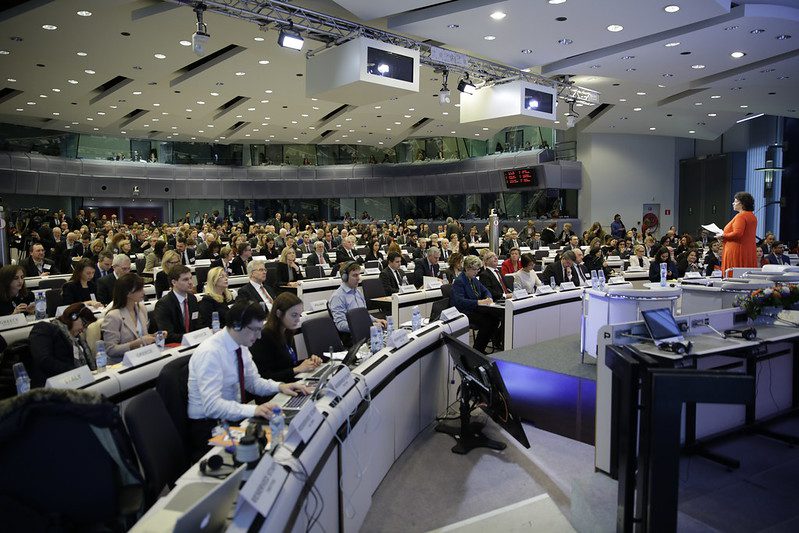
European Anti-Poverty NetworkIn 2019, 92.4 million people in the European Union were at risk of poverty or social exclusion, around 21.1% of the EU’s entire population. With such a high number of Europeans in poverty, the European Anti-Poverty Network (EAPN) remains dedicated to its mission to eradicate poverty and prevent social exclusion.

Origin of the European Anti-Poverty Network

Established in 1990, the European Anti-Poverty Network is the largest European network of national, regional and local organizations aimed at pulverizing poverty in Europe. The EAPN consists of 32 national networks within the 27 EU member states in addition to Serbia, Norway, Iceland, North Macedonia and the United Kingdom.

The EAPN has organized many activities to combat poverty, from education and training to lobbying and research. The membership of the European Anti-Poverty Network seeks to turn the fight against poverty into a priority for the European Union and foster improved coordination in anti-poverty policies between nations.

Poverty in the European Union

From 2012 to 2017, 10 million fewer people were at risk of poverty or social exclusion in the European Union, but poverty reduction was not shared equally in the EU. The strength of different welfare systems within European countries varies significantly, contributing to sizably different poverty rates on the continent. The average EU nation reduced the risk of poverty by 34%, while the best welfare system reduced poverty by 57% and the worst by only 16%.

Countries with the highest poverty rates in 2019 were Spain (25.3%), Lithuania (26.3%), Italy (27.3%, 2018 data), Latvia (27.3%), Greece (30.0%), Romania (31.2%) and Bulgaria (32.5%). The nations with the lowest poverty rates in Europe were Austria (16.9%), the Netherlands (16.5%), Slovakia (16.4%), Denmark (16.3%), Finland (15.6%), Slovenia (14.4%) and Czechia (12.5%), according to Eurostat.

Poverty disproportionately affects specific demographics in Europe, especially the disabled. In 2017, 30.1% of people with disabilities in the EU were at risk of poverty or social exclusion, 9.1% more than those without disabilities, according to the European Commission. As a result of these inequities, the European Anti-Poverty Network publishes specific sections dedicated to reducing poverty for people with disabilities, as well as for elders and women.

The EAPN Takes Action

The European Anti-Poverty Network acts against poverty through designated segments of the organization. The EAPN’s General Assembly advises the political and strategic direction, while its Executive Committee (EXCO) and Bureau focus on enforcing this pathway. The EU Inclusion Strategies Group (EU ISG) carries out policy work to fight against poverty.

Together, the EU ISG and EXCO invite the 32 anti-poverty national network members of the EAPN and representatives from the 13 member European organizations, holding two-day meetings three times a year to advise future direction and strategy in the fight against poverty.

In addition to these conferences on poverty, the EAPN publishes press releases, synthesis reports and policy recommendations to monitor current efforts to eradicate poverty and guide future steps. The EAPN’s most notable publications include the Country Reports, Annual Growth Survey, Country Specific Recommendations and the National Reform Programmes.

EAPN’s Poverty Watch Reports capture the findings on poverty in many European nations, outlining the notable trends affecting poverty, examples of poverty-eradication successes and evidence-based recommendations to alleviate poverty.

In addition to monitoring poverty through publications, the EAPN actively lobbies representatives in Brussels and national governments. This effort allows the European Anti-Poverty Network to spread its knowledge surrounding poverty into effective policies to counteract destitution. By engaging with policymakers through face-to-face discussions and written exchanges, the EAPN actively brings poverty to the forefront of the European Union’s agenda.

Successes

As a result of the EAPN’s work to raise awareness of poverty, Europe continues to make strides against poverty. In 2010, the EAPN helped the year become designated as the European Year for Combating Poverty and Social Exclusion. Other successes have been more on the legislative front, with the EAPN contributing to several new articles in EU Treaties. For instance, the Amsterdam Treaty adopted Articles 13, 136 and 137 (all anti-poverty-related legislation) due to, in part, the contribution of the EAPN, according to its website.

As the EAPN refuses to be a bystander in the fight against poverty, millions of Europeans have a faithful ally. The European Anti-Poverty Network recognizes the time to end poverty is now and through its publications and lobbying, the EAPN can help bring this positive future closer.

– Michael Cardamone
Photo: Flickr

August 29, 2022
https://borgenproject.org/wp-content/uploads/borgen-project-logo.svg 0 0 Naida Jahic https://borgenproject.org/wp-content/uploads/borgen-project-logo.svg Naida Jahic2022-08-29 01:30:282022-08-26 03:49:15The European Anti-Poverty Network Tackles Poverty in Europe
Global Poverty

Turkey’s Conditional Cash Transfer for Education Program

Conditional Cash TransferIn 2003, the Turkish government enacted a Conditional Cash Transfer for Education (CCTE) Program that included bi-monthly cash transfers that beneficiaries receive with the stipulation that the family’s children have at least an 80% attendance rate in school. However, the Turkish Government has modified its educational program in order to address a wide array of issues throughout multiple decades. For example, the Turkish Government expanded the Cash Transfer Program for Education to include refugees as beneficiaries after the Syrian Refugee Crisis. Turkey utilized these transfer payments to combat the low schooling rates of Syrian refugees living in Turkey, with only 60% of Syrian refugee children attending school. By utilizing cash-based transfer payments, the Turkish government has incentivized education among groups that are traditionally most at risk to drop out.

Original Enactment

The Turkish government originally enacted the Conditional Cash Transfer for Education Program in order to assist “vulnerable families living in Turkey.” The average beneficiary in 2003 received payments per-child in Turkish Lira that are equal to approximately $48 in 2022. Although the original program did not change overall dropout rates, it was successful in increasing school enrollment.

Refugee Adaptation

In 2017, the program expanded to alleviate growing concerns regarding the safety and health care of refugees in Turkey, of which the vast majority are Syrian-born. As a result of EU, Norwegian and U.S. aid, UNICEF helped Turkey expand its CCTE program to include over 695,000 refugee children attending school in Turkey. Currently, 3.7 million Syrian refugees reside in Turkey, 98% of them living outside the camps.

Child Protection Component

On top of cash transfers, the enhanced version of CCTE includes a “child protection component,” according to the American Institutes for Research (AIR) report. This should provide outreach support teams to families that have children at risk of dropping out or becoming chronically absent. AIR reports found that Turkish provinces with outreach support teams experienced higher rates of school attendance from 2017-2020. However, there were many areas in which outreach support teams were also understaffed and under-resourced.

COVID-19 Education Cash Transfer

During the COVID-19 pandemic, the CCTE not only stayed operational, but also enhanced its programs with additional COVID-related funding. EU funding during COVID-19 has expanded the program to include single payments enacted to help offset pandemic related costs. EU provided €4.5 million to the CCTE budget, with one-time payments given to over half a million beneficiaries, according to Global Compact on Refugees.

Similar Programs Elsewhere

Strategies utilized in Turkey’s CCTE method of cash transfer payments have been utilized in other areas of the world with equally successful outcomes. For example, Brazil’s Bolsa Família program is a cash transfer program in which beneficiaries are required to attend school and receive regular health check-ups. Originally enacted in 2003, the Brazilian government adopted the Bolsa Família program in order to ensure that pandemic school closures do not cause school dropout and child labor rates to rise.

Program Effects

The CCTE assisted in funding education for almost 1 million refugee children in Turkey. Outreach social worker teams have assisted over 100,000 children in order to ensure that they stay in school and any get care that they might need, according to Global Compact on Refugees. However, the CCTE is completely funded by external support in the form of international aid. Although the Turkish education system has successfully educated almost a million refugee children, the future of CCTE and many programs like it rely on aid from the international community.

– Salvatore Brancato
Photo: Flickr

August 28, 2022
https://borgenproject.org/wp-content/uploads/borgen-project-logo.svg 0 0 Jennifer Philipp https://borgenproject.org/wp-content/uploads/borgen-project-logo.svg Jennifer Philipp2022-08-28 07:30:522022-08-28 10:09:41Turkey’s Conditional Cash Transfer for Education Program
Global Poverty

Ireland’s Poverty Reduction

from-the-troubles-to-recession-to-rapid-growth-irelands-poverty-reductionIreland’s poverty reduction has been impressive, coming from the times of the political and religious troubles of 30 years ago. In 1987, at a poverty line of $5.50 a day, poverty in Ireland was at 3.7%, but in the 21st century, the poverty rate has never been above 1.5%. However, as with the U.S., the recession of 2008 greatly affected the Irish economy. Following the recession, the consistent poverty rate was still 2.5% higher in 2017 than it was in 2008. At the national poverty line, the World Bank suggested the poverty level was at 13.9% in 2019. To make matters worse, 25% of those living in poverty currently are children.

GDP

In 2021 Ireland’s GDP per capita growth rate was 16%. This measurement can be misleading. Despite Ireland having one of the highest GDP per capita in the world, it still faces the issue of poverty. The GDP per capita figure is distorted due to over 1,500 multinational corps being located here and the small population size. As GDP per capita is a measurement of average income across a whole population, extremely rich individuals or companies and small populations can easily distort it.

Despite this, the presence of these large pharmaceuticals and tech firms also have some benefits for Ireland. For example, Apple provides 6,000 jobs in Ireland alone. This proves to be a major contributor to the economy, which in turn provides the government with more funding.

The Irish government reinvests this back into public services. For example, during the pandemic homelessness decreased, dropping below 9,000 for the first time since 2017. On top of this, it is estimated that without Ireland’s welfare system a huge four in every ten of the population would be in poverty. If the country reduces child poverty, this could continue at an even greater rate, as Social Justice Ireland advocates for.

Impact of the Recession

The recession hit Ireland in 2008, resulting in a housing market crash similar to the U.S. This was followed by an economic depression in Ireland in 2009- with GNP decreasing by 12% in the first quarter of that year. The housing crisis also affected many other industries as the population lost confidence in the economy. Unemployment increased by almost 8% between 2008 and 2012.

However, Ireland appears to be crawling out of this “lost decade” of economic turmoil with reduced unemployment, homelessness and high levels of growth. But there are still lasting effects of poverty that Ireland still hasn’t addressed.

Social Justice Ireland outlines the serious problem of in-work poverty in Ireland. In-work poverty was at 6.2% in 2020 and has not shown any signs of decreasing over recent years. COVID-19 appears to have affected these lowest earners as well- with income tax receipts only decreasing by 1% in 2020. Social Justice Ireland believes the country needs to do more in achieving governmental targets, implement more policies to support the ‘working poor’ and provide more support for the poor such as greater enforcement of a wide living wage.

Focus Ireland

Focus Ireland is a prime example of the foundations that helped to foster Ireland’s development post-recession. The organization supports homeless people in Ireland. In 2020, it successfully helped 1,829 households stay out of homelessness or helped them to move to a secure home. Projects like this are helping to contribute to Ireland’s reducing level of homelessness.

Ireland’s poverty reduction is succeeding as it stands, but more help needs to be provided for a large number of working poor and children in poverty.

–Reuben Cochrane
Photo: Flickr

August 28, 2022
https://borgenproject.org/wp-content/uploads/borgen-project-logo.svg 0 0 Jennifer Philipp https://borgenproject.org/wp-content/uploads/borgen-project-logo.svg Jennifer Philipp2022-08-28 01:30:512024-12-13 18:02:44Ireland’s Poverty Reduction
Global Poverty

Umra Omar and Health care in Kenya

Health care in KenyaIn the coastal waters of Kenya, one leader serves as a role model in creating healthier, safer communities. Umra Omar grew up on Pate Island in Kenya where she returned after attending college in the United States. She envisioned a community where people have access to health care in Kenya and the ability to obtain available life-saving treatments.

Current Health Care in Kenya

Kenya is comprised of a series of coastal islands, which, in conjunction with remote villages spread throughout the country, make it difficult for many Kenyans to access quality health care services.

Kenya’s new constitution, created in 2010, includes an emphasis on improved health care for all Kenyan citizens. Since the implementation of this constitution, the government set new goals, including the achievement of Universal Health Coverage (UHC). This resolution refers to the ability to retain health care services without economic barriers.

Recent objectives include eliminating fees for health institutions and the implementation of the National Health Insurance Fund (NHIF). Although cost remains the largest obstacle to the completion of the program, another suggested problem is the lack of health infrastructure and inadequate health systems.

Umra Omar and Safari Doctors

In order to help tackle some of the existing barriers to health care in Kenya, Omar decided to create Safari Doctors which began providing mobile health care services to communities near Lamu, Kenya in 2015.

The organization features unique forms of transportation, such as boats and created a related program called Safari Vets for the care of animals. Educational services provide training for citizens to become Community Health Workers (CHWs), learn about health and understand the politics of health care in their community.

Omar boasts a long list of awards for her revolutionary work in health care in Kenya, including the “Kenya Person of the Year Award” in 2017 and an “Amujae Leader” in 2021. Safari Doctors received the “SDGs in Action Solidarity Award” in 2020.

Omar’s Next Steps

As of 2022, Omar decided to make an even bigger difference in terms of improving the well-being of Lamu’s citizens. She is running for governor of Lamu. Lamu consists of a County Government, in which the governor leads, followed by two elected representatives to Parliament for the eastern and western sections of the county as well as 10 wards in the Assembly.

Omar aims to create a health care agenda to help the most vulnerable groups. At 39 years old, she is both young and female, representing a challenge for the governorship race.

If is successful, she would be Lamu’s first female governor. Omar is running as part of the Safina Party against the incumbent, Yasin Twaha. Twaha is a member of the Jubilee Party, according to Reuters. Omar already vows to enact a health audit and focus on the environmental health of Lamu.

As a leader in creating the revolutionary and visionary project, Safari Doctors, Omar now hopes to enact long-lasting change through the political institutions of Kenya. The field of health care in Kenya is changing thanks in part to Omar’s goals, inspiring a new generation of youth toward a healthier future.

– Kaylee Messic
Photo: Wikimedia

August 28, 2022
https://borgenproject.org/wp-content/uploads/borgen-project-logo.svg 0 0 Jennifer Philipp https://borgenproject.org/wp-content/uploads/borgen-project-logo.svg Jennifer Philipp2022-08-28 01:30:412022-08-25 10:02:57Umra Omar and Health care in Kenya
Global Poverty

WAFCON Win Supports Income Equality

WAFCON Win Supports Income EqualitySouth Africa beat Morocco 2-1 in the Women’s African Cup of Nations final on July 23, 2022, in Rabat, taking home the country’s first-ever trophy from WAFCON and first continental title. The team’s accomplishment also highlighted the staggering difference between female and male earnings. The WAFCON win supports income equality efforts by sparking more concern for equal pay.

Income Inequality in South Africa

Income inequality is an unsavory reality for female athletes in South Africa. Nicknamed Banyana Banyana (Girls Girls), the women’s team players earn far less: R4,000 for a competitive match draw and R5,700 for a win, about $238 and $340, respectively, compared to the men’s R30,000 and R60,000, $1790 and $3580. Bafana Bafana, the men’s team, also receive regular salaries from their clubs. Female players, like Andile Dlamini and others on Banyana, receive only an R500 monthly stipend.

The gender pay gap extends beyond the sports arena. South Africa has a median gender pay gap between 23% and 35%, which exceeds the global average of 20%. Unequal earnings persist in households as well: 38% of homes are managed by women, and such households are 40% poorer than ones managed by men. In addition, 48% of women-led households support extended family members compared to 23% of their male counterparts. In this regard, unequal earnings plus proportionally higher economic demands on women call further attention to South Africa’s income inequality.

Since the 90s, the gender wage gap median decreased from 40% to 16%. UNU-WIDER, a United Nations research institute, emphasizes that the closing gap stalled at 16% in 2007 and has not changed. The lowest pay for female workers increased to match their male counterparts in middle-paying positions, but women earners still disproportionally earn less.

UNU-WIDER calls this the “sticky floor” effect, where socio-economic conditions constrain a specific demographic to the bottom of the job scale. Today, South African female workers still occupy the highest proportion of the lowest earners and rarely occupy the highest-paying jobs.

A Way Forward to Equal Pay in South Africa

A few days after South Africa’s WAFCON win, President Cyril Ramaphosa promised equal pay for the women’s national team through funding from the country’s ministers of finance and sports. Danny Jordaan, president of the South African Football Association, echoed the need to follow in Sierra Leone’s footsteps and remedy the pay disparity between men and women in sports. Ultimately, Banyana received an extra R5.8 million from the sports ministry to supplement the R9.2 million bonus from SAFA, $345,320 and $547,788, respectively.

Ramaphosa also highlighted how the WAFCON win supports income equality by using it as an opportunity to tackle the gender pay gap in all of South Africa. The president stated that in addition to awarding Banyana the pay they deserved, the country must eliminate unequal pay in all other sectors of the economy.

The WAFCON win shows how female success helps combat gender inequality. While bringing pride to South Africa, the women’s national team also used the spotlight to highlight unequal treatment and generate support for bridging the pay gap. With leaders in politics and sports now backing efforts to eliminate pay discrimination, there is continuing hope for progress.

– Emily Xin
Photo: Wikimedia Commons

August 27, 2022
https://borgenproject.org/wp-content/uploads/borgen-project-logo.svg 0 0 Jennifer Philipp https://borgenproject.org/wp-content/uploads/borgen-project-logo.svg Jennifer Philipp2022-08-27 07:30:282024-05-30 22:30:00WAFCON Win Supports Income Equality
Development, Education, Global Poverty, Health

How Tony Robbins Fights Child Poverty in Cambodia

Robbins Supports Impoverished CambodiansIn Cambodia, 17.8% of the population lived below the poverty line in 2019. That is why famous author, philanthropist and life coach Tony Robbins supports the Cambodian Children’s Fund (CCF), a nonprofit organization addressing child poverty. Robbins raised $68,000 for CCF through the Tony Robbins Foundation while also personally matching the donation amount for a total of $136,000.

Poverty in Cambodia

Below are some key facts about poverty in Cambodia.

  • Crises and emergencies. The global financial crisis led to increased commodity prices in 2008-2009. Other examples include natural disasters such as floods that destroy crops. Floods are more likely to occur in Cambodia due to its unique hydrologic regime and low coverage of water management infrastructure.
  • Food insecurity. In Cambodia, approximately 1.7 million individuals are food insecure. Malnutrition is also an issue that hinders cognitive development, reducing life opportunities and impacting economic growth.
  • Seasonal employment. Food insecurity results in low demand for agricultural labor and unemployed farmers during the off-season.
  • Health shocks. Poor households can become trapped in a cycle of paying high health care costs, resulting in more poverty.

Creating the CCF

After visiting Cambodia in 2004, founder and executive director Scott Neeson left the film industry to set up the CCF. Neeson paid for the start-up costs entirely out of his own pocket, initially planning for the CCF to help only a handful of children. However, the organization now educates approximately 1,900 children living in impoverished areas of Cambodia and supports families through community-based projects. Overall, the CCF aims to promote long-lasting, generational change by working in direct contact with at-risk children and their families and communities to create responsive approaches to extreme poverty.

A New Addition to the Team

Tony Robbins, an American author, coach and speaker, is not unfamiliar with helping people out of poverty. In 1991, Robbins founded the Tony Robbins Foundation, a nonprofit organization working to empower individuals and organizations to create positive change in the lives of the marginalized, such as the hungry and the homeless.

With similar goals in mind, the Tony Robbins foundation and the CCF formed a partnership in 2008. As part of that partnership, Robbins supports impoverished Cambodians by inviting a group of about 10 CCF Leadership students to attend the Tony Robbins Global Youth Leadership Summit (GYLS) in San Francisco each year.

In 2019, the CCF hosted the Platinum Partners from the Tony Robbins Foundation, who were able to get to know the Leadership students they support by visiting and volunteering in communities and schools. “The visit by Tony Robbins Platinum Partners last week provided a day of mutual inspiration, with Tony’s group spreading their passion and encouragement and our CCF youth presenting the CCF model and how it has changed their life journey,” remarked Neeson. Robbins supports impoverished Cambodians through encouraging in-person visits that work to inspire Cambodian children.

During the visit to the CCF in 2019, the Tony Robbins Foundation presented a $68,000 check to help the CCF build up the future leaders of Cambodia. Later, after the trip to the CFF, Tony Robbins posted on his Facebook page, “I’m so proud of my Platinum Partners… they don’t know this, but I’m going to MATCH their donation of $68k. So, Scott, you’ll have $136,000 for the kids shortly!”

A Look Ahead

Ultimately, Robbins supports impoverished Cambodians through his kind spirit and generosity, which will go a long way toward ensuring that children in Cambodia will have equal opportunities irrespective of their financial status. More broadly, Robbins’ and the CCF’s work provide a glimmer of hope for the future of Cambodia.

– Sarah DiLuzio
Photo: Flickr

August 27, 2022
https://borgenproject.org/wp-content/uploads/borgen-project-logo.svg 0 0 Jennifer Philipp https://borgenproject.org/wp-content/uploads/borgen-project-logo.svg Jennifer Philipp2022-08-27 07:30:132022-08-25 11:18:16How Tony Robbins Fights Child Poverty in Cambodia
Global Poverty

Horn of Africa Drought Displaces Millions In Ethiopia

https://borgenproject.org/food-insecurity-in-africa/After little to no rain since 2020, the Horn of Africa drought is plaguing several countries, causing displacement in Ethiopia. The UNHCR and other humanitarian organizations have been working with local disaster prevention centers to provide food, water and shelter to the thousands who find themselves within the affected areas.

Horn of Africa Drought: Zero Rainfall

Ethiopia is experiencing one of the worst droughts that have occurred in the last 40 years. “We have never seen a drought like this, it has affected everyone, we have named it ‘the unseen,” said Ardo who lives in the Eastern Somali region of Ethiopia.

The UNHCR has been working with local communities impacted by the drought by providing water, shelter and clothing. The U.N. agency and other regional disaster management organizations assisted more than 7,000 drought-affected households. However, despite the humanitarian assistance, the needs of the communities are steadily growing. “The most pressing issue here is a lack of water, as well as effective water management,” said Abdullahi Sheik Barrie, a field associate in the UNHCR office in the capital of the Somali region.

Following the deterioration of water sources, livestock is dying which removes people’s ability to provide for themselves. While the drought is predicted to continue during the next couple of months, Shabia Mantoo, the UNHCR spokesperson announced the estimated cost to adequately address the crisis. “To deliver life-saving assistance and protection to some 1.5 million refugees, internally displaced people, and local host communities…UNHCR is appealing for $42.6 million,” said Mantoo during a press briefing.

Problem Solving

USAID is also providing assistance to people in the Somali region. The agency has declared a $488 million budget for providing humanitarian aid to Ethiopia. USAID’s funding will cover, “food supplies, including sorghum, peas and vegetable oil.”

Although almost 1 million people have been forcibly displaced from their homes in the hopes of finding food and water, humanitarian organizations claim that this number will continue to rise and there is an approaching risk of a fifth failed rainy season. As such, the World Health Organization (WHO) has labeled the drought affecting the Horn of Africa a grade three health emergency which is its highest rating. “We don’t know where the bottom is yet for this crisis…the fact is that we are in a devastating situation already and the likelihood is that it’s going to continue,” said Michael Dunford, the head of the WHO in Eastern Africa in an interview with the Telegraph.

Lives At Stake

Abdul Risac, mayor of a small city in the Somali region called Buaro, told the Telegraph that his communities have no other form of income and lack proper methods to deal with this drought. Selma, a 20-year-old mother of two who recently arrived at a displacement camp once had 100 goats and sheep but now has none. “We realized we couldn’t survive so we came to this place, ” she said to the Telegraph.

Selma also added that her family, like many others, can only return to their homes if they acquire livestock. “It’s my dream to return, but now we’re goatless and have no way of breeding more animals. It’s hard to know what our options are. All I know is being a pastoralist,” she concluded.

While the Horn of Africa drought is expected to persist, the UNHCR and USAID are providing their support in the form of life-saving funding for internally displaced persons in Ethiopia.

– Henry Hyman
Photo: Flickr

August 27, 2022
https://borgenproject.org/wp-content/uploads/borgen-project-logo.svg 0 0 Jennifer Philipp https://borgenproject.org/wp-content/uploads/borgen-project-logo.svg Jennifer Philipp2022-08-27 01:30:412022-08-25 07:14:16Horn of Africa Drought Displaces Millions In Ethiopia
Children, Developing Countries, Development, Global Poverty, Health

US Begins Uniting for Ukraine Program to Take in Refugees

Uniting for Ukraine programIn April 2022, the U.S. government began the Uniting for Ukraine program. This allows Ukrainians with financial sponsorship to temporarily live in the United States and take refuge from ongoing war conditions. This program covers those who lived in Ukraine when the war began and fled to other countries. Applicants must have a supporter in the United States who will “agree to provide them with financial support for the duration of their stay in the [country].”

About the Program

In addition to financial sponsorship, the Uniting for Ukraine program guarantees the right to work and residence for up to two years according to the U.S. Department of Homeland Security. While U.S. President Biden promised protection for 100,000 Ukrainians through this program, the actual number of Ukrainians supported will depend on the number of willing financial sponsors in the United States.

Applicants must be Ukrainian citizens or immediate family members of a Ukrainian citizen who is applying to the program. The U.S. Citizenship and Immigration Services states that children without a legal guardian cannot apply for this program, but may apply for a separate parole process if they have a parent or guardian already in the United States.

One limitation is that individuals seeking sanctuary must cover for their own travel costs to the United States. However, there is a 90-day grace period to travel after an application has been authorized.

War Struggles

The current economic situation in Ukraine is dire. In March 2022, the UNDP projected that “90% of the Ukrainian population could be facing poverty” over the course of a year if the Russian invasion continued. Although the United Nations is doing its best to help, the damage inflicted on Ukraine can be measured in hundreds of billions of dollars and will continue to rise as the war continues.

The number of Ukrainians forced to leave their home country is equally dramatic. In 2020, the population of Ukraine was 44.13 million. As of August 18, the UNHCR recorded 6,657,918 Ukrainian refugees. This means at least 13.6% of the country’s population was forced to flee elsewhere with the majority moving to the neighboring countries of Russia and Poland.

And of these refugees, 3.74 million of them are registered under the European Union’s Temporary Protection Directive, which provides benefits such as housing, the right to work and health care.

Support From Overseas

While the Uniting for Ukraine program is not as comprehensive as the EU directive, it still acts as a way for the United States to aid Ukrainians who would otherwise be suffering. This program hopefully signals that the U.S. will provide more direct support to refugees in the future. For now, U.S. residents willing and able to be a supporter can find the relevant form on the Citizenship and Immigration Services website.

– Henry Bauer
Photo: WikiCommons

August 27, 2022
https://borgenproject.org/wp-content/uploads/borgen-project-logo.svg 0 0 Jennifer Philipp https://borgenproject.org/wp-content/uploads/borgen-project-logo.svg Jennifer Philipp2022-08-27 01:30:062022-08-25 07:38:37US Begins Uniting for Ukraine Program to Take in Refugees
Page 596 of 2162«‹594595596597598›»

Get Smarter

  • Global Poverty 101
  • Global Poverty… The Good News
  • Global Poverty & U.S. Jobs
  • Global Poverty and National Security
  • Innovative Solutions to Poverty
  • Global Poverty & Aid FAQ’s
Search Search

Take Action

  • Call Congress
  • Email Congress
  • Donate
  • 30 Ways to Help
  • Volunteer Ops
  • Internships
  • Courses & Certificates
  • The Podcast
Borgen Project

“The Borgen Project is an incredible nonprofit organization that is addressing poverty and hunger and working towards ending them.”

-The Huffington Post

Inside The Borgen Project

  • Contact
  • About
  • Financials
  • President
  • Board of Directors
  • Board of Advisors

International Links

  • UK Email Parliament
  • UK Donate
  • Canada Email Parliament

Get Smarter

  • Global Poverty 101
  • Global Poverty… The Good News
  • Global Poverty & U.S. Jobs
  • Global Poverty and National Security
  • Innovative Solutions to Poverty
  • Global Poverty & Aid FAQ’s

Ways to Help

  • Call Congress
  • Email Congress
  • Donate
  • 30 Ways to Help
  • Volunteer Ops
  • Internships
  • Courses & Certificates
  • The Podcast
Scroll to top Scroll to top Scroll to top