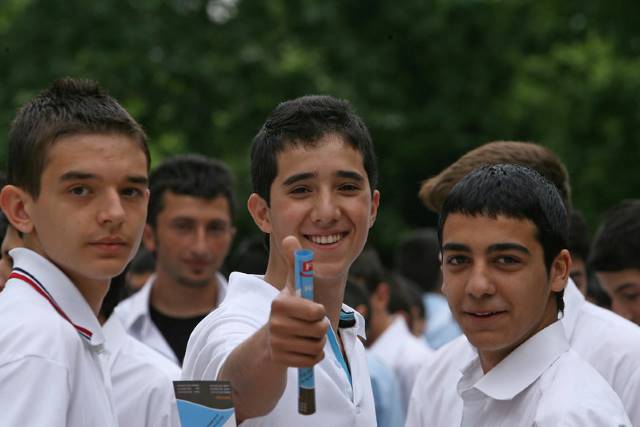
 With the COVID-19 pandemic creating economic distress in Turkey, the need for NGOs, nonprofits and organizational aid is bigger than ever. One NGO, the Darüşşafaka Society, is providing much-needed support for one of Turkey’s most vulnerable populations: children. As Turkey’s oldest non-governmental organization in the field of education, the Darüşşafaka Society has served as a model for combating Turkish educational inequality and remains one of the most prominent NGOs in Turkey today.
Low Enrollment Rates in Turkish Schools
In comparison to the majority of EU countries, Turkey has a larger issue with educational enrollment. In 2016, Turkey hit a peak in terms of the percentages of out-of-school adolescents since 2012. The UNESCO Institute of Statistics found that approximately 523,363 Turkish adolescents were unenrolled, surpassing the previous year by almost 100,000 youths.
While this number has declined in recent years, 2019 data from the Organization for Economic Cooperation and Development (OECD) found that the percentage of Turkish 15-to-19-year-olds who were unemployed and out of school was 17% still far above the average 6.6% for OECD countries.
Academic and Socioeconomic Inequality in Turkey
A contributing factor to these numbers is Turkish educational inequality, which impacts technological access, enrollment rates and academic performance overall.
In 2020, the COVID-19 pandemic exacerbated the issue of Turkish educational inequality. Reports indicate the true severity of the situation, stating that 20% of Turkish students had internet connection issues in 2020, limiting online learning accessibility and resources for students across the country. Additionally, the financial stress of the pandemic put many families in a tight spot, unable to afford necessary tools like school supplies, computers and technological resources. Households were also unable to pay for data and the internet to connect to online classes.
The History of Darüşşafaka Society
For many needy children and families, relief has come in the form of the Darüşşafaka Society. Darüşşafaka Society is the oldest Turkish NGO in the field of education, originally founded in 1863 as a part of Cemiyet-i Tedrisiyye-i İslamiye or the Islamic Education Society. High-standing intellectuals in Turkey founded Darüşşafaka Society in order to establish formal education channels for needy children and orphans, teaching basic skills like reading, writing and math when governmental efforts fell short.
In more than 100 years since its founding, Darüşşafaka Society has become an integral part of the fight against Turkish educational inequality, providing educational and financial support to needy and orphaned students and expanding on its original mission by constructing a physical campus in Istanbul. The Society offers full scholarships to students as well as complete coverage of all healthcare, living and academic expenses. These costs are covered through donations made to The Society. The initiative also strives for scholarship support to its students during their tertiary studies.
Success Stories
The Society’s impact on Turkish educational inequality can be seen through the stories of students, faculty and alumni. One such story is that of Dr. Nahit Çakar, a professor of anesthesiology at Istanbul University who was admitted to Darüşşafaka after struggling to pay for education. Çakar, while not an orphan, was a student with significant financial hardships that prevented accessibility to prestigious schools.
Çakar says, “We learned about friendship, camaraderie. We were a group of people coming from the same deprivation and poverty.” After graduating from Darüşşafaka, Çakar went on to become a doctor and professor, aiming to pay forward the gift of education.
Funding for Darüşşafaka Society comes primarily from local community donors, but The Society has also found itself in the sights of international corporations in recent years. A 2011 interview with Saffet Karpat, chairman of the Procter & Gamble Turkey Board of Directors, highlighted the “Dream to Reality” flagship project with the Darüşşafaka Society as part of the company’s social responsibility campaign in Turkey. The program has helped more than 10,000 students with projects in the fields of science, photography and music, throughout the course of one year.
Darüşşafaka Society Today
According to Darüşşafaka’s website, the current student cohort amounts to a little less than 1,000 students, many of whom were previously learning in disadvantaged classrooms with up to 60 other students. The success of Darüşşafaka’s students is in part due to the improved learning environments that it provides. For instance, as a result of its rigorous focus on science, Darüşşafaka’s robotics team has become a significant contender in the FIRST Robotics Competition, an annual international STEM and robotics championship held in the U.S.
Comprised entirely of orphaned and disadvantaged students, the team has won championship-division awards since its start in 2009 and was most recently presented with awards in both the Long Island and Houston championships in 2019.
Breaking the Cycle of Poverty
According to the Global Partnership for Education, an equal chance at education for students of all backgrounds could reduce international economic disparities by 39%. With the continued efforts of organizations like Darüşşafaka Society, youth in need, disadvantaged and orphaned students will continue to be provided with opportunities to rise out of poverty through education.
– Madeleine Youngblood
Photo: Flickr

8 Facts About Elderly Poverty In Thailand
Thailand’s population of senior citizens has been increasing in recent years. Alongside this increase in population size, the percentage of elderly poverty in Thailand is also rising. A decrease in the younger generation’s desire to have children and a lack of retirement incomes have contributed to this poverty increase. Here are eight facts about elderly poverty in Thailand.
8 Facts About Elderly Poverty in Thailand
Elders in Thailand rely on the assistance of their families and pension after retirement. However, the decrease in the nuclear family and the lack of financial insurance are affecting the poverty rate among elders. Pension programs are working to lower the elder poverty rate in Thailand to combat financial reliance on families.
– Grace Parker
Photo: Wikimedia Commons
Homeless in India: Causes and Aid Available
Causes
Factors that contribute to homelessness include impairment, a shortage of housing affordability, irregular or long-term unemployment and shifts in business. Policymakers state that the cause of homelessness is substance addiction, mental illness, relationship failures and domestic abuse. Prime Minister Modi has set a goal to eradicate homelessness by 2022, but the government has made no progress thus far.
Street Children
As a result of urbanization, poverty and other factors, children end up on the streets. In India, there are more than 400,000 children living on the street. According to UNICEF, there are four categories of street children. There are high-risk kids who stay with families, but labor on the streets for a living. Then there are children who mainly live on the street, but spend some time with family. There are children who spend a good deal of time on the streets and therefore do not live with or communicate with family. Finally, there are orphaned children who are left alone with no caring adults.
Children who end up on the street are often subjected to neglect and physical and emotional abuse at home. Once on the street, children experience trafficking and/or heavy labor as they flee their families in hopes of a new life. Children as young as 6 years old skim through the litter in search of money to survive.
How Unemployment Has Contributed to Homelessness
Because education is more expensive for the average Indian than for the average American or European, more Indians are becoming unemployed. India’s average per capita income is only slightly more than $1,200, compared to the United States’ $54,510. This economic discrepancy shows why economic security is so difficult for Indians to achieve.
Challenges Homeless in India Face
Due to severe weather, seven homeless people die every day in Delhi. Homeless people have very little access to healthcare services. The absence of proper identification documentation needed by hospitals, the expenses and the tendency of physicians to openly reject them are just a few of the factors. According to a study taken by the United Nations Development Programme in 2010, less than 3% of homeless people in India had an ID.
Aid Available
Street kids have benefited from drop-in centers. These centers are set up by one of several NGOs working to assist the homeless in India. Salam Baalak Trust (SBT) is one such organization that has been functioning in Delhi since 1989. SBT operates four community centers that are open 24/7 and can accommodate up to 220 children at any given time. This group has aided 3,500 children living on the streets. Free clothes, food, schooling, support and rehabilitation programs are all available at SBT facilities.
Other NGOs offer different services to the homeless in India. Aashray Adhikar Abhiyan operates as an advocate for the homeless and Pehchan assists the homeless in getting proper identification, for example. With organizations such as these, as well as others, there is hope for the future of the homeless population of India.
– Rand Lateef
Photo: Flickr
Ugandan Science Show Teaches Science to Children
A new Ugandan science show called N*Gen (pronounced “engine”) has exploded in popularity over the past year. The show is delighting kids across Africa and presenting a new and engaging way to learn science. The show debuted on Ugandan television in September 2020. Afterward, television networks in various African countries picked up the show. The show is even now available in North America and the Caribbean. N*Gen presents science through a “decidedly African Prism” and seeks to promote greater African and female representation in science, technology, engineering and mathematics (STEM) fields. With the show’s massive popularity, it has encouraged children to learn more about science and pursue careers in STEM.
The Origins of N*Gen
Six teachers from the Clarke Junior School in Kampala created the Ugandan science show in 2020. They created the show in conjunction with the East African nonprofit Peripheral Vision International. Peripheral Vision International produces and funds the show. The show is shot in Kampala, Uganda and airs weekly in 35-minute episodes. It also features episodes shot on location for specific topics at times. N*Gen targets 8- to 12-year-old African children as its audience and has proven to be very popular with this demographic.
N*Gen seeks to be both engaging and entertaining to its audience. This is important in a culture where science is often labeled a more challenging subject. The show centers around engaging presentations of STEM topics through guest teachers and presenters, animations, quizzes and experiments, fitness and mindfulness exercises, on-location episodes and more. The creators stated the show’s goals are to be to:
How N*Gen is Changing Science Media
A persistent complaint about science education is that it has focused primarily on Western male perspectives. N*Gen’s ability to change this and engage its viewers in new ways has perhaps been the greatest success of the show. The show focuses on African issues and topics that are present in African kids’ lives. It primarily involves African female perspectives. This gives young girls role models and hopes to look to for a future in science.
N*Gen tends to cover topics that are specific to Africa. For example, they had a segment on the Turkana Boy fossil located in Kenya. A paleontologist from the museum where the bones are located spoke about the fossil. The show visited other locations including Lake Victoria and a local chocolate factory in order to bring science under a more relatable and close-to-home lens for the show’s viewers.
N*Gen’s Depiction of Women
N*Gen has emphasized the depiction of women as scientific experts and presenters as an important aspect of the show. A study shows that at age 6, girls draw 70% of scientists as women compared to 25% at age 16. This is likely due to a lack of female representation in media as scientists and scientific experts. However, N*Gen has made this a strong area of focus and helps to inspire young girls by showing exceptional women in the scientific field.
The two main presenters are teachers at the Clarke Junior School: Irene Nyangoma Mugadu and Annah Komushana. Guest teachers, scientists and presenters are predominantly women although men are certainly present in the show as well. This has influenced its audience and had the intended effect. A 10-year-old girl from Kampala who watches and even appeared on the show explained, “It’s boys who do all the fun stuff, and sometimes, a girl like me gets a little left out. But girls can be scientists and go to the moon.”
Going Global
After its debut in September, N*Gen was quickly picked up by television networks in over half a dozen African countries. After becoming a smash hit, the show was picked up by The Africa Channel and is now available for viewing in North America and the Caribbean every Saturday and Sunday at 6 a.m. and 9 a.m. ET.
– Clay Hallee
Photo: Flickr
Kidnappings in Nigeria: What Is Being Done
Kidnappings Across the Country
Widespread kidnappings began in 2006. These kidnappings were considered to be politically motivated. Many people helped push laws that would benefit Nigerians across the country. Furthermore, people wanted to take a stand against the President. However, kidnappings have gone beyond the initial political nature. Now, kidnappings are a way for people to get rich quick. All kidnappers ask for a ransom regardless of the victim’s socioeconomic status. They are well aware that families will do whatever they can to guarantee the safe return of their loved ones.
Additionally, kidnappers will often raid schools with as many as 20 gunmen and grab children. Furthermore, they often face little to no government interference. In some cases, groups of people have been abducted from their cars that were blocked on the highway. Kidnappers hold victims hostage for days, months or even years. Moreover, victims’ families typically struggle to pay the ransom. These ransoms average around $1,222. The debts incurred to pay the ransom often hang over victims’ heads for years. Thus, kidnappings inflict not only physical damage but material as well.
Concerned citizens have been urging the government to put a stop to the rise of kidnappings in Nigeria for years. As a result, there has been an increase in military involvement to locate kidnapped Nigerian school girls. However, this has not been enough.
Many soldiers who attempt to help often face firefights. For example, soldiers often face armed gunmen who are in the midst of kidnapping several children. This is one of many instances where kidnappers fight against the military. Often, soldiers consider the risk greater than the reward and refuse to help. Furthermore, there are reports that soldiers have helped kidnappers escape in return for some ransom money.
What Changes are Being Made?
The Nigerian government has ordered the Naval forces to put a stop to the widespread kidnappings in January 2021. Nigeria’s Naval forces are large and have more firepower to help address this problem. Nigeria appointed Rear Admiral A.Z. Gambo as the naval chief at the beginning of the year. He plans to have a no-nonsense, iron fist on the kidnapping situation. Gambo plans to crack down on all forms of criminality surrounding kidnappings. Additionally, Gambo noted that he is aware of the corruption within the Navy and that often naval personnel assist with the kidnappings. As a result, he plans to crack down on this corruption as priority number one.
This new no-nonsense plan was implemented just days after pirates boarded a Turkish manned vessel. As a result, pirates killed one crew member and kidnapped 15 people. A preexisting law did not allow foreign naval vessels from countries such as Spain and France to carry weapons on Nigerian national waters, leaving the crew members of these vessels defenseless. Thus, the government repealed the law in 2020. Yet, kidnapping continues to rise.
The efforts to combat kidnappings in Nigeria have not been very successful. As a result, the nation saw its highest number of kidnapping cases in history in 2020. However, the government has not ignored this problem. There is a potential for kidnapping cases to decrease if the government cracks down on corrupt naval officers, politicians and government officials.
– Claire Olmstead
Photo: Flickr
The Gender Wage Gap in India
Barriers to Equality
Indian women often receive an insufficient amount of education and preparation for the workforce. On top of this, the educational training they do obtain tends to be of poorer quality. The literacy rate for women in India is around 70% while the literacy rate for men in India is 84.7%. Due to lower quality in education, women are less likely to attain higher-paying jobs. In fact, the participation rate of Indian women in the labor force has declined over the past 20 years and is significantly less than the world’s average. A high percentage of women who do find work do so in vulnerable employment situations. Around 80% of employed women work in rural areas in the agricultural sector and very few women work in the paid labor market. Comparatively, unpaid work accounts for only a quarter of men’s time. As a result, the wage gap between men and women widens.
This is if women can succeed in pushing against the social norm that women should stay at home and care for children. Oftentimes, women must take on the position of caretaker, which leaves less time for pursuing careers outside of the home. This societal standard has furthered educational and occupational inequalities. Investment in education is geared more toward men because women are labeled as future homemakers. Additionally, women face discrimination in the workforce due to the assumed idea of motherhood. Women are viewed as potential mothers who do not have time for the job and thus receive unfair pay. Accompanying the role of child caretaker, women in India generally hold a lower status than men. This leads to women being treated unfairly, one way being through smaller wages than men.
Commit2Change
The movement to decrease the gender wage gap in India is not without aid. NGOs are joining the fight for equality from all around the globe in numerous functions. One international NGO working specifically with young girls in India is Commit2Change. Its primary goal is to educate orphaned girls in India to transform their lives and provide a pathway to a bright future. Commit2Change believes educated women can help remedy gender inequality, especially in the job market.
Commit2Change works with young girls to instill academic knowledge, self-worth and the importance of community aid and involvement. Its educational programs help its participants to thrive holistically in all of these elements, especially educationally. Commit2Change has reached more than 4,000 girls, helping 98% of them to enroll in secondary school, 89% to pass exams and graduate and increase their interest in education by 82%. Commit2Change is undoubtedly fulfilling its goal of helping girls succeed through the power of education.
A Promising Shift Toward Gender Equality
The hurdles women must overcome in relation to education and job opportunities greatly influence the gender wage gap in India. To tackle these issues, Commit2Change along with similar organizations are paving the way for equality in the workforce. Commit2Change prepares young girls for a technologically advanced workforce, which can help them obtain high-paying jobs. It achieves this by providing quality education and adaptive life skills programming. As Commit2Change and other NGOs continue to educate and support women and young girls, the ultimate end to the gender wage gap in India may be an attainable goal.
– Philip Tang
Photo: Flickr
Poverty Alleviation and Entrepreneurship
Research shows supporting entrepreneurship in low-income countries may be one of the most effective ways to permanently reduce global poverty. Despite this, this method of poverty reduction has often been overlooked. This is due to the fact that there has been limited information on its positive impact. However, with more information compiled, individuals in positions of power have sought to make it a focus of poverty reduction. The Global Partnership for Poverty and Entrepreneurship (GPPE) is an organization that has collected a plethora of this data. The resources on the GPPE website provide countless examples of poverty alleviation and entrepreneurship.
The Global Partnership for Poverty and Entrepreneurship
Established in November 2019, the GPPE officially launched in May 2020. This partnership was created by the University of Notre Dame with the intent of building up a research base that can help with future initiatives in supporting low-income individuals with entrepreneurial pursuits throughout the world. In an interview with Dr. Michael Morris, the head of this start-up, the three main objectives of this organization became clear. The first objective was to gather information on entrepreneurial startups in poor communities throughout the world. The second objective was to teach individuals about compiled information within poor communities in order to allow for community uplift. The third objective was to reach out to academics who have an influence on getting more research done on these topics and easily spread techniques to those within their academic influences.
Overall, the GPPE wants to get more people on the ground within impoverished communities. These people would support the poor with their entrepreneurial endeavors. The GPPE is currently setting up example programs within the United States. The purpose of these programs is to prove resources in various areas can be useful in supporting low-income individuals. Within South Bend, Indiana one of these example programs is the Urban Poverty and Business Initiative. This initiative uses resources from the Notre Dame community, especially from the students, to help poor individuals set up entrepreneurial endeavors. Students have helped create social media platforms and helped with marketing for the impoverished in the South Bend community. This is just one idea countries around the world can use to help reduce global poverty.
Entrepreneurship Among the Youth in Swaziland
A study on the youth in Swaziland has provided important information on where certain entrepreneurial systems are lacking within Africa. Other countries can use this study as a resource to help enact systems for poverty alleviation through entrepreneurship. Inadequate work experience provided within universities, a lack of youth voice in entrepreneurial policies and weak business environments are all factors that have driven the youth within Swaziland to have poor entrepreneurial experiences in the past. Organizations like the Youth Enterprise Fund, created in 2009 in Swaziland, have struggled to support new entrepreneurs.
Models have, however, been created in order to show the effects of government intervention when it comes to reducing obstacles that hinder the growth of young entrepreneurs, which can be extremely useful. Examples of influential government intervention include granting youth greater access to capital and giving them business training. Business training in particular has shown to make an enormous difference among the youth of Swaziland with regards to sales. A mixture of giving the youth in Africa more educational resources and professional connections has proven to greatly improve their entrepreneurial success and thus help them rise out of poverty.
Poverty-Reducing Work of Women in Bangladesh
In many low-income countries, the workforce does not utilize women as often as men. This can cause the viewpoint of women being financially burdening. Creating entrepreneurial and employment opportunities for women positively impacts their livelihoods. This is especially true for women living in rural areas. Within Bangladesh, a company called Hathay Bunano has given women both jobs and resources to build enterprises on their own. What this establishment has found is that not utilizing women is a huge waste of production resources. This includes supporting more women artisans through developing pride in the ownership of a product.
Hathay Bunano has worked to employ women who are at the most disadvantaged positions within Bangladesh. The organization has shown that simply giving these women jobs boosts their self-confidence in order to create better lives for themselves. Hathay Bunano is a company that produces hand-knit toys which is important in the context of proving that handicraft businesses can thrive in a competitive economic market. Overall, evidence shows providing grounding for poor women to start businesses that can be supported by their skill levels is plausible.
In conclusion, information that the GPPE has compiled, including the two studies mentioned above, shows poverty alleviation and entrepreneurship can go hand in hand. Working to inform more individuals on how communities can support the poor in their creation of businesses and entrepreneurship will transform low-income countries’ economies and the lives of the poor within them.
– Olivia Bay
Photo: Flickr
Addressing Turkish Educational Inequality
Low Enrollment Rates in Turkish Schools
In comparison to the majority of EU countries, Turkey has a larger issue with educational enrollment. In 2016, Turkey hit a peak in terms of the percentages of out-of-school adolescents since 2012. The UNESCO Institute of Statistics found that approximately 523,363 Turkish adolescents were unenrolled, surpassing the previous year by almost 100,000 youths.
While this number has declined in recent years, 2019 data from the Organization for Economic Cooperation and Development (OECD) found that the percentage of Turkish 15-to-19-year-olds who were unemployed and out of school was 17% still far above the average 6.6% for OECD countries.
Academic and Socioeconomic Inequality in Turkey
A contributing factor to these numbers is Turkish educational inequality, which impacts technological access, enrollment rates and academic performance overall.
In 2020, the COVID-19 pandemic exacerbated the issue of Turkish educational inequality. Reports indicate the true severity of the situation, stating that 20% of Turkish students had internet connection issues in 2020, limiting online learning accessibility and resources for students across the country. Additionally, the financial stress of the pandemic put many families in a tight spot, unable to afford necessary tools like school supplies, computers and technological resources. Households were also unable to pay for data and the internet to connect to online classes.
The History of Darüşşafaka Society
For many needy children and families, relief has come in the form of the Darüşşafaka Society. Darüşşafaka Society is the oldest Turkish NGO in the field of education, originally founded in 1863 as a part of Cemiyet-i Tedrisiyye-i İslamiye or the Islamic Education Society. High-standing intellectuals in Turkey founded Darüşşafaka Society in order to establish formal education channels for needy children and orphans, teaching basic skills like reading, writing and math when governmental efforts fell short.
In more than 100 years since its founding, Darüşşafaka Society has become an integral part of the fight against Turkish educational inequality, providing educational and financial support to needy and orphaned students and expanding on its original mission by constructing a physical campus in Istanbul. The Society offers full scholarships to students as well as complete coverage of all healthcare, living and academic expenses. These costs are covered through donations made to The Society. The initiative also strives for scholarship support to its students during their tertiary studies.
Success Stories
The Society’s impact on Turkish educational inequality can be seen through the stories of students, faculty and alumni. One such story is that of Dr. Nahit Çakar, a professor of anesthesiology at Istanbul University who was admitted to Darüşşafaka after struggling to pay for education. Çakar, while not an orphan, was a student with significant financial hardships that prevented accessibility to prestigious schools.
Çakar says, “We learned about friendship, camaraderie. We were a group of people coming from the same deprivation and poverty.” After graduating from Darüşşafaka, Çakar went on to become a doctor and professor, aiming to pay forward the gift of education.
Funding for Darüşşafaka Society comes primarily from local community donors, but The Society has also found itself in the sights of international corporations in recent years. A 2011 interview with Saffet Karpat, chairman of the Procter & Gamble Turkey Board of Directors, highlighted the “Dream to Reality” flagship project with the Darüşşafaka Society as part of the company’s social responsibility campaign in Turkey. The program has helped more than 10,000 students with projects in the fields of science, photography and music, throughout the course of one year.
Darüşşafaka Society Today
According to Darüşşafaka’s website, the current student cohort amounts to a little less than 1,000 students, many of whom were previously learning in disadvantaged classrooms with up to 60 other students. The success of Darüşşafaka’s students is in part due to the improved learning environments that it provides. For instance, as a result of its rigorous focus on science, Darüşşafaka’s robotics team has become a significant contender in the FIRST Robotics Competition, an annual international STEM and robotics championship held in the U.S.
Comprised entirely of orphaned and disadvantaged students, the team has won championship-division awards since its start in 2009 and was most recently presented with awards in both the Long Island and Houston championships in 2019.
Breaking the Cycle of Poverty
According to the Global Partnership for Education, an equal chance at education for students of all backgrounds could reduce international economic disparities by 39%. With the continued efforts of organizations like Darüşşafaka Society, youth in need, disadvantaged and orphaned students will continue to be provided with opportunities to rise out of poverty through education.
– Madeleine Youngblood
Photo: Flickr
Vaccinating Zero-Dose Children
The State of Global Child Vaccinations
There has been an undeniable trend of progress in global child vaccination rates over the past several decades. The rate of children fully vaccinated against diphtheria, pertussis and tetanus stands at 85% today compared with 20% in 1980. Likewise, the rate of vaccinations protecting against measles and polio rose from less than 20% in 1980 to 85% in 2019, while rates of vaccinations for rubella rose from less than 10% to more than 70% in the same period of time. However, despite the obvious progress in child vaccinations, there is still a sizable portion of children who are unvaccinated or under-vaccinated, leaving them susceptible to life-threatening diseases.
Approximately 20 million children are either under-vaccinated or completely unvaccinated across the globe, with more than 60% of this number coming from just 10 countries including Nigeria, Ethiopia and Pakistan. About half of the 20 million receive no routine vaccinations whatsoever, making them zero-dose children. These children overwhelmingly live in developing nations, many of which are high-intensity conflict zones. More peaceful areas in developing nations still lack adequate infrastructure and millions of children living in remote and marginalized communities have little or no access to healthcare.
The Risks for Zero-Dose Children
Zero-dose children are some of the most vulnerable people on the planet as they are easy targets for life-threatening diseases such as pneumonia, measles and HPV. Pneumonia kills more than 800,000 children every year, making it the leading infectious cause of preventable child deaths in the world. It is a treatable disease, and if diagnosed early, pneumonia treatment over a three-to-five day period can be successful using antibiotics costing just $0.40. However, in low-income countries lacking access to clean water, healthy diets and affordable healthcare, it is a life-threatening disease as almost all child pneumonia deaths occur in developing nations.
Other major diseases of concern to zero-dose children include measles and HPV. Global measles cases are on the rise again, reaching levels not seen in more than two decades. In 2019, the world reported about 863,000 cases of measles compared with only 360,000 the year before. This alarming escalation turned even worse with the arrival of COVID-19 as many countries had to suspend immunization services and programs leaving even more children unable to get vaccinated. Furthermore, while the rate of global HPV vaccinations has steadily increased for several years, fully-vaccinated girls only make up about 15% of the world with many developing nations lacking any vaccination programs. These low coverage levels around the world mean the likelihood a child born today will have all necessary vaccinations by age 5 is less than 20%.
The Partnership
Thankfully, Gavi, the Vaccine Alliance and Save the Children plan to make a global impact with a vaccination program intended to reach zero-dose children. Save the Children already works in developing nations by training and supporting frontline healthcare workers, delivering life-saving medicine and improving immunization coverage. Gavi will leverage this existing presence to expand immunization programs for vaccinating zero-dose children. The partnership between the two organizations will work by sharing key learnings and best practices to explore adding vaccinations to current treatments of pneumonia, malaria and malnutrition for children in low-income communities.
This program will build on the healthcare successes of Save the Children in developing nations and expand the reach of vaccinations to Gavi-supported countries such as Angola, the Republic of the Congo and Cameroon. Immunization efforts will prioritize fragile and high-conflict areas but other locations with major immunization gaps will also receive aid and vaccination increases. Additionally, the partnership will address vaccine hesitancy among parents by implementing community-based education programs and will continue the advancement of COVID-19 vaccination access in developing nations. These efforts stand to make an immense difference in developing nations and millions of children and their families stand to benefit, as do entire communities, as higher levels of immunizations lead to less infectious diseases.
The Road Ahead
Although health innovations in the past half-century have contributed to a major decrease in preventable child mortality rates, there are still far too many children who die from infectious diseases and many of these children are completely unvaccinated. In response to this situation, Gavi and Save the Children have teamed up with efforts in vaccinating zero-dose children in the world’s most impoverished nations. By building on the successes of current operations and introducing vaccinations into existing health programs, the partnership will strive to decrease the immunization gap and continue making headway toward the global goal of no zero-dose children.
– Calvin Nordhougen
Photo: Flickr
The Decline of Deforestation in Indonesia
Causes of the Decline of Deforestation in Indonesia
Indonesia’s government attributed the drop to their several prohibited forest-clearing policies imposed last year. These include, “a permanent ban on issuing new permits to clear primary forests and peatlands; a moratorium on new oil palm plantation licenses; forest fire mitigation; a social forestry program; land rehabilitation and increased enforcement against environmental violations.”
Due to La Niña, 2020 was one of Indonesia’s rainiest years in the past four decades. As a result, deforestation from forest fires decreased significantly. Additionally, the economic fallout caused by COVID-19 slowed Indonesia’s timber production, contributing to the low deforestation rate. A researcher with Forest Watch Indonesia, Mufthi Fathul Barri, commented on the matter, “The disruption to economic activity can be seen from timber production from natural forests, which declined. In 2019, Indonesia produced timber from 8.4 million hectares of natural forests. In 2020, it was 6.6 million hectares.” As such, the very low rate of deforestation in Indonesia last year will be difficult to mimic in the near future.
Conservation Work
Yet another factor contributing to Indonesia’s declining deforestation rate is the conservation work done by advocacy groups such as Rainforest Alliance. This organization assists farm and forest communities across the island through training and certification. It successfully improves the health of the environment as well as the people. The Rainforest Alliance details their conservation efforts in Kalimantan on their website, which reads, “FSC [Forest Stewardship Council] certification significantly reduced deforestation by 5% points and air pollution by 31% compared to the rates of control villages in non-certified logging concessions.”
In addition, the Rainforest Alliance has helped educate Indonesian people on ecosystem conservation and sustainable farming. Their educational initiatives help protect the ecosystem while simultaneously administering information that can improve the livelihoods of Indonesian farmers. Overall, this aspect of the Rainforest Alliance’s mission offers considerable aid to low-income communities.
The organization’s work in Central Sulawesi has helped restore the region’s watershed, Lake Poso. This was achieved through a community-led program with the Karya Bersama cocoa cooperative in Pamona Seletan. Since the cooperative started working with Rainforest Alliance, their 500 farmers have experienced increased crop productivity, with a 20% yield increase in 2019. Rainforest Alliance’s work with the Karya Bersama cooperative shows significant potential to restore Indonesia’s ecosystem while improving the quality of life in rural communities. This can all be achieved through conservation and sustainable farming education.
Looking Ahead Amidst the Decline of Deforestation in Indonesia
Many factors caused the 75% drop in deforestation in Indonesia last year. The government’s new anti-forest-clearing policies, the rainy season and the slow in timber production due to COVID-19 all contributed. Although the climatic conditions of 2020 and the economic lull offered favorable circumstances for a decrease in deforestation, the Indonesian government, along with organizations can not be discounted for their tremendous efforts. Hopefully, Indonesia can continue the favorable trend into the future.
– Eliza Kirk
Photo:Flickr
Progress Regarding the Gender Wage Gap in Taiwan
The gender wage gap in Taiwan is a prominent issue. In 2012, women had to work 65 more days than men to earn the same pay. In 2018, it was down to 52 more days. But in 2019, it was back up to 54. Even though this statistic has decreased in the past 10 years, it is still a prominent issue.
Background
While the gender wage gap in Taiwan is better than in other developed nations, more work is necessary. In human health services, for example, the pay gap is 45%. This means that women would have to work 109 more days to receive the same yearly salary as a man. While the wage gap is decreasing, the progress is not spread out equally across different industries.
Certain professions have seen the gap increase in particular. In arts and entertainment careers, men’s wages in this field have increased drastically while women’s have remained the same.
Progress, From a Global Perspective
According to the Ministry of Labor, the average salary per hour for women in Taiwan in 2020 was New Taiwan (NT) $296, or $10.63. On the other hand, men earned NT $344, or $12.35. This gap has improved throughout the past 10 years, as it was 17.1% in 2010 and 14% in 2020.
While a significant wage gap in Taiwan still exists, the country is making significant progress in relation to other countries. For comparison, in 2019, the wage gap was 31.9% in Japan, 30.6% in South Korea and 17.7% in the United States.
Government Efforts
In order to raise awareness about the gender wage gap in Taiwan, the Ministry of Labor initiated an Equal Pay Day in 2012. This has drawn attention to the higher number of days women must work in order to earn the same amount as a man. As of 2017, women needed to work 13 fewer days to receive the same annual salary as they did in 2012.
Taiwan has also established gender equality laws to create a better workplace environment for women. In 2002, the Act of Gender Equality in Employment (AGEE) passed. Its goal is to protect gender equality in the workplace by prohibiting gender discrimination. One can see this in the Maternity Protection section of AGEE, which protects menstrual leave. This provides women with half of one’s regular pay one day each month, maternity leave for eight weeks and five days of leave for pregnancy checkups.
The Office of Gender Equality in the Taipei City government has played a key role in advocating for gender equality in Taiwan. Since its development, it has worked to improve family support, enforcing legal action against gender discrimination and supporting female union members.
Progress
The number of women who are pursuing college degrees in Taiwan has increased throughout the past decade. However, the graduate school rate is lower, with females taking up 31.7% of doctoral degree graduates. As the number of women in college continues to increase, they are more likely to hold positions in the workplace.
In addition to this, the average age of giving birth to one’s first child has increased. In 2017, the average age was 30.83 years. Family obligations make it difficult for mothers to continue their careers and/or education. This contributes to the higher number of women in the workplace and in graduate studies.
– Miranda Kargol
Photo: Flickr