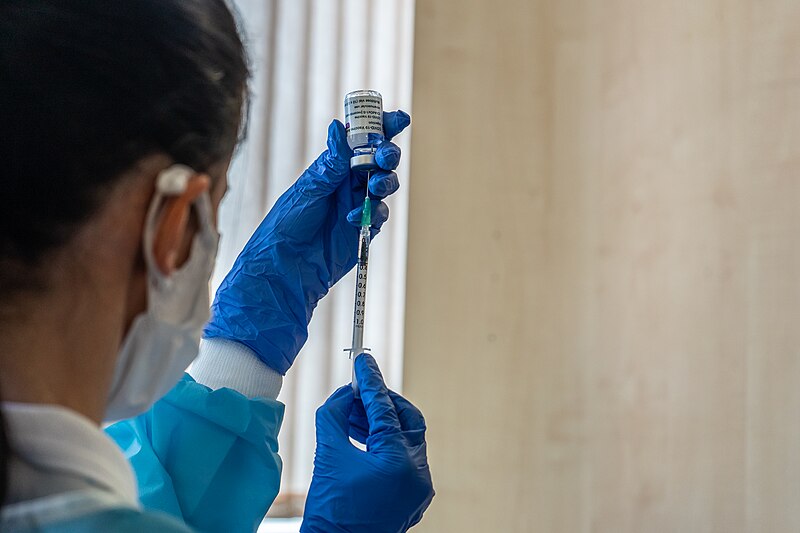
On March 12, 2021, the Quadrilateral Security Dialogue — known as the “Quad” — met at a virtual summit to discuss concerning issues across the Indo-Pacific. The Quad comprises Australia, Japan, the United States and India. Recently, they committed to providing one billion vaccines to the Indo-Pacific by 2022. The main focus is on Southeast Asia, which is struggling to inoculate its population. In other words, the Quad is taking on vaccine insecurity in Southeast Asia.
The Quad’s History
The Quad, which was formed in 2004, is a meeting format for the four influential democracies in the Indo-Pacific to discuss regional security issues. Originally, these democracies coordinated joint search and rescue missions and humanitarian aid in response to the Boxing Day Tsunami’s decimation of large areas of South and Southeast Asia. From there, the Quad met one more time in 2007 before disbanding for a decade.
However, the group began reconvening again at a ministerial level in 2017. The members became mutually concerned over the terrorism and Chinese aggression in the Indo-Pacific. As a result, the four foreign policies began supporting a rules-based international system and a free and open Indo-Pacific. This intersection had a heightened sense of importance as the group convened its first-ever leader-level summit in March 2021.
The motivation of the organization is not entirely clear. Some refer to it as an “Asian-Nato” intent on countering China‘s rise in the region. Others claim it is a group of like-minded, influential states coordinating responses to some of the most pressing issues of the day, including the environment, terrorism, COVID-19 response and humanitarian aid.
“The Spirit of the Quad”
Despite how others define the Quad’s intent, the latest summit concentrated less on geopolitics and more on issues plaguing the region. It released a statement entitled “The Spirit of the Quad.” This shared how the group focused on important humanitarian and anti-poverty issues of democratic values. Some of these are international law, infrastructure investment and disaster relief. Nevertheless, the most pressing issue the summit addressed was the coronavirus pandemic.
During the summit, the Quad “pledged to respond to the economic and health impacts of COVID-19.” It will do this by “building on the progress countries have achieved on health security [and] expand safe, affordable and effective vaccine production and equitable access, to speed economic recovery and benefit global health.”
The Plan
To achieve these results, the Quad will utilize the individual strengths of each member. For example, India is one of the largest vaccine developers in the world. Even before COVID-19, it developed 60% of the world’s vaccines. The Deloitte consulting firm partner, PS Earwaran, predicts that the Indian government will produce nearly 3.5 billion doses in 2021.
However, to increase that amount, the United States will provide technology and intellectual property rights to improve production methods. In addition, Japan will help finance the production upgrades. For Australia’s part, it will also assist with financing. More importantly, however, it will utilize its unique distribution capacity in Southeast Asia.
Additionally, the Quad will work through international organizations, including the World Health Organization (WHO) and COVAX. COVAX is particularly important because it is an international vaccine program. This program supports vaccine accessibility in the underdeveloped world. The goal of the COVAX program is to distribute two billion doses of vaccines to 94 lower and middle-income countries by the end of 2021.
Notably, the Quad is prioritizing Southeast Asia in its vaccine distribution. As the National Security Advisor for President Joe Biden, Jake Sullivan stated, “The Quad committed to delivering one billion doses to ASEAN (Association of Southeast Asian Nations), the Indo-Pacific and beyond by the end of 2022.”
Vaccine Insecurity in Southeast Asia
At first glance, Southeast Asia seemingly would not need the Quad’s focus due to its successful handling of the pandemic. The Sydney-based Lowy Institute created a performance index and ranking of 98 states and how each government handled the pandemic. The institute found that five of the seven Southeast Asian nations included were in the top 24 states. This ranked higher than Germany, Japan and the United States.
However, purchasing and distributing vaccines takes a different set of administrative skills and resources than containing a virus, leaving poorer nations more vulnerable. In other words, upper-middle-income countries with the administrative ability and resources like Singapore could hit widespread inoculation by mid-2022. Yet, with Vietnam being the exception, the rest of Southeast Asia is not likely to fair as well. The Economist Intelligence Unit recently reported that a bulk of the region’s population, including Myanmar, Laos, Cambodia, the Philippines and Indonesia, will take at least two years, maybe longer, to reach widespread vaccination.
It is not just poorer nations in the region that are struggling to inoculate their population. Although Malaysia is a middle-income country that just initiated a historic immunization program, it is struggling to vaccinate its entire population at an efficient rate. As of March 19, 2021, Malaysia had administered on average 22,215 vaccinations a week with a total of 367,213 doses. Assuming that everyone will need two doses each, this means only 0.6% of the population has received vaccinations. At that rate, it will take another 288 days to reach 10% of the population.
Although Southeast Asia has been relatively successful in containing the outbreak, it clearly needs assistance in vaccinating its population. In March 2021, the Quad committed to pooling each state’s comparative resources and expertise to take on vaccine insecurity in Southeast Asia. The Quad’s commitment is critical for the region’s health and post-pandemic recovery.
– Vincenzo Caporale
Photo: Wikipedia Commons

The World Bank’s Projects Adapt to COVID-19
The Ghana Accountability for Learning Outcomes Project
The Ghana Accountability for Learning Outcomes Project, or GALOP, was established in 2019 with the goal of improving the quality of low-performing schools in Ghana and ultimately improving education equity. GALOP operates in 10,000 schools in disadvantaged areas, implementing measures to improve the quality of education and the presence of accountability. The project benefits more than two million students and tens of thousands of teachers.
Since COVID-19 struck and majorly disrupted education systems and school attendance, the project has been adjusted to remain as effective as possible. Notably, it has expanded its benefits for children with disabilities, for whom education is less accessible than ever. The World Bank is responding to the consequences of COVID-19 on the school system to provide more appropriate aid where necessary.
The Sahel Women’s Empowerment and Demographic Dividend Project
The Sahel Women’s Empowerment and Demographic Dividend Project, which has been active since 2014, is also being adapted to compensate for the impacts of the pandemic. The goal of this project is to empower African women and increase their accessibility to health services. A substantial part of its mission involves education and raising awareness about female empowerment.
The World Bank has been presented with a significantly heightened issue compared to when it took this project on more than five years ago. Domestic violence rates have increased, girls’ enrollment in schools is lower than ever and much progress in the way of female empowerment seems to have been undone by the pandemic. In response to this, the World Bank project has shifted its focus primarily to young girls and women at risk of violence. These are two groups whose hardships are most exacerbated by COVID-19. The World Bank recognizes that and has adjusted its actions to prioritize those most at-risk.
New Projects
In addition to revising and expanding existing projects, the World Bank has taken on many new projects specifically to help relieve the consequences of COVID-19. The organization has played a large role in providing vaccine accessibility to developing countries and has provided significant funding for its member nations to assist in mitigation and COVID-19 relief efforts.
Some projects, like Building Back Better, were created to provide support for impoverished communities so that they cannot only recover from the global health crisis but to maintain the progress made prior to it. Building Back Better focuses on implementing solutions that are sustainable and will be functional long-term within developing nations.
Other projects, like the Kinshasa Multisector Development and Urban Resilience Project, known as Kin Elenda, focus on problems that existed prior to COVID-19 but have been exacerbated by the crisis. In particular, Kin Elenda targets accessibility issues present in urban neighborhoods in the Democratic Republic of the Congo. It is providing solutions that are rooted in resilience and introducing equity to these urban areas.
In an April 2021 conference, India’s Minister of Finance Nirmala Sitharaman urged the World Bank to continue funding at this level, which is considered a “crisis response.” It is clear that the organization’s targeted efforts are providing genuine relief during this crisis, and the countries impacted would benefit from the continuation of these efforts.
The World Bank is dedicated to ending extreme poverty and promoting shared prosperity. While the global crises presented by COVID-19 have exacerbated many of the issues that contribute to poverty, the international organization has proved that it will continue to fight for its mission. The World Bank’s success in fighting the pandemic has presented evidence of poverty solutions that are both sustainable and adaptable.
– Samantha Silveira
Photo: Flickr
The COVID-19 Outbreak in Vietnam
Vietnam is currently undergoing its worst outbreak of COVID-19 with more than 4,000 active cases. The Vietnamese Ministry of Health has already sprung into action and developed a plan to make sure the situation does not get out of control. Despite the pandemic, Vietnam has managed to expand its economy due to its swift action. Here is some information about the COVID-19 outbreak in Vietnam.
Historical Context
Vietnam, like any country, is no stranger to disease and has always found pride in its epidemic response. In the early 2000s, the World Health Organization (WHO) declared Vietnam the first country to become SARS free.
Since 2016, Vietnam’s hospital staffers have had to report notable diseases to a central database within a 24-hour period. The Ministry of Health is using this database to promptly track patterns of contagion within the country. This has been a key instrument in limiting the COVID-19 outbreak in Vietnam.
Current Statistics
Vietnam remains one of the leading countries in COVID-19 control with 4,809 confirmed cases as of May 20, 2021. As one of the bordering countries of China, Vietnam sprung into action when the pandemic began spreading. The first reports of COVID-19 cases in Vietnam began on January 23. This prompted the government to set up quarantine camps to isolate the patients as well as their close contacts.
Dan Nguyen, a Vietnamese citizen, had to stay in a quarantine camp upon her return to Vietnam. She uploaded her stay to YouTube, which documented Nguyen sharing her quarters with three others. Medical professionals checked their temperatures twice daily and provided everyone with three meals a day.
“It was cleaner than I expected,” Nguyen said. “The only thing that concerned me is that we don’t have the Wi-Fi here. The data is really slow that’s why we don’t have very excellent internet access.”
Vietnam had gone 99 days without any community transmissions, breaking the streak on July 25, 2020. However, the last week of July saw a 30% increase in coronavirus cases, which has kept steady ever since.
Hanoi, Bac Ninh and Vinh Phuc are the current leading cities for COVID-19 outbreaks in Vietnam. In total, 2,077 Vietnamese people have been receiving treatment either for COVID-19 symptoms, COVID-19 exposure or proven infection as of May 20, 2021. There have been 39 confirmed deaths.
How Vietnam is Handling the Pandemic
As mentioned, the Ministry of Health practices isolationism techniques, but one of its goals is to find a balance between concealment and economic productivity. The Ministry has limited non-essential vocations and other community-based activities while allowing essential businesses to continue their work. All businesses must adhere to standard COVID-19 procedures such as mask-wearing and disinfection techniques. Vietnam has encouraged its citizens to continue social distancing and only leave their homes for work, school or medical functions.
In addition, Vietnam has 123 medical facilities with laboratories that can test for COVID-19. The Ministry of Health plans to increase testing for active screening for those with COVID-19 symptoms. These symptoms would include cough/difficulty breathing, fever and respiratory inflammation. This screening process would make those who have a high risk of infection a priority.
The Vietnamese government officially closed its borders to everyone except for public officials and essential workers on March 22, 2020. All foreigners who enter Vietnam must quarantine for a period of 21 days. One can accredit this to an incident in which a carrier of COVID-19 tested positive upon their completion of a 14-day quarantine.
COVID-19’s Impact on Vietnam’s Economy
Reports stated that Vietnam was the top-performing Asian economy of 2020 with an expansion of 2.9%. This is one of the highest in the world. Economists such as Gareth Leather have suggested that the extensive and immediate COVID-19 response aided in preventing an economic recession. Leather reported, “By the end of 2021, we think GDP will be only 1.5% lower than it would have been had the crisis not happened. This is one of the smallest gaps in the region.”
Despite the COVID-19 outbreak in Vietnam, projections have determined that Vietnam will expand its economy by 6.5% in 2021. This is in part because of Doi Moi reforms that took place in the 1980s. This transformed Vietnam from an agriculturally based economy to a foreign direct investment-led manufacturing system that brought the country out of extreme poverty.
In addition, essential businesses have continued to provide high-demand exports of electronics and clothing manufacturing throughout the pandemic. Vietnam is the second-largest exporter of smartphones, an important feature of the COVID-19 pandemic which has increased telecommunication.
Vietnam’s Vaccination Goals
As of May 11, 2021, 892,454 citizens have received vaccinations. This has met 107% of Vietnam’s goal which was to have 917,600 individuals vaccinated. Though officials want at least 70% of Vietnam’s population vaccinated, the distribution of vaccine doses currently remains with medical professionals. Officials plan to purchase 150 million vaccination doses through COVAX. WHO, UNICEF, GAVI and CEPI should be delivering over 3 million vaccines to the country by the end of May 2021.
Looking Ahead
The deliverance of the vaccines provides Vietnam with a sense of hopefulness that the current outbreak will soon be a thing of the past. The country is looking forward to eliminating COVID-19 from its region.
– Camdyn Knox
Photo: Flickr
Disability and Poverty in the United Kingdom
Errol Graham, another under the care of the U.K. Department of Work and Pensions (DWP), starved to death in 2018 while seriously mentally ill. He had not responded to DWP inquiries and they had ended his benefits. When found, he weighed 30 kg and had pulled his teeth out with pliers.
Disability and Factors for Poverty
A Joseph Rowntree Foundation (JRF) report found that of those in poverty in the United Kingdom, nearly half are disabled or live with someone who is. The JRF found that factors for this poverty were that disabled people were less likely to be employed. They are also less likely to have the qualifications for high-paid employment if employed. Many were unable to find employment that accommodated their disabilities and health needs. They also had higher costs of living due to their health needs. These factors continue to aggravate the situation for disability and poverty in the United Kingdom.
The Desperate Situation
Disability and poverty in the United Kingdom has grown dire. BBC discovered there have been over 150 government inquiries into cases where a person claiming benefits has died or come to serious harm. Further, 82 people claiming benefits have died after the Department for Work and Pensions (DWP) made changes to their cases. Thirty-five of those deaths involved mental illness, leading to claims that DWP refuses to make accommodations and adjustments for mentally ill clients, thus endangering them. Secretary of State for Work and Pensions, Thérèse Coffey, stated that the DWP “did not have a duty of care or statutory safeguarding duty.” However, the DWP is solely responsible for the income of these disabled and vulnerable citizens.
Best Next Steps
Quite simply, the disabled need the same things as the able-bodied. That is, access to food, shelter, safety, community and opportunity. As it stands, a society built to benefit typical bodies and minds has built-in barriers for disabled people. For disabled people to achieve equality, these barriers must come down. In 2019, the UK government began a new mission toward improving life for disabled UK citizens. This is an attempt to remedy the worsening problem of poverty and disability in the United Kingdom. These goals include expanding accessible housing (300,000 homes per year), helping employers support disabled employees, reforming Statutory Sick Pay and exploring improvements to support for those on disability benefits.
These long-overdue steps, if effectively and sincerely followed, should provide relief for the problem of disability and poverty in the United Kingdom. This will help prevent further tragedies, such as the death of Philippa Day and the 82 benefits claimants who died after changes had been made to their cases.
– Hilary Brown
Photo: Flickr
How Elizabeth Mpofu is Transforming Agriculture in Zimbabwe
Mpofu is an organic farmer and activist. With a focus on gender equality and agroecology, she is fighting to transform the landscape of agriculture in Zimbabwe. For Mpofu, this begins with one key distinction — food security versus food sovereignty.
Food Sovereignty Versus Food Security
Agriculture in Zimbabwe is geared toward food security. According to an interview with Holding Our Ground, Voices for Food Sovereignty, Mpofu wants to change this focus to food sovereignty.
Advocates for food security aim to put food in the marketplace and on the table. However, this does not account for the quality of that sustenance, the sustainability of its production and the people’s relationship with what they consume. On the other hand, food sovereignty emphasizes people’s personal ownership over what they grow and eat, as well as the cultivation of sustainable, locally-grown foods. For instance, if giving a woman a fish is food security, teaching her to fish is food sovereignty.
Mpofu argues that the current state of agriculture in Zimbabwe, which places profit over all else, yields homogenous, mass-produced food that is not as nutritious as what a small-scale farmer might grow on their own land. As a result, many impoverished Zimbabweans are being fed but not nourished. According to UNICEF, nearly one in three children in Zimbabwe under the age of 5 are malnourished.
In 2007, Mpofu took the first step toward shifting her community’s focus to food sovereignty when she co-founded a nonprofit, Zimbabwe Organic Smallholder Farmers’ Forum (ZIMSOFF).
Planting Traditional Seeds
Among many of its functions, ZIMSOFF advocates for the use and protection of traditional seeds. The organization gave rise to the Zimbabwe Seed Sovereignty Programme, which has established seed banks, seed fairs and raises awareness of the importance of cultivating food that is native to the land. Such crops include rapoko (a type of millet), groundnuts and peanuts. These traditional crops are more drought-resistant and more suitable for the soil than those brought to the country by foreign entities.
Empowering Women
In 2002, Elizabeth Mpofu was nominated to represent Zimbabwe at the World Summit on Sustainable Development in Johannesburg, South Africa. She was hesitant, citing her inability to speak English and her self-proclaimed lack of knowledge. Now, Mpofu is the leader of Via Campesina, a coalition of 164 organizations in 73 countries. It is one of the largest coalitions of farmers in the world. Despite her ascension to the international stage, it’s her work with the women of her community that she finds most rewarding.
She leads workshops where she trains women in agroecology. This is the practice of farming that maximizes crop yield in a sustainable, ecologically sound manner. Women recognize the value of their own labor, even if it is treated as insignificant compared to men’s labor. Mpofu and those she trains present their case for food sovereignty to local leaders. The whole community benefits when women are empowered to make decisions.
“They, like me, stop seeing access to land as a privilege and see it instead as both a right and a responsibility,” says Mpofu in the Holding Our Ground interview, about the women with whom she works alongside.
The Road Ahead
Mpofu believes that the keys to sustainable agriculture in Zimbabwe are already known. “Knowledge is not in short supply amongst farmers. What is lacking is the documentation and the spread of this knowledge,” says Mpofu.
In 2020, the GDP of Zimbabwe shrunk by 8% due in large part to COVID-19. In 2021, it is set to rebound by nearly 3% as the agricultural sector recovers. The road to recovery is a long one. In the eyes of Elizabeth Mpofu, if women’s empowerment and agroecology are put at the forefront, then that road will lead not just to food security, but food sovereignty for all the people of Zimbabwe.
– Greg Fortier
Photo: Flickr
Aspiring Drone Engineers Fly to Malawi
African Drone and Data Academy
In January 2020, UNICEF established the first African Drone and Data Academy in Malawi. About 140 students from across Africa received a Certificate in Drone Technology from Virginia Tech upon graduation. They partnered with Virginia Tech as the university has delivered successful drone training workshops to Malawi for years. The future ADDA graduates, more than half of whom are women, will build and pilot the drones used for agriculture, health, natural resources monitoring and humanitarian missions.
ADDA students are learning the most modern approach to pressing challenges. Deborah from Malawi plans to use her degree to tackle environmental challenges. She will then be able to improve the living conditions and health of Malawians. By 2022, the academy will offer a free master’s degree program in drone technology. This is possible due to a partnership with the Malawi University of Science and Technology. The curriculum will highlight sustainable business models for using drones.
The Drone Testing Corridor
Africa must spend $75 billion more each year to sustain its quality of infrastructure and agriculture productivity. However, investing in drone technology would reduce the region’s expenses. In 2017, Malawi opened the first drone testing corridor to test the potential humanitarian uses of drones. It provides a controlled environment for local and international drone companies to explore how drones can deliver services. Some of these services are vaccines, blood transfusion kits, malaria drugs and antibiotics. The drone engineers generate aerial images of floods and earthquakes, test drone extension of WiFi to difficult terrains and survey water to find malarial mosquito breeding sites.
Direct Impact on Malawian Lives
For residents of Chizumulu, a small island in Lake Malawi, access to blood tests was limited as the ferry only came once a week. Now, residents receive a diagnosis in hours, thanks to drone service. In 2019, Cyclone Idai caused devastating flooding, forcing many Malawians to evacuate. Aerial drone photography identified the damage to buildings, bridges and crops, which revealed when families could return home and what they would need to fix.
Malawi’s rough terrain makes it difficult for patients to get blood samples before they expire and for hospitals to receive emergency medical supplies in time. Drones can transport newborns’ blood samples and HIV tests to laboratories, and fly the results back in less than an hour, 10 hours faster than normal. In Malawi, drone images help to create maps of areas that do not have basic hygiene infrastructure, identifying flood-prone zones and preventing cholera outbreaks. Additionally, artificial intelligence can classify drone photographs of crops to prevent malnutrition.
A high demand exists for qualified drone engineers in Malawi. Many young Malawians want to pursue careers in STEM, so the academy is a perfect solution. ADDA students have futures in which their passion for STEM complements their interest in humanitarian work. They will build drones using those technical skills and fly them to improve the lives of people across Africa.
– Rebecca Pomerantz
Photo: Flickr
The Wealth Divide in India Increased During COVID-19
Inequality in Numbers
The wealthiest people in India have 77% of the national total amount of wealth. There are a total of 119 billionaires in India. In 2000, there were only nine. These billionaires have a fortune that would take the average worker 941 years to earn. In addition to this, their fortunes have increased by almost 10 times over the past 10 years. More than half of people in India are living in poverty, as about 780 million people live on under $3.10 each day. Almost 75% of people live in villages and earn their money through hard labor. Only 11% own a refrigerator and 35% cannot read and write.
COVID-19 and the Wealth Gap
COVID-19 has hurt India’s middle and lower-class significantly. Throughout the pandemic, billionaires have earned more money while the middle and lower classes have lost money due to the decrease in economic activity and lockdown restrictions. One of the world’s richest men, Mukesh Ambani, earned $30.5 billion in wealth. In addition, Cyrus Poonawala, the founder of Serum Institute of India, added $5.56 billion to his net worth in 2020.
Due to the strict lockdown, which started on March 25, 2020, in India, millions of workers across the country lost their jobs and, as a result, had no source of income. This pushed even more people into poverty, further widening the wealth divide in India. This was also true of middle-class people, as they faced many job losses and pay cuts, resulting in a decrease in income.
CMIE reported that there was a 26% fall in industrial workers since the start of the pandemic. This consisted of small industrial units and enterprises. It also reported that there was a loss in white-collared employees, such as engineers, physicians and teachers. This was the biggest loss among salaried workers. Many also view healthcare as a luxury in India. Only those who have the money to pay for healthcare can obtain decent care in India. As a result, the poorest areas in India have high infant mortality rates and maternal deaths.
Possibilities for Change
People are more likely to succeed if they get a quality education. In Asian countries, rich people are more likely to have had four full years of school than the poor population. As a result, the growing inequality connects a lack of education with a lack of a substantial salary. The divide between the wealthy and the poor requires introducing policies in order to stop inequality and social injustice. Few governments have implemented these kinds of policies. If the government focused more attention on the wealth divide in India, it may be able to put more policies into place.
– Miranda Kargol
Photo: Flickr
Vaccine Insecurity in Southeast Asia
On March 12, 2021, the Quadrilateral Security Dialogue — known as the “Quad” — met at a virtual summit to discuss concerning issues across the Indo-Pacific. The Quad comprises Australia, Japan, the United States and India. Recently, they committed to providing one billion vaccines to the Indo-Pacific by 2022. The main focus is on Southeast Asia, which is struggling to inoculate its population. In other words, the Quad is taking on vaccine insecurity in Southeast Asia.
The Quad’s History
The Quad, which was formed in 2004, is a meeting format for the four influential democracies in the Indo-Pacific to discuss regional security issues. Originally, these democracies coordinated joint search and rescue missions and humanitarian aid in response to the Boxing Day Tsunami’s decimation of large areas of South and Southeast Asia. From there, the Quad met one more time in 2007 before disbanding for a decade.
However, the group began reconvening again at a ministerial level in 2017. The members became mutually concerned over the terrorism and Chinese aggression in the Indo-Pacific. As a result, the four foreign policies began supporting a rules-based international system and a free and open Indo-Pacific. This intersection had a heightened sense of importance as the group convened its first-ever leader-level summit in March 2021.
The motivation of the organization is not entirely clear. Some refer to it as an “Asian-Nato” intent on countering China‘s rise in the region. Others claim it is a group of like-minded, influential states coordinating responses to some of the most pressing issues of the day, including the environment, terrorism, COVID-19 response and humanitarian aid.
“The Spirit of the Quad”
Despite how others define the Quad’s intent, the latest summit concentrated less on geopolitics and more on issues plaguing the region. It released a statement entitled “The Spirit of the Quad.” This shared how the group focused on important humanitarian and anti-poverty issues of democratic values. Some of these are international law, infrastructure investment and disaster relief. Nevertheless, the most pressing issue the summit addressed was the coronavirus pandemic.
During the summit, the Quad “pledged to respond to the economic and health impacts of COVID-19.” It will do this by “building on the progress countries have achieved on health security [and] expand safe, affordable and effective vaccine production and equitable access, to speed economic recovery and benefit global health.”
The Plan
To achieve these results, the Quad will utilize the individual strengths of each member. For example, India is one of the largest vaccine developers in the world. Even before COVID-19, it developed 60% of the world’s vaccines. The Deloitte consulting firm partner, PS Earwaran, predicts that the Indian government will produce nearly 3.5 billion doses in 2021.
However, to increase that amount, the United States will provide technology and intellectual property rights to improve production methods. In addition, Japan will help finance the production upgrades. For Australia’s part, it will also assist with financing. More importantly, however, it will utilize its unique distribution capacity in Southeast Asia.
Additionally, the Quad will work through international organizations, including the World Health Organization (WHO) and COVAX. COVAX is particularly important because it is an international vaccine program. This program supports vaccine accessibility in the underdeveloped world. The goal of the COVAX program is to distribute two billion doses of vaccines to 94 lower and middle-income countries by the end of 2021.
Notably, the Quad is prioritizing Southeast Asia in its vaccine distribution. As the National Security Advisor for President Joe Biden, Jake Sullivan stated, “The Quad committed to delivering one billion doses to ASEAN (Association of Southeast Asian Nations), the Indo-Pacific and beyond by the end of 2022.”
Vaccine Insecurity in Southeast Asia
At first glance, Southeast Asia seemingly would not need the Quad’s focus due to its successful handling of the pandemic. The Sydney-based Lowy Institute created a performance index and ranking of 98 states and how each government handled the pandemic. The institute found that five of the seven Southeast Asian nations included were in the top 24 states. This ranked higher than Germany, Japan and the United States.
However, purchasing and distributing vaccines takes a different set of administrative skills and resources than containing a virus, leaving poorer nations more vulnerable. In other words, upper-middle-income countries with the administrative ability and resources like Singapore could hit widespread inoculation by mid-2022. Yet, with Vietnam being the exception, the rest of Southeast Asia is not likely to fair as well. The Economist Intelligence Unit recently reported that a bulk of the region’s population, including Myanmar, Laos, Cambodia, the Philippines and Indonesia, will take at least two years, maybe longer, to reach widespread vaccination.
It is not just poorer nations in the region that are struggling to inoculate their population. Although Malaysia is a middle-income country that just initiated a historic immunization program, it is struggling to vaccinate its entire population at an efficient rate. As of March 19, 2021, Malaysia had administered on average 22,215 vaccinations a week with a total of 367,213 doses. Assuming that everyone will need two doses each, this means only 0.6% of the population has received vaccinations. At that rate, it will take another 288 days to reach 10% of the population.
Although Southeast Asia has been relatively successful in containing the outbreak, it clearly needs assistance in vaccinating its population. In March 2021, the Quad committed to pooling each state’s comparative resources and expertise to take on vaccine insecurity in Southeast Asia. The Quad’s commitment is critical for the region’s health and post-pandemic recovery.
– Vincenzo Caporale
Photo: Wikipedia Commons
How Substance Abuse Impacts the Homeless in Greece
Economic Despair
As Greeks struggled to survive, many turned to substance abuse. In 2019, 55% of drug users seeking assistance were heroin addicts. However, although a majority of addicts were using heroin and marijuana, some were using a drug called shisha. The Guardian newspaper describes shisha as a drug containing meth-like qualities when mixed with other substances. It became popular when drug dealers began providing low-quality versions of the drug for extremely low prices. One hit of shisha only cost two euros.
The high addiction rates to shisha combined with lack of employment opportunities have led addicts to become more engaged in harmful and dangerous behaviors. A significant number of women have also resorted to prostitution as a way to finance their addictions. According to the Guardian, there has also been an increase in suicides, overdoses, HIV infections, Hepatitis C and pregnancies among the homeless in Greece.
A Personal Story of Drug and Alcohol Addiction
In conversation with The Borgen Project, Sue Silversmith, a Licensed Independent Substance Abuse Counselor, said she has worked with Native Americans facing substance abuse and alcohol addiction throughout her entire career. As a social worker and licensed counselor, Silversmith has also worked together with indigenous groups fighting against substance and alcohol addictions. While funding and accessibility are a challenge, there are organizations available for those struggling with addictions. As one-quarter Navajo, Silversmith has a strong heritage and dedication to working with native tribes. She is passionate about her culture and how addiction is killing her people. Silversmith acknowledges the sadness of people dying from this disease but says that it motivates her to help those suffering from addiction.
While alcohol and substance abuse education are core components of Silversmith’s group sessions, she also discusses her own battle and recovery from alcohol abuse. Her personal story has allowed her to help many clients in their own recovery. Community and organizational support are key to individual recovery as well, particularly when clients don’t know how to advocate for themselves. She teaches her clients that alcoholism and substance abuse is physical, emotional and spiritual. She also emphasizes that addiction is often part of an individuals’ genetics and family heritage, which can be difficult to overcome. Silversmith uses a holistic approach in helping her clients combat addiction.
Kethea Fights Substance Abuse
As the homeless in Greece continue to struggle with substance abuse and addiction, organizations such as Kethea have taken action to address the growing problem. Kethea is a therapy center for drug addicts, providing rehabilitation services for people with cannabis, alcohol and gambling addictions. It also supports people facing problems with law enforcement and those looking to reintegrate into society. While Kethea provides services for various types of addictions, the main addictions it treats are heroin and opium. It has also recognized the need to expand services for alcoholism and gambling.
Kethea is the largest network of rehabilitation centers in Greece, not only offering services to addicts but also to their friends and family. It provides all services pro bono and these services are available in many sectors of society, including in prisons. After the government initially reduced funding for social programs during the recession, efforts are now emerging to re-implement and reform these programs. Despite widespread unemployment and poverty due to the economic crisis, organizations like Kethea offer hope for people struggling to overcome drug addictions and reintegrate into society.
– Brandi Hale
Photo: Flickr
A Closer Look at Humanitarian Aid in Pakistan
The European Union Assists
The European Union (E.U.) has contributed a fair amount of humanitarian aid to Pakistan. In 2020, the E.U. addressed some of the concerns regarding internally displaced Pakistani people and Afghan refugees by providing around €40 million worth of aid. Around 60% of this amount goes towards resolving health concerns that the COVID-19 pandemic has caused. The pandemic has put the Pakistani healthcare system under strain, which makes aid increasingly important. The humanitarian aid in Pakistan is also helping to give displaced Pakistanis access to quality education and sanitation facilities.
Aid also reaches Afghan refugees who have not integrated into Pakistani society and instead live in isolated communities within Pakistan. The E.U. helps these Afghan refugees by providing them with proper healthcare, education and sanitation facilities. The E.U. support also addresses the natural disasters that occur in Pakistan. The E.U. provided €1.15 million to Pakistan in August 2020 when the country experienced severe flooding. The aid that the E.U. provided allowed for shelter toolkits, personal hygiene supplies and access to reliable water and sanitation for families that these events impacted.
The International Rescue Committee Helps
The International Rescue Committee (IRC) is another organization providing significant humanitarian aid in Pakistan. From 2013 to 2019, the IRC worked with Pakistan on the Pakistan Reading Project (PRP), which aimed to improve the reading skills of 1.3 million Pakistani children. The program reached more than 1.7 million students and trained more than 27,000 teachers. The IRC further supports the education of Pakistani children by building and repairing schools. Considering the amount of displaced Pakistani people and Afghan refugees, the IRC provides what it calls “child-friendly places.” These are areas where children are safe to interact with other children and learn and heal from traumatic events they have experienced.
The Aga Khan Agency for Habitat
The Aga Khan Agency for Habitat (AKAH) is an organization that has been providing humanitarian aid in Pakistan since 1988. One area, in particular, is disaster response. The AKAH trains Pakistani volunteers on how to deal with any natural disasters they may encounter. These volunteers would be the first responders if a natural disaster occurs in the area they live in. These volunteers are called Community Emergency Response Teams (CERTs). The AKAH has been able to establish 162 CERTs and a total of 36,000 volunteers serve as first responders. More than 50% of the 36,000 volunteers are women.
Pakistan is an impoverished nation and therefore needs humanitarian assistance to deal with the many challenges it faces. These three organizations provide aid that addresses these pressing issues.
– Jacob E. Lee
Photo: Flickr
5 Facts about the Burundi Refugee Crisis
Here are five facts about the Burundi refugee crisis.
The 2021 Burundi Refugee Response Plan will ensure that Burundi refugees will be safe wherever they choose to reside. The plan advocates for more education and vocational training and incorporates Burundi refugees into local livelihood activities. It also ensures that basic needs, including health services, food and shelter are met in refugee camps.
– Samantha Silveira
Photo: Flickr