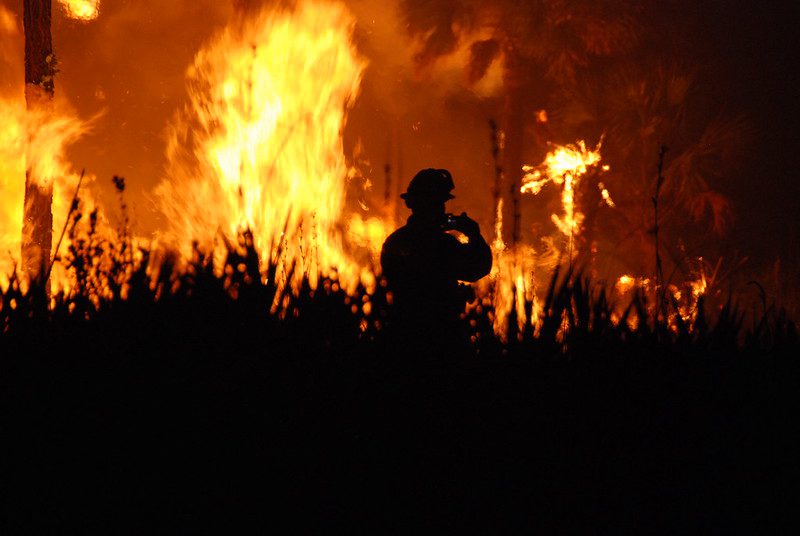
 The year 2021 is setting records in extreme heat and droughts, and Turkey is currently facing its worst heatwave in 30 years. On July 28, 2021, wildfires began to spread across the southwest coastline of Turkey. A total of 156 destructive blazes erupted and killed nine people, during these natural disasters in Turkey. The strong winds, low humidity and temperatures above 204 degrees Fahrenheit helped spread the fires quickly and made it extremely difficult to work towards putting out the fires. According to the Mugla municipality, wildfires have already affected more than 230,000 acres in Turkey.
Under Fire
Disputes have emerged as to whether or not Turkey’s government was prepared to handle such natural disasters. Turkish President Recep Tayyip Erdogan is receiving criticism for not purchasing properly equipped firefighting planes despite knowing that Turkey often faces wildfires.
The fires began in mountainous southwest Turkey, meaning ground intervention was not possible. Despite the Turkish Aeronautical Association containing previous fires with planes, the government claimed to have no water-dropping planes in inventory.
Floods Follow Fire
Changing weather is causing more extreme environmental events throughout the world, and Turkey is facing several of these disasters. By August 9, 2021, heavy rainfall helped put out all but two fires. Just days after, starting August 11, 2021, Turkey faced flash floods that swept through the Black Sea Coast. With a current death toll of 77 and 47 people still missing, the torrents of water and debris are devastating from these Natural DIsasters in Turkey.
The most heavily hit area is Kastamonu province, where apartment buildings experienced destruction after the Ezine river burst its banks. Additionally, the floods collapsed buildings, destroyed bridges, clogged the streets and cut the power supply. Over 1,700 people were evacuated, with boats and helicopters rescuing many citizens.
Natural Disasters and Poverty
There is a clear connection between natural disasters and poverty; natural disasters disproportionately affect poor people. Following the COVID-19 pandemic in 2020, Turkey’s poverty rate rose above 12%, meaning that these natural disasters will heavily affect many people. Unfortunately, the Turkish government did little to deal with the economic impact of COVID-19, and the lack of support contributed to rising poverty levels.
When facing poverty, any amount of impact on assets or consumption levels is a threat. Often, those facing poverty have to accept living in more risky areas due to affordability, which can lead to devastating outcomes during natural disasters. Additionally, people in low-income countries have less infrastructure to protect them.
A World Bank report found that the impact of extreme weather events on poverty is even more devastating than previously thought. Each year, natural disasters cause consumption losses of $520 billion and push 26 million people into poverty.
Often, events like these increase the damage to buildings, infrastructure and agriculture. These losses only represent the losses of those wealthy enough to lose something, and they fail to show the magnitude that the world’s poor suffer. With this idea in mind, the World Bank warns that natural disasters are a huge impediment to ending global poverty, and it is essential that poor people receive social and financial protection from unavoidable disasters.
The Good News
Poland sent firefighters, police officers and equipment to Turkey in order to help deal with the fires and flooding. Additionally, hundreds of Turkish volunteers banded together to help fight the fire. Volunteers formed a human chain to help carry equipment to firefighters and even put out a hillside fire with instruction from fire crews.
Turkish Philanthropy Funds has set up a Wildfire Relief Fund in order to provide support during the wildfires in Turkey. This support includes provisions of food and emergency aid to help those affected.
– Jacqueline Zembek
Photo: Flickr

5 Healthcare Successes in Burundi
5 Healthcare Successes in Burundi
What Does This Mean for Poverty in Burundi?
These healthcare successes in Burundi are creating economic, social and physical improvement for the country. Malnutrition, the rate of disease and poverty are all decreasing. These operations expand beyond just healthcare, though. They reach every aspect of living in Burundi. They create opportunities for more children to thrive in school and more people to go to work. Ultimately, these opportunities lead to economic growth and a more sustainable country.
– Delaney Gilmore
Photo: Flickr
Natural Disasters in Turkey and the Impact on Poverty
Under Fire
Disputes have emerged as to whether or not Turkey’s government was prepared to handle such natural disasters. Turkish President Recep Tayyip Erdogan is receiving criticism for not purchasing properly equipped firefighting planes despite knowing that Turkey often faces wildfires.
The fires began in mountainous southwest Turkey, meaning ground intervention was not possible. Despite the Turkish Aeronautical Association containing previous fires with planes, the government claimed to have no water-dropping planes in inventory.
Floods Follow Fire
Changing weather is causing more extreme environmental events throughout the world, and Turkey is facing several of these disasters. By August 9, 2021, heavy rainfall helped put out all but two fires. Just days after, starting August 11, 2021, Turkey faced flash floods that swept through the Black Sea Coast. With a current death toll of 77 and 47 people still missing, the torrents of water and debris are devastating from these Natural DIsasters in Turkey.
The most heavily hit area is Kastamonu province, where apartment buildings experienced destruction after the Ezine river burst its banks. Additionally, the floods collapsed buildings, destroyed bridges, clogged the streets and cut the power supply. Over 1,700 people were evacuated, with boats and helicopters rescuing many citizens.
Natural Disasters and Poverty
There is a clear connection between natural disasters and poverty; natural disasters disproportionately affect poor people. Following the COVID-19 pandemic in 2020, Turkey’s poverty rate rose above 12%, meaning that these natural disasters will heavily affect many people. Unfortunately, the Turkish government did little to deal with the economic impact of COVID-19, and the lack of support contributed to rising poverty levels.
When facing poverty, any amount of impact on assets or consumption levels is a threat. Often, those facing poverty have to accept living in more risky areas due to affordability, which can lead to devastating outcomes during natural disasters. Additionally, people in low-income countries have less infrastructure to protect them.
A World Bank report found that the impact of extreme weather events on poverty is even more devastating than previously thought. Each year, natural disasters cause consumption losses of $520 billion and push 26 million people into poverty.
Often, events like these increase the damage to buildings, infrastructure and agriculture. These losses only represent the losses of those wealthy enough to lose something, and they fail to show the magnitude that the world’s poor suffer. With this idea in mind, the World Bank warns that natural disasters are a huge impediment to ending global poverty, and it is essential that poor people receive social and financial protection from unavoidable disasters.
The Good News
Poland sent firefighters, police officers and equipment to Turkey in order to help deal with the fires and flooding. Additionally, hundreds of Turkish volunteers banded together to help fight the fire. Volunteers formed a human chain to help carry equipment to firefighters and even put out a hillside fire with instruction from fire crews.
Turkish Philanthropy Funds has set up a Wildfire Relief Fund in order to provide support during the wildfires in Turkey. This support includes provisions of food and emergency aid to help those affected.
– Jacqueline Zembek
Photo: Flickr
Women Are the Face of the Farmers’ Movement in India
The Farm Laws
The three laws passed are known as the Farm Laws. They allow for the privatization of agricultural markets. While the government stated that the Farm Laws would “give expanded market access and provide greater flexibility to farmers,” protestors say the laws will push small farmers into poverty by curtailing produce prices and favoring large corporations.
Women’s Role in Agriculture
Women are prominent in the farmers’ movement protest scene for multiple reasons. The laws can affect both their work as farmers and their family lives as spouses to farmers. According to India’s National Council of Applied Economic Research, women account for more than 42% of India’s agricultural labor force but own only 2% of farmland.
In 2019, more than 10,000 agricultural sector workers in India committed suicide, partially due to financial hardships. Widowed women were left to provide for themselves and were often unable to gain rights to their husbands’ farmland due to gender-biased inheritance traditions.
Women’s Role in the Protests
The farmers’ protests and women’s role in them have received mixed reactions from the public and the government. S.A. Bobde, the Chief Justice of India, asked, “Why are women and elders kept in the protest?” Bobde asked advocates to encourage women to stop showing up at protest sites. However, women responded to his remarks by yelling “no” into microphones and continuing to protest.
Jasbir Kaur, a 74-year old farmer, told Time Magazine, “Why should we go back? This is not just the men’s protest. We toil in the fields alongside the men. Who are we — if not farmers?” On Christmas Eve, protestor Amra Ram, the vice president of the All India Kisan Sabha, acknowledged the work and importance of women in the farmers’ movement in India.“Women farmers are fighting the battle at the threshold, and we are here to follow them,” he said.
Global Response
Despite governmental dismay toward the protestors, there is support for the Indian farmers’ movement across the globe. Solidarity protests have been held in Great Britain, the U.S. and Canada. Furthermore, women celebrities such as singer Rihanna, climate activist Greta Thunberg and author Meena Harris have used their Twitter platforms to stand in solidarity with the Indian activists.
“We ALL should be outraged by India’s internet shutdowns and paramilitary violence against farmer protesters,” Harris tweeted in February.
India’s foreign affairs ministry accused foreign celebrities of being dangerously “sensational” after Rihanna’s tweet reading “why aren’t we talking about this?! #FarmersProtest” increased anger toward India’s government officials.
History of Women in Protests
A large female presence is not new in Indian protest scenes. In the 1960s and 1970s, women activists stood up against gender violence and the economic exploitation of women. Their efforts drew the attention of the United Nations, which called for the reassessment of social conditions for women in India. That led to the founding of the Committee for the Status of Women in India (CSWI) in 1974.
More recently, in 2012, protests following the gang rape of Jyoti Pandey demanded public safety reform for women. India passed the Criminal Law Amendment Act in 2013 to address concerns about sexual violence.
In India, women protestors have historically been persistent in demanding reform. Women are propelling the farmers’ movement in India, one of the largest protests in history. However, the Indian government has yet to repeal the Farm Laws as protestors demand.
– Sarah Eichstadt
Photo: Flickr
How COVID-19 Has Impacted Hunger In Brazil
Hunger in Brazil
Hunger existed in Brazil long before COVID-19 reached the South American nation, where inequality has fueled high rates of poverty and food insecurity. In 2011, despite a relatively high GDP of $10,900 per capita, roughly 16 million Brazilians lived in extreme poverty, and many lacked the income to support an adequate diet.
However, the U.N. World Food Programme’s 2020 Hunger Map, which displays data from 2017-2019, showed positive progress in Brazil. Less than 2.5% of the total population was undernourished, a rate among the lowest in the world.
COVID-19 Worsens Hunger in Brazil
While the U.N. statistics demonstrate positive trends, COVID-19 has exacerbated food insecurity by widening preexisting inequalities in Brazil’s population. For example, the pandemic caused prices of basic food products to increase. Cooking oils, rice and other diet essentials became so expensive that they were essentially impossible to purchase for many families in Brazil. The New York Times pointed out that as of April 2021, a kilogram of rice sold for twice as much as before the pandemic, and cooking oil tripled in price in the same period.
High unemployment rates caused by the pandemic combined with high food prices further increased the rates of hunger. In an interview with Reuters, unemployed worker Rosana de Paula describes the situation among the unemployed. Because of a lack of credit and little to no savings, the sudden disappearance of income from pandemic-related unemployment is devastating, leaving “no way to pay for food,” according to de Paula.
Now, more than a year into the pandemic and with hunger continually worsening in Brazil, the country is back in the “yellow zone” on the U.N.’s Hunger Map. In an interview with The New Humanitarian, the Director of the Center of Excellence Against Hunger said increasing hunger has raised the alarm in Brazil. More than 19 million people, or 9% of the population, are currently food insecure.
Ways the World is Helping Brazil
Despite the hardships the pandemic has created for many Brazilian families, NGOs and other grassroots campaigns have stepped in to alleviate the hunger crisis. Food campaigns across the country have offered support and resources, distributing meals to millions of Brazilian families. Anyone worldwide can donate to these anti-hunger campaigns to help curb the high demand for food and other necessities that the pandemic has exacerbated.
– Rebecca Fontana
Photo: Flickr
Impact of COVID-19 on Poverty in Iraq
Iraq has suffered from past wars, a security-challenged and corrupt government and the recent withdrawal of the United States troops. The impact of COVID-19 on poverty in Iraq adds another challenging element to this underdeveloped country. More than a year into the COVID-19 pandemic, the country’s impoverished communities are struggling. The COVID-19 pandemic has pushed 4.5 million Iraqis below the poverty line. Job losses and a rise in prices for goods have contributed to the increase in poverty.
The Children
The pandemic has impacted Iraqi children the most. According to a UNICEF Iraq study, one out of five Iraqi children were already impoverished before the crisis. Since the COVID-19 pandemic, the number has doubled to two out of five children. The study also revealed that the increase in poverty has affected school enrollment, nutrition and children’s development and coping skills.
UNICEF Iraq has recommended that the country needs more social services programs that protect children and that the Iraq government should take prompt action in making these programs more accessible in rural areas. The Iraq government has the funding to promote these programs and health-related public service announcements as well as awareness campaigns on gender-based violence awareness and prevention. However, the government has not always been consistent.
Employment Challenges
Since the COVID-19 pandemic began in March 2020, Iraqis have faced an increase in employment challenges. According to the International Labour Organization (ILO) and Fafo Institute for Labour and Social Research in collaboration with the Cash Consortium for Iraq (CCI), COVID-19 has had a catastrophic impact on vulnerable households’ income and employment. Younger workers and people in informal employment make up 3,265 of the households in the study.
Prior to the COVID-19 pandemic, the Iraq unemployment rate was at 12.76% and rose to 13.74%, after the pandemic. Research also determined that the majority had no health insurance or social security. One-quarter of citizens that had employment prior to the pandemic lockdown experienced permanent lay-offs, with 36% of those in the age group of 18-24 permanently dismissed from their jobs. Further assessment revealed that those employed under verbal agreements had a 40% reduction in income. Only 16% had savings and 85% only had savings to last less than three months.
The International Labor Country Coordinator for Iraq, Maha Kattaa, stated that COVID-19 has limited the availability of resources to vulnerable households and has affected their ability to cope. It has also created barriers to retaining good jobs.
The Government and Solutions
UNICEF Iraq has recommended that the Iraqi government establish long-term policy measures for impoverished communities to alleviate the impact of COVID-19 on poverty in Iraq. It suggested that the government create accessible support packages and provide cash and in-kind support to those who have lost their jobs. UNICEF Iraq also suggested that the Iraqi government make equal social security benefits available for public and private employees.
Despite the fact that the United States has withdrawn troops from Iraq, it is continuing to provide aid to the country’s impoverished communities. In August 2021, it donated 500,000 doses of the Pfizer vaccine. The U.S. Agency for International Development (USAID) has prepared labs for large-scale testing of COVID-19 and will continue to do so long-term. USAID has also implemented public health emergency plans, provided more than 19,000 food baskets and distributed cash-based transfers to the most vulnerable Iraqi citizens.
The Iraq government has been open to aid from other countries. The government wants to combat the negative effects of COVID-19 but realizes it needs help from outside sources. On the other hand, the government has not led a consistent vaccine awareness campaign and many Iraqis are skeptical about the COVID-19 vaccines. On April 24, 2021, Iraq had more than one million COVID-19 cases.
Looking Ahead
The Iraqi government has made efforts to protect its citizens from COVID-19. However, the inconsistent messaging, limited resources and rise in COVID-19 cases have made it difficult for impoverished communities to thrive. The resources for new jobs, healthcare, education enrollment and coping skills will need to be steady and must align with the current needs of the country. Continued studies on COVID-19 and the impact of COVID-19 on poverty in Iraq as well as aid from other countries could help Iraq significantly.
– Dana Smith
Photo: Flickr
Children International Works to End Global Child Poverty
Children International
Children International, a nonprofit that has worked to end poverty for nearly 80 years, is renowned for its transparency. Its website displays the many tangible positive changes the organization has brought about for children living in poverty. Children International believes addressing the needs of children is the way to end global poverty. Through its unique child sponsorship program, a person from anywhere in the world can fund the health, educational, security and nutritional needs of a child.
Through its Employment Program, Empowerment Program and various health and education programs, Children International works to end global child poverty through sustainable short-term and long-term approaches. These include providing basic health and dental services, boosting children’s confidence and creating post-graduation employment opportunities.
Safe Community Centers
Children International has also created more than 67 community centers to ensure that children can grow in secure and safe environments. Holistic child care in these safe spaces addresses the nutritional, educational and physical needs of children up to age 20. Children International believes that safe spaces and programs tailored to the unique needs of each child will ultimately end global poverty.
Nuanced Attention to Every Child
Children International’s customized programs focus on the individual needs of each child. The child sponsorship program enables donors to choose a child to sponsor, then give directly to that child’s specific needs. This “contextualization” ensures that both “a 6-year-old in Zambia” and “a 14-year-old in Honduras” have their particular needs met. The child sponsorship program focuses on the nuanced needs of every child by truly listening to the children themselves and allocating the necessary resources to lift them out of poverty.
Children International’s customized programs ensure that children are educated, healthy, employed and empowered as they transition into adulthood. The education program also provides children with shoes, books, uniforms, tutoring and scholarships and builds community centers with computers and other useful resources. Nearly 88% of children engaged in tutoring programs from Children International have improved profoundly in reading, writing and math and 71% of those involved in the Employment Program have found employment.
Ending Global Child Poverty
Success stories from four continents illuminate the astounding work of Children International, which has helped more than one million children. Children International is working to end global child poverty and has already taken off immensely in its success.
– Nora Zaim-Sassi
Photo: Flickr
The Grand Ethiopian Renaissance Dam and Its Effect on Egypt
Project Background
Construction of the Grand Ethiopian Renaissance Dam began in April of 2011 and finished in July of 2020. The dam can hold up to 74 billion cubic meters of water, which makes it the largest hydropower project in Africa.
Located in the Benishangul-Gumuz Region, about 30 km upstream from Sudan, the U.S. Bureau of Reclamation identified the site between 1956 and 1964. But, construction only actually began after surveys in 2009 and 2010.
Funds from local taxes, donations and government bonds raised the necessary $4.8 billion to cover construction costs. Ethiopian’s at home and abroad provided the first $350 million. Then, the state-owned Ethiopian Electric Power Corporation invested some of its own revenue, as well as money borrowed from state-owned banks.
Controversy
Despite the benefits some say the dam will have, the project is not without controversy. Over the last decade, the governments of Ethiopia, Egypt, and Sudan are working to come to an official agreement on how the GERD will operate.
The Egyptian government voiced strong opposition to the GERD stating that it will cause major disruptions to the Nile. Egypt depends on more than 90% of its water from the river. Egyptian Foreign Minister Sameh Shoukry said that Egypt is facing “an existential threat” because of this project.
For Egypt, the main concern lies in the impact on the water supply of previous dams on the Nile. They worry GERD will do the same. The annual flooding of the Nile is one of the most important natural events that occur throughout Egypt’s history. Egypt relies heavily on this annual event for its agriculture. Additionally, there is concern that the GERD could alter this flooding and/or interfere with the flow of sediments that are vital for growing food in the region.
Furthermore, the Sudanese government expressed concern over the effect of the dam on its people and their water rights. In June 2021, Sudan and Egypt released a joint statement. They urged for a legally binding agreement between the countries before Ethiopia began its second filling of the dam.
Water Rights
The Nile Waters Agreements of 1929 and 1959 gave Egypt and Sudan the right to all the water in the Nile. These agreements also gave Egypt the right to veto any upstream construction, such as the GERD. However, The agreements did not include Ethiopia. Therefore, Ethiopia does not recognize the agreements as legitimate.
Since Ethiopia does not recognize the Nile Waters agreements, Egypt and Sudan pushed to get a legally binding agreement. The new agreement would place restrictions on the amount of water Ethiopia may hold in the dam. However, Ethiopia refused to agree to any of these restrictions, instead favoring looser guidelines that are not legally binding.
However, the international community supports Egypt’s calls for a formal agreement. The United States warns that filling the dam without an agreement in place would lead to heightened tensions in the region. In July 2021, the United Nations Security Council made another attempt at mediating the conflict, the latest in the decade-long struggle to reach an agreement. These talks also failed and Ethiopia proceeded to fill the dam.
Looking Ahead
Despite the controversy and the Grand Ethiopian Renaissance Dam’s effect on Egypt and Sudan, it appears that the Ethiopian government will continue to move forward with filling the dam. In July of 2021, the second filling of the dam was completed. Even with the controversy, the project will provide electricity to millions in the region who previously did not have access. This is sure to have a positive impact on the citizens of the region.
– Taryn Steckler-Houle
Photo: Flickr
Child Marriage in Zimbabwe
Child marriage in Zimbabwe greatly predates the COVID-19 pandemic, suggesting that efforts to eliminate the practice will require a wide range of economic and cultural mitigation tactics rather than focusing solely on the eradication of the coronavirus.
Current Events
The topic of child marriage in Zimbabwe caught international attention recently when 14-year-old Memory Machaya died during childbirth. The practice is common in Zimbabwe’s Apostolic Church and has led to an online petition entitled “justice for Memory Machaya” garnering nearly 60,000 signatures.
“Female persons are not seen as fully human, with individual rights, choice, right to control our own bodies,” said Zimbabwean feminist activist Everjoice Win in a tweet on August 6, 2021 “The enemy is patriarchy, and the attendant systems within the state and religious institutions and wider society, which do not see us as humans.”
Introduction to Child Marriage in Zimbabwe
Almost one in three Zimbabwean women are married by the time they turn 18. The practice most often occurs in the poorer regions of Mashonaland Central and Mashonaland West regions, where 50% and 42% of girls, respectively, marry as children, according to a 2014 UNICEF report. Despite the fact that the Zimbabwean Constitutional Court deemed the practice of child marriage as unconstitutional in January 2016, setting the minimum age for marriage at 18, child marriage in Zimbabwe persists.
What Drives Child Marriage?
The risks for child marriage in Zimbabwe have the potential to exist domestically but require unequivocal participation from healthcare providers. In a 2016-2020 healthcare plan, The Zimbabwe National Family Planning Strategy allowed 16-year-olds to receive contraception without parental consent. However, providers remain reluctant and child services are scarce.
Lack of education also drives child marriage in Zimbabwe. The same 2014 survey found that “the average age at marriage is 17.2 years for girls with no education and 23.6 for girls with more than a secondary education.” Nearly half of 15- to 19-year-olds without a secondary education began having children compared to only one in five girls the same age who completed their secondary education.
Potential Solutions
UNICEF published a list of strategies that it plans to implement throughout Western and Central Africa to reduce child marriage. The organization cites the growing child population in Africa behind the urgency in their efforts.
The following practices will help UNICEF reduce child marriage in the year 2021:
While the practice of child marriage in Zimbabwe has deep roots, the international community has taken notice and has a plan to reduce its prevalence. With increased empowerment and investment in young Zimbabwean girls, child marriage will soon enough become much less commonplace and eventually, experience eradication.
– Jessica Umbro
Photo: Flickr
Vaccine Hesitancy and Africa’s Low COVID-19 Vaccination Rate
Inadequate Supply
Low-income countries around the world have struggled to obtain a sufficient supply of the COVID-19 vaccine while wealthy countries acquired much of what was available. This lack of vaccines is apparent in Africa, home to some of the most impoverished countries in the world. Wealthy countries obtained COVID-19 vaccines because they “cut deals directly with vaccine-makers, securing a disproportionately large share of early supply and undermining a fledgling COVAX.”
In contrast to the actions of wealthy countries, COVAX wanted to distribute the vaccine supply to all countries engaged in the initiative. Countries in Africa are especially dependent on COVAX as most African governments cannot afford to buy vaccines. For example, Burundi, with “the highest poverty rate in Africa at 80%” needs aid from COVAX to obtain various vaccines. These countries rely on Gavi, the global Vaccine Alliance behind COVAX to obtain vaccines not only for COVID-19 but for various other illnesses as well. So far, COVAX has delivered more than 31 million doses of the COVID-19 vaccine to countries in Africa and plans to supply 520 million doses by the end of 2021. While Africa is receiving more vaccines through COVAX, vaccine hesitancy in Africa presents another barrier to vaccination.
Vaccine Hesitancy
The ONE Campaign, UNICEF and the African Union have partnered to create a TikTok initiative to tackle vaccine hesitancy in Africa by addressing concerns and misinformation about the vaccine. During a COVID-19 surge in May 2021 in Africa, “a survey conducted by Geopoll” indicated that a mere 48% of people in Africa would take the vaccine if it was accessible. This statistic decreased from 62% in November 2020, which “further illustrates the impact of continued negative information about the vaccine.”
The TikTok campaign helps correct social media misinformation about COVID-19, addresses people’s concerns and promotes the vaccine under the hashtag #MythOrVax. The campaign will have two phases. The first phase involves a public quiz on TikTok that tests users’ preexisting knowledge of COVID-19 and the vaccine. The second phase of the campaign starts on September 4, 2021, involves the organizations bringing African celebrities and health experts to discuss people’s concerns about the vaccine and the importance of getting the vaccine. While the slow vaccine rollout in Africa is a result of limited supply due to wealthy countries obtaining masses of vaccines, there is still low vaccine confidence in Africa, which the campaign aims to resolve.
Looking Ahead
The vaccine rollout in Africa is lagging but major international organizations and governments are committing to securing more vaccines for people in Africa in the coming months heading into next year. However, vaccine confidence must grow in order for Africa’s vaccination rate to improve, which should ultimately help to reduce the growing number of infections on the continent. With the TikTok campaign to reduce vaccine hesitancy in Africa, Africa can successfully improve its low vaccination rate.
– Kyle Har
Photo: Flickr
The Nature of Poverty in the North Caucasus
The North Caucasus comprises a rugged region along Russia’s southwestern frontier. The area is ethnically diverse and has a complicated history. Additionally, its poverty rate is high compared to most other regions of Russia.
Background of the Region
The makeup and history of the North Caucasus are essential to understanding the nature of poverty there. The region lies along Russia’s border with Georgia and Azerbaijan. It consists of the five republics of Chechnya, Dagestan, Ingushetia, North Ossetia and Kabardino-Balkaria. The North Caucasus has a population of around 10 million, and of Russia’s eight federal districts, it is the only one in which ethnic Russians comprise a minority. Dozens of different ethnic groups call the North Caucasus home.
Conflict worsens poverty in the North Caucasus. After the fall of the Soviet Union, violence began in Chechnya and spread to the neighboring republics of the region, such as Dagestan, which has seen spillover violence. A low-level insurgency now spans much of the North Caucasus following earlier Chechen-Russian conflicts. Just as the conflict worsens poverty, poverty also contributes to conflict in the region. Areas such as Dagestan have become breeding grounds for Islamic extremists in recent years, due mainly to high unemployment and poverty rates throughout the region.
Poverty in the North Caucasus
Not only does the North Caucasus have high rates of poverty compared to other regions of Russia but it has also suffered from uneven development in recent years. Chechnya, which suffers from high poverty and unemployment rates, has seen little effective reconstruction in the wake of conflict. Underdevelopment also complicates accurately measuring the scope of poverty in the region.
The North Caucasus felt the economic impact of the pandemic heavily as many lost their jobs overnight. Additionally, the Russian government has largely left the regional governments of the North Caucasus on their own during the pandemic, sending little aid. The human rights violations and corruption that hamstring efforts to alleviate poverty have further complicated the situation. However, in recent years, the number of casualties from armed conflict in the region has diminished.
NGOs’ Work in the North Caucasus
With poverty so prevalent in the region, NGOs have been stepping up to provide needed services. For example, My Angel offers assistance to children in Karachayevo-Cherkessia who suffer from genetic diseases. Meanwhile, the All-Caucasus Youth Training Center works to encourage children’s participation in sports and provides support to women and children who have suffered violence. In addition, the Mother and Children NGO assists young women throughout the North Caucasus by informing them about their rights and healthcare options.
The North Caucasus is an incredibly diverse region within the Russian Federation. It has a complicated history, especially regarding the conflict that has impacted the region since the fall of the Soviet Union. In addition, poverty remains prevalent in the North Caucasus and contributes to conflict in the region. However, despite these challenges, NGOs are working to provide the people of the North Caucasus with as much assistance as possible.
– Coulter Layden
Photo: Wikimedia Commons