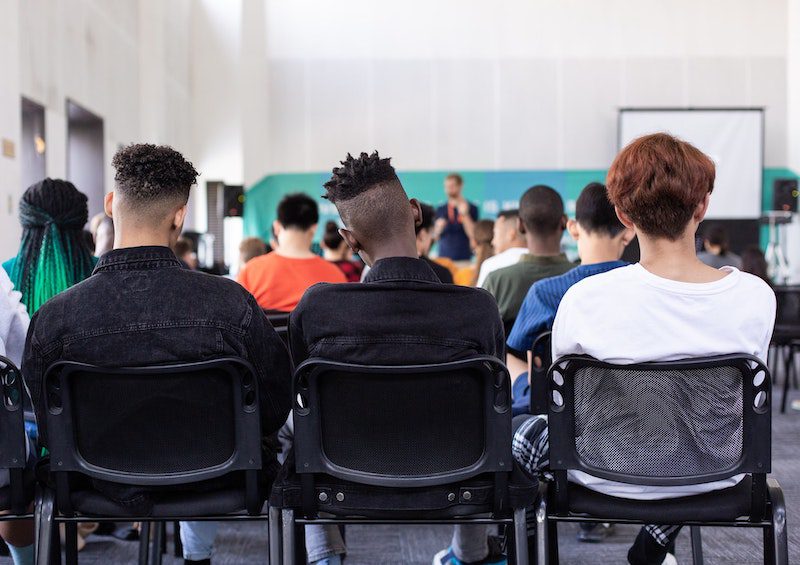
 Latin America notes large numbers of extreme poverty across its population. In 2021, extreme poverty hit 86 million, under the pressures of COVID-19. This is a 5 million increase from 2020 — the Social Panorama of Latin America report highlights that this is a setback equivalent to 27 years. English learning in Latin America could help reduce poverty across the region by opening up more economic opportunities.
English Learning in Latin America
According to the English Proficiency Index, “Latin America is the region [with] the lowest levels of English” as of 2020. Low English proficiency rates stem from a “low quality of language teaching programs in public education and the difficulties in accessing alternative training” as a result of the scarcity of language training institutions and the expensive costs of such programs.
According to the index, some of the Latin American countries with the lowest rates of English proficiency are Colombia, Venezuela, Ecuador and Mexico. In Mexico, less than 10% of schools have English as part of the education curriculum. Furthermore, in 2015, Latin America lagged 2.5 years behind Organization for Economic Co-operation and Development (OECD) nations in schooling development.
The Importance of English Skills
According to the report “Work in Progress: English Teaching and Teachers in Latin America, “Many, if not most, English teachers in Latin America lack either the necessary English skills, the necessary pedagogical skills, or both, to be effective educators in the classroom.” Yet, most Latin American countries do not have programs in place to ensure English educators receive the training necessary for high-quality English education.
The Inter-American Dialogue highlights that one of the top “21st-century skills for most countries in [Latin America] is English language proficiency.” It says further, “English proficiency is increasingly necessary for business and international communication and, in that regard, linked with prospects for economic competitiveness and growth in the global economy.”
Learning English in Latin America offers many new opportunities, sources of revenue and securities. There are clear benefits to learning and speaking more than one language. In particular, English speaking skills open up a greater range of job opportunities. On top of this, English is commonly used as “a trade language or diplomatic language.” In fields such as tourism, science and computers, English is the dominant language.
Opportunities in and out of Latin America
Firstly, tourism is booming in Latin America, bringing significant income to the region. Considering the proximity of the United States and Canada to Mexico, it is no surprise that Mexico is a popular destination for tourists from these English-speaking countries.
In 2019 alone, 55 million U.S. citizens traveled to Latin America. Speaking English would likely enable locals in Latin America to do business more effectively in the tourism market. Locals could conduct tours in English or provide translation services.
English is growing as the language of choice for international business and trade, known as “business English.” As much as 80% of jobs offered in Latin America require proficiency in English. Considering only 20% of professionals in Latin America can speak English, a lack of English proficiency is concerning for labor markets. As international commerce expands, if Latin America wants to draw in more money and attain greater job security and revenue, it needs to promote greater education in English. This will persuade more multinational corporations to relocate to Latin America or hire individuals within Latin America.
Lastly, speaking English provides individuals with the opportunity to apply for jobs in countries that offer better wages and job security. The minimum wage in Mexico is 172 pesos for one day of work, which converts to around $8 a day.
The Positives of the Pandemic: Education, Policies and Technology
The restrictions of the COVID-19 pandemic led to a rise in education software that people across the world can access remotely. This expands people’s access to opportunities for English learning. With the added pressure on governments to provide online services for schooling, in Latin America, there are now 12 million adults accessing online education, UNESCO says.
Many Latin American countries are recognizing the importance of providing English language learning opportunities. Costa Rica has made English learning compulsory and launched an initiative in 2018 where teachers across the country enter into English learning courses.
Following the increased pressures of COVID-19, resulting in about a third of Latin America living below the extreme poverty line as of May 2021, English learning in Latin America appears to offer a window for many to access new opportunities in a wider job market with higher pay and more security. If Latin America continues to prioritize English learning, this skill could translate to economic growth across the region.
– Reuben Cochrane
Photo: Unsplash

The DOLE Graduation Program In the Philippines
Many developing countries suffered the impact of the COVID-19 pandemic with the Philippines being one of them. The past few years left about 19.99 million Filipinos below the poverty line recorded in 2021. Not only did the pandemic affect families but projections also stated that the Philippines’ GDP would decrease by about 11.5% during the timeline of the pandemic. The DOLE (Department of Labor and Employment) Graduation Program in the Philippines, whose purpose is to lead participants into self-sustainability and out of poverty has taken place and proved to be positive even among those latest struggles.
Needed Aide For the Philippines
The Philippines had initiatives and organizations set up even before the pandemic that was working on poverty reduction. UNICEF is one organization with several efforts already in place in the Philippines. For example, it teamed up with CERF (United Nations Central Emergency Response Fund) and Plan International to push the WASH initiative which helps with hygiene and healthier living conditions.
However, even with programs like that, there was still a need for assistance in other ways. Among hygiene health, resources and training for the Filipinos to learn how to manage their livelihoods themselves seemed like the next step.
DOLE Graduation Program
Fortunately, a pilot program called the Graduation program that BRAC started in 2002, was yielding positive results. More than 2 million households had graduated from the program and were out of extreme poverty as a result.
The purpose of the program is to give support and aid through various means like cash transfers. The program also helps find health resources and provides training or mentorship for financial management and long-term resiliency skills. Not just economically but also socially; the program has coached for the participants to learn how to navigate and gain resources through city links or their government.
This type of program is what the people of the Negros Occidental municipalities could benefit from. So, the DOLE had been partnering with the Asian Development Bank (ADB) and BRAC UPGI (Ultra-Poor Graduation Initiative) to instill this working program in their community. The goal was to help their people become self-stainable and work their way out of poverty like the others in the initial pilot program.
Graduation Initiative in the Philippines
The DOLE Graduation Program for the Philippines began in 2018, reaching about 1,800 participants. The fundamental goal was to put these beneficiaries on a path toward sustainability and have long-term effects even after it would end. According to the BRAC’s country brief, the program ended in September 2020 but the COVID-19 pandemic had made many wonders if the program’s desired effects were able to sustain throughout and after it.
Adaptability
For the DOLE graduation pilot to survive during the epidemic they had to adapt. Coaching and peer meetings had to become remote or change in frequency or size. The program included many other measures to ensure safety for all those involved including digital monitoring, and strong communication between workers/participants. Workers also used PPE and participated in training on safety protocols like reporting symptoms and rescheduling meetings if needed or conducting them from a distance.
Through the hygiene training that was already being implemented, the participants were able to quickly handle the COVID-19 pandemic more effectively. There were even cases where participants with food assistance from the initiative were able to feed themselves and other neighbors too during the pandemic.
Results
The results of the DOLE Graduation pilot program and its adaptability have been positive for the participants. In the ADB assessment of the Graduation program households receiving the interventions along with government help, fared better during the COVID-19 pandemic than regular households. Other results from the assessment showed specific numbers, “The pilot project’s regular monitoring system found that, on average, 71% of households met each of the nine criteria under the four pillars of graduation—social protection, financial inclusion, livelihoods promotion and social empowerment.”
BRAC had also started its Rapid Diagnostic Assessment to monitor the participants even during the quarantine and mark down assistance or data. Through this, the pilot participants used the training and resources they received to find government assistance when necessary like the 96% who were able to go and find cash assistance from the government or two-thirds (67.15%) of participants able to keep up earnings and their occupation/livelihoods compared to a smaller amount in April (48.72%), according to BRAC’s bulletin.
The financial literacy training given displayed pilot participants withstanding the financial hardships during the pandemic. Seventy-five percent of the participants had savings to even use at this time compared to the 29% that originally reported in the beginning, according to the bulletin.
The Future
The Philippines DOLE Graduation pilot program has shown long-term impact and resilience during the COVID-pandemic for the Negro Occidental municipalities. This in turn has made the Philippines Department of Social Welfare and Development (DSWD), adopt the learnings of the pilot and instill the full Graduation program in other provinces of the Philippines, according to the country’s report. BRAC also has a worldwide goal to reach around 4.6 million more households by 2026.
– Marynette Holmes
Photo: Flickr
Global Gender Equality Progress
World Vision reports that 689 million people endured extreme poverty in 2021 and research shows that women make up a majority of the world’s impoverished. One trend that is common among countries with high poverty rates is a lack of gender equality. In some of these countries, women make less money than men, have limited access to education, or have fewer rights than men. Fortunately, in recent years, the world is noting global gender equality progress.
New Female Leaders Worldwide
In recent years, gender equality movements have reached government offices as countries around the world have made the progressive change of appointing women to leadership positions. In 2021, Albania appointed 12 out of its 17 total cabinet seats to women, a 70% majority. By giving the prime minister a new, primarily female cabinet, Albania could begin to go in a new direction that could further empower women in the nation. Albania ranks 25th out of 156 countries on the World Economic Forum’s Global Gender Gap Report of 2021.
Honduras also made a significant change to its government in January 2022 when Xiomara Castro became the first female president in the country’s history. Castro has already voiced her intentions to tackle social injustice and help women. This should be encouraging to the citizens of Honduras, particularly its women who have faced numerous challenges such as femicide and reproductive rights restrictions.
Like Castro, in December 2020, Maia Sandu became the first woman to hold the presidency in her country, Moldova. In Moldova, almost 27% of people lived in poverty in 2020 and gender inequality is prominent as women face high rates of gender-based violence and less than half of Moldovan women participate in the workforce. Despite the challenges that Sandu has faced due to gender biases, there is hope for the women of Moldova to reach equality through Sandu’s efforts.
New Female Leader of the World Trade Organization (WTO)
In 2021, Ngozi Okonjo-Iweala became the first woman to lead the World Trade Organization (WTO) as director-general. She is also the first African to lead the organization. The WTO is focused on the “global rules of trade between nations.” Its goal is to help nations efficiently conduct trade with each other. Having Okonjo-Iweala as the WTO new leader could be promising in terms of reducing global poverty as Okonjo-Iweala is a “firm believer” in using trade to help raise countries out of poverty. Furthermore, being an African woman, Okonjo-Iweala has experienced the struggles of the African continent first-hand. Africa holds a large majority of the world’s poor, most of whom are women.
New Constitution in Chile Strengthens Equality
In 2021, Chile voted to elect an assembly made up of 155 citizens to construct the country’s newest constitution. This is the first constitution in the world that men and women wrote equally. Many believe that this will help women in Chile make significant progress toward equality.
The previous constitution had a number of flaws as it was drafted, primarily, by one person during a time when Augusto Pinochet ruled Chile with an iron fist. One of the main issues is that men had more rights than women. The new constitution heavily prioritizes gender parity in the country. With more people having input on their country’s laws, Chile can better address the issue of inequality.
Chile’s new constitution could create a new standard for gender equality movements around the world. Because the world’s impoverished mostly consist of women, improving gender equality could reduce that poverty. If more countries adapted governments to promote gender equality, more women worldwide would have the same rights as men. This could be a driving force behind eliminating inequality between men and women as well as eliminating poverty for both.
Continued global gender equality progress will ensure that more women rise out of poverty across the world.
– Tyshon Johnson
Photo: Unsplash
TODOC Provides Affordable Cochlear Implants
A South Korean tech startup is pioneering a more affordable cochlear implant through automated production. TODOC specializes in making these implants, which use surgically installed devices to help those with severe hearing loss improve their hearing by bypassing damaged portions of the ear. Without the devices, hearing-impaired people are more likely to experience lower economic status, poorer education and more, especially in parts of the world where resources dedicated to people with disabilities are scarce.
The average cochlear implant costs more than $20,000, putting it firmly out of reach for many in the developing world. At the same time, 80% of people that could benefit from having cochlear hearing live in the developing world.
With higher rates of hearing impairment and limited resources, TODOC’s more affordable cochlear implant poses a possible solution to an issue that is costing the world billions of dollars and pushing many into isolation and poverty.
How Deafness and Hearing Loss Contribute to Poverty
Hearing loss and deafness can create numerous barriers to success, especially when those living with them do not receive sufficient support. One study published in the journal Disability and Society showed that those in the United Kingdom living with hearing impairment on average had lower household incomes, greater difficulties making ends meet, struggled more with unexpected costs and had higher jobless rates than their unimpaired counterparts.
Compared to those living in the U.K., which boasted an impressive Human Development Index of 0.932 in 2018, people with hearing difficulties are even more likely to face disability-related consequences when living in developing countries. A 2005 study published in the BMJ posited that though children with hearing issues are just as likely to see a doctor, 80% did not receive a hearing aid. As a result, children with hearing impairments on average saw their education delayed until they were more than 10 years old, putting them at a considerable disadvantage to their unimpaired peers.
Barriers to Distributing Hearing Aids and Other Treatments
Throughout the developing world, similar situations are commonplace. One study published in the International Journal of Environmental Research and Public Health demonstrated that the distribution of hearing aids to families living in proximity to Guatemala City, Guatemala significantly increased household incomes. Another study from BMC Health Services Research demonstrated that children living with disabilities in Sub-Saharan African countries faced numerous barriers, such as widespread poverty, cultural stigma and inadequate healthcare systems, to receiving diagnoses and treatments for their issues, which ultimately decreased their quality of life.
The economic consequences of unaddressed hearing impairment and the lack of affordable cochlear implants in the developing world has received wide documentation. The World Health Organization (WHO) has stated that lower- and middle-income countries have contributed 57% of the $980 billion lost to healthcare costs, educational costs, loss of productivity and societal costs stemming from unaddressed hearing impairment. The number that WHO provided excluded the exorbitant amount of money spent on hearing aids.
TODOC’s Plans to Improve Hearing For the Poor
Kyou Sik Min, who has previously worked for Samsung Electronics’s healthcare technology division and at other cochlear implant companies, started TODOC with the mission of expanding the cochlear implant market globally. To further this point, Sik Min named the company after the Korean word for the sound made when someone pats another’s shoulder “to create a company that comforts people with hearing loss by ‘patting’ the shoulders of people in difficult situations.”
The company specifically focuses on creating high-quality, affordable cochlear implants for those who could not otherwise afford them. It also creates nerve stimulation and neuromodulation devices to help researchers and help with nerve pain. To reduce costs and increase output, TODOC has developed a system to manufacture its devices using automation.
Currently, TODOC does not list a price for any of its devices. There are also questions of if and/or how the company plans to address the issue of the costs and accessibility to the surgery required to implant the devices and the therapy typically required to use cochlear implants.
At the same time, the company lists numerous innovations and improvements attached to its SULLIVAN model of affordable cochlear implants. This includes brain-machine interfacing and what the company calls “superior Neural Interface Technology,” which both have the potential to streamline the device’s implementation and use.
Looking Ahead
The company was invited to the Consumer Electronic Show in January 2022 to show its first line of implants and further advertise its products. In 2021, Min’s pitch for making a more affordable cochlear implant won the company $500,000 in funding at the Entrepreneurial World Cup Finals. Investors have also provided the company with more than millions of dollars in funding, including $3.5 million from the South Korean government.
Overall, the investments demonstrate the international community’s confidence in TODOC’s ability to deliver on its promise to bring a solution to the developing world’s hearing problems and fight inequity within the cochlear implant industry.
– Ryan Morton
Photo: Wikipedia Commons
Impact of COVID-19 on Poverty in Cote d’Ivoire
The breakout of COVID-19 in 2020 had dramatic consequences on the economy of Cote d’Ivoire. Closing public spaces, quarantines and curfews helped to limit the spread of COVID-19 but created a rise in unemployment. Consequently, there has been a significant impact on poverty in Cote d’Ivoire due to COVID-19.
The Increase in Extreme Poverty After the COVID-19 Outbreak
As a result of measures to counter COVID-19, 85% of the informal workers in the country lost their jobs. Furthermore, COVID-19 measures have destroyed more than 1.3 million jobs and 71.7% of the households have a lower income than before the health crisis.
However, the poorest people of Cote d’Ivoire were the ones who suffered the most from the consequences of anti-COVID policies. In fact, 1.37 million households went under the poverty line and the poorest people lost on average more than 30% of their revenues, the UNDP reported.
According to the UNDP, extreme poverty in the country increased by four between 2019 and 2020 due to the COVID-19 consequences on the economy. Then, between 2020 and 2021, the share of the population living with less than $1.90 per day went from 18.3% to 20.2%. It shows how urgent it is to counter the impact of COVID-19 on poverty in Cote d’Ivoire.
New Measures to Fight Against Extreme Poverty
The government developed policies and programs in 2020 to help the economy recover as well as to reduce as much as possible extreme poverty. As a matter of fact, the country’s budget increased from $14.8 billion in 2021 to $16 billion in order to increase the number of anti-poverty policies and strengthen the health sector.
Furthermore, as 93% of the labor force works in the informal sector, many policies have been implemented to support this critical economic sector and to avoid more poverty among the workers in this sector. Indeed, starting from March 2020, workers from the informal sector are benefiting from the same social security through the Social Regime for the Self-Employed (RSTI).
The Informal Sector Support Fund (FASI)
In addition to the RSTI, which Cote d’Ivoire adopted before the pandemic, the government launched the Informal Sector Support Fund (FASI) in May 2020 to financially support the companies and the workers of the informal sector which suffered heavily from the economic consequences of COVID-19. The implementation plan of the FASI has four phases. Between June and August 2020, the first phase aimed to identify potential beneficiaries and grant subsidies and loans. The second phase between September 2020 and February 2021 was about training and follow-up support for beneficiaries to avoid bankruptcy and the destruction of jobs following the COVID-19 outbreak.
Furthermore, the Ministry of Solidarity and Fight Against Poverty started its research on extreme poverty in October 2021. This research provided a better view of extreme poverty with detailed statistics and determinants of extreme poverty within all the regions of Cote d’Ivoire in the period following the COVID-19 crisis.
Conclusion of the Study
This study helped increase the efficiency of the National Register for poor and vulnerable households. Since the launching of its operational phase in 2019, the register is one of the most important policies the government implemented to tackle poverty in Cote d’Ivoire. Indeed, this unique database currently helps to examine the social needs that come from the consequences of COVID-19 on the economy and provide social programs to the ones who need them with high efficiency. This is because the database informs governments of exactly where and for what they need to send help.
The United Nations agencies, and especially the UNDP which provided $1.8 million to Cote d’Ivoire, are supporting on a daily basis the government of Cote d’Ivoire in their fight against COVID-19 consequences.
With such ambitious policies, the government is facing the impact of COVID-19 on the economy of Cote d’Ivoire, hoping to eradicate extreme poverty and allow an even brighter future for the country at the same time.
– Evan Da Costa Marques
Photo: Wikipedia Commons
English Learning in Latin America
English Learning in Latin America
According to the English Proficiency Index, “Latin America is the region [with] the lowest levels of English” as of 2020. Low English proficiency rates stem from a “low quality of language teaching programs in public education and the difficulties in accessing alternative training” as a result of the scarcity of language training institutions and the expensive costs of such programs.
According to the index, some of the Latin American countries with the lowest rates of English proficiency are Colombia, Venezuela, Ecuador and Mexico. In Mexico, less than 10% of schools have English as part of the education curriculum. Furthermore, in 2015, Latin America lagged 2.5 years behind Organization for Economic Co-operation and Development (OECD) nations in schooling development.
The Importance of English Skills
According to the report “Work in Progress: English Teaching and Teachers in Latin America, “Many, if not most, English teachers in Latin America lack either the necessary English skills, the necessary pedagogical skills, or both, to be effective educators in the classroom.” Yet, most Latin American countries do not have programs in place to ensure English educators receive the training necessary for high-quality English education.
The Inter-American Dialogue highlights that one of the top “21st-century skills for most countries in [Latin America] is English language proficiency.” It says further, “English proficiency is increasingly necessary for business and international communication and, in that regard, linked with prospects for economic competitiveness and growth in the global economy.”
Learning English in Latin America offers many new opportunities, sources of revenue and securities. There are clear benefits to learning and speaking more than one language. In particular, English speaking skills open up a greater range of job opportunities. On top of this, English is commonly used as “a trade language or diplomatic language.” In fields such as tourism, science and computers, English is the dominant language.
Opportunities in and out of Latin America
Firstly, tourism is booming in Latin America, bringing significant income to the region. Considering the proximity of the United States and Canada to Mexico, it is no surprise that Mexico is a popular destination for tourists from these English-speaking countries.
In 2019 alone, 55 million U.S. citizens traveled to Latin America. Speaking English would likely enable locals in Latin America to do business more effectively in the tourism market. Locals could conduct tours in English or provide translation services.
English is growing as the language of choice for international business and trade, known as “business English.” As much as 80% of jobs offered in Latin America require proficiency in English. Considering only 20% of professionals in Latin America can speak English, a lack of English proficiency is concerning for labor markets. As international commerce expands, if Latin America wants to draw in more money and attain greater job security and revenue, it needs to promote greater education in English. This will persuade more multinational corporations to relocate to Latin America or hire individuals within Latin America.
Lastly, speaking English provides individuals with the opportunity to apply for jobs in countries that offer better wages and job security. The minimum wage in Mexico is 172 pesos for one day of work, which converts to around $8 a day.
The Positives of the Pandemic: Education, Policies and Technology
The restrictions of the COVID-19 pandemic led to a rise in education software that people across the world can access remotely. This expands people’s access to opportunities for English learning. With the added pressure on governments to provide online services for schooling, in Latin America, there are now 12 million adults accessing online education, UNESCO says.
Many Latin American countries are recognizing the importance of providing English language learning opportunities. Costa Rica has made English learning compulsory and launched an initiative in 2018 where teachers across the country enter into English learning courses.
Following the increased pressures of COVID-19, resulting in about a third of Latin America living below the extreme poverty line as of May 2021, English learning in Latin America appears to offer a window for many to access new opportunities in a wider job market with higher pay and more security. If Latin America continues to prioritize English learning, this skill could translate to economic growth across the region.
– Reuben Cochrane
Photo: Unsplash
Zero-Emission Goals Affect Australian Capital Residents
Zero-Emission Goals
As of January 1, 2020, Canberra became the first non-European city to be powered completely by renewable electricity. The ZEV Strategy is the next step toward one of the capital government’s zero-emission goals to be carbon neutral by 2045. The ACT Greenhouse Gas Inventory for 2020-21 reported that the transport sector contributed the most emissions, making up to 63.5% of all carbon emissions in the territory.
Last month, Canberra announced its plan to become the first city in the ACT to ban the purchase of new fossil fuel vehicles by 2035. The purchase ban includes motorcycles and small trucks. Within the next eight years, the goal is to have 80-90% of compact vehicle sales be zero-emission.
Resident Reactions
Despite the initiative’s good intentions, some are concerned about how the zero-emission strategy will affect Canberra’s low-income residents. “[It’s] one of the main concerns for most people,” 22-year-old Alysha Muhamad Khairuldin told The Borgen Project. The part-time technical expert depends heavily on her car to get to work as public transportation is limited in the city’s suburbs. “[I’m] not sure how this will affect me personally but hopefully, when they do decide to proceed with this plan, they will make good changes including making it affordable.”
Another Canberra resident, 21-year-old Callum Stewart-Thomson, divides his time between attending classes and working two jobs. “I’m not super comfortable [with my current financial situation] and would prefer not to have to stress about money so much,” he told The Borgen Project. Like Khairuldin, he also depends on driving as his main mode of transportation. “I chose petrol because it was the cheapest option, I can’t afford any other options,” he said.
The National Roads and Motorists’ Association reports that full battery electric vehicles can start at $47,500 in addition to on-road costs in Australia. Financing concerns include registration, stamp duty and electric vehicle charging rates. Other worries include having a shorter travel range, longer “fueling” time and lack of charging stations.
Following Suit
Australia isn’t the only country aiming to decrease motor vehicle carbon emissions. Within the next 20 years, the United Kingdom, France, Spain, Denmark and parts of the U.S. will restrict the sale of new gas-fueled vehicles. Some cities have also begun introducing electric public transportation. It is predicted that by 2025, electric vehicle sales will triple to around 20.6 million.
Canberra’s ZEV Strategy includes expanding the current charging network. At least 180 new charging stations will be accessible within the next three years, with 70 to be completed this fiscal year. The ACT government also announced that all new multi-unit commercial and residential buildings will be required to include charging stations. The government is offering a $2,000 incentive for the installation.
Going Green for Less
There are further incentives to make ZEVs more affordable. The current registration system is weight-based, making heavier electric vehicles more expensive to register. The new registration system will be emissions-based. Until June 30, 2024, all electric and hydrogen fuel cell vehicles registered in the territory will receive two years of free registration. The same vehicles will also be eligible for an exemption from stamp duty, a document and transaction tax.
The Sustainable Household Scheme, running until 2026, is offering up to $15,000 in zero-interest, 10-year loans. Those who are eligible may use this loan for energy-efficient improvements, including ZEVs, charging infrastructure, installation costs and more. The loan may be used to cover the costs of one or more approved products up to the maximum amount of $15,000.
– Aishah French
Photo: Unsplash
GENDES AC Fights Gender Inequality in Mexico
Gender inequality is one of the most widespread barriers to global development. The World Economic Forum has reported that political participation, economic opportunity, education and health care are still not fully accessible for women around the world and noted that it would take about 132 years to dissolve the gender gap in the world’s current trajectory. Gender inequality in Mexico reflects a similar reality — in 2021, almost 44% of females 15 and older participated in the labor force compared to 75.7% of males. Furthermore, females in Mexico contribute 30.7% of their time to unpaid care work in comparison to just 10% of men. These numbers work to reinforce poverty as having more women in the workplace brings many positive benefits that lift up entire economies. GENDES AC aims to reduce gender inequality in Mexico by focusing on the roles of men.
Gender Inequality in Mexico
The COVID-19 pandemic shone a light on just how deeply rooted the exclusion of women is. In Mexico, at the onset of the pandemic, women faced higher rates of job losses and shouldered the burden of unpaid domestic care. According to a study that Paula Andrea Valencia Londoño led, “The inequality in the distribution and use of time is an important determinant in workforce inequality.” Further, “the fact that women bear the brunt of unpaid domestic labors and caregiving has limited their economic participation and constitutes one of the principal barriers to their economic independence.”
Violence against women in Mexico is common and citizens have criticized the government for failing to effectively protect women. A May 2022 Americas Quarterly article said that there are about 10 femicides in Mexico each day. Mexico’s government has largely dissolved social programs aimed at empowering women, contributing to increasing gender equality in the nation.
GENDES AC
Founded in 2008, GENDES AC is a nonprofit based in Mexico that fights this gender inequity with a unique approach. In Mexico, “the presence of a machista culture, in which men exaggerate the violent, authoritarian, aggressive aspects of male identity, can be seen in the socially entrenched gender inequality and sexist, patriarchal structures,” said a journal article by Sarah Frances Gordon. This type of cultural norm dictates the nature of relationships between men and women in Mexico, in private spheres as well as in the broader economic landscape.
GENDES AC operates workshops for men to challenge their cultural biases and unlearn the social stigmas surrounding violence and relationships. These workshops teach men to contribute to gender equality and the protection of women by identifying their own actions that contribute to these injustices. GENDES AC’s mission is to involve men in the restructuring of gender norms in order to create a safer space for women to participate in civil society.
GENDES AC also conducts research and partners with local governments and civil society to propose public policy solutions that effectively utilize gender inclusion for development. It releases a number of publications, ranging from providing education about the interplay between masculinity and poverty to guidebooks for those seeking to relearn new behaviors that empower their communities. The organization’s release titled “Gender Equality Policies” offers insight into culturally relevant strategies for Mexico to improve outcomes for women.
Looking Ahead
Coupled with sound economic and public policy, community-based efforts to restructure power and increase understanding may be the best approach to fighting gender inequality in Mexico. GENDES AC is doing the grassroots work necessary to garner national attention and create change.
– Hannah Yonas
Photo: Flickr
Home of Angels’ Work Aiding Children in Uganda
A Brief Introduction to Jaaja Barb’s Home of Angels
The Jaaja Barb’s Home of Angels’ name has a heartwarming meaning. Jaaja stands for “grandma” in Lusoga and Barbara Giraud is a grandmother who helped found the organization alongside Edwin Lufafa, who is from Jinja, Uganda.
Jaaja Barb’s Home of Angels aims to improve life for Uganda’s children. In Uganda, HIV/AIDS has left many parents unable to afford child-rearing responsibilities. In many cases, young children are caring for themselves and their younger siblings at the same time and many children are homeless. Statistics showed that one in four of Uganda’s households has at least one orphan.
The intent of the organization is to help children find a home and gain education. As a result, Jaaja Barb’s Home of Angels is not only providing a safe haven for orphan children but also acting as a children’s welfare project.
Success Stories
The Borgen Project emailed the staff at the Home of Angels to learn about their experiences with the organization and its accomplishments. The inquiry revealed that Edwin and Barb rescued 11 children who were living at an abandoned orphanage and provided them with shelter, food and water.
Currently, the organization is taking care of 32 children and has even implemented a nursery and a primary school, thanks to donations and the selling of banana bread. The organization also built a grass hut where the children can have meals and attend events. It also contains a projector and screen from which the children can learn English. Additionally, the organization implemented a well to provide both the shelter and its community with access to sanitary water.
Looking Ahead
More recently, Jaaja Barb’s Home of Angels is providing aid to poor families with mentally and physically challenged children by giving their families land and seeds to grow food. Additionally, Edwin is teaching families how to make bricks to sell.
The kindness and love that Barb, Edwin and their co-workers are giving to children in Uganda are incredibly important. Their efforts have helped feed and shelter many children and their families.
– Ella Li
Photo: Flickr
Renewable Energy in Afghanistan
Afghanistan faces an uphill battle in the supply of reliable electricity to rural communities. As of 2016, it produced only 22% of the country’s electricity needs domestically, mainly as hydroelectric (88%). Afghanistan’s rural regions often experience major neglect. In response, the Afghan government, with the help of foreign aid initiatives, is making a proactive shift towards off-grid renewable sources. This implementation of domestic renewable energy sources in Afghanistan will help the country more effectively alleviate poverty.
Afghanistan’s Energy Reliance
The import of 78% of Afghanistan’s grid-supplied electricity comes from neighboring Uzbekistan, Tajikistan, Iran and Turkmenistan. However, after the Taliban’s takeover in 2021, the Afghan government has increasingly struggled to pay for imported electricity, due to political instability, dysfunctional public services and the international freeze on overseas assets.
Afghanistan’s dependency only exacerbates its unstable international relations. In 2021, the country faced the daunting prospect of losing power, with only 38% of the 38 million residents having access to electricity. The burden of repaying outstanding bills to neighboring countries weighs heavily on the Taliban government. Meanwhile, independent companies are reliant on international loans to reimburse their neighbors.
Amid the rising insecurity surrounding the availability of electricity, there seems a desperate need for domestically sourced sustainable forms of energy. With this in mind, private organizations and government initiatives have been instrumental in the development and implementation of renewable energy in Afghanistan.
Off-the-Grid Renewable Options
Since much of rural Afghanistan is isolated and mountainous, the cost of transmission to these communities is not always feasible. However, off-grid renewables, that is energy sources that do not have a connection to a central grid system, have proven to be pivotal in electrifying regions without access to reliable power.
In 2002, the Afghan government established the national solidarity program (NSP), and with the help of USAID, managed to implement mini-grid systems powered by micro-hydro and solar projects. These mini-grids allow local communities to manage and take ownership of renewable energy.
Independently-sourced renewable energy can have a myriad of benefits to Afghan society, economy and environment. Organizations like the nonprofit Mercy Corps, with help from the U.K. Department for International Development, have worked with locals in establishing affordable renewable energy. Using a unique funding model, the organization helped bring solar power to a hospital in Lashkargah, Helmand Province, that now has access to electricity 24/7. By merging business incentives and humanitarian objectives, the hospital has been able to repay the initial start-up costs of solar implementation, and now has unlimited access to cheap, reliable off-grid electricity.
A Substantial Cause for Optimism
These initiatives benefit the country’s energy independence while also minimizing the impact on the environment. Mercy Corps has managed to install more than 300 solar systems across the country, and they strive to further integrate these technologies into programs that supply renewable energy in Afghanistan.
Investments in off-grid renewables like solar or micro-hydro can have an important effect on Afghanistan’s development. Access to consistent and clean energy helps alleviate poverty since more people have access to better health care, education and amenities. Furthermore, reliable electricity for water distribution centers and cold-storage facilities helps to sustain the basic needs of rural communities.
– Namra Tahir
Photo: Flickr
How the Economic Crisis in Sri Lanka is Exacerbating Poverty
Surrounded by the Indian Ocean in Southern Asia, the island nation of Sri Lanka is currently facing its worst economic crisis in history. While the country once held great promise with the Sri Lankan Ministry of Foreign Affairs hailing it as “Asia’s fastest growing economy” in recent years, the country has faced a great economic decline. A combination of extreme corruption, political instability and deficit borrowing has led to an economic downtrend that the ongoing Russo-Ukrainian war recently heightened. As a result of this political and economic unrest, poverty rates are rising. This is how the economic crisis in Sri Lanka is exacerbating poverty within the country.
Poverty in Sri Lanka
Compared to other countries in the region, poverty rates in Sri Lanka are not as bad. For example, pre-pandemic poverty rates in surrounding countries such as Bangladesh and India were more than 20%, but Sri Lanka’s rates never passed the 10% mark. However, the most recent data regarding the state of poverty in Sri Lanka from the World Bank reveals that there are more than 847,100 people in Sri Lanka living below the poverty line. This means that there are currently more than 847,100 people without access to education, food, water and shelter in Sri Lanka.
The Impact of the COVID-19 Pandemic on Poverty
Historically, Sri Lanka has been especially dependent on government-guided market investments and tourism to keep its economy afloat. Most recently, with the onset of the COVID-19 pandemic, the latter industry felt the greatest impact. Losing a great percentage of tourism meant the country had to exhaust its foreign currency reserves, leading to further disaster in May 2022 as the country began to default on public debt payments. This led to a rise in inflation and as a result, more Sri Lankan families were borderline in poverty.
Russo-Ukrainian War Exacerbating the Issue
Economic conditions were already poor pre-war, but the greatest rise in poverty rates happened recently as Putin enforced a blockade of wheat exports. Several impoverished Sri Lankan families relied on wheat to provide stable, relatively affordable food to their loved ones, but with the removal of this option, families had to either consistently go hungry or abandon their children.
The Current State of Sri Lanka
According to the U.N., an estimated 10,000 children already rely on some form of institutional care due to poverty. The number of these children requiring assistance from these institutions is rapidly increasing as a consequence of increasing poverty rates due to the economic crisis. Unfortunately, these institutions lack the resources necessary to provide for these children. Additionally, this has caused student enrollment to decrease and, conversely, caused child abuse rates to increase. Both factors have contributed to increased rates of general poverty over time.
What Does This Mean?
The economic crisis in Sri Lanka is especially troubling and not only raises concerns about malnutrition, disease and death in the country but also extends to other areas of the world as similar patterns are present in other Asian and African countries. There is hope, however, as Sri Lanka has the potential to serve as a cautionary tale for other countries to prepare their economies for potential, post-pandemic deficiency. Additionally, financial aid from bordering countries, such as India, promises Sri Lanka a degree of stability as they work through this trying time. India has provided Sri Lanka with $5 billion in assistance throughout the crisis along with food and fuel supplies. Furthermore, India has opened the Tamil Nadu borders to Sri Lankan refugees seeking additional support.
– Aarika Sharma
Photo: Flickr