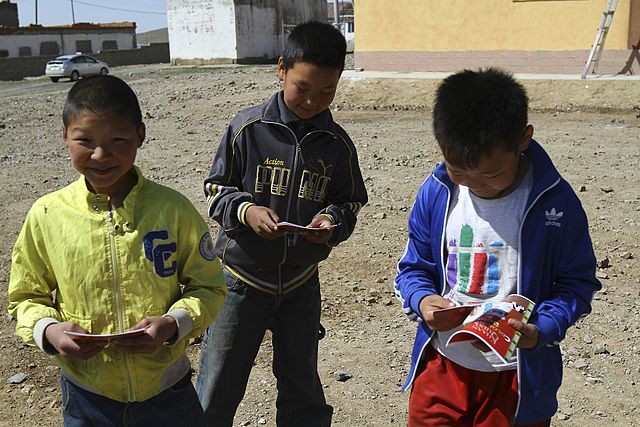
After the collapse of socialism in the late 80s and early 90s, education for rural Mongolian children suffered due to a lack of financing for the country’s rural schools. Fortunately, changes in government policy and assistance from NGOs over the last 15-20 years have slowly but surely improved education in rural Mongolia.
Poverty Among Mongolian Herders
As of 2021, about 31% of Mongolia’s population lived in rural areas and as much as 40% of the population lives a herding lifestyle. In 2020, the World Bank pegged Mongolia’s rural poverty rate at 31%, with herders accounting for three-fifths of the rural poor.
Rural Education Issues
While basic education in Mongolia (grades 1 through 12) is free under the country’s constitution, attending school can be difficult for rural families.
Herder families struggle because they move around several times a year to find pastures for their herds. As such, many children move into dormitories at boarding schools. During Mongolia’s socialist era, the country was able to establish a well-functioning and convenient boarding school system for rural children, but after the collapse of socialism, authorities neglected rural development, which resulted in poorly maintained boarding schools.
Between 1990 and 1992, “public spending on education as a share of GDP” decreased by close to 50%, many rural schools suffered bankruptcy and many educators abandoned their professions due to lack of payment.
Because of financial neglect, about one-fifth of dormitories do not have proper heating and lack water, sanitation and hygiene (WASH) facilities, according to data from 2015. For example, a dorm in Tarialan soum (a part of a province) in Northwest Mongolia did not have a single running toilet, so students had to use a “dirty, cold, bad-smelling” pit latrine outside, with no way to wash their hands with clean water. In 2014, UNICEF established indoor toilets and hygiene facilities in the dormitory.
Another problem with education in Mongolia is that many teachers in rural schools graduate from “low-quality private teacher training institutes,” making them underqualified for teaching.
Rural Mongolians also have low access to early childhood education (ECE) services. While progress has been visible over the last few decades, herder children’s access to ECE services remained low as of 2016. According to a UNICEF fact sheet from 2020, ECE attendance is 1.5 to 2.2 times lower among 2-4-year-olds in rural areas than in urban ones and 19% to 26% lower among children aged 5.
These issues contribute to a gap in education quality between rural and urban schools. Due to high dropouts in the mid-90s, in 2013, the level of literacy among males aged 15-24 stood at 98.4% in urban areas, but dropped to 88.2% in rural areas. The percentage of out-of-school primary school children in 2018 stood at 5% in rural areas compared to 2% in urban areas and children from herder households accounted for around 68% of out-of-school children in 2013/2014.
Improving Facilities
To improve access to education in rural Mongolia, the government built 37 new dormitories across the country between 2014 and 2017 and planned to create an additional 19 between 2018 and 2019. In 2015, Mongolia established specific standards for WASH facilities in schools and dorms to improve conditions.
In addition, the Asian Development Bank (ADB) provided a grant in 2015 to renovate 12 dormitories in the Govi-Altai, Uvs and Zavkhan aimags (provinces) in western Mongolia, as a part of the Improving School Dormitory Environment for Primary Students in Western Region Project. The renovations included insulating buildings, installing “safe electric systems” and establishing more WASH facilities.
Supporting Teachers
Mongolia’s government has worked since 2006 to enhance financial support for rural teachers. The 2006 and 2016 amendments to the Law on Education give financial support to teachers in rural schools and kindergartens. Furthermore, a “teacher salary reform” in 2007 helped to improve the income inequalities between rural and urban teachers.
Outside of the government, the World Bank created the Rural Education and Development (READ) Project (2007-2013) to improve the standard of education in rural schools. The training of educators and principals formed one of the project’s objectives. A total of 4,144 rural primary educators and 383 school directors received training to improve teaching skills and strategies. The project also established a “local professional development network” with 95 main schools and 178 mentor educators.
Enhancing Access to Early Childhood Education
To provide ECE services for rural Mongolians, Save the Children, a child rights organization operating in Mongolia since 1994, alongside the World Bank and Japan Social Development Fund, implemented the project Improving Primary Education Outcomes for the Most Vulnerable Children in Rural Mongolia.
The project operated from 2012 to 2017 in four aimags (Arkhangai, Uvurkhangai, Dornod and Sukhbaatar). The program enabled the completion of the Home Based School Preparation Program for around 4,000 5-year-old herder children. The project utilized mobile learning kits with educational toys, activity books and guidebooks. The program was so effective that primary school enrollment in the four aimags rose from 72.8% in 2012-2013 to 86% in 2017-2018.
Education in rural Mongolia suffered after the collapse of the socialist educational system, but thanks to government initiatives and NGO projects, more herder children are receiving a quality education.
– James Harrington
Photo: Wikipedia Commons

Ending the War on Drugs in Latin America
The “War on Drugs” is an international focus that began in 1961 when the U.N. Single Convention on Narcotic Drugs recommended countries adopt punitive measures for drug charges. Prohibitionist efforts to eliminate illegal drug use intensified 10 years later when U.S. President Richard Nixon announced his war on illegal drugs, which he deemed “public enemy number one” on June 17, 1971.
After this, the U.S. took the lead in the war on drugs, leading international drug-control efforts such as halting the harvesting of the sacred Incan coca plant and criminalizing product consumption. These efforts mainly impacted Latin America, specifically Colombia, Bolivia and Peru, which are the main cocaine producers. Mexico, Central America and the Caribbean are the distributor countries that funnel drugs into Europe and the U.S. These Latin and Central American countries have experienced community and environmental damage, as well as an increase in violence and corruption because of the war on drugs. Even when levels of drug production in one country decrease, production moves to another country, a phenomenon called the “balloon effect.”
The war on drugs in Latin American countries weakened the economy, environment and overall safety and well-being of citizens. As new progressive leaders in Latin America gain power, Latin America begins the work of creating less punitive measures for drug offenses with the hope of ending the war on drugs.
The Need for Change
The “war on drugs” harms the national development of “narco-economies” and infringes on human rights, through forced labor and torture, the absence of fair trials and the right to a clean and healthy environment. Ending the war on drugs in Latin America is an important step because it frees up Latin American resources to focus on reparations for human rights violations.
Policies created during the war on drugs negatively impact marginalized communities. For example, women serve in prison for drug-related offenses at a higher rate than men, even though women with drug offenses are often non-violent and first-time offenders. These policies have also led to the use of harmful practices such as racial profiling. The Working Group on Arbitrary Detention conducted a study released in 2021 on the “war on drugs,” which found that the war resulted in mass incarceration, disproportionate sentencing, abusive use of the death penalty and extensive human rights violations. The UN system Common Position on drug policy states that drug use and dependency are not to be treated as a criminal matter, but as a health issue that should be treated using public health education, mental health support and rehabilitation and reintegration programs.
New Leadership, New Policies
The main voice for ending the “war on drugs” in Latin America comes from the new Colombian President Gustavo Petro, a progressive leader of the state whose focus is peace in Latin America. Petro calls for a reversal of anti-narcotics efforts like ending the criminalization of coca growers and instead focusing on prosecuting the criminal organizations that profit off of drug trafficking.
Colombia, as well as Cuba, Norway, Venezuela and now Mexico, are all guarantor countries participating in the process of peace with the guerrillas of the National Liberation Army (ELN). The recruitment of countries to participate in ending the war on drugs in Latin America is a large focus for Petro, who joined a conference of leaders in Latin America at the National Palace in Mexico to announce reforming Latin American drug policy. After the conference, Petro announced on social media that “concrete agreements” were made in regard to development, sovereignty, migration and integration.
Looking Ahead
During Colombian President, Gustavo Petro’s appeal to the world to end the “hypocritical war on drugs” at the U.N. general assembly in 2022, he called out the world’s obsession with carbon, oil and money, which has led to deforestation and the destruction of Latin American stability and health. Petro announced a new time of peace in Latin America, because, in Petro’s own words, “without peace with the planet, there will be no peace among nations. Without social justice, there is no social peace.”
President Gustavo Petro represents a new age of progressive leaders whose focus is to repair the damage to the environment and citizens due to the war on drugs and the climate crisis. His efforts have gained the attention and support of the Puebla Group – made up of progressive Latin American leaders – and The Global Commission on Drug Policy, an organization of cultural and political leaders whose goal is to push reforms for international drug control by using responsible regulation.
With the support of these groups and leaders, economic, social and environmental justice will be at the forefront of future policy creation. Ending the war on drugs in Latin America is no easy task, as it involves creating a nurturing, supportive society for those addicted to and involved with drugs. However, it is a crucial step that must be taken to reverse the climate and humanitarian crisis created by the war on drugs.
Moving forward, the U.N. Human Rights Council requires drug policies to cohere with international human rights laws. Moreover, countries are to provide technical and financial assistance to drug policy to ensure that they protect fundamental freedoms and human rights. In addition, current drug policies are to be replaced with a restorative justice approach involving support rather than punishment for drug offenses. With these policy changes and the focus of dedicated world leaders like Colombian President Gustavo Petro, ending the war on drugs in Latin America is an achievable reality.
– Arden Schraff
Photo: Flickr
Everything You Need to Know About the Hunger Crisis in Haiti
Factors Contributing to the Hunger Crisis in Haiti
On August 14, 2021, a magnitude 7.2 earthquake hit the southern peninsula of Haiti. The earthquake damaged homes, businesses and critical infrastructure. As many Haitians lost their means of earning an income, food insecurity became more pronounced. The United Nations said about 650,000 Haitians needed humanitarian aid in the aftermath of the earthquake.
The supply chain disruptions as a consequence of the COVID-19 pandemic and the Russia-Ukraine war has caused soaring inflation rates in Haiti and across the world. As of July 2022, Haiti had already seen a 26% inflation rate.
The prevalence of gang activity in Haiti, as a consequence of the political instability in the country, also plays a role in the hunger crisis in Haiti. At the moment, gangs control the entrances to the capital of Haiti, Port-au-Prince. The rapidly increasing inflation rate coupled with gangs cutting off the southern peninsula from the capital has led to a steep increase in hunger for the vast majority of impoverished Haitians living in that area of the country.
“The complete blockage of the road leading to the impoverished southern peninsula for a year has cut off at least 3.5 million people from the capital — restricting access to markets, basic services and essential humanitarian assistance,” the World Food Programme (WFP) reported in July 2022. Due to these impacts, some families in this area report only eating once a day.
The southern peninsula also experienced the worst effects of the 2021 earthquake, meaning that this newer food crisis hit while the area was still trying to recover from the last major natural disaster in Haiti.
The Most Vulnerable Groups
About 20% of Haiti’s population is projected to experience crisis levels of acute food insecurity from July 2022 to January 2023, according to the Famine Early Warning Systems Network. Though the crisis affects all Haitians, rural Haitians face harsher impacts. The New Humanitarian reports in a September 2022 article that a single “plate of food already costs the average Haitian 35% of their daily income.” But, the average rural Haitian currently needs to spend 25% more of their daily income on food than the national average.
Children face the worst repercussions of the hunger crisis in Haiti as inadequate supplies of nutritious food affect their growth and development. Malnutrition has far-reaching impacts that affect individuals even in adulthood.
Efforts to Help Reduce Hunger in Haiti
Despite gang violence posing barriers to the delivery of food and other critical resources to those in need, the WFP and other organizations, such as USAID, are working around these barriers. As of August 2022, the WFP, for example, has been utilizing a United Nations Humanitarian Air Service (UNHAS) helicopter, and the WFP’s own ship, the Linda D, in order to bypass the dangerous occupied roads and deliver essentials to those in need.
Additionally, USAID has provided more than $170 million over the last two years to aid Haiti. In terms of the hunger crisis in Haiti specifically, USAID “provided more than $88.6 million to five public international
organizations and 10 non-governmental organizations in FY 2022.” This funding will go toward “cash and in-kind emergency food assistance, as well as nutrition services and agricultural support, to vulnerable households countrywide,” according to a USAID document.
To adequately address food insecurity in Haiti, aid organizations must look toward helping Haiti achieve self-sufficiency and sustainability. With less dependence on food imports and greater focus on agricultural production, Haiti can reduce its hunger woes.
– Chris Dickinson
Photo: Flickr
Reducing Child Marriage in Zimbabwe
According to a 2022 press release by UNICEF, in Zimbabwe, one out of three young girls enters into marriage before reaching their 18th birthday. Child marriage often results from gender disparities in developing countries. Girls Not Brides explains that “child marriage is rooted in gender inequality” and “poverty, lack of education, harmful social norms and practices and insecurity” exacerbate it. Child marriage in Zimbabwe limits future possibilities for women and perpetuates cycles of poverty.
Child Marriage in Zimbabwe: Contributing Factors
By June 2021, the number of individuals living in extreme poverty in Zimbabwe rose to almost 8 million. The Guardian reported that “child marriage in Zimbabwe is often driven by poverty.” Families living in poverty often push their young daughters into marriage because the “bride price” the family receives will reduce the household’s financial burden.
Aside from economic reasons, there is a cultural and religious ideology that condones marrying off young girls. Specifically, indigenous apostolic religious groups have a higher number of child marriages. The doctrine of the Apostolic Christian Council of Zimbabwe directs that girls must wed between the ages of 12 and 16 in order to prevent premarital sexual relations. Furthermore, many indigenous apostolic churches in Zimbabwe prohibit girls from returning to school once married.
Whereas 33% of girls in Zimbabwe entered into marriage before the age of 18, for boys, this rate is just 2%. The lack of education among women further pushes them into oppression, limiting job prospects and forcing women to rely on their husbands economically. According to a UNICEF statistic, as of 2021, only 14% of females in Zimbabwe attain an upper secondary education.
Human Rights Watch highlights the implications of child marriage: “Child marriage in Africa often ends a girl’s education, exposes her to domestic violence and grave health risks from early childbearing and HIV and traps her in poverty.”
The Women Advocacy Project (WAP) Zimbabwe
In efforts to decrease child marriage in Zimbabwe, the Women Advocacy Project Zimbabwe, a partner of U.S.-based The Advocacy Project, provides the support young girls need to thrive. The specific child marriage program looks to raise $5,000 via the GlobalGiving platform to train five local Zimbabwean girls to become community leaders. As leaders, these girls will be able to action community-wide change to bring an end to child marriage in Zimbabwe. These girl leaders will educate others about women’s rights, the far-reaching implications of child marriage, the benefits of obtaining an education and how to safeguard oneself from abuse.
The leaders will also “identify 25 girls in each of their communities who are at risk of marrying early and assist them in choosing better options,” the project page says. Each leader will form a “Give Us Books, Not Husbands” club in their local communities. The club aims to change beliefs and attitudes regarding child marriage.
WAP expects the project to reduce rates of child marriage in Zimbabwe and increase school attendance and completion rates among girls.
The Good News
The advocacy work of organizations has created lasting impacts. On May 27, 2022, the President of Zimbabwe signed into law the Marriages Act, legally prohibiting the marriage of individuals younger than 18. This means that child marriage is now a criminal offense.
The piece of legislation brings hope to the fight against child marriage, however, implementation and enforcement will play a critical role in actioning change.
– Micaela Carrillo
Photo: Wikimedia Commons
How The Gates Foundation is Enabling Sustainable Sanitation Services
The Bill and Melinda Gates Foundation is an organization dedicated to fighting poverty, disease, and inequity around the world. It has been working to create a world where every person has the opportunity to live a healthy and productive life. In order to reach their goal, in 2021 alone, the Gates Foundation has been responsible for funding 2,051 grants and contributing a total of $6.7 billion of charitable support to build economies across the globe. With $653 million going to global growth and opportunity, the Gates Foundation has been a leader in improving water, hygiene and sustainable sanitation services globally.
Sustainable Sanitation
Since the main objective of a sanitation system is to provide a clean environment to people living in a community, promote better health and break the cycle of disease in the process. It is imperative that all societies have access to clean, filtered water and sewage systems. Sustainable sanitation is a sanitation system that is economically viable and institutionally appropriate. For example, sustainable sanitation measures should be both socio-culturally acceptable and easy to operate. It should also be low-cost and effective in mitigating disease and preserving the health of the community.
The Importance of Sanitation Services
The World Health Organization (WHO) has reported that “poor sanitation is linked to the transmission of diarrheal diseases.” As the spread of diseases like cholera, dysentery, typhoid and polio contributes to the spread of antimicrobial resistance, proper sanitation is crucial to the development of a community. Often linked to reducing the well-being and economic development of society, sustainable sanitation services are crucial to reducing poverty. However, improving and providing sustainable sanitation services can lead to many more benefits such as:
However, WHO reported that in 2020, only 54% of the world’s population were using safely managed sanitation services and more than 1.7 billion people still don’t have access to basic sanitation services. Since roughly 830,000 people die every year due to the effects of poor hygiene and inadequate water sanitation in low/middle-income countries, it is important to take steps to mitigate the problem.
The Gates Foundation and Its Goals
The Gates Foundation has been working with government leaders and technologists to revolutionize sanitation standards and practices around the world. Their core initiatives include:
The Four Focus Regions
The Gates Foundation recognizes that the implementation of sustainable sanitation services is most pertinent in sub-Saharan Africa and South Asia. Even in the sub-Saharan countries with the best water coverage rates, as much as 25% of people still lack adequate access to proper sanitation services. The Gates Foundation reports that governments are now beginning to acknowledge the need for more innovative sustainable sanitation solutions as the population of towns and cities begins to grow rapidly. The organization has been focusing on four complementary areas, which are as follows:
Goals for the Future
Because poor sanitation is responsible for so many health complications, the Gates Foundation recognizes the importance of expanding access to clean water and providing sustainable sanitation. Solving sanitation challenges in the developing world will require new technologies that are both reliable and cost-effective. It is therefore crucial to invest in proper sanitation to lift poverty-stricken nations.
– Opal Vitharana
Photo: Flickr
Improving Education in Rural Mongolia
After the collapse of socialism in the late 80s and early 90s, education for rural Mongolian children suffered due to a lack of financing for the country’s rural schools. Fortunately, changes in government policy and assistance from NGOs over the last 15-20 years have slowly but surely improved education in rural Mongolia.
Poverty Among Mongolian Herders
As of 2021, about 31% of Mongolia’s population lived in rural areas and as much as 40% of the population lives a herding lifestyle. In 2020, the World Bank pegged Mongolia’s rural poverty rate at 31%, with herders accounting for three-fifths of the rural poor.
Rural Education Issues
While basic education in Mongolia (grades 1 through 12) is free under the country’s constitution, attending school can be difficult for rural families.
Herder families struggle because they move around several times a year to find pastures for their herds. As such, many children move into dormitories at boarding schools. During Mongolia’s socialist era, the country was able to establish a well-functioning and convenient boarding school system for rural children, but after the collapse of socialism, authorities neglected rural development, which resulted in poorly maintained boarding schools.
Between 1990 and 1992, “public spending on education as a share of GDP” decreased by close to 50%, many rural schools suffered bankruptcy and many educators abandoned their professions due to lack of payment.
Because of financial neglect, about one-fifth of dormitories do not have proper heating and lack water, sanitation and hygiene (WASH) facilities, according to data from 2015. For example, a dorm in Tarialan soum (a part of a province) in Northwest Mongolia did not have a single running toilet, so students had to use a “dirty, cold, bad-smelling” pit latrine outside, with no way to wash their hands with clean water. In 2014, UNICEF established indoor toilets and hygiene facilities in the dormitory.
Another problem with education in Mongolia is that many teachers in rural schools graduate from “low-quality private teacher training institutes,” making them underqualified for teaching.
Rural Mongolians also have low access to early childhood education (ECE) services. While progress has been visible over the last few decades, herder children’s access to ECE services remained low as of 2016. According to a UNICEF fact sheet from 2020, ECE attendance is 1.5 to 2.2 times lower among 2-4-year-olds in rural areas than in urban ones and 19% to 26% lower among children aged 5.
These issues contribute to a gap in education quality between rural and urban schools. Due to high dropouts in the mid-90s, in 2013, the level of literacy among males aged 15-24 stood at 98.4% in urban areas, but dropped to 88.2% in rural areas. The percentage of out-of-school primary school children in 2018 stood at 5% in rural areas compared to 2% in urban areas and children from herder households accounted for around 68% of out-of-school children in 2013/2014.
Improving Facilities
To improve access to education in rural Mongolia, the government built 37 new dormitories across the country between 2014 and 2017 and planned to create an additional 19 between 2018 and 2019. In 2015, Mongolia established specific standards for WASH facilities in schools and dorms to improve conditions.
In addition, the Asian Development Bank (ADB) provided a grant in 2015 to renovate 12 dormitories in the Govi-Altai, Uvs and Zavkhan aimags (provinces) in western Mongolia, as a part of the Improving School Dormitory Environment for Primary Students in Western Region Project. The renovations included insulating buildings, installing “safe electric systems” and establishing more WASH facilities.
Supporting Teachers
Mongolia’s government has worked since 2006 to enhance financial support for rural teachers. The 2006 and 2016 amendments to the Law on Education give financial support to teachers in rural schools and kindergartens. Furthermore, a “teacher salary reform” in 2007 helped to improve the income inequalities between rural and urban teachers.
Outside of the government, the World Bank created the Rural Education and Development (READ) Project (2007-2013) to improve the standard of education in rural schools. The training of educators and principals formed one of the project’s objectives. A total of 4,144 rural primary educators and 383 school directors received training to improve teaching skills and strategies. The project also established a “local professional development network” with 95 main schools and 178 mentor educators.
Enhancing Access to Early Childhood Education
To provide ECE services for rural Mongolians, Save the Children, a child rights organization operating in Mongolia since 1994, alongside the World Bank and Japan Social Development Fund, implemented the project Improving Primary Education Outcomes for the Most Vulnerable Children in Rural Mongolia.
The project operated from 2012 to 2017 in four aimags (Arkhangai, Uvurkhangai, Dornod and Sukhbaatar). The program enabled the completion of the Home Based School Preparation Program for around 4,000 5-year-old herder children. The project utilized mobile learning kits with educational toys, activity books and guidebooks. The program was so effective that primary school enrollment in the four aimags rose from 72.8% in 2012-2013 to 86% in 2017-2018.
Education in rural Mongolia suffered after the collapse of the socialist educational system, but thanks to government initiatives and NGO projects, more herder children are receiving a quality education.
– James Harrington
Photo: Wikipedia Commons
Human Trafficking in Montenegro
Montenegro is a country located in the Balkan peninsula. Montenegro has close ties and relations with Serbia. Along with corruption and organized crime, human trafficking is a very common enterprise throughout the country. Due to the frequency of human trafficking in Montenegro, The U.S. Department of State classifies the nation as a Tier 2 country.
Human Trafficking in Montenegro
Because of the prevalence of human trafficking in Montenegro, everyone living there and in surrounding Balkan countries is extremely vulnerable to becoming a victim. Traffickers smuggle people of all genders and ages into Montenegro from nearby Balkan countries. Trafficking victims often become street beggars and forced laborers.
In 2020, the U.S. Department of State identified 48 victims of human trafficking in Montenegro. This is an uptick from the 39 official victims in 2019. Of those 48 victims, at least 46 individuals ended up in forced labor. Of those 46, seven became beggars. Meanwhile, 17 of the 48 victims were female, 31 were male and at least seven were children.
According to the U.S. Embassy in Montenegro, women and girls from Montenegro are more likely to be victims of sex trafficking. In Montenegro, Roma teenagers have often worked as prostitutes and at least a few of them were sex trafficking victims. Boys and men, on the other hand, are more likely to become forced laborers. Since the construction industry is rapidly growing in Montenegro, traffickers are moving more boys and men from foreign countries to work in Montenegro’s booming industry.
Aida Petrovic, the founder and executive director of Montenegro Women’s Lobby – a non-governmental agency that helps to support victims of trafficking in Montenegro – found that traffickers were forcing girls as young as 13 into forced prostitution. These were not isolated findings, however, as Petrovic also found that the majority of the victims of forced prostitution were underaged.
Addressing the Problem
Since the U.S. Department of State ranked Montenegro as a Tier 2 country, many preventive measures have been put into place to address human trafficking in Montenegro. In 2011, the government established a hotline to support victims of human trafficking. In 2020, the support hotline received at least 1,657 phone calls. About five possible victims of human trafficking also made calls to the hotline. Moreover, the Ministry of Finance and Social Welfare opened a new shelter for trafficking victims in 2020. For this new shelter, the Ministry of Finance and Social Welfare allocated $82,860, including $49,080 in operating expenses and up to $310 per month for every victim living at the shelter.
In 2019, Maria Grazia Giammarinaro, U.N. Special Rapporteur on trafficking in persons, introduced new operational strategies in collaboration with the International Organization for Migration to help identify trafficking victims. She also helped develop “guidance on the implementation of the non-punishment of victims” in collaboration with the Organization for Security and Cooperation in Europe (OSCE). Lastly, a fund dedicated to compensating victims also underwent establishment.
The Road Ahead
It is imperative that victims of human trafficking receive psychological, financial and medical support for the trauma they have endured. The government of Montenegro is making strides in helping victims and preventing future trafficking, but it still has a long way to go in its fight against human trafficking.
– Yonina Anglin
Photo: Flickr
Trial Ebola Vaccines Arrive in Uganda
On December 8, 2022, a shipment of trial Ebola vaccines reached Uganda, the first of its kind, that will undergo further evaluation in a clinical trial to determine efficacy against the Sudan ebolavirus. The arrival of these 1,200 doses of trial vaccines comes only 79 days after Uganda announced an Ebola outbreak on September 20, 2022. The speed of this response is unprecedented.
Background
Preceding the arrival of the trial Ebola vaccines in Uganda, the Ugandan Ministry of Health and the World Health Organization (WHO) announced an Ebola outbreak in Uganda on September 20, 2022, after confirming a lethal case of Ebola in Mubende District due to the Sudan ebolavirus.
As the outbreak continued, authorities placed lockdowns in certain districts in Uganda. Additionally, authorities restricted travel and ended school terms earlier. These measures seem to have been largely effective: since November 27, Uganda reported no new cases.
Health in Uganda
As a low-income country, the threat that Ebola outbreaks pose is severe. In 2019, the GDP of Uganda stood at $35.35 billion, with 3.83% of the GDP going toward health expenditure.
According to WHO data from 2018, Uganda faces challenges to its health situation as a result of high rates of communicable diseases. Additionally, “malaria, HIV/AIDS, TB and respiratory, diarrhoeal, epidemic-prone and vaccine-preventable diseases are the leading causes of illness and death,” the WHO reported. These diseases are responsible for more than half of the nation’s morbidity and mortality statistics.
The health care conditions and the availability of medical care vary widely depending on the area. More specifically, rural and remote areas face a shortage of supplies and a lack of human resources, resulting in less patient care, poor health information, limited access to health services and the inappropriate usage of medications.
Current Situation
There are no vaccines available to protect against the strain of Ebola responsible for the outbreak in Uganda, the Sudan ebolavirus species, which is why the trial is necessary. WHO has noted that the arrival of trial Ebola vaccines in Uganda in less than 100 days since the initial outbreak is a “historical milestone in the global capacity to respond to outbreaks.”
The organization went on to emphasize how this vaccine’s fast availability is the result of many international organizations and researchers collaborating and working together. It also comes as a direct result of investments from countries such as the United States to allow WHO to coordinate and focus work on priority health concerns, like Ebola.
Potential Global Impact
The arrival of the trial Ebola vaccines in Uganda offers a promising global impact. Dr. Matshidiso Moeti, the WHO Regional Director for Africa, noted in a statement to WHO, “[The trial] showcases the power of scientific research on our continent and how working in collaboration with international partners we can develop critical tools that will limit the lethal effects of Ebola.” The speed and collaboration that brought about the trial of Ebola vaccines may help combat other diseases and global health concerns in the future.
Impact for Uganda
Once trials reach completion and a vaccine proves effective against the Sudan ebolavirus, this will have a direct impact on the country’s population. Uganda has seen Ebola outbreaks due to the Sudan ebolavirus in nine different districts of Uganda, with 142 confirmed cases by December 5, 2022. From these confirmed cases, Ugandan authorities noted 55 deaths.
Outbreak control for this virus requires several different interventions, including case identification, contact tracing, sufficient laboratory capacity, safe burials, proper hygiene and sufficient treatment early on. As Uganda is a low-income country, recently impacted by food insecurity, severe weather and the COVID-19 pandemic, disease outbreaks can be devastating. Thus, a vaccine to prevent further outbreaks will significantly assist Uganda.
Moving Forward
Ultimately, the arrival of trial Ebola vaccines to combat the Sudan ebolavirus in Uganda shows that through collaboration it is possible to create countermeasures against serious viruses in a minimal amount of time. For the country of Uganda, it is a message of hope and assurance that the international community is capable and prepared to work together and build solutions for further Ebola outbreaks that may arise.
– Johanna Bunn
Photo: Wikipedia Commons
Serbian Job Market: The Growing Tech Sector
In the ever-growing technology market, Serbia is determined not to be left behind. With huge investments in information and communication technologies and the support of startups and software education, the Serbian job market is on track to experience significant growth, specifically in the tech sector.
The Growth of the ICT Sector
In 2012, according to The World Bank, Serbia reported a 24% unemployment rate. Just 10 years later, this statistic dropped 14.8%– a 9.2% unemployment rate reported in Q2 of 2022, and the Serbian export of information and communications tech (ICT) definitely played a role. According to the International Trade Administration (ITA), Serbia generates as much as 10% of its GDP from its ICT sector. More than 3,300 ICT businesses employ almost 50,000 Serbs, and although that is just a small percent of the Serbian population of almost 6.9 million, it is evident that the Serbian economy is growing to rely more on ICT. That should ensure growth in the Serbian job market. Serbian tech companies produce software for everything from medicine to agriculture, games and testing. They run call centers and customer service centers.
Demand for More Skilled Workers
To meet the increasing demand for ICT exports, however, Serbia needs at least 15,000 more engineers in the tech sector. That is why the Serbian government invested 70 million euros in technical infrastructure, supporting start-ups and mandating software programming classes in elementary schools. This is particularly important because Serbia’s youth unemployment is 40%, and often young people will leave a country if they cannot find jobs there.
Importantly, Serbia and the United States Agency for International Development (USAID) are turning to the youth and aspiring entrepreneurs, with projects like Impact Hub Belgrade, Junior Achievement and ICT Hub Venture.
Impact Hub Belgrade
Impact Hub Belgrade (IHB), launched with a USAID grant, provides young aspiring entrepreneurs with the tools, support and skills to brainstorm products, develop business models and network with regional and international investors. It is part of a global network that has branches in 49 countries. It provides a co-working space for project collaboration and sharing of practice and knowledge. In December 2022, for example, it sponsored a Western Balkan Winter Demo Day to help young entrepreneurs assess if they were investment ready.
Junior Achievement Serbia
Junior Achievement Serbia (JAS), another program that USAID funded, aims to advance entrepreneurship through a training curriculum, which effectively equips high schoolers with essential business skills– from communication and problem-solving to specifics on how to set up a business and predict earnings. JAS is part of Junior Achievement Worldwide, a global network in 121 countries. JAS launched in 2005 and by 2021 had served more than 60,000 students in 286 schools.
While the Junior Achievement (JA) program has numerous success stories across Europe, its presence in Serbia has been “among the strongest.” In fact, JA’s 2018 Belgrade team, Groove Street, designed and coded wristbands containing the medical information of the individual wearing it. Thanks to the JA curriculum, guidance and support, these students invented a life-saving device while also gaining real-life business experience.
ICT Hub Venture
While both IHB and JAS specifically focus on providing Serbian youth with the skills they need to succeed in the growing tech sector, other projects aim to support aspiring entrepreneurs of any age.
ICT Hub Venture, another partner project of USAID, equips young businesses with developmental assistance, mentoring and networking opportunities. Established in 2014 as ICT Hub, in 2017 the project became an investment fund in Belgrade, dedicated to supporting information and communication tech startups. ICT Hub Venture provides its partners with financing, guidance, support and education, in exchange for a 5 to 15% share in the company. As of 2022, ICT Hub Venture fully funds nine startups.
Milan Brindič, a co-creator of Bincode Entertainment, a software company specializing in game development and mobile software, says that ICT Hub has been “very useful,” and through its support, has become “like family.” Brindič also said ICT Hub provided his company a space to work and networking opportunities, both of which are critical to a startup’s success.
Looking Forward
With numerous success stories, Impact Hub Belgrade, Junior Achievement Serbia and ICT Hub Venture are innovatively helping to broaden the Serbian job market and tech sector by supporting and investing in the future. The ITA estimates more than 20% per year growth in the Serbian tech sector, with opportunities continuing to grow in sub-sectors such as cybersecurity, gaming, and e-government. Through programs like Impact Hub Belgrade, Junior Achievements, and ICT Hub Venture, Serbia is not only gearing up to meet the growing demand of skilled workers, but equipping its aspiring entrepreneurs with the support, funding, and necessary skills to thrive in a growing job market.
– Micaella Balderrama
Photo: Flickr
USAID Programs in India
USAID programs in India began with the signing of the Emergency Food Assistance Act in 1951 and have since transitioned from emergency food aid to “infrastructure development, capacity building of key Indian institutions, support for the opening of the Indian economy and more,” according to the USAID website. USAID programs in India have helped the nation progress in several areas, including health care, economic development, gender equality and infrastructure building.
USAID-THALI Project
The USAID-THALI (Tuberculosis Health Action Learning Initiative) became a necessity because, in 2016, India held the highest burden of tuberculosis globally with 2.7 million cases. In 2017, India’s TB notification rate, defined as the diagnosis and reporting of TB, for new patients stood at about 2.15 million. To strengthen TB control efforts and facilitate the growth of the TB notification rate, USAID/India launched the USAID-THALI project in 2016.
USAID-THALI took “a holistic approach to TB control efforts,” initially beginning with three states — Karnataka, Telangana and West Bengal. The goal was to “identify, apply and scale up successful, innovative approaches to addressing TB and multi-drug resistant TB.”
The four-year USAID-THALI program eventually expanded its target to nine states across India. World Health Partners (WHP) led efforts in western and northern India and the Karnataka Health Promotion Trust (KHPT) led efforts in the south of India.
Positive Outcomes
WHP’s website reports positive program outcomes. During the four-year span of THALI, the program has raised awareness of TB “among 3 million rural, tribal, urban slum and vulnerable populations.” Furthermore, “more than 60,000 notified TB patients received support for contact tracing, treatment adherence and counseling across all project geographies.”
The Mitchell Group and its local partner New Concept Information Systems performed a 10-week-long assessment of THALI’s successes and shortcomings. In the first phase of THALI (2016-2017), the program succeeded in increasing “private sector notifications for presumptive TB cases in urban slums in the targeted cities of Bengaluru, Hyderabad and Kolkata.” During the second phase (2018-2019), THALI was able to provide more than 9,400 TB patients in Northern India and more than 12,400 patients in Southern India with “patient-centered services.” In 2019, TB notification rates in India rose by 16%.
Mariam Begum, a slum-dweller in Hyderabad, is one of USAID-THALI’s success stories. At the age of about 17, she began experiencing TB symptoms. She reached out to a THALI health worker named Subhadra, who took her to a hospital for diagnosis and treatment. Due to malnourishment, Begum struggled with the TB treatment but followed through and recovered. Now, she uses her personal story as motivation for others to seek treatment and follow through.
USAID POWER
In 2019, USAID founded the “Producer Owned Women Enterprises (POWER)” project. POWER’s purpose is to improve the livelihoods of women in India and facilitate gender equality and independence in India by allowing the growth of employment opportunities for marginalized women.
USAID’s collaboration with the Industree Crafts Foundation under the Women’s Global Development and Prosperity Initiative has positively impacted women across India through the POWER project. The project helps to establish female producer-owned enterprises to facilitate the economic independence of women.
By helping women to become micro-entrepreneurs, rural women are able to earn a steady income to rise out of poverty. “POWER also addresses restrictive social norms to increase support for women as entrepreneurs, working toward establishing their collective prosperity and dignity,” according to the Industree Crafts Foundation Facebook page.
The Times of India said that “the project is a great example of the U.S. government’s strong commitment [to the] economic empowerment of women in India…”
A child bride at the age of 14, Kavita is one of the many women benefiting from POWER. Greenkraft, a producer-owned company supported by POWER, initially employed Kavita as a production line worker. Greenkraft promoted Kavita to quality control just three months later because of her exceptional attention to detail and innovative ideas to help improve production.
USAID programs in India, like the POWER initiative, have transformed the lives of women like Kavita. She can now contribute financially “to rent farmland and pay for her children’s education,” the USAID website says.
Looking Forward
USAID programs in India such as USAID-THALI and USAID POWER are among a handful of programs that are helping India alleviate poverty and improve quality of life through a focus on health interventions and employment opportunities for the marginalized.
– Arijit Joshi
Photo: Flickr
Impact of COVID-19 on Poverty in Malawi
The COVID-19 pandemic displayed a significant impact on the world’s economic situation and presented numerous challenges for several countries. One such country is Malawi, located in the Southern part of Africa. In 2020, Malawi stood at 174 from a sum of 189 countries on the Human Development Index. This article delves deeper into the impact of COVID-19 on poverty in Malawi in terms of economic activity, education and food security.
Economy
In response to the pandemic, several governments around the world adopted restriction measures on imports and exports. Such safety measures displayed numerous ramifications on Malawi’s economy. This is especially since it heavily relies on imports pertinent to energy, agriculture and health among others. For instance, 80% of the overall population is employed by the agricultural sector, which also accounts for 30% of the Gross Domestic Product (GDP). Scarce availability of such rudimentary resources caused the cost of living to increase, and in 2020, 17% of the general public lived below the poverty line. One can attribute such a decline in Malawi’s economic activity to heightened government spending during the pandemic, which accounted for $345 million. In 2020, the fiscal deficit stood at 7.7%, and economic growth declined to 1.7% compared to 5.7% in 2019.
To help curb the impact of COVID-19 on poverty in Malawi, the country’s government launched cash aid for affected households and small-sized business entities. The cash aid encapsulates aiding around 1 million eligible households and businesses with $40 monthly payments, equivalent to 35,000 Malawi Kwacha.
Education
The emergence of the COVID-19 pandemic forced many countries to shift from traditional to virtual education. This shift placed much emphasis on access to technological facilities among pupils. Increased poverty rates in Malawi, impeded learners’ ability to access online education due to limited internet facilities. According to UNICEF, COVID-19 caused students’ performance to plummet across the country. As a result, the Malawi government contracted with Telecom Network Malawi (TNM). TLM is an internet company, which, as part of the agreement, provided free unlimited internet packages to students. This agreement enabled learners across all different levels to obtain equal access to online education, especially since COVID-19 halted the education for 5.4 million students from both schools and universities.
Food Security
The impact of COVID-19 economic growth and poverty in Malawi yielded devastating results for the overall population. The outbreak of COVID-19 contributed to widespread disproportionate food insecurity. One can primarily attribute challenges relevant to nutritional support to rising poverty and declining agricultural productivity. To mitigate against food insecurity, UNICEF for instance, supported the government of Malawi in the delivery of adequate nutritional support. Other efforts to curtail hunger include World Food Programme assistance (WFP). Through funding via USAID, WFP provides financial and nutritional support to 382,000 food-deprived Malawians. Efforts such as those, assist the Malawian people to recover and survive in the midst of a food crisis, as well as allow the general public to lead healthy and sustainable lives.
The emergence of the pandemic on the global level, contributed to increased poverty and unemployment rates, alongside a declining economy. Measures and initiatives such as those that the WFP and government implemented enable the nation to undergrow economic recovery, as well as improve the living conditions across the country.
Photo: Unsplash