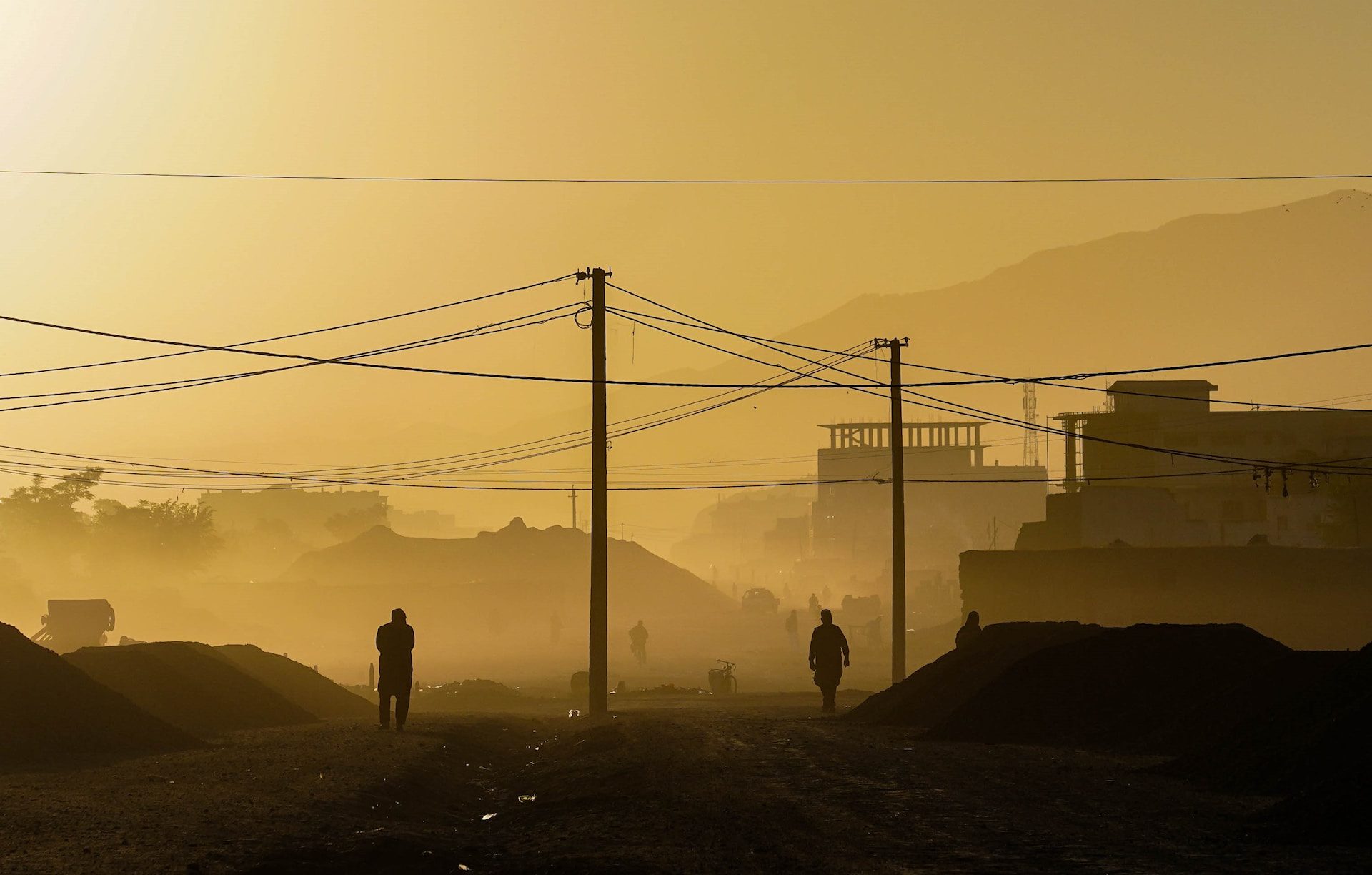
 From the beginning of the war in 2001 to the recent political transition beginning in 2021, Afghanistan has seen significant economic fluctuations and an upward trend in the national poverty rate, despite periods of economic growth. For instance, the World Bank estimated that at least a third of the Afghan population was living in poverty and unable to afford basic necessities between 2007 and 2012. Yet, the country’s GDP steadily grew at a rate of 6.9% annually during those years. A rising Gini coefficient of almost 2% from 2007 to 2012 indicates that inequality has contributed to the country’s sustained high poverty rate, which has continued to grow amidst the recent political transition in Afghanistan.
According to the Asian Development Bank (ADB), an alarming 49.4% of Afghan citizens were already living below the national poverty line in 2020. With the political transition sparking a 20.7% contraction in the country’s GDP in 2021, the World Bank has reported that more than 65% of households in Afghanistan “could not afford food and other basic non-food items” by the middle of 2022. Fortunately, the international community remains committed to aiding the millions in need amidst the ongoing political transition in Afghanistan.
The Past and Present of Poverty in Afghanistan
Historically, poverty has most heavily impacted rural areas in Afghanistan. According to the 2015 Afghanistan Poverty Status Update, some 80% of the country’s impoverished resided in rural communities as of 2011-2012, with more than 50% of poor Afghans being concentrated in the remote regions of East, Northeast and Central Afghanistan. These regions have been particularly vulnerable to political, economic and climactic shocks and have assumed an inordinate share of the burden that poverty poses to the country as a whole.
For example, the 2015 report, prepared by the World Bank and Islamic Republic of Afghanistan Ministry of Economy, noted that poor households were both more susceptible to and less able to recover from financial shocks, which affected 84% of Afghan households in 2011-2012. Furthermore, 75.6% of impoverished Afghans age 15 and older were illiterate, while 41% of those already living in poverty were underemployed and more than 84% were engaged in vulnerable forms of employment, such as agriculture. In addition to lacking access to education and employment opportunities, the country’s predominantly rural poor also lack equal access to basic services: in 2011-12, only 63.8% had electricity, 40.3% had potable water and 2.8% had basic sanitation, percentages significantly lower than among Afghanistan’s non-poor population.
Since the United States’ withdrawal from Afghanistan in 2021, the country has seen a surge in poverty. The United Nations Development Programme (UNDP) estimated that Afghanistan’s real GDP could contract by more than 13%, putting 97% of Afghanistan’s 41 million citizens at risk of falling into poverty. However, despite increasing poverty amidst the political transition in Afghanistan, past efforts have shown that humanitarian aid can make a difference.
Humanitarian Support for Afghan Citizens
For example, as a result of international aid, access to electricity, potable water and sanitation each improved by 14% annually between 2007 and 2012, and youth literacy increased by 8%. Since its withdrawal, the U.S. and other nations have therefore focused their efforts on providing humanitarian aid to Afghan citizens who are suffering amid the political transition.
One such initiative is the Local Area-Based Programme, which the UNDP introduced in 2021. In collaboration with local businesses and NGOs, the 24-month program aims to aid at least nine million Afghan citizens in need by supporting infrastructure development, income opportunities and essential services. It targets the country’s most vulnerable communities, including women, children and the elderly, and centers on cash transfers, grants and other interventions that will help guarantee vital income, promote women-led businesses and boost local economies.
As of July 2022, the U.S. had provided $775 million in aid overall to support Afghan citizens during the transition, with the specific aims of combating food insecurity, improving agricultural industries, strengthening education and advancing women’s and minority rights. Since 2001, the U.S. has provided more humanitarian aid to Afghanistan than any other country, including $36.07 billion in development aid. In an effort to uphold stability and protect Afghan citizens without supporting the Taliban, the U.S. and other countries are also collaborating to ensure financial liquidity and retain Afghan banks’ connections to the international community.
Looking Ahead
Amid Afghanistan’s recent political transition and economic challenges, the international community continues to show support by providing humanitarian aid to millions in need. Initiatives like the Local Area-Based Programme aim to aid vulnerable communities, including women, children and the elderly, with infrastructure development and income opportunities. The U.S. and other countries have contributed significant financial aid to combat food insecurity, improve education and advance women’s and minority rights, all with the goal of supporting Afghan citizens during this critical period.
– Sahib Singh
Photo: Unsplash

Coconut Hounds: Caring for Stray Dogs in the Dominican Republic
From Puerto Rico to the Dominican Republic, stray dogs wander the streets of both urban and rural areas. While these dogs are laid-back, relaxed and rarely aggressive, they dominate entire neighborhoods. Tourists see stray dogs in the Dominican Republic, dubbed “Coconut Hounds” by locals, as a concern and a major problem.
Contrary to the fears of tourists, Coconut Hounds are friendly animals that have decent lives roaming the streets of urban areas, such as Santo Domingo. The pet culture of the Dominican Republic is dissimilar to that of other nations like the United States. While tourists believe these dogs are in danger and need help, organizations such as Dogs and Cats of the Dominican Republic ensure these pooches are well cared for. On the island, it is normal for pets to roam around during the day to visit friends or their favorite food spots and then return home to their owners at night.
How Stray Dogs Become an Issue
Despite Coconut Hounds’ friendly nature, stray dogs in the Dominican Republic are unfortunately impacting the tourism industry. With street dogs roaming around resort areas, websites such as Trip Advisor advise foreigners to not vacation in the Caribbean due to the unpleasant animal presence. As a result, the Dominican Republic loses millions of dollars as first-time visitors are told to avoid the island and returning tourists do not want to come back and see the strays.
As the economy takes a hit, the number of street dogs amplifies. Poverty directly links to more abandoned animals because owners lack the money to properly care for their pets. Not only can people in poverty not afford the supplies, food, shelter and health care for their pets, but underserved communities also have a lack of access to veterinary services and pet-care information.
Animal resource deserts appear in impoverished towns. Not only can owners not provide their pets with services to aid in their well-being, but there are also no veterinarians, spay and neuter clinics, groomers or supply stores. As impoverished individuals unable to care for their pets increasingly neglect their dogs, nations like the Dominican Republic face issues with their stray dog populations.
Dedication to Care, Dignity and Rescue
Fortunately, the organization Dogs and Cats of the Dominican Republic (DCDR) is making strides in providing Coconut Hounds with proper care. Managed entirely by volunteers, the non-profit runs programs in impoverished communities where animal neglect is prevalent.
To mitigate the effects of poverty on pet well-being, DCDR works with volunteer veterinarians who provide free medical services for both strays and dogs belonging to impoverished owners. Through spay and neuter clinics, the organization can prevent overpopulation and reduce the number of strays on the streets. Their outreach programs involve volunteers going into underserved neighborhoods and handing out tick, flea and parasite medication. While DCDR cannot house all the Coconut Hounds of the Dominican Republic in their shelter, they focus on providing vet services, such as x-rays and surgeries, to any dog in need.
Besides expanding the accessibility of animal well-being services, DCDR is also committed to educating impoverished individuals on proper pet care. The organization runs classes on proper treatment of pets, animal rights laws and what to do in an encounter with a stray. Along with providing pet owners with advice and information, DCDR also educates tourists on the pet culture of the island and encourages them to support stray dogs in the Dominican Republic by staying in hotels that embrace the animals.
Through the effort of the locals of the Dominican Republic, visitors and organizations like Dogs and Cats of the Dominican Republic, the beloved Coconut Hounds will continue to live happy lives on the island.
– Meilyn Farina
Photo: Flickr
5 Ways to Combat Communicable Diseases in Developing Countries
According to the World Health Organization (WHO), communicable diseases are those that are spread from person to person through “microorganisms such as bacteria, viruses, parasites and fungi.” These diseases, also known as infectious diseases, disproportionately impact developing countries. Based on 2001 data from the National Center for Biotechnology Information, 98.6% of the burden of infectious diseases arose in low and middle-income countries. Some of the most common communicable diseases burdening developing countries are tuberculosis, respiratory tract infections, malaria, HIV/AIDS and most recently, COVID-19.
Although the global burden of communicable diseases reduced by about 44% from 1990 to 2019, there is still a long way to go. Fortunately, there are numerous techniques to combat communicable diseases and alleviate the burden on underdeveloped nations across the globe. Here are five ways to combat communicable diseases in developing countries.
5 Ways to Combat Communicable Diseases in Developing Countries
Looking Ahead
These are just a few methods that can help ease the burden of communicable diseases on low-income populations. The U.S. can do its part by providing aid and funding for health-related interventions, much like the AFD in France. Alongside aid, education should be at the center of all of these methods to empower countries to fight these diseases locally.
– Yesenia Aguilera
Photo: Flickr
Power in Pulses: Using Beans To Reduce Food Insecurity
Food Insecurity
The Food and Agriculture Organization (FAO) describes a person as food insecure when they “lack regular access to enough safe and nutritious food for normal growth and development and an active and healthy life.” According to the Economic Research Service of the USDA (ERS), around 1.3 billion people in low and middle-income countries met this definition in 2022.
According to the World Bank’s 2023 data, 61.1% of low-income countries are experiencing more than 5% food price inflation. Rising food prices lead to people being unable to afford basic necessities and resorting to skipping meals, sometimes for days. Unfortunately, the cheapest foods are often the least nutritious, increasing the risk of malnutrition and diseases like diabetes. Natural disasters and geopolitical crises in developing countries can disrupt food production and trade, resulting in food shortages. Lack of sanitation can also compromise accessible food supplies, leading to the spread of diseases.
Food insecurity affects both child and adult health. The Joint Child Malnutrition Estimates for 2022 show that, globally, one in five children under the age of 5 suffer from stunting. These children are at risk of experiencing cognitive delays that impact their development into adulthood. Malnourished adults are less productive, making them more susceptible to diseases and less capable of working.
The Benefits of Beans
Beans, considered one of the “pulses” harvested for their high protein, fiber and low-fat content, offer a host of benefits to the dinner table and beyond. Incorporating beans into diets can help reduce the risk of coronary heart disease and diabetes. These nutrient-rich legumes provide numerous advantages, making them a valuable addition to a healthy diet.
In addition to their nutritional value, beans are a cost-effective option. Beans and other pulses are cheaper than animal-based proteins and one can store them dried or canned for longer periods of time, reducing food waste. The high levels of complex carbohydrates and fiber in beans provide lasting energy and satisfaction.
Beans are an environmentally-friendly option as compared to meat. It takes 43 gallons of water to produce one pound of pulses, whereas it takes 800 gallons of water to produce one pound of meat. Moreover, beans are highly adaptable and can thrive in various weather conditions. This makes beans a practical solution for reducing food insecurity in regions that experience harsh weather conditions.
The Issue of Labels
Despite its benefits, beans still attract stigma. For many, this food is a quintessential poverty meal and is disregarded in favor of meat. In her piece on the subject, Nikesha Elise Williams recounts her husband’s perception of the food and how he felt he “had no choice but to swallow and stomach” it. Unfortunately, Williams’ experience is not uncommon. Perceptions like these create negative associations with beans and may even deter people from eating this healthy source of high-quality nutrients.
Beans Around the World
Despite the stigma surrounding beans, the food remains a part of many cultures due to its nutritional and cultural values. People cook staple meals with beans in countries like Mexico, Italy and Zambia. The following are few of the different ways in which cultures around the world enjoy beans.
Organizing Around Beans
Many are starting to realize the potential of beans to reduce food insecurity. There are entire organizations centering beans as a poverty solution.
Slow Food, an Italian-based organization founded in 1989, aims to ensure access to nutritious and safe food for all.” The organization’s Slow Beans network is aimed at educating people on the benefits and traditions of eating beans. In 2020, it launched the Let It Bean! campaign in collaboration with Meatless Monday. It aimed to increase knowledge of how to cook beans and support local bean producers. Slow Food started in Italy but is now active in more than 1,600 areas of the world.
The Pan-Africa Bean Research Alliance (PABRA) is dedicated to improving food security, income and health for smallholder farmers and urban dwellers across Africa.” PABRA works in 31 countries in Africa. Its work includes breeding more resilient and nutrient-dense bean varieties, helping farmers maximize bean production in an affordable and environmentally-friendly way. The organization also helps farmers sell their beans in the world markets.
Looking Ahead
In the face of food insecurity, beans prove to be a powerful ally. Rich in nutrients and cost-effective, these legumes offer multiple health benefits while being environmentally friendly. Organizations like Slow Food and the Pan-Africa Bean Research Alliance are championing beans as a solution to poverty and malnutrition, promoting education and innovation to harness their potential. By challenging stigma and embracing the cultural and nutritional value of beans, communities worldwide can take a significant step toward reducing food insecurity and building a healthier, more sustainable future.
– Yesenia Aguilera
Photo: Flickr
3 Organizations Fighting Malnourishment In Nigeria
Action Against Hunger
Action Against Hunger reveals that Nigeria is Africa’s most popular and wealthy nation due to its fast-growing economy. However, the organization’s website reports that “Despite this, more than half of the country lives below the poverty line and northern Nigeria suffers with widespread child undernutrition. In 2020, 7.9 million people were in need of humanitarian aid.” The reduced access to food, clean water and sanitation facilities results in malnutrition and severe hunger. Additionally, the lack of basic services caused by poor knowledge of healthy feeding practices for young children results in extreme hunger.
Northeast Nigeria has faced food insecurity due to the conflicts involving the Boko Haram insurgency since 2012. In situations like this, it is more challenging for humanitarian organizations such as Action Against Hunger to positively intervene. However, Action Against Hunger works hard to operate within the most affected areas in the country — already reaching more than 2.4 million people facing malnourishment in Nigeria.
Here are some of Action Against Hunger’s efforts in Nigeria:
United Nations International Children’s Emergency Fund (UNICEF)
With 45% of all child deaths in Nigeria among children 5 and under being caused by malnutrition, UNICEF’s program intends to support the government in diminishing this tragedy. It implemented the National Plan of Action on Food and Nutrition, which sustains health and community systems by including nutrition in every aspect of the primary health care (PHC) system — focusing on micronutrient supplementation, community management of acute malnutrition (CMAM) and infant and young child feeding (IYCF) interventions.
Other sectors that UNICEF’s nutrition interventions support in Nigeria include:
UNICEF reports that, since 2009, it has been “supporting Nigeria’s community-based program for the treatment of severe acute malnutrition. Since then, the program has grown significantly to become one of the largest UNICEF-supported treatment programs in the world.”
Action Contre la Faim
For more than 40 years now, Action Contre la Faim has fought hunger and malnutrition around the world. It began its mission to alleviate malnutrition, specifically in Nigeria, in 2009. Currently, with a team of 394 people, Action Contre la Faim supports the progression of the country with multiple interventions. These interventions surround sectors such as Nutrition and Health, Food Security and Livelihoods, Access to drinking Water, Sanitation and Hygiene, Advocacy and Mental Health and Psychosocial Support.
Action Contre la Faim states that “In 2021, global acute malnutrition rates reached one of the highest levels recorded since 2016. Nigeria also experienced a significant cholera epidemic, which affected the north of the country especially.” Also, the non-government-funded organization reports that “In 2021, ACF supported communities and systems, helping them to improve their resilience, and continued with its nutrition and health emergency response, providing humanitarian assistance to populations impacted by conflicts and natural disasters.”
The organization was able to combat severe malnutrition in Nigeria by providing treatment for women and children — as well as introducing health education programs. Combined with the renovation and contraction of water supply points and sanitation facilities, Action Contre la Faim was able to “respond to the needs of displaced populations and of communities affected by the cholera epidemic.”
What is Next?
Despite these organizations’ great efforts and accomplishments to tackle malnourishment in Nigeria, an estimated 88.4 million Nigerians continue to live in extreme poverty. With poverty being the main cause of severe hunger among people living in the country, there is a need for poverty alleviation in the fight against malnourishment in Nigeria.
– Katerina Petrou
Photo: Flickr
Combating Poverty Amidst Political Transition in Afghanistan
According to the Asian Development Bank (ADB), an alarming 49.4% of Afghan citizens were already living below the national poverty line in 2020. With the political transition sparking a 20.7% contraction in the country’s GDP in 2021, the World Bank has reported that more than 65% of households in Afghanistan “could not afford food and other basic non-food items” by the middle of 2022. Fortunately, the international community remains committed to aiding the millions in need amidst the ongoing political transition in Afghanistan.
The Past and Present of Poverty in Afghanistan
Historically, poverty has most heavily impacted rural areas in Afghanistan. According to the 2015 Afghanistan Poverty Status Update, some 80% of the country’s impoverished resided in rural communities as of 2011-2012, with more than 50% of poor Afghans being concentrated in the remote regions of East, Northeast and Central Afghanistan. These regions have been particularly vulnerable to political, economic and climactic shocks and have assumed an inordinate share of the burden that poverty poses to the country as a whole.
For example, the 2015 report, prepared by the World Bank and Islamic Republic of Afghanistan Ministry of Economy, noted that poor households were both more susceptible to and less able to recover from financial shocks, which affected 84% of Afghan households in 2011-2012. Furthermore, 75.6% of impoverished Afghans age 15 and older were illiterate, while 41% of those already living in poverty were underemployed and more than 84% were engaged in vulnerable forms of employment, such as agriculture. In addition to lacking access to education and employment opportunities, the country’s predominantly rural poor also lack equal access to basic services: in 2011-12, only 63.8% had electricity, 40.3% had potable water and 2.8% had basic sanitation, percentages significantly lower than among Afghanistan’s non-poor population.
Since the United States’ withdrawal from Afghanistan in 2021, the country has seen a surge in poverty. The United Nations Development Programme (UNDP) estimated that Afghanistan’s real GDP could contract by more than 13%, putting 97% of Afghanistan’s 41 million citizens at risk of falling into poverty. However, despite increasing poverty amidst the political transition in Afghanistan, past efforts have shown that humanitarian aid can make a difference.
Humanitarian Support for Afghan Citizens
For example, as a result of international aid, access to electricity, potable water and sanitation each improved by 14% annually between 2007 and 2012, and youth literacy increased by 8%. Since its withdrawal, the U.S. and other nations have therefore focused their efforts on providing humanitarian aid to Afghan citizens who are suffering amid the political transition.
One such initiative is the Local Area-Based Programme, which the UNDP introduced in 2021. In collaboration with local businesses and NGOs, the 24-month program aims to aid at least nine million Afghan citizens in need by supporting infrastructure development, income opportunities and essential services. It targets the country’s most vulnerable communities, including women, children and the elderly, and centers on cash transfers, grants and other interventions that will help guarantee vital income, promote women-led businesses and boost local economies.
As of July 2022, the U.S. had provided $775 million in aid overall to support Afghan citizens during the transition, with the specific aims of combating food insecurity, improving agricultural industries, strengthening education and advancing women’s and minority rights. Since 2001, the U.S. has provided more humanitarian aid to Afghanistan than any other country, including $36.07 billion in development aid. In an effort to uphold stability and protect Afghan citizens without supporting the Taliban, the U.S. and other countries are also collaborating to ensure financial liquidity and retain Afghan banks’ connections to the international community.
Looking Ahead
Amid Afghanistan’s recent political transition and economic challenges, the international community continues to show support by providing humanitarian aid to millions in need. Initiatives like the Local Area-Based Programme aim to aid vulnerable communities, including women, children and the elderly, with infrastructure development and income opportunities. The U.S. and other countries have contributed significant financial aid to combat food insecurity, improve education and advance women’s and minority rights, all with the goal of supporting Afghan citizens during this critical period.
– Sahib Singh
Photo: Unsplash
5 Key Insights Into the Gender Wage Gap in Lebanon
The Problem
Ongoing Efforts
Here are five ways that Lebanon and the international community are working to achieve progress in reducing the gender wage gap in the country.
Looking Ahead
Through ongoing efforts, Lebanon and the international community are working to address the underlying issues behind the country’s persistent gender wage gap. By supporting women’s social, economic and political empowerment, they are paving the way for a more prosperous and just future for the country as a whole. Still, there appears to be room for more effort and progress. Efforts such as targeted legislation, promoting equality in hiring, promotion and pay, alongside changing social attitudes could go a long way in closing the gender wage gap in Lebanon.
– Kassem Choukini
Photo: Flickr
4 Projects Working to End Period Poverty in The Gambia
Impacts of Period Poverty
The World Bank reports that more than 500 million people worldwide face the effects of period poverty. This issue can have severe consequences, as it exposes women to urogenital infections when they use inadequate substitutes like cloth pieces or plantain leaves. Additionally, females may suffer in terms of dignity, societal participation, school attendance, economic independence and mental health.
Period Poverty in the Gambia
In The Gambia, period poverty is widespread, especially in rural areas. The United Nations Sexual and Reproductive Health Agency (UNFPA) conducted a survey in The Gambia’s Lower River Region, which revealed that three out of 10 women manage their menstruation using old cloth strips instead of sanitary products. Consequently, due to the lack of menstrual products and safe hygiene facilities, some girls miss school during their period and lag behind academically compared to their male peers. However, four initiatives in The Gambia are working to eliminate period poverty in The Gambia and empower girls and women economically.
4 Projects Working to End Period Poverty in The Gambia
Looking Ahead
These programs and organizations are doing vital and inspiring work to address period poverty in The Gambia. Due to ongoing efforts, menstruating individuals in The Gambia can look forward to higher school attendance, greater dignity, improved physical and mental health, and better economic mobility.
– Eleanor Moseley
Photo: Flickr
Kyrgyzstan’s Combat Against Statelessness
Offering individuals a national identity is crucial, enabling access to education, employment, housing, health care and political rights like voting. Kyrgyzstan’s efforts to combat statelessness hold immense importance in ensuring the well-being and inclusion of affected individuals.
Global Aid to End Statelessness
To tackle Statelessness, the United Nations Refugee Agency (UNHCR), created a Global Action Plan in 2014 titled the #IBelong Campaign to End Statelessness. The goal of the program is to eliminate statelessness by 2024 by implementing 10 actions. These actions include removing gender discrimination from nationality laws and providing protection status to migrants. These actions serve as guidelines for countries dealing with this problem.
Through these National Action Plans, the UNHCR works closely with countries in implementing new laws, allying with them through a clear outline to end statelessness called the 1961 Convention on the Reduction of Statelessness, and monitoring the country’s efforts to reduce and prevent statelessness. Despite their best efforts, cases in Kyrgyzstan continue to appear due to legal gaps, and legal barriers within the administration.
In the same year the #IBelong Campaign began, Kyrgyzstan’s efforts against statelessness took off by joining the campaign and allying with the UNHCR. From 2014-2017, birth registration reached a high rate of 98%, and on July 4, 2019, Kyrgyzstan became the first country to solve the issue of statelessness.
With the UNHCR, the Kyrgyz Republic identified more than 13,000 stateless persons including 2,000 children. By obtaining a birth certificate and passport, the newly identified people of Kyrgyzstan took their first steps in acquiring a national identity.
Welcoming Children as Kyrgyzstan Citizens
Even though Kyrgyzstan has successfully fought against statelessness, it is essential to continue taking action to prevent the issue from recurring. Thus, on June 24, 2023, the Kyrgyzstan government in alignment with the #IBelong Campaign implemented a law that will provide birth certificates and registration for all children born in the nation regardless of whether or not their parents are undocumented or stateless, including children born prior to this new implementation.
In a 2022 survey conducted by the United Nations (UN), an estimated 5,000 families reportedly benefitted from this law. Alongside establishing a nationality, birth certificates ensure to ensure the protection of children’s rights. This is to help children obtain government assistance and access quality education.
Without crucial legal rights, many stateless persons face disadvantages such as economic and political marginalization. Also, putting an end to statelessness can potentially uplift several thousands of people from extreme poverty by providing them with access to sufficient housing, employment opportunities and health care services.
Looking Ahead
Overall, Kyrgyzstan’s successful efforts to combat statelessness through the #IBelong Campaign and collaboration with the UNHCR have resulted in significant progress, granting several thousand individuals a national identity. And by eliminating statelessness, Kyrgyzstan is paving the way for improved living conditions and opportunities for its citizens, helping uplift them from poverty and marginalization.
– Kenzie Nguyen
Photo: Flickr
The Catch-22 of Crime and Poverty in Haiti
Poverty as a Breeding Ground for Gang Violence in Haiti
Simply put, political dysfunction, natural disasters and the COVID-19 pandemic have ensured that as of 2023, more than half of Haitians live below the poverty line. This poor circumstance allows organized crime to thrive. A lack of jobs and government instability open space for gangs to offer the structure, stability and income that Haitians desire. Haiti has such poverty, desperation and lack of political strength that more than 200 gangs have formed in the last five years. However, gangs do not offer the social stability or solution to poverty that Haitians might hope for.
Nearly 100 gangs, half of the gangs in the entire country, currently fight for control of Haiti’s capital, Port-au-Prince. So many rival gangs in such close proximity cause extreme danger for Port-au-Prince’s residents, but Haiti’s current government is not powerful enough to regain control of the city.
Gangs do not lift Haitians out of poverty the way that official government action could. For instance, by building infrastructure, protecting against natural disasters, increasing education rates or developing industry. Rather, gangs introduce extreme violence and cause long-term damage to a country already ransacked by extreme poverty.
Gangs are responsible for much of the crime in Haiti; the crime rate has more than doubled from 2022 to 2023 and more than 1,600 crimes occurred in just the first quarter of 2023. These crimes, including homicides and kidnappings, impede both immediate and long-term solutions to poverty because crime wrecks stability. Children, for example, run the risk of shootings at school and in the streets, impacting their education and the chance of a prosperous future. In other words, the crime-ridden atmosphere that poverty creates guarantees that poverty will continue — the catch-22 of crime and poverty in Haiti.
Aid to Haiti
Despite the catch-22 that encloses Haitians in an unending loop of danger and poverty, some hope remains outside the loop. The U.S. has a close partnership with Haiti and is responsible for the largest amount of humanitarian aid sent to Haiti in 2023. Since 2021, USAID has provided Haiti with a total of $278 million for humanitarian assistance, societal advancement and the development of a reliable health care system; more than $110 million of this aid has come in 2023.
In addition to USAID, many nonprofit organizations work in Haiti to promote health, development and safety despite the threat of gangs. In fact, Haiti is known as the “republic of NGOs” due to the amount of aid that has poured into the country from nonprofits since the earthquake of 2010.
Hope for Haiti is one particularly successful NGO that aims to promote education among Haiti’s children. To date, Hope for Haiti has paid the salaries of 400 teachers, which opened space for more than 4,000 children to attend school. Regular school attendance guarantees Haitian children some form of stability amid the chaos of a gang-ridden country, allowing them the opportunity of a promising future.
Although crime in Haiti is at an all-time high, which cycles into high poverty rates, the support of the U.S. and NGOs helps millions of Haitians living below the poverty line.
– Suzanne Ackley
Photo: Unsplash
Tackling tuberculosis in Moldova: The Stop TB Partnership
On the bright side, the Stop TB Partnership is diligently working to prevent this treatable yet often fatal disease from gaining a stronghold. The organization’s efforts span the globe, aiming to halt avoidable deaths among those who may not otherwise receive adequate health care.
Combating Tuberculosis in Moldova
Looking Ahead
In the battle against tuberculosis, the Stop TB Partnership is making significant strides with innovative and community-focused initiatives. By increasing testing accessibility through XPert machines and raising awareness through child-friendly comics, the organization is empowering Moldova’s communities to combat the disease. Additionally, the use of AI technology in TB diagnosis streamlines the process and enables health care professionals to focus on providing timely treatment. These efforts offer hope for a future of reduced TB impact in developing countries like Moldova.
– Annabel Kartal-Allen
Photo: Unsplash