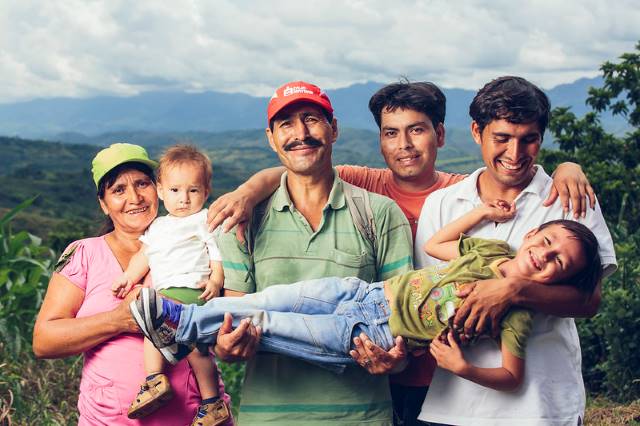
 In a recent interview, The Borgen Project spoke to social and economic historian Dr. Richard Sheldon and Tessa Munt, former MP and current Liberal Democrat counselor, about foreign aid and development.
Foreign Aid
The British public is divided on foreign aid and development. There are those who celebrate the humanitarian achievements of foreign aid packages, there are some who decry foreign aid as “neo-colonial extraction” and there are others who consider it a waste on outsiders. Generally, the support trumps the critique. In fact, support is strengthened when one considers and reviews critique.
Tessa Munt and the Public Debate
ODA, or Official Developmental Assistance, is the vehicle for aid delivery in the U.K. ODA typically takes the form of all-in-one packages — funds, manpower and organizational assistance. The U.K. government is not currently meeting the U.N. target of 0.7% of GDP allocated for foreign aid. Set at 0.5%, the British government says it has no intention to restore foreign aid spending to the pre-pandemic levels of 0.7% until at least 2027/28. Tessa Munt and the Liberal Democrats are strong supporters of foreign aid and overseas development. Munt says, “the Liberal Democrats are the government of foreign aid” and the foreign aid target will return to 0.7% when the Liberal Democrats are in power.
Although public support of foreign aid is strong and sustained, public concerns over immigration and notions of free-riding may draw funds away from positive ODA programs toward initiatives designed to keep migration low. The Bibby Stockholm barge is one such example. Using foreign aid budgets, the U.K. has procured the engineless barge from the Netherlands at the cost of an estimated £18 million. The Bibby Stockholm is one of a number of sites the U.K. government is trying to set up to provide an alternative to housing migrants in hotels. The barge will house asylum seekers who are awaiting the outcome of their asylum applications. Its use has been criticized as inhumane and its ultimate purpose serves to deter asylum seekers from seeking illegal migration routes to safety in the U.K.
Stories like this and the recent attack on a hotel housing asylum seekers in Knowsley, Merseyside, dominate the headlines. As a result, foreign aid can be appropriated and its aims misunderstood. Munt offered a solution, arguing that the positive deployment of ODA programs weakens “the push factor that brings asylum-seekers to our shores.” Munt succinctly finishes the discussion on the xenophobic pushback to foreign aid with this: “Foreign aid is, or should be, at 0.7% – that leaves us with 99.3% to spend however we wish.”
Critique with Dr. Richard Sheldon
Dr. Sheldon explains to The Borgen Project his thoughts on whether or not foreign aid is beneficial and effective. “‘Generally, yes… I think it does work.” Not only does foreign aid work, according to Dr. Sheldon, but it is “very much in our interests to do it.” ODA and foreign aid hope to slow asylum channels by creating stability and reducing poverty in troubled regions and enabling opportunities for investment and trade. Dr. Sheldon goes further, by arguing that”‘we have an obligation and a duty” toward the poor across the globe and that there are “all sorts of places where advancement isn’t possible without some kind of external aid.”
The numbers appear to support Dr. Sheldon’s case. According to a Global Citizen article published in 2018, foreign aid and development financing has saved 700 million lives over the last 25 years. U.K. foreign aid, in particular, saved more than 990,000 lives between January 2015 and December 2017 by immunizing more than 56 million children across the world, according to Results.org.
In Syria, for example, the U.K. has provided a total of £3.8 billion worth of official development assistance from 2011 to 2022. Food aid and emergency assistance in Syria through U.K. aid “alleviated suffering and allowed recipients to use their own resources on housing and health care. It had enabled some families to send their children back to school. There was also evidence of positive outcomes at the community level, in the form of reduced incidence of local crime, fewer disputes and families having a more optimistic outlook about the future,” according to the Institute of Chartered Accountants of India (ICAI). Through foreign aid, the U.K. has saved the lives of thousands and averted much greater burdens of asylum.
Foreign Aid Issues
Foreign aid is not without its issues, however. Charges laid at the sector surround questions of power and wealth extraction. According to research in 2017 by a coalition of U.K. and African social justice campaigners, more than $40 billion leaves Africa each year through multinational corporations “repatriating profits and illegally moving money into tax havens.” Further still, countries have faced accusations of using foreign aid “as a weapon to boost trade and further political aims.”
Take the series of structural adjustments implemented in the 1980s by the International Monetary Fund (IMF), for example. During this period, the IMF placed conditions on aid packages that required the restructuring of a nation’s economic life. These conditions directed a reduction in state expenditure, and, state assets, like water gas and coal repositories, were to be privatized and bought by multinationals in the West. As a result, millions of people suffered unemployment and impoverishment at the same time social security systems weakened due to requirements to reduce state expenditure.
But, as Dr. Sheldon argues, the situation was complex. The IMF required governments to reduce state expenditures because of eye-watering levels of debt in the Global South and the risk of widespread defaulting.
Dr. Sheldon comments, “Yes, I think there were a lot of very harsh ideologically driven set of conditions [that] very much reflects the [late] Cold War and the triumphalism [of] the Reagan and Thatcher years.” Dr. Sheldon goes on to say that these issues “do matter – more rather than less,” but they need not diminish aid in its entirety. Foreign aid also “pushe[s] for political reform, accountability, democracy and human rights… [I’ve] been studying this for quite some time, and the time scale (for the 700 million lives saved) isn’t in the most generous time period,” Dr. Sheldon highlights.
Looking Ahead
If one looks at the reduction in extreme poverty from the 20th century, progress is remarkable. The percentage of those living in extreme poverty stood at 53% in the 1950s — this percentage reduced to 9% in 2018. Dr. Sheldon argues that “capitalism, international aid, transport and humanitarianism have all [contributed] toward this.”
Ultimately, the emotive nature of this topic means that when individuals hear stories of misuse and misinformation about refugees and asylum seekers, they’re inclined to negatively perceive foreign aid as a whole. Dr. Sheldon argues that this is not correct; foreign aid is “part of the positive picture.” Despite the world population growing at a “rapid rate,” by most measures, poverty and extreme poverty have declined. As a result of this, the threat of global instability and concurrent issues of asylum have decreased. And, because of foreign aid, the U.K. has benefited from increased trade and increased stability.
– James Durbin
Photo: Flickr

Amazon’s Investment in India
India Unplugged
With India becoming one of, if not the, largest countries in the world by population, the new technology world is a crucial development. However, 67% of India’s population resides in rural areas of India that are labeled as underdeveloped. Due to this, only 35% of India’s population has a connection to the internet.
Amazon’s Relationship with India
India is full of local street vendors. These vendors could benefit greatly from the e-commerce world as it would create the possibility for their goods to reach a variety of buyers. However, most vendors in India are very small and were steered away from e-commerce as it seemed too complex. In response to these obstacles, in 2013, Amazon’s investment in India produced Amazon India. Within its initial set-up, Bezos invested 5 billion dollars into Amazon India.
Regardless of the creation of Amazon India, many Indians were hesitant to trust the new site. To gain the locals’ trust, Amazon created a program called “Amazon Chai Cart.” Amazon Chai Cart is a mobile tea cart that goes around cities serving tea while teaching small business owners about the e-commerce world. The Chai Cart is reported to have engaged with over 10,000 vendors.
Amazon’s investment in India continued by creating Amazon Tatkal. Amazon advertises this program as “a superfast solution to selling online.” The Amazon Tatkal vans patrol North and South India aiming to engage local vendors and simplify the process of selling online. Specifically, providing tips on registration, advertising, imaging and more skills.
Shipping and Warehouses
Not only has Amazon impacted small businesses by investing in India’s online world, but Amazon adapted its Fulfillment by Amazon (FBA) to India as well. FBA is a centralized shipping platform that Amazon uses to distribute its products. Companies send their product to fulfillment centers and pay a price for the centers to store, pack and ship their product. There are now over 70 fulfillment centers in India.
Keeping Small Businesses Alive
While there are many legitimate concerns about Amazon overpowering small shops, Amazon India has listed many of the “mom-and-pop businesses” in their delivery system to promote their business and simultaneously the small shops as well. This system encourages buyers to go into their local small vendor shop and use the store’s internet connection to peruse through products on Amazon. While this method is not ideal as it does not promote the shop’s products, shops have reported that their sales have gone up regardless. This is likely because by wanting to use the internet, the buyers are forced to go to physical shops where this is the internet and hopefully buy something within the store, too.
Looking Ahead
On June 24, 2023, Amazon announced that they will increase their investment in India’s online world to $26 billion by 2030. This was decided after Amazon’s CEO Andy Jassy met with India’s Prime Minister Narendra Modi. The two agreed that Amazon’s investment in India will increase job opportunities in India, support local start-up businesses, enable exports and empower small businesses to compete in the global market. Considering this, there is hope for India’s small businesses to flourish and thus its economy as a whole.
– Samsara Shrivastava
Photo: Flickr
A Conversation on Foreign Aid and Development
Foreign Aid
The British public is divided on foreign aid and development. There are those who celebrate the humanitarian achievements of foreign aid packages, there are some who decry foreign aid as “neo-colonial extraction” and there are others who consider it a waste on outsiders. Generally, the support trumps the critique. In fact, support is strengthened when one considers and reviews critique.
Tessa Munt and the Public Debate
ODA, or Official Developmental Assistance, is the vehicle for aid delivery in the U.K. ODA typically takes the form of all-in-one packages — funds, manpower and organizational assistance. The U.K. government is not currently meeting the U.N. target of 0.7% of GDP allocated for foreign aid. Set at 0.5%, the British government says it has no intention to restore foreign aid spending to the pre-pandemic levels of 0.7% until at least 2027/28. Tessa Munt and the Liberal Democrats are strong supporters of foreign aid and overseas development. Munt says, “the Liberal Democrats are the government of foreign aid” and the foreign aid target will return to 0.7% when the Liberal Democrats are in power.
Although public support of foreign aid is strong and sustained, public concerns over immigration and notions of free-riding may draw funds away from positive ODA programs toward initiatives designed to keep migration low. The Bibby Stockholm barge is one such example. Using foreign aid budgets, the U.K. has procured the engineless barge from the Netherlands at the cost of an estimated £18 million. The Bibby Stockholm is one of a number of sites the U.K. government is trying to set up to provide an alternative to housing migrants in hotels. The barge will house asylum seekers who are awaiting the outcome of their asylum applications. Its use has been criticized as inhumane and its ultimate purpose serves to deter asylum seekers from seeking illegal migration routes to safety in the U.K.
Stories like this and the recent attack on a hotel housing asylum seekers in Knowsley, Merseyside, dominate the headlines. As a result, foreign aid can be appropriated and its aims misunderstood. Munt offered a solution, arguing that the positive deployment of ODA programs weakens “the push factor that brings asylum-seekers to our shores.” Munt succinctly finishes the discussion on the xenophobic pushback to foreign aid with this: “Foreign aid is, or should be, at 0.7% – that leaves us with 99.3% to spend however we wish.”
Critique with Dr. Richard Sheldon
Dr. Sheldon explains to The Borgen Project his thoughts on whether or not foreign aid is beneficial and effective. “‘Generally, yes… I think it does work.” Not only does foreign aid work, according to Dr. Sheldon, but it is “very much in our interests to do it.” ODA and foreign aid hope to slow asylum channels by creating stability and reducing poverty in troubled regions and enabling opportunities for investment and trade. Dr. Sheldon goes further, by arguing that”‘we have an obligation and a duty” toward the poor across the globe and that there are “all sorts of places where advancement isn’t possible without some kind of external aid.”
The numbers appear to support Dr. Sheldon’s case. According to a Global Citizen article published in 2018, foreign aid and development financing has saved 700 million lives over the last 25 years. U.K. foreign aid, in particular, saved more than 990,000 lives between January 2015 and December 2017 by immunizing more than 56 million children across the world, according to Results.org.
In Syria, for example, the U.K. has provided a total of £3.8 billion worth of official development assistance from 2011 to 2022. Food aid and emergency assistance in Syria through U.K. aid “alleviated suffering and allowed recipients to use their own resources on housing and health care. It had enabled some families to send their children back to school. There was also evidence of positive outcomes at the community level, in the form of reduced incidence of local crime, fewer disputes and families having a more optimistic outlook about the future,” according to the Institute of Chartered Accountants of India (ICAI). Through foreign aid, the U.K. has saved the lives of thousands and averted much greater burdens of asylum.
Foreign Aid Issues
Foreign aid is not without its issues, however. Charges laid at the sector surround questions of power and wealth extraction. According to research in 2017 by a coalition of U.K. and African social justice campaigners, more than $40 billion leaves Africa each year through multinational corporations “repatriating profits and illegally moving money into tax havens.” Further still, countries have faced accusations of using foreign aid “as a weapon to boost trade and further political aims.”
Take the series of structural adjustments implemented in the 1980s by the International Monetary Fund (IMF), for example. During this period, the IMF placed conditions on aid packages that required the restructuring of a nation’s economic life. These conditions directed a reduction in state expenditure, and, state assets, like water gas and coal repositories, were to be privatized and bought by multinationals in the West. As a result, millions of people suffered unemployment and impoverishment at the same time social security systems weakened due to requirements to reduce state expenditure.
But, as Dr. Sheldon argues, the situation was complex. The IMF required governments to reduce state expenditures because of eye-watering levels of debt in the Global South and the risk of widespread defaulting.
Dr. Sheldon comments, “Yes, I think there were a lot of very harsh ideologically driven set of conditions [that] very much reflects the [late] Cold War and the triumphalism [of] the Reagan and Thatcher years.” Dr. Sheldon goes on to say that these issues “do matter – more rather than less,” but they need not diminish aid in its entirety. Foreign aid also “pushe[s] for political reform, accountability, democracy and human rights… [I’ve] been studying this for quite some time, and the time scale (for the 700 million lives saved) isn’t in the most generous time period,” Dr. Sheldon highlights.
Looking Ahead
If one looks at the reduction in extreme poverty from the 20th century, progress is remarkable. The percentage of those living in extreme poverty stood at 53% in the 1950s — this percentage reduced to 9% in 2018. Dr. Sheldon argues that “capitalism, international aid, transport and humanitarianism have all [contributed] toward this.”
Ultimately, the emotive nature of this topic means that when individuals hear stories of misuse and misinformation about refugees and asylum seekers, they’re inclined to negatively perceive foreign aid as a whole. Dr. Sheldon argues that this is not correct; foreign aid is “part of the positive picture.” Despite the world population growing at a “rapid rate,” by most measures, poverty and extreme poverty have declined. As a result of this, the threat of global instability and concurrent issues of asylum have decreased. And, because of foreign aid, the U.K. has benefited from increased trade and increased stability.
– James Durbin
Photo: Flickr
5 Military Humanitarian Missions
South Korea
Recently, South Korean President Yoon Suk Yoel announced he would be increasing aid to the war-stricken country of Ukraine through the military. South Korea had been hesitant to sell arms to Ukraine. Foreign aid, as well as demining equipment and ambulances, make up the help that the nation is giving. For a more direct example of missions, the South Korean military delivered disaster relief supplies to Turkey by their planes. This came after the recent earthquake. The military also planned to help Syria.
Germany
Since the German reunification in the 1990s, their military has been doing its share of humanitarian work. The German army works with both government and non-government organizations. The most frequent aid is disaster relief, which is used both in Europe and across the world. Examples include their efforts after the 2004 tsunami in Indonesia and the 2017 Caribbean hurricanes. The military was also used during the Mediterranean refugee crisis.
Singapore
As an island nation, the primary branch of Singapore’s military is its navy. Due to Singapore’s smaller size, the country partners with international organizations to conduct humanitarian work. The nation gives back through its various military humanitarian missions. The Singapore Armed Forces worked in Iraq after the wars in 1991 and 2003. Further engagements were completed in Texas after Hurricane Harvey and in Taiwan after the 2018 Hualien earthquake.
Sweden
As a member of many global organizations such as the United Nations, the Swedish military focuses on international aid. One example is Iraq, which has been helped by the Swedish military through its changes. Sweden has also helped Yemen in its war through aid. The military has delivered aid not only to Ukraine but to nearby Moldova. The war has hurt Moldova’s economy, necessitating assistance.
Brazil
The Brazilian army is known and well-regarded for its humanitarian work. It was recognized in 2018 for its resettling of Venezuelan refugees. Also in Brazil, the Yanomani people, who live in the Amazon, have faced poverty and difficulties which come from illegal mining. Some members of the military will protect the indigenous people. Others will deliver aid and food baskets.
Conclusion
Humanitarian work is, as it should be, an important part of our militaries. As we can see, military humanitarian missions help people across the globe. These soldiers hope for peace. An end to poverty is a major milestone in achieving this goal.
– Josh Sobchak
Photo: Flickr
5 Organizations Fighting Poverty in Burundi
Burundi is severely affected by chronic malnutrition related to limited access to clean water and food. Poverty in Burundi also affects many of the children in the population, with limited education and health resources available. Half of the children in Burundi suffer from stunted growth as the result of malnutrition. With the country being so vulnerable to the increase of poverty-like conditions, several charities and organizations around the world provide aid for this country in hopes of alleviating some of the struggles.
5 Organizations Fighting Poverty in Burundi
This organization also helps local farmers by supplying them with the tools and education to grow better crops. They also work to increase the number of children who attend school and help refugees find jobs.
Gender inequality is a huge issue in Burundi and ActionAid works to improve the living conditions of women and girls. They spread awareness of women’s rights and the importance of legal marriages rather than informal ones.
The Impact
These are only a few of the many organizations that work in Africa and provide humanitarian aid to Burundi directly. The country faces a multitude of issues, as it is one of the most impoverished countries in the world. Common trends of hardship that we see this country face are poverty, malnutrition, displaced persons and gender inequality.
There are so many nonprofit organizations fighting poverty in Burundi, and many of them have provided the country with great improvements. While the country still faces many hardships, there is potential for greater development thanks to all of these organizations providing assistance.
– Alesandra Cowardin
Photo: Flickr
From Farm to Fork: Food Waste In Hong Kong
Turning Excess Into Essentials
The Power of Redistribution
Despite these efforts, one challenge remains in reducing food waste in Hong Kong: households. In Hong Kong, households contribute to 68% of food waste. Hence, in 2021, the government started both the Waste Blueprint for Hong Kong 2035 and the Waste Charging Scheme. The Waste Blueprint calls for intense reform and work on waste reduction, waste separation, education, resource circulation, innovation and industry support with goals to reduce waste, have zero landfills and circulate resources properly by 2035. The Waste Charging Scheme is a law establishing that households be charged for the amount of waste being thrown out. Since the law was implemented, food waste in Hong Kong has been reduced by about 50%, and food redistribution has increased to 55%.
Food waste in Hong Kong — and across the globe — is a serious issue. About 21% of Hong Kongers live below the poverty line with 45% of the elderly being affected and one in four children living without proper nutrition. Globally, around 1 billion people go hungry a year, but a third of the food produced — 931 tons — goes to waste. Food is thrown out at every level of the supply chain from farm to fork. That lost third could feed 3 billion people worldwide. Hunger is the number one risk to human health globally. Without a proper meal or nutrition, a person is more susceptible to disease, sickness and poor living conditions. Hong Kong’s efforts in reducing food waste demonstrate the power of redistribution, and that all foods, no matter the stage, can aid in resolving hunger.
– Kenzie Nguyen
Photo: Flickr
Why the Maldives Needs the Loss and Damage Fund
G20, an intergovernmental forum of countries like the United States (U.S.), Argentina and France — nations that are historically responsible for 75% of greenhouse gas emissions worldwide. However, changing weather patterns impact low-income nations the most and they often carry the burdens related to that even though they are not all as responsible for carbon emissions as other countries. For example, Pakistan emits less than 1% of global admissions yet has $30 billion in damages from severe flooding.
The Need for a Loss and Damage Fund in the Maldives
Climate-vulnerable countries have been demanding a loss and damage fund for more than three decades, with the Alliance of Small Island States (AOSIS) spearheading the movement. G77 nations, a group with developing economies like the Bahamas, believe high-emission countries have a climate debt they need to pay to poor nations whose standards of living are suffering due to changing weather patterns.
As a result of extreme climate disasters, such as severe flooding, bushfires, species extinction, rising sea levels and crop failures, citizens of impoverished nations are losing their land and culture. One prime example of such a nation is the Maldives, as rising sea levels are affecting the country.
Trouble in the Maldives
The Maldives is a nation made up of 1,190 islands facing territorial damage as a result of changing weather patterns. According to the Intergovernmental Panel on Climate Change (IPCC), heightened ocean temperatures as a result of global warming have led to rising sea levels and 70% of its coral bleaching. As a low-lying country with 99% of its territory consisting of seawater and most islands sitting at less than one meter above sea level, the Maldives sinks further into the ocean every year.
The Maldives’ most pressing issue is beach erosion. As a result of sea levels rising, sand ends up in the ocean and trees’ roots cannot support them, wiping away land from the islands as ocean levels rise 3 to 4 millimeters per year.
While the Maldives is losing its geographic and physical presence to the ocean, its population is also facing cultural erasure. As communities move once their homes and recreational centers become uninhabitable, a culture heavily connected to the sea is unable to properly interact with the water surrounding it. The waning biodiversity and health of coral reefs, beaches and mangrove ecosystems also prevent the traditional fishing industry from flourishing.
The Maldives and the Loss and Damage Fund
Due to the damaging sea level rise in the Maldives, advocates like former president Mohamed Nasheed were major supporters of developed countries providing financial assistance to island nations. Adaptations to help mitigate the effects of changing weather patterns on the population include a sea wall to prevent beach erosion and protect the main island of Malé from wave destruction. However, initiatives for improving urban infrastructure and disaster preparation are expensive, resulting in a World Bank loan of more than $16 million to the Maldives for climate mitigation measures.
The Maldivian government has supported the installment of a loss and damage fund so it could freely take measures to keep its population and land safe from changing weather patterns without owing massive debts to organizations like the World Bank. Now that the Maldives has passed the fund, the Maldives must wait until COP28 for financial planning to get underway. Nonetheless, $140 to $300 billion will likely go toward climate-vulnerable nations.
Looking Ahead
For now, the Maldives is looking to be resilient to climate impacts by exploring alternative measures. The government finished the construction of a man-made island, Hulhumalé, in 2018. Labeled the City of Hope by locals, it is two meters above sea level, which mitigates the impact of flooding, beach erosion and sea level rise on the island. With space for more than 240,000 people, the Maldivian government is hoping to move residents from the capital of Malé, where space is limited due to the island’s sinking, to new homes.
As the construction of Hulhumalé demonstrates, the Maldivian government and its people are tackling the effects of extreme weather patterns on their nation in innovative ways. The loss and damage fund established at COP27 appears to be a promising step in the direction of climate justice and resilience for impoverished nations.
– Meilyn Farina
Photo: Flickr
The Jamaican Government’s Efforts To Destigmatize Mental Health
Background
Many Jamaicans live in disadvantaged communities with limited access to resources such as health care, education or employment. Conditions like this can lead to stress and inadvertently increase the risk of mental illness. Negative stigma about mental health exists all over the world. The stigma around mental health in Jamaica can make things incredibly difficult.
Many Jamaicans view mental illness as a weakness or a sign of fragility. This often leads to those with mental illness not seeking help out of fear of being judged. These harmful stigmas only force more Jamaicans to suffer in silence. The government has been working to solve this growing issue by increasing awareness and reducing the stigma around mental health in Jamaica.
Campaigns
One of the ways Jamaica is addressing this is with the “Speak Up, Speak Now” campaign by the Ministry of Health & Wellness.
The Ministry is a government organization that oversees Jamaica’s public health system and leads the national effort to protect Jamaicans’ rights to access health care services. Its most recent target has been mental health in Jamaica. According to their website, MOHW’s goal is to “ensure the provision of quality health services and to promote healthy lifestyles and environmental practices.” The ministry started the campaign to destigmatize mental health in Jamaica and to connect people to the resources that they need. It also aims to educate and encourage Jamaicans to speak freely about mental illness.
The Ministry’s website includes many different resources for Jamaicans seeking help with their overall health. The mental health section includes a short video giving encouraging words to those dealing with depression due to the COVID-19 pandemic. Below the video, there are more than a dozen posters with facts and tips about different mental health issues and how to overcome them.
When the campaign first launched, they activated a 24-hour suicide prevention hotline for Jamaica’s residents. The campaign also partnered with the United Nations Children’s Fund, a digital platform that sends messages to cell phones, three times in 2019. The campaign reached more than 1,500 young people with suicide prevention tips. Since around 20% of Jamaican children have a mental disorder, the message needed to reach many people.
The number of children with mental illness is linked to poverty as well. In 2018 at least 25% of Jamaican children lived below the poverty line. When adults do not have access to essentials, it often leads to mental illness. The same thing applies to children.
Looking Forward
The campaign does not end there. In February 2022, the ministry worked with Bellevue Hospital in Kingston to upgrade its mental health services. Some of these improvements include developing guidelines for managing psychiatric emergencies, investing in buses for transporting patients and purchasing standardized restraints for hospitals and community emergencies.
This campaign has done wonders for its community ever since it emerged in 2019. It will no doubt continue to educate the population and destigmatize mental health in Jamaica.
– Brianna Leonard
Photo: Flickr
How Receiving Cows is Helping Those in Poverty in Burundi
Alongside being the poorest country globally, Burundi faces one of the highest poverty rates. However, the Great Lakes Regional Integrated Agriculture Development Project (PRDAIGL) is making significant strides in aiding those in poverty in Burundi. This effort is especially evident in its initiative to gift cows to households in need, a pivotal component of the project.
Poverty Rate in Burundi
The U.S. State Department declared Burundi as the poorest country in the world based on the country’s GDP. In Burundi, as of 2022, the GDP per capita is $238.40. Compared to developed countries like the U.S., with a GDP per capita of $76,398.60, or the U.K. with $45,850.40, the difference is substantial. Even Burundi’s neighboring country, Tanzania, has a GDP of $1,192.40. As of 2022, 87% of Burundians live on less than $1.90 a day.
Conflict’s Effect on Poverty in Burundi
Part of the reason for the state of poverty in Burundi is The Burundian Civil War. This conflict arose from long-standing tensions between the Tutsi and Hutu ethnic groups. It stretched from 1993 to 2005, during which the GDP dropped 50%, and caused issues with food security, education, safe housing and general health. All in all, the rate of poverty in Burundi is high and highlights the need for external support. This is what PRDAIGL has set out to provide.
PRDAIGL’S Goals
The World Bank formed PRDAIGL in 2017 to improve the financial and living conditions of those living in poverty in Burundi. Despite being a largely agricultural country, with 80% of its people relying on agriculture for income, 50% of people in Burundi do not have enough access to food. In fact, food production in Burundi can only provide a person with enough food for 55 days a year.
PRDAIGL set out to alleviate financial struggles due to poverty in Burundi by providing livestock in the form of cattle, along with financial and technical support. Despite a difficult beginning to the project, with delays caused by bovine diseases and COVID-19 measures that prevented the importing of more than 3,000 cows to Burundi, PRDAIGL has finally been able to carry out its mission in 2023.
A Case Study of the PRDAIGL Project
An example of how the project has supported those in poverty in Burundi is 56-year-old Christine Nyabenda, whose financial situation improved after receiving a cow from PRDAIGL. After receiving training in animal husbandry and receiving assistance in building a structure for the cow, Nyabenda has started a successful dairy business.
With the profits from selling dairy products, she has since been able to buy a second cow, build a shop for her products and hire four employees. She has also used her increased earnings to improve her family’s living conditions. And she has been able to take care of the cows properly after receiving training from PRDAIGL in how to monitor their health, keep them and their enclosures hygienic and operate a sustainable farm.
How the Project Has Helped People
PRDAIGL’s successes during this project include:
Looking Ahead
In spite of being one of the poorest countries globally, Burundi receives crucial assistance from organizations like PRDAIGL. Charities and initiatives like these offer a glimmer of hope for the eventual eradication of poverty in Burundi.
– Jess Wilkinson
Photo: Flickr
What Is The “Social Supermarket” And How Is It Tackling Poverty?
In the fight to tackle food poverty, a concept titled the “Social Supermarket” has emerged. A social supermarket sells discounted food to those who are experiencing poverty or live on a low income, selling food 70% cheaper than high-street supermarkets.
What is the Social Supermarket?
The Observer’s restaurant critic and feature writer, Jay Rayner, explains in his article discussing the rise of the social supermarket for The Guardian that “it’s not about selling cheap food, but building strong communities.” Community First estimates that one-third of the food that the world produces goes to waste, meaning it converts to landfill and rots to produce methane, a dangerous greenhouse gas. It has also revealed that “1.9 million tonnes of food is wasted by the food industry every year in the U.K.” and “250,000 tonnes of the food that goes to waste each year is still edible.” This is where the “Social Supermarket” helps.
Run by voluntary organizations working with local food producers and suppliers, social supermarkets aim to provide products at a lower cost than traditional supermarkets. Torbay Food Alliance refers to social supermarkets owning the capability to help “prevent people reaching the point where they need a food bank.”
What is the Difference Between a Food Bank and a Social Supermarket?
A food bank is an emergency support service provided to people in crisis. It lacks control over the items on offer and the food is not always fresh.
This concept aims to provide short-term support. Alternatively, social supermarkets provide a range of discounted food for, usually, up to six months. A social supermarket offers a variety of products from fresh food to toiletries and cleaning supplies.
Unfortunately, social supermarkets may soon experience high demand. As Money Magpie states, “Social supermarkets and food re-distributors have popped up in quick succession in the last few months. With food insecurity becoming a real issue for more people than ever before, the choice between heating and eating this winter is a real threat for people across the U.K.”
Who Can Use a Social Supermarket?
There are multiple social supermarkets around the U.K. for the public to use. Additionally, with 4.7 million people reported in 2021/22 experiencing food poverty, many can benefit from this service. Anyone is eligible to use a social supermarket — shoppers do not need to receive welfare benefits.
Community First has released the following statement about its work with social supermarkets: “We’re hoping that those who find themselves having to use FoodBanks have an alternative with the added benefit of taking away any stigma and providing healthy options at affordable prices.”
How Has the Social Supermarket Already Reduced Food Poverty?
The Mayor of London is funding three new social supermarkets in London, with Haringey, Enfield and Lambeth councils spending a share of £300,000 to set up the new stores. Hosting London’s very first social supermarket, Lambeth has helped 520 low-income households access discounted food and even employment; along with food access, social supermarkets also bring new jobs to underprivileged people. London Assembly explains that “the London Food Board will work to ensure that everyone in London can access good, healthy food at every stage of their lives, from new mothers to children, all the way through to older people who may be at risk of malnutrition often caused by inadequate diets.”
The social supermarket concept has helped many people overcome the struggle of food poverty. However, with 49 million people in 43 countries still experiencing food poverty and 3 billion people unable to fund a healthy, nutritious diet, there is still a need for more work.
– Katerina Petrou
Photo: Flickr
New Emissions Standards in Africa Make Used Car Exports Safer
UNEP reports that around two out of every five used cars exported worldwide find their way to Africa. Many African countries do not have age limits on imported cars, according to a 2020 report by Global Citizen. Furthermore, emissions standards in Africa are often not on par with those in Europe, leading to poor health and environmental consequences through air pollution.
The Bad: Unsafe Emissions
Vision of Humanity report from 2023 examines the causes and effects of used car exports to developing countries, especially Africa. The European Union (EU) alone sent more than 7.5 million vehicles abroad from 2015 to 2018, with many vehicles meeting emissions standards in Africa but falling short in Europe due to “poor fuel economy and higher emissions.” Vision of Humanity’s report goes on to explain that most of these vehicles “contain inefficient diesel engines, a major source of particulate matter (PM) and nitrogen oxides (NOx),” both of which reportedly share links with climate change and risk of respiratory diseases.
Lack of Emissions Standards in Developing Countries
According to a 2023 article by the World Economic Forum, about 10 years ago, European motor vehicles were previously required to emit a little over 130 grams of carbon dioxide per kilometer of travel. However, in developing countries dominated by the used car market, cars now consume nearly 1.5 times that amount of fuel.
For additional perspective, the World Economic Forum’s article continues that four in five used vehicles exported to Africa fail to meet “basic emissions standards” like those in Europe. In this article, Margo Oge, formerly of the U.S. Environmental Protection Agency, claims that improved emissions standards in Africa and elsewhere in the developing world could cut vehicle emissions by up to 99%.
The Good: Progress Toward Safer Emissions Standards in Africa
The United Nations Environment Programme (UNEP) covered an instance of progress before the pandemic. In February 2020, environment and energy ministers from every nation in the Economic Community of West African States conferred to adopt elaborate new standards for ensuring that fuels emitted by area vehicles were cleaner than they had been.
As part of these new emissions standards in Africa, there are several significant changes. By 2030, the average fuel consumption of imported vehicles was reduced from 8 liters to 4.2 liters per 100 kilometers traveled. Additionally, sulfur fuel composition standards were lowered to 50 parts per million (ppm) in diesel and gasoline. This is a significant reduction from levels as high as 10,000 ppm in some of the region’s nations.
With nearly seven years remaining to meet fuel consumption goals, the environment looks forward to concrete evidence of progress in safer imported used cars. Improved emissions standards in Africa offer a pathway to a healthier environment, particularly in central and western Africa, without diminishing the life-changing impact that used cars can have on individuals like Mwangi.
– Noel Teter
Photo: Flickr