3 Ways EVs Are Reducing Global Poverty
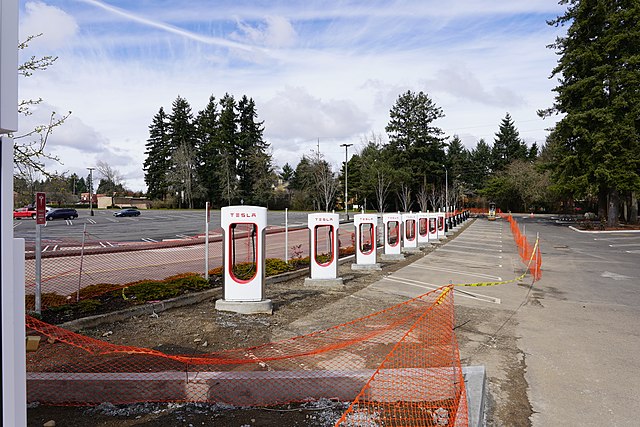
Electric vehicles (EVs) are the latest trend in the automotive industry and are helping diminish global poverty. Originating in the 1880s, the recent resurgence of the electric car has helped reduce air pollution associated with internal combustion engines (ICEs).
Although they can have a high upfront cost and require charging infrastructure, electric vehicles are driving solutions to global poverty by lowering operating costs, reducing air pollution and creating energy independence. Here are three ways EVs are reducing global poverty.
1. Lowered Operation Cost
Although the high cost of using electricity as fuel may at first seem daunting, lower maintenance costs mean EVs manage to break even over ICE cars. Proponents of EVs have cited the fact that these cars are cheaper to drive per mile, and this is due to the cars’ superior fuel efficiency. Compared to cars that run on ICEs, EVs require far fewer units of fuel.
For example, a study from the World Bank predicts a large increase in the cost advantage of EVs. The study, focusing on 20 countries around the world, observed scenarios like the 30 x 30, green grid, and scarce minerals scenarios to simulate the return on investment of EVs by 2030. These scenarios all had different concentrations of EVs and varied circumstances. For instance, the green grid scenario assumes the achievement of certain renewable energy goals.
The statistics strongly support the idea that increasing efforts to promote EVs would create a significant financial cost advantage. Even in the scarce minerals scenario, a case where critical minerals are depleted and the cost of batteries decreases slower than expected, the study predicts a positive financial cost advantage for all of the 20 countries observed.
These statistics, therefore, support the idea that EVs’ lowered operation cost can save important money for developing countries. Their strong long-term prospects for fuel economy make EVs a good tool for reducing global poverty.
2. Reduced Air Pollution and Associated Savings
EVs also allow for substantial savings thanks to their reduced air pollution. The environmental benefits of EVs translate into economic advantages for both individuals and societies at large.
ICE cars release emissions like carbon dioxide, nitrogen oxides and particulate matter, which contribute to pollution, increasing populations’ susceptibility to airborne disease.
EVs, which do not burn gas but instead use electricity as fuel, do not release these harmful emissions. Although generators, which charge these cars with electricity, do release emissions, these are at a far lower level than those released by ICE engines. Replacing ICE cars with EVs would thus tremendously lower poverty associated with pollution-caused disease.
In addition to lowering disease-related poverty, reducing pollution would cut the need for expensive cleanup efforts. Funds that would otherwise be used for these projects could go toward projects that improve employment and education.
3. Improvements to Energy Independence
Electricity generated domestically, mostly from renewable resources like solar, wind and hydropower, can help charge EVs. By depending more on locally produced, renewable energy, the need to import fossil fuels decreases, improving energy security.
For many developing countries, oil is a key source of energy. Increasing oil costs might be bad for these economies. By switching to EVs, nations can lessen their dependence on imported oil, reducing the political and economic risks related to the oil market.
Therefore, a crucial part of the answer to reducing global poverty is energy independence, an issue which is considerably improved by EVs.
Conclusion
As these vehicles become ever more affordable for the public, there is no doubt that EVs will become the go-to method of transportation, alleviating both economic and environmental issues.
EVs lower operating costs, reduce air pollution and contribute to energy independence making them key in building a more equitable and sustainable world. By continuing to invest in this integral technology, we can work toward a future where EVs play a central role in alleviating poverty and promoting prosperity for all.
– Advait K. Mishra
Photo: Wikipedia Commons
