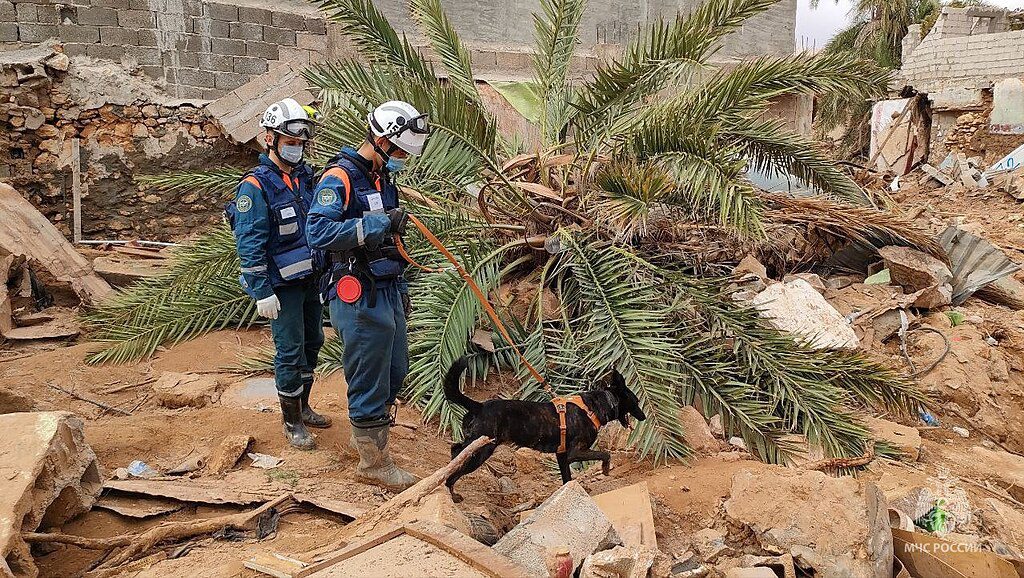
On September 10, 2023, Storm Daniel hit Libya, where torrential rainfall generated massive floods and the breach of two dams located in the south of Derna leading to the destruction of entire neighborhoods. The devastating flooding has so far killed more than 4,000 people and displaced more than 42,000, with a further 8,500 missing. Between 30,000 and 35,000 of these displaced individuals are currently residing in overcrowded camps in the Derna governorate, with little access to clean water and sanitation. Derna is amongst the worst affected districts for lack of open and safe health care facilities due to damage that the floods caused.
The Threat of Waterborne Diseases
The majority of the health risks for survivors stem from the presence of contaminated water, limited access to clean water and poor hygiene and sanitation facilities. These risks include the threat of waterborne disease outbreaks such as acute watery diarrhea and cholera. Additionally, the challenges of disrupted health care services, especially for vulnerable groups such as children, women and patients with chronic diseases or conditions, have heightened these risks. The Libyan National Centre for Disease Control (NCDC) reported 238 cases of diarrhea from September 14 to 18 alone.
The World Health Organization (WHO)
To detect early waterborne disease outbreaks and allow for the conduction of immediate control measures, the NCDC is leading surveillance efforts with support from the WHO including active surveillance in hospitals, health facilities and shelters for displaced people.
The World Health Organization (WHO) has assessed 78 health facilities, 24 of which are hospitals and 54 of which are primary health care facilities. More than half are either closed or not functioning due to damaged infrastructure or shortages of staff, medical supplies and equipment.
Alongside the Libyan Ministry of Health (MoH), the WHO is working to restore functionality in 10 health care facilities. Due to the 30,000 to 35,000 individuals residing in camps in Derna, a 100-bed field hospital with 10 intensive care beds, radiology services and an obstetrics and gynecology department has emerged with intentions to establish a further six field hospitals across the affected areas of Libya.
Due to damage causing the only rural hospital in the village of Al-Bayada to close, the WHO has deployed a mobile clinic in the nearby city of Assahel city in Al-Jabal Al-Akhdar. Additionally, the WHO has not provided chronic disease medicines to primary health care centers in AlBayda, AlMarj, Derna, Shahat and Sousa.
UNICEF
Since Storm Daniel, UNICEF has supported 14 primary health care facilities and three secondary health facilities with essential health supplies sufficient to meet the essential health needs of 91,750 people for three months.
In collaboration with the NCDC, UNICEF launched the Safe Water: Healthy Lives awareness campaign. This campaign targets the most affected locations in eastern Libya and focuses on preventing waterborne diseases, promoting safe hygiene practices and prioritizing the safety and well-being of unaccompanied children. The campaign has reached nearly 12,000 people with crucial messages.
In addition to waterborne disease threats, mental health issues such as acute mental distress, anxiety and depression are at increased risk, especially for those who have lost loved ones, homes, jobs and livelihoods. UNICEF has provided psychosocial support to more than 530 children and 81 parents and trained 62 partners’ staff in psychosocial first aid.
The EU has provided Libya with €5.7 million in humanitarian funding, channeled through ground-operated humanitarian partners delivering lifesaving health, water and sanitation supplies to vulnerable people most affected by Storm Daniel and the floods. Substantial civil protection assistance that EU Member States have offered and coordinated via the EU Civil Protection Mechanism has complemented the EU’s humanitarian funding that is tackling disaster needs. It includes the medical teams, equipment, shelter and food that those displaced by the floods need, especially those who might be suffering from waterborne diseases.
Conclusion
In conclusion, the devastating flooding that the torrential rain of Storm Daniel in Libya caused has displaced, injured and killed many individuals. However, many organizations are addressing the threat of waterborne diseases due to contaminated water and lack of clean water and sanitation facilities with the united aim to prevent, treat and cure the individuals whom the challenges have affected.
– Charlotte Campion
Photo: Wikipedia Commons

How The Olympic Refuge Foundation is Helping Refugees
With a growing number of people across the world who are forced to leave their livelihoods and start a new life somewhere else, projects that increase confidence and well-being are a key part of minimizing the chances of poverty among refugees. The Olympic Refuge Foundation is using sport to encourage communication and teamwork, provide a regular routine and increase the self-confidence of refugees.
4 Facts About Refugees
World Refugee Day, celebrated each year on June 20, aims to highlight the strength and courage of people who have had to flee their home country. In 2023, the main theme focused on hope, which is no better embodied than by the athletes dreaming big on the Olympic Refugee Team.
The Olympic Refuge Foundation
Since the 1990s, the International Olympic Committee (IOC) and the United Nations High Commissioner for Refugees (UNHCR) have been developing sports programs in the camps and settlements refugees often find themselves in. People from many different countries, who speak multiple languages, have been able to unite through sport and find joy in a simple game of basketball.
Since then, the sports projects have developed beyond the walls of the camps. In March 2016, the IOC announced the creation of the Olympic Refugee Team, and that summer at the Rio Olympics, 10 athletes were selected to represent the first-ever IOC Refugee Olympic Team.
At the Olympic Games in Tokyo 2021, 29 refugee athletes competed across 12 different sports. The increase in top-level athletes also reflects the expansion of sports programs around the world that are working to help refugees. In December 2017, the IOC created the Olympic Refuge Foundation with the aim of providing consistent support not only to high-level refugee athletes but to refugees across the world. The foundation now supports 12 programs in eight countries: Colombia, the Democratic Republic of Congo (DRC), Jordan, Kenya, Mexico, Rwanda, Turkey and Uganda and is looking to extend the project to Colombia and France.
The sports projects in refugee camps provide safe and inclusive spaces for young people escaping violence, abuse, negligence and exploitation. Young people of different nationalities are able to communicate with each other through the common language of sport, making valuable friendships and building trust and confidence in themselves. The day-to-day activities contribute to the social cohesion and development of people who have been scarred by their past. Fighting the feeling of hopelessness and desolation — so common in camps — is key to their future growth and recovery.
Terrains D’avenir
The IOC and Olympic Refuge Foundation are also keen to use the upcoming Olympics in Paris as a tool to encourage sport in local communities in France. With the support of the French Ministry of Sports and multiple other partners, a program – Terrains d’Avenir – has emerged to provide 7,000 young people who are displaced with access to sports by 2025. The program, which launched in June 2023, aims to support refugees in recovering from their experiences of trauma and to involve them in French society through sport.
The project is open to any displaced young person, regardless of their administrative status or ability to speak French and will offer organized activities across a variety of sports. Starting a new life somewhere is never easy; learning a new language, adapting to new customs, finding a new job and integrating yourself into the local community take time and patience. However, if these steps can be achieved, the chances of poverty among refugees are far less likely.
– Almaz Nerurkar
Photo: Flickr
Storm Daniel: Reducing Waterborne Diseases in Libya
On September 10, 2023, Storm Daniel hit Libya, where torrential rainfall generated massive floods and the breach of two dams located in the south of Derna leading to the destruction of entire neighborhoods. The devastating flooding has so far killed more than 4,000 people and displaced more than 42,000, with a further 8,500 missing. Between 30,000 and 35,000 of these displaced individuals are currently residing in overcrowded camps in the Derna governorate, with little access to clean water and sanitation. Derna is amongst the worst affected districts for lack of open and safe health care facilities due to damage that the floods caused.
The Threat of Waterborne Diseases
The majority of the health risks for survivors stem from the presence of contaminated water, limited access to clean water and poor hygiene and sanitation facilities. These risks include the threat of waterborne disease outbreaks such as acute watery diarrhea and cholera. Additionally, the challenges of disrupted health care services, especially for vulnerable groups such as children, women and patients with chronic diseases or conditions, have heightened these risks. The Libyan National Centre for Disease Control (NCDC) reported 238 cases of diarrhea from September 14 to 18 alone.
The World Health Organization (WHO)
To detect early waterborne disease outbreaks and allow for the conduction of immediate control measures, the NCDC is leading surveillance efforts with support from the WHO including active surveillance in hospitals, health facilities and shelters for displaced people.
The World Health Organization (WHO) has assessed 78 health facilities, 24 of which are hospitals and 54 of which are primary health care facilities. More than half are either closed or not functioning due to damaged infrastructure or shortages of staff, medical supplies and equipment.
Alongside the Libyan Ministry of Health (MoH), the WHO is working to restore functionality in 10 health care facilities. Due to the 30,000 to 35,000 individuals residing in camps in Derna, a 100-bed field hospital with 10 intensive care beds, radiology services and an obstetrics and gynecology department has emerged with intentions to establish a further six field hospitals across the affected areas of Libya.
Due to damage causing the only rural hospital in the village of Al-Bayada to close, the WHO has deployed a mobile clinic in the nearby city of Assahel city in Al-Jabal Al-Akhdar. Additionally, the WHO has not provided chronic disease medicines to primary health care centers in AlBayda, AlMarj, Derna, Shahat and Sousa.
UNICEF
Since Storm Daniel, UNICEF has supported 14 primary health care facilities and three secondary health facilities with essential health supplies sufficient to meet the essential health needs of 91,750 people for three months.
In collaboration with the NCDC, UNICEF launched the Safe Water: Healthy Lives awareness campaign. This campaign targets the most affected locations in eastern Libya and focuses on preventing waterborne diseases, promoting safe hygiene practices and prioritizing the safety and well-being of unaccompanied children. The campaign has reached nearly 12,000 people with crucial messages.
In addition to waterborne disease threats, mental health issues such as acute mental distress, anxiety and depression are at increased risk, especially for those who have lost loved ones, homes, jobs and livelihoods. UNICEF has provided psychosocial support to more than 530 children and 81 parents and trained 62 partners’ staff in psychosocial first aid.
The EU has provided Libya with €5.7 million in humanitarian funding, channeled through ground-operated humanitarian partners delivering lifesaving health, water and sanitation supplies to vulnerable people most affected by Storm Daniel and the floods. Substantial civil protection assistance that EU Member States have offered and coordinated via the EU Civil Protection Mechanism has complemented the EU’s humanitarian funding that is tackling disaster needs. It includes the medical teams, equipment, shelter and food that those displaced by the floods need, especially those who might be suffering from waterborne diseases.
Conclusion
In conclusion, the devastating flooding that the torrential rain of Storm Daniel in Libya caused has displaced, injured and killed many individuals. However, many organizations are addressing the threat of waterborne diseases due to contaminated water and lack of clean water and sanitation facilities with the united aim to prevent, treat and cure the individuals whom the challenges have affected.
– Charlotte Campion
Photo: Wikipedia Commons
The WFP Provides Aid After Drought in the Horn of Africa
The recent drought in the Horn of Africa was the area’s longest drought in history (2020–2023). Excessive rain and flash flooding followed it, and the conflict in Sudan is making recovery more difficult. Organizations such as the World Food Programme (WFP) are working in these regions to provide aid, but are struggling to keep up with the need due to lack of funding.
At the end of 2022, the WFP was providing food for more than 4.7 million Somalis, but low funding forced the organization to cut back to feeding only 3 million people in April 2023. A lack of funds will cause this number to decrease even further.
“Without sustainable funding for both emergency and climate-adaptation solutions, the next climate crisis could bring the region to the brink of famine,” said WFP’s regional director for Eastern Africa, Michael Dunford.
The Longest Drought in History
Generally, the Horn of Africa experiences two rainy seasons: Oct.–Dec. and March–May, but the region has had five consecutive dry seasons from 2020 to 2023. This has been the longest and most severe recorded drought in the area’s history. This has left residents of the area food insecure. In fact, more than 21 million people are dealing with food insecurity, and more than 3 million of those people are facing emergency levels of food insecurity. This means they regularly go without food for a day or more at a time.
WFP reporter, Tomson Phiri, met a bright 14-year-old boy whose family the drought has impacted. Ali (not the boy’s real name) graduated from primary school, but can no longer progress to secondary school. His family lost an entire herd of livestock and has nothing left to sell in order to fund Ali’s education. More than 13 million livestock died during the drought in the Horn of Africa.
In 2022, the WFP was calling for $327 million to keep up with the level of starving individuals. Now, $810 million is essential to provide the correct amount of support.
Rain and Flash Floods
Beginning in March 2023, the region got its first taste of moisture in three years as heavy rains and flash floods hit. Ethiopia, Somalia and Kenya were receiving significantly more rain than they normally would during that time of the year. Although, March–May generally provides the Horn of Africa with 60% of its total annual rainfall. For example, Ethiopia received between 2 and 4 inches more rain within the first 25 days of March than it normally would. Despite providing the area with much-needed water, the floods killed dozens and negatively affected 300,000 people in both Ethiopia and Somalia.
The Maluak family living in South Sudan lost their grass-thatched house during flooding. “The floods started when we had cultivated some vegetables and swept everything away,” said Gabriel Maluak to a Medium reporter. “Our grass-thatched house was floating in water; we had no place to put our heads.”
Maluak and his family had no option except to live in an internally displaced persons camp in Sudan.
Conflict in Sudan
Current conflicts in Sudan are causing food and energy prices to skyrocket throughout the entire region — thus, further perpetuating the food crisis that the drought caused in the Horn of Africa.
The WFP has provided assistance to four Sudanese states — more than 384,000 people. However, the conflict has caused major security concerns for the organization. Three employees of the WFP and four staff from a partner organization died in the fighting, and this forced the WFP to briefly halt their operations in Sudan.
Drought, flash floods and conflict are plaguing the Horn of Africa, causing millions to face serious food insecurity. Though the WFP has aided millions so far, their financial standing is not allowing them to keep up with the need. In the last year, the funding that the organization is calling for has more than doubled.
Help from organizations such as the WFP provides hope for famine prevention and change within the region.
– Taylor Barbadora
Photo: Flickr
Poverty Reduction in the Philippines
In a world where news too often reports problems rather than progress, it is essential always to have news that highlights the progress and accomplishments made to fix the problems. One piece of good news is the efforts and accomplishments aimed at poverty reduction in the Philippines. The Philippines has been making steady progress and gains towards poverty reduction as the country works towards its goal of eliminating poverty in the middle class entirely by 2040.
What Has the Philippines Accomplished?
The World Bank released a report on November 24, 2022, entitled “Overcoming Poverty and Inequality in the Philippines: Past, Present, and Prospects for the Future.” In this report, the World Bank highlighted how the Philippines have been making critical gains in their fight towards poverty reduction. One can attribute these gains to both high growth rates and the expansion of jobs primarily outside agriculture. According to the numbers, from 1985 to 2018, the poverty rate fell from 49.2% to 16.7%.
Additionally, the population of the middle class had ballooned to 12 million people, and the amount of the population that had become economically secure had reached 44 million people. The report highlighted more accomplishments as well, including “the expansion of secondary education, mobility towards better-paying jobs, access to basic services and government social assistance have started to reduce inequality since the mid-2000s.”
Anti-Poverty Programs in the Philippines
The government of the Philippines has introduced anti-poverty programs, which, according to the Department of the Interior and Local Government (DILG), have benefited around 4.7 million Filipinos. According to DILG Secretary Benjamin Abalos Jr., there are more than 1,000 projects that benefit more than 1.69 million Filipinos and have received funding from the Conditional Matching Grant for Provinces and Financial Assistance to local government units (LGUs). The president of the Philippines, Ferdinand R. Marcos Jr., has made it his priority to achieve poverty reduction in the Philippines significantly.
Recently, the Philippines has completed more than 2,778 farm-to-market roads, water and sanitation systems, health stations, school buildings, rural electrification and other infrastructure projects. These are specifically designed to benefit people who are both geographically isolated and disadvantaged under what is known as the Support to Barangay Development Program (SBDP). The current Filipino government has embraced poverty reduction initiatives, and the DILG chief reiterated a vow to fully support the current administration’s plans to “…improve the economy, increase employment, improve the ease of doing business, boost agricultural production, ensure food security, and continue social programs for the poor and the vulnerable.”
What Still Needs Improvement?
Despite the progress, more work is necessary. The COVID-19 pandemic has turned back progress in several areas across the globe, especially in the Philippines. Between 2018 and 2021, about 2.3 million people were pushed into poverty, according to the Filipino government. This increase is due to the economic downturn that COVID-19 has caused. In 2021, the number of people living in poverty rose to almost 20 million, which is a little more than 18% of the population. That is up from 16.7% in 2018.
The current President, Ferdinand Marcos Jr., aims to tackle this problem to reduce the poverty rate in the Philippines by nine percentage points by the end of his term in 2028. This goal remains achievable even though the country is wrestling with soaring inflation. The president’s focus is on three specific aims: “fully reopening the economy, investing in human capital and social protection and transforming production sectors to generate more quality jobs and competitive products.”
Before the pandemic, the Philippines had succeeded in its goal of pulling 6 million Filipinos out of poverty four years ahead of the original target date of 2022. The pandemic has had negative and long-lasting impacts that the world must work to overcome.
Conclusion
Great strides have been made to reduce poverty in the Philippines. There is a growing middle class, a long-term decrease from 1985 in the poverty rate and more people have started to achieve economic security. All of this, in addition to the expansion of secondary education and a reduction in income inequality due to government social assistance, has created good news for the fight against poverty.
The pandemic had a tremendous impact around the globe and has hurt essential progress worldwide in education and poverty. This is also true in the Philippines, which had made tremendous social and economic progress prior to the pandemic. Fortunately, the Philippines’ president is committed to slashing poverty by the end of his term and has set clear goals toward that end. With this mentality and attention to the problem, expect more good news in the fight to reduce poverty in the Philippines.
– Gary Williams
Photo: Flickr
Addressing Poverty Among the Honduran Garifuna
The Honduran Garifuna are an Indigenous group and descendants of the African Caribs, an Indigenous community from the Caribbean island of St. Vincent. In the 18th century, they were exiled from the Central American region and dispersed along the coast and rural areas. Due to miscounts and failure of recognition by the Honduran government, there is no Honduran Garifuna census, but according to the UN’s most recent findings (2021), the population is at about 300,000.
Of the 6.5% African and Indigenous population in the nation of Honduras, 71% are Indigenous and living in extreme poverty. The Garifuna primarily comprise that statistic – along with the other Indigenous groups – which ultimately concludes that they face a high discrepancy in inequality and income in the nation. Here are a myriad of detrimental factors contributing to the poverty among the Honduran Garifuna.
Inadequate Infrastructure
With poor housing comes a deficit in electricity, running water and sanitation services. At Honduras’ national level, about 73% have access to an adequate home, yet this access is unavailable to 30% of their counterparts — those residing in rural areas. More than 40% of the rural population depends on rivers or wells for water, and the Honduran Garifuna account for 17% of them. The Garifuna account for 18% out of 50% that have little to no access to an installed sanitation facility — this includes an outhouse, toilet, potable water and sewer system.
Lack of Basic Needs
Studies find that the illiteracy and malnutrition rates among Honduras’ Indigenous, rural population are at an all-time high and found little to no access to the basic needs for education and food. More than 40% of rural people are not enrolled in grade school resulting in a 46% illiteracy rate because they are geographically isolated.
Isolation/Exclusion
The Honduran Garifuna are isolated and excluded across the spectrum — geographically, economically, socially and politically. Additionally, others do not recognize them as a people in the country. This perpetuates disputes between them and the Honduran government over human and land rights. Even the urban Garifuna that are economically active in the tourism industry regularly experience discrimination and human rights violations. They, and their rural counterparts, face challenges within their own lands over decision-making processes and injustices that further sustain the poverty found among the Honduran Garifuna.
Two grassroots NGOs working with and representing the Honduran Garifuna in legal cases today are the Black Fraternal Organization of Honduras (OFRANEH) and the Ethnic Community Development Organization (ODECO). Both OFRANEH and ODECO have similar goals and visions when working with the Garifuna community. They both prioritize the Garifuna culture and language to educate them about their designated human and land rights and apply them to protect themselves.
The Honduran Garifuna community still stands in solidarity today and holistically tackles the structural challenges of poverty, discrimination and marginalization. It has faced these obstacles by prioritizing its Indigenous culture and traditions and will continue to do so until reconciled.
The Garifuna community is matrifocal. Women are the head of the household and take the leadership roles. Here is a group of Honduran Garifuna women launching a Land Recovery Campaign to fight for their ancestral territories.
– Amy Contreras
Photo: Flickr
How Aid is Improving Life in Informal Settlements in Morocco
At the beginning of the 21st century, nearly 2.5 million Moroccan citizens, close to 10% of the total population, did not have access to water within their homes. Most had to walk to a well to replenish water supplies and were less able to focus on caring for their families or generating income, fostering a distressing quality of life.
Due to these conditions, many Moroccans immigrated from rural areas to cities, and these new populations formed settlements on the edges of urban areas. The state, however, considered these informal settlements in Morocco illegitimate and, as such, decreed them ineligible for essential services like clean water and sanitation. Output-based Aid (OBA) stepped in to remedy the situation and has been instrumental in improving access to fundamental rights in Morocco.
The Success of a Combination of State Assistance and Output-Based Aid
The state developed affordable housing programs, yet the housing created by these programs was still too expensive for some of the inhabitants of the settlements. Programs to improve the quality of life in the informal settlements in Morocco were established as attempts to eradicate the settlements proved unsuccessful. The Global Partnership on Output-Based Aid (GPOBA) delegated a grant to the local governments of Casablanca and Tangiers, the cities that this phenomenon most affects. The grant helped contract different water provider companies to construct the necessary infrastructure to service the settlements.
The Construction of Infrastructure
By eliminating the high fee to connect to a piped network, the OBA grant helped bridge the gap between what the households could afford and how much the water services cost, as they only had to pay the service fee. In 2007, a company called LYDEC constructed the necessary infrastructure for water distribution and waste management in Lamkensa, a settlement on the edge of Casablanca.
The OBA grant also enabled another service provider, Amendis, to provide affordable access to water to those living in the settlements bordering Tangiers. The city of Meknès benefited from the aid program as well. Outside foreign aid was once again used to contract a service provider called RADEM that successfully provided water and waste management services to the city.
The Positive Impact of the Partnership Between Local Government and International Aid
The Department for International Development and the International Finance Corporation of the World Bank mainly financed these OBA programs in Morocco. The OBA method improved the conditions of those living in Moroccan informal settlements. More than 62,000 residents benefitted from the aid project by its completion in 2012. Not being preoccupied with finding clean water opened up opportunities for residents to devote their attention to other activities such as employment, caring for their families and giving back to their communities.
The Growing Probability of Extreme Weather Events
The Moroccan government’s progressive recognition of the existence of informal settlements in Morocco has improved the efforts to create the necessary infrastructure to improve the quality of life of their inhabitants, and there have been more efforts to rehouse these populations through affordable housing programs. In 2019, however, approximately 1.4 million individuals remained in informal settlements in poor urban and peri-urban areas, some without access to essential services.
Additionally, droughts have been more frequent, resulting in limited water resources, an issue that could not be solved with the creation of infrastructure. In 2015 and 2016, rainfall was far lower than the norm and quasi-nonexistent in some regions of Morocco, resulting in scarce water resources. Some cities, such as Zagora, did not have water for days or only a few minutes daily. Predictions seem to indicate that this circumstance will only occur more frequently as the probability of extreme weather events increases. However, the success of the partnership between local government and international institutions shows the real impact this type of initiative can have on human rights in Morocco and elsewhere.
– Tatiana Gnuva
Photo: Flickr
How the Global Oxygen Alliance Continues a Crucial Mission
On May 24, Unitaid, a global health agency that fundraises to support novel treatments for major diseases in the developing world, and the Global Fund to Fight AIDS, Tuberculosis and Malaria both published press releases officially announcing the commencement of the Global Oxygen Alliance (GO2AL).
Additionally, backed by the Pan American Health Organization (PAHO), the Africa Centres for Disease Control and Prevention (Africa CDC), the World Health Organization (WHO) and UNICEF, GO2AL was first established in April as an initiative that seeks to bridge the gaps in medical oxygen access that continue to exist in low- and middle-income countries (LMICs). In the wake of the COVID-19 pandemic, GO2AL aims to ensure that advancements made in oxygen supply and distribution during the height of the virus are maintained and expanded to even more regions, as medical oxygen is a key treatment tool that health care workers use in hospitals worldwide.
Building Blocks
Although the WHO refers to oxygen as an “essential medicine,” necessary for almost all aspects of many standard hospital procedures, rarely do people consider the supply of medical oxygen when identifying indicators to help analyze the performance of countries’ health systems.
A scarcity of medical oxygen in the vast majority of LMICs (Lower or Middle-Income Countries), then, has gone overlooked for years, only gaining relevance in the face of devastating shortages during the pandemic. On top of often lacking an oxygen source, many hospitals in LMICs also lack pulse oximeters, a piece of medical equipment that measures the amount of oxygen in a person’s red blood cells and is therefore crucial in the proper administration of oxygen to patients suffering from hypoxemia, or a low level of arterial oxygen.
February of 2021 saw the creation of the Oxygen Emergency Taskforce of the Access to COVID-19 Tools Accelerator (ACT-A), a multilateral coalition founded to respond to these shortages. ACT-A was able to achieve a number of successes in expanding access to medical oxygen in LMICs, raising $1 billion to increase oxygen production and reduce its cost, distributing equipment like pulse oximeters to hospitals in need and providing support to governments in the implementation of improved oxygen systems.
The Global Oxygen Alliance aims to be a successor of ACT-A, hoping to maintain the advancements that have occurred and extend them ever further, especially as oxygen shortages have faded out of public perception after the pandemic. Furthermore, GO2AL is also partnering with the Lancet Global Health Commission on Medical Oxygen Security, formed in September of last year, to address data gaps in the supply of oxygen in LMICs and utilize that new research to find solutions to the oxygen insecurity that still exists in many health systems across the globe.
Preventable Deaths
The work of GO2AL is critical since medical oxygen is also frequently used in the treatment of the elderly, infants and pregnant women, all of whom are vulnerable populations. Developing countries have long struggled to acquire enough medical oxygen for their needs; before the COVID-19 pandemic began in 2020, 90% of hospitals in LMICs did not have access to sufficient amounts of oxygen for their patients, which led to a preventable death toll of 800,000 annually.
Though COVID-19 may no longer officially be a global emergency, the havoc it wreaked on health systems around the world was a wake-up call for more investment to be directed towards future pandemic preparedness. One year into the pandemic, 60% of hospitals in LMICs did not have a sufficient supply of medical oxygen. Should there be another virus similar to COVID-19, every country will need the resources to adequately care for any and all patients who may need oxygen during their treatment.
There are also plenty of non-COVID-19 patients who suffer from the lack of access to medical oxygen, with diseases common in LMICs like pneumonia, malaria and meningitis causing hypoxemia and requiring immediate care. The Clinton Health Access Initiative estimates that more than 15% of children under 5 admitted into hospitals suffer from hypoxemia, in addition to 20% of all admitted infants.
An inadequate supply of oxygen affects pneumonia patients in particular, as 7.2 million children with the condition end up in hospitals every year. Without access to oxygen therapy, around 148,000 annual child pneumonia cases are preventable. Research suggests that installing and upgrading oxygen systems in pediatric wards can lower the number of deaths due to child pneumonia by 46%, in addition to lowering all deaths in children under 5 by 40%. GO2AL’s stated commitment to increasing medical oxygen access, then, is one that is sure to save millions of lives in years to come.
Hope for the Future
ACT-A successfully brought medical oxygen to LMICs desperately in need of it and worked through logistical obstacles to make sure these countries have the infrastructure to continue accessing the oxygen they require. On the part of those organizations that were a part of ACT-A and are now supporting the Global Oxygen Alliance, they are offering an extremely important example of what dedication to bettering the lives of those who are less fortunate should look like. Not only will GO2AL continue filling the oxygen gap that exists in many LMICs, but it will also fill the data gap that made the lack of medical oxygen in many developing countries a sorely underappreciated issue before the pandemic.
– Sofia Oliver
Photo: Wikipedia Commons
From Ashes to Hope: Fires in Greece
The Impact on Impoverished Areas
The fires have exacerbated the challenges faced by impoverished areas in Greece, which have been disproportionately affected by the destruction of homes, access to resources and inadequate infrastructure, resulting in these communities being particularly vulnerable during this time of crisis. These areas often lack proper fire prevention measures and may have inadequate firefighting capabilities. As a result, it is more challenging to contain and extinguish fires within these communities, leading to greater damage, loss and strain on communities of already fragile conditions. Similarly, their access to health care, housing and basic necessities has become even more critical in these communities.
Support and Aid
Despite the challenges, there has been an outpouring of support and aid for the affected communities. The fires have highlighted the importance of support and assistance needed to rebuild and strengthen these vulnerable areas. Local and international organizations, volunteers and individuals have come together to provide assistance, including emergency supplies, fire-fighting equipment, financial aid and resources for rebuilding. So far, volunteers have joined local communities in firefighting, hoping to reduce the destruction and spread of the fire. Additionally, other good news is that since 2019, the E.U. has developed rescEU, a fully funded program whereby if a member state requests aid and support, the rescEU force must respond, allowing Greece to receive an abundance of international support during this time of crisis.
Community Resilience
In the face of adversity, stories of resilience and unity have emerged from these impoverished areas. Communities have come together, supporting one another and demonstrating the strength and determination to rebuild their lives and neighborhoods. The unity and solidarity shown by communities within Greece during these fires continue to inspire people worldwide, aiding efforts in the donation of supplies, offerings of shelter through the use of their own homes, and helping with the cleanup and rebuilding process, particularly when it comes to the natural restoration of vegetation and forests as many people residing in the lower classes within Greece rely on pine trees to fund their livelihood and agricultural work.
This is shown in this first-hand account regarding the burning of pine trees in wildfires from 2022 due to lack of government intervention in fire prevention: “Because they did nothing to protect the forest. They let it burn. They let us burn,” said resident Giorgos Anagnostou. Since the 2022 fires and thousands of accounts similar to the one above, Greece has developed plans to monitor wildfires with drones, along with temperature sensors in high-risk forests so that future wildfires are more contained and cause less destruction.
Rebuilding Efforts
The rebuilding efforts in these impoverished areas are crucial for long-term recovery. With the support of organizations and volunteers, damaged homes are being reconstructed, infrastructure is being restored and plans are being made to help communities regain their livelihoods. Current efforts from volunteers both locally and internationally have been instrumental in providing support to those who have lost their homes and in helping communities recover from the devastation caused by the fires.
Creating Sustainable Solutions
Due to the fact that Southern European countries often have scorching and dry summers, they are often prone to wildfires, with European Union officials acknowledging that the severity of the situation will only increase as the years go on due to the alarming rate at which climate change is occurring, with higher temperatures igniting more fires across the globe. The fires in Greece have particularly shed light on the need for sustainable solutions in these surrounding areas, especially within impoverished areas, to limit the damage caused by any possible future fire. Efforts are being made to address the underlying issues contributing to impoverished communities’ vulnerability, such as improving access to education, health care and economic opportunities.
Hope for the Future
While the fires have caused immense devastation, there is hope for a brighter future. Through collective efforts, these communities can rebuild more robust and more resilient than before. It is an opportunity to address the inequalities and create a more inclusive and supportive society. With mass destruction came the acknowledgment from the European Union of a more immediate and decisive plan to be ready to deploy and fund forces when needed, with the current response aiding Greece with special programs, aircraft, equipment and hundreds of firefighters, resulting in around one-fifth of firefighters fighting against the fires in Greece being from the E.U. force.
The fires in Greece have significantly impacted impoverished areas, but there is also hope amidst the challenges. The support and aid received, coupled with the resilience of these communities, are driving efforts to rebuild and create a better future. Together, we can make a difference and help these communities thrive again.
– Ellis Nicoll
Photo: Flickr
UNESCO and Prada Partner To Educate African Girls
The number of girls not attending school was high in Africa even before the COVID-19 pandemic. According to UNESCO, 128 million female students did not attend any academic institution in 2020 before the coronavirus. However, COVID-19 became the reason that even more girls ceased their studies in school. Approximately 24 million additional students will now not go back to academic establishments. Moreover, around 450 million learners cannot access online materials for individual studying.
Keeping Girls in the Picture
A previous joint project of Prada and UNESCO, Keeping Girls in the Picture, reached up to 360 million people around the world. Prada devoted the profit from the Tools of Memory auction to sponsor UNESCO’s COVID-19 Global Education Coalition’s work on girls’ learning.
In August 2023, UNESCO and Prada launched boot camps to develop new skills for girls in Kenya. Over 200 young ladies participated in a joint campaign. Science, technology, engineering and mathematics (STEM) and information and communication technology (ICT) were the main focus of the training provided by UNESCO and Prada. The goal of it was to demonstrate gender equity to the girls and to advocate psychosocial aspects associated with STEM subjects. Young learners obtained a chance to create apps, use 3D printing for their designs and acquire artificial intelligence, coding and robotics. Along with technical opportunities presented for Kenyans, they received the honor of meeting female mentors. This event was helpful to develop stronger confidence and provide a new generation of girls with experience in a male-dominated field.
Keeping Girls in the Picture helps to equal the rights of males and females in society. Teaching STEM and ICT to a new age group of girls will help eliminate the evident gender gap in this area.
A Look Ahead
The consequences of Prada’s joint projects with UNESCO helped to improve education for girls in Africa and contributed to narrowing the gap between historically male and female-oriented professions. Eventually, more women will have access to academic resources, which will provide the continent with an opportunity to fight poverty and gain financial independence from the Western world.
–Stephanie Len
Photo: Flickr
Education for Native Hawaiians
Indigenous Hawaiians face a history of educational disparities. According to the 2019 U.S. Census Bureau, only 10.6% of Native Hawaiians or part-Hawaiians earn an associate degree or higher. Native Hawaiian or other Pacific Islander students only made up 0.3% of all associate degrees. Social factors such as homelessness, substance abuse, degradation of cultural values and the government not funding education for Native Hawaiians can explain the educational disparities. Different legislations and NGOs have taken action which recognize the unique need for education for Native Hawaiians.
Native Hawaiian Education Act
In 1981, the Office of Education submitted a comprehensive report, stating that Hawaiians score below parity in education, directly related to cultural factors. The passing of the Native Hawaiian Education Act in 1988 was a piece of legislation that was the start of recognizing the unique educational needs that Native Hawaiians require. The purpose of the Native Hawaiian Education Act is to develop and expand on various educational programs that aim to assist education for Native Hawaiians. These programs include early educational care, beginning literacy programs and professional development for educators. These programs focus on the idea that Native Hawaiians are a unique cultural group that requires a culturally appropriate curriculum to thrive.
Due to the Native Hawaiian Education Act, Congress has consistently provided funding to address the educational gap between Native Hawaiians and other racial groups. In 2020, only 35% of Native Hawaiians enrolled in college upon graduation. The Native Hawaiian Education Act provides scholarship and college transition opportunities.
Native Hawaiian Education Council
Recognizing that education for Native Hawaiians requires more support, the act called for the establishment of a council in 1994, known as the Native Hawaiian Education Council. The purpose of the Native Hawaiian Education Council is to “coordinate the educational and related services and programs available to Native Hawaiians, … assess the extent to which such services and programs meet the needs of Native Hawaiians; and provide direction and guidance, through the issuance of reports and recommendation, to appropriate Federal, State and local agencies in order to focus and improve the use of resources… on Native Hawaiian education.” In 2022, the council was able to give funding for Hawaiian language instruction, a cultural-based curriculum and address mental health needs for Native Hawaiian students.
Lumina Foundation Donates to the University of Hawai’i
Only 10.6% of Native Hawaiians over the age of 25 have earned an associate’s degree. To aid the effort to provide education for Hawaiians, the Lumina Foundation donated $575,000 to the University of Hawai’i in 2022. Lumina Foundation announced that the funding was dedicated to increasing the share of Native Hawaiians, Pacific Islanders and Filipinos earning college credentials in Hawaii. The University of Hawai’i is set to raise attainment rates by 5% for these ethnic minorities in the next four years. The university will also use part of the funding to expand professional development to professors so they are capable of teaching Native Hawaiians, Pacific Islanders and Filipinos in a culturally inclusive way.
– Yana Gupta
Photo: Flickr