Volunteer Nurses in Honduras
 As of 2024, almost 63% of people in Honduras lived in poverty. The main reasons for such a high poverty rate are extreme food insecurity, lack of access to basic services, climate disasters and violence.
Particularly in the city of La Ceiba, poverty is at a severe high of almost 93%. Located on the northern coast of Honduras, La Ceiba has a population of about 285,000 people. If 93% of these people are living in poverty, then about 265,000 people are in poverty in just one city in Honduras. The city experiences common hurricanes and flooding, which exacerbates the poverty rate.
A Broader View
The nonprofit A Broader View sends volunteer nurses to La Ceiba to assist in public hospitals. The organization was founded in 2007 and runs volunteer programs in 32 countries around the world. Since its founding, A Broader View has raised and donated more than $4.5 million to partners in need and has had almost 70,000 volunteers.
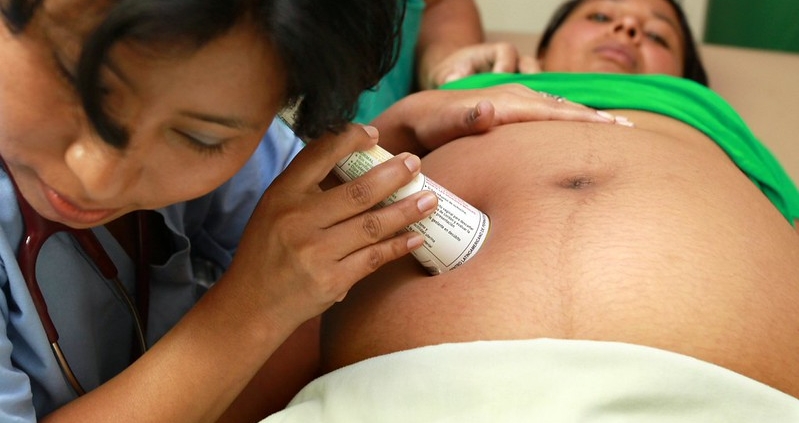
The Premedical and Student Nurse program in La Ceiba sends volunteers over the age of 17 to work in public hospitals and clinics. These volunteer nurses in Honduras work alongside local doctors to help the largely understaffed facilities. Volunteers assist with basics such as charting patients, cleaning and bandaging wounds and taking vitals. No experience is required to participate in the program. Spanish immersion lessons are offered to those interested. Volunteers are asked to bring several pairs of scrubs, a stethoscope, a blood pressure cuff, masks, gloves and pens. La Ceiba has limited availability of supplies and cannot provide these basics to each volunteer. Volunteers are housed on-site and work eight-hour shifts Monday through Friday. Program lengths range from one week to 12 weeks.
Volunteer Nurses in Honduras
The Borgen Project interviewed Nancy Crane, a volunteer nurse who went to Honduras in 2017. In January of that year, La Ceiba experienced major flooding that affected thousands of people. September and October 2017 saw heavy rain and frequent flooding. Nancy went to La Ceiba in September 2017 as a volunteer nurse for 12 weeks with A Broader View. Her motivation for going was a desire to move into the nursing field. She had no prior experience, and A Broader View provided hands-on experience. Nancy was placed in Hospicentro Okens in the emergency room four days a week and at a small local clinic one day a week. She was placed in a homestay with a man who taught her Spanish in her free time.
Nancy told The Borgen Project that her expectations for her time in La Ceiba were to do more observing, handle basic first aid and take vitals. She quickly learned that it would require a lot more patient care than she had prepared for, as well as tasks that do not take place in U.S. hospitals. Nancy was the only volunteer at Hospicentro Okens and was welcomed by everyone, even though her Spanish was not perfect.
“When they heard that I was from the U.S., they actually called me ‘Doctor,'” she said. She was surprised by this since she had no experience or training. Hospicentro Okens was very limited in resources. Nancy recalled some of the more basic tasks she had to complete to help with hospital functioning. “At the emergency room where I worked, they do not have computer systems to log people in, and so we actually would have to sit down in our free time and create lined paper so that we could have people sign in,” she said. She also had to cut and sterilize gauze to be used as needed.
Poverty in La Ceiba
When asked about poverty in La Ceiba, she described walking 10 minutes through flooded streets to reach the emergency room each day. The clinic she worked in was in the most impoverished part of La Ceiba. “When I would go there, there would be hundreds of people lined up to come in to the un-air-conditioned ER, and there are dogs running in and out,” she said. She described it as “organized chaos.” The only running water at the clinic came in through the kitchen window during rain and flowed into a barrel, serving as the only fresh water available.
When patients came in for care that required supplies the hospital or clinic did not have, they were sent to the medical store to buy the supplies themselves before returning for treatment. Nancy described all of the people seeking care as very patient and accepting of the quality care they were receiving. She recounted a man who arrived having a severe heart attack in an open-back jeep with no gurney — he had to walk himself to the entrance.
Nancy also recounted what happens when no surgeons are available. The osteopathic surgeon only comes in once a week, so if someone had a broken limb, doctors would clean it, remove all the bone pieces, clean them, put the clean bones back and stitch it up. The patient would then wait in that condition for one to six days until the surgeon returned.
Nancy also spoke about the severity of diabetes in Honduras. Most people do not have access to whole foods or blood pressure devices, which causes a large number of people to require amputations.
Nancy greatly valued her time as a volunteer nurse in Honduras and later went to school in the U.S. to become a nurse. She volunteered at a clinic in Guatemala in the fall of 2018 and hopes to return to Honduras in the future.
Healthcare in Honduras
Since 2017, several organizations have worked to improve health care in Honduras. The United Nations Office for Project Services (UNOPS) worked with the Honduran Ministry of Health to improve the quality of one of the main public hospitals in Tegucigalpa. In September 2024, UNOPS announced a plan to upgrade and construct six operating rooms not currently in use. As of December 2025, Hospital Escuela now has four stretcher elevators to better transport staff and patients. A Temporary Equipment and Sterilization Center was also handed over to the hospital to provide more space during construction and to ensure proper sterilization of medical supplies.
On March 13, 2026, the U.S. Embassy in Tegucigalpa announced a $46.5 million five-year bilateral health Memorandum of Understanding (MOU). The Department of State will provide $29.5 million over the next five years to help the Honduran health care system address HIV/AIDS and other noncommunicable diseases. The Honduran government commits to increasing its health spending in HIV and global health security by $16.8 million. The MOU gives Honduras greater national autonomy over its health care system and integrates U.S.-funded frontline health care and laboratory workers into the national health workforce.
Looking Ahead
Volunteer nurses in Honduras still play a critical role in supporting the health care system. Several organizations beyond A Broader View send volunteers to the country. With limited local staff available, volunteer nurses provide immediate, short-term care and relieve pressure on local nurses. Volunteer programs also bring critical supplies that Honduras lacks. In the years since Nancy Crane volunteered in La Ceiba, funding has increased and more volunteer nurses have helped support the health care system for those living in poverty.
– Kaitlyn Crane
Kaitlyn is based in Rohnert Park, CA, USA and focuses on Global Health for The Borgen Project.
Photo: Flickr
