Telemedicine: Health Care access for Afghan Women
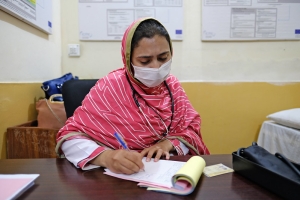 Afghanistan, a country beset by constant, unequivocal political unrest, faces a time of profound inequality. When the Taliban reasserted control over the country in August 2021, a cascade of reactions found the country’s health care system on the verge of collapse. In the first half of that year alone, Taliban forces attacked health care facilities, leaving 12 health care workers dead and damaging more than 25 buildings.
The impact on Afghan women has cut the deepest. Now lacking almost all fundamental rights, health care has taken a backseat. Not a single woman received screening for any cancer form and less than 10% received screening for sexually transmitted infections. Even where diagnosis is possible, treatment for these demographics remains virtually inaccessible.
Barriers to Health Care Access for Afghan Women
These obstacles to health care access for Afghan women are not accidental but structural. The Taliban’s governance has systematically dismantled the conditions in which women can safely seek and receive medical attention. At the center of this is the Mahram Policy, which requires female health workers to be accompanied by a male guardian at all times outside the home.
On December 21, 2022, women were banned from working with NGOs nationwide, except in health care. Yet the requirement for them to be chaperoned now hinders their ability to provide and receive adequate health care. Even when women reach a facility, barriers persist; whether they would like to or not, male doctors can scarcely provide the necessary care except in life-threatening conditions.
Additionally, medicines are in short supply and the financial burden of travel pushes families to impossible decisions, leading women to disregard their health and rely on traditional cures.
The Organizations Still Showing Up
Despite the deteriorating environment, the international humanitarian response has been remarkable. In 2024 alone, nearly one million patients, 65% of whom were women and children, received primary care across 47 implemented health facilities. Alongside these infrastructural changes, the International Committee of the Red Cross (ICRC) has upgraded equipment, improved staff competency and educated hospitals on mass-casualty incidents.
Through expanding services into urban areas, organizations like the ICRC are pivotal in improving access to health care and alleviating difficult living conditions in Afghanistan. Médecins Sans Frontières (MSF) has equally refused to retreat. Operating across eight provinces, MSF has seen the number of patients it treats double in the last three years.
The organization prioritizes the most acute needs: emergency trauma care, maternal health and malnutrition. In 2024 alone, the organization admitted more than 400,000 emergency patients and assisted in more than 45,000 births. Despite attacks from the Taliban, the remaining feeding center and trauma facility in Kunduz have become vital for Afghanistan’s health care infrastructure.
What makes these organizations so significant is not just the scale of their operations but the conditions under which they persist. They hold together the health care system in a place of such turmoil, despite uncertain funding, restrictions on female staff and the collapse of broader public health systems.
Telemedicine: A Bridge No Wall Can Close
Among the most promising developments for Afghanistan’s health care system is the expansion of telemedicine. When physical access is blocked by Taliban restrictions, a mobile phone may still get through. Telemedicine is being pursued by many organizations and charities, with evidence of its impact.
The Central Asia Health Systems Strengthening project connected seven tertiary care facilities with 14 secondary care facilities across the region. The project enabled more than 6,000 teleconsultations and delivered 52 e-learning sessions to more than 2,000 health staff. A tele-ICU service running from 2020 to 2023 provided the same number of teleconsultations to nearly 1,600 patients.
This began as a response to COVID-19 before expanding into neonatal, pediatric and surgical critical care. Researchers found that increased consultation frequency was associated with reduced patient mortality, demonstrating clinical applicability.
Arian Teleheal
Dr. Waheed Arian grew up in Afghanistan during the Soviet conflict, sheltering in cellars from rockets and bombs. Later, his family fled to Pakistan, where he contracted malaria and tuberculosis in a refugee camp. He arrived in the U.K. at 15 with $100 in his pocket, went on to study medicine at Cambridge and is now the founder of Arian Teleheal.
Founded in 2015, Arian Teleheal began by connecting Afghan hospitals to a global network of volunteer specialists via smartphones and tablets. As expensive medical systems are inaccessible to medics in these low-resource settings, this enables medical personnel and patients to receive appropriate care by being routed to a network of more than 150 international volunteers. The results have been unparalleled, with a three-year study finding that Arian Teleheal’s volunteers have helped care for thousands of patients.
The organization has also since partnered with the World Health Organization (WHO) to provide emergency, mental health and psychosocial support to people in need across the globe.
Final Remarks
Initiatives such as these show great promise for those in need in Afghanistan, who face a health care system rocked by political repression, stripping the right to provide medical care freely. As humanitarian organizations struggle to fill the gap, telemedicine is emerging as a quiet revolution. Where Taliban restrictions try to block the door, a smartphone may still get through.
– Juliette Dall’Aglio
Juliette is based in London, UK and focuses on Technology and Global Health for The Borgen Project.
Photo: Flickr
