Let Our Girls Succeed Program in Kenya
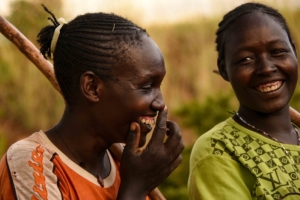
As Kenya moves closer to its goal of becoming an upper-middle-income country, many girls still lack educational opportunities, leading to gender disparities as the country develops. Girls living in urban slums and “arid and semi-arid lands” (ASALs) are particularly at risk of poverty. To address these issues, U.K. Aid developed a program, which will run from May 2017 to March 2023, called Wasichana Wetu Wafaulu, Swahili for “let our girls succeed,” as part of the Girls’ Education Challenge.
The Let Our Girls Succeed Program
The Education Development Trust has implemented the Let Our Girls Succeed program in “eight counties in [ASALs] and urban slums” in Kenya. The program targets 72,000 marginalized primary school girls, providing assistance for them to finish their current level of education with optimal outcomes and advance to the next phase of learning. The program builds on the original Wasichana Wote Wasome program, meaning “let all girls learn,” which began in 2013. The Let All Girls Learn program aimed to improve “enrolment, retention, attendance and learning.” Overall, the Let All Girls Learn program saw success, benefiting 88,921 girls.
Program Methodologies
The program uses several methods to help girls succeed:
- Let Our Girls Succeed Considers Girls in All Contexts: The program addresses the needs of girls on an individual level as well as the needs of the girl in her household, in her school and within the community. Intervention at each of these levels allows for “a holistic approach” to confront issues acting as barriers to the girl’s success.
- In-School Coaching for Teachers: The average primary school class size in Kenya is around 40 pupils. With this large class size, it is imperative that Education Development Trust offers gender-sensitive training to teachers so that they can teach in a way that supports girls, ensuring they feel comfortable and confident enough to return to class. As such, “more than 2,300” educators have received training on improved methodology and models, including gender inclusivity skills.
- The Deployment of Community Health Workers to the Girls’ Homes: The Ministry of Health sends community health workers to households to talk to girls and their families about the importance of school. From 2013-2017, these workers made more than 15,000 visits to homes, leading to a rising rate of girls’ enrollment. In 2020, during the school closures due to COVID-19, community health workers were “the only education point of contact” for most marginalized girls in Kenya.
- Community Education and Involvement: The program appeals to community leaders by seeking their involvement in girls’ education. The previous project saw success in this regard. At the beginning of the Let All Girls Learn project, 43% of community leaders did not agree that “vulnerable girls in [the] community should attend school.” At the end of the project, only 16% disagreed.
- Implementing Catch-Up Centers: The centers allow girls who have dropped out of school to come back and catch up to their classmates. Rasol dropped out of school due to pregnancy but is now attending the catch-up center so she can re-enroll in primary school. The center focuses on girls aged 10-15 mostly. Typically, girls spend between six and 12 months in catch-up centers. By 2019, the center saw more than 650 girls attending these classes.
- Cash Transfer Program Aids Underserved Households: More than 3,200 “households have received monthly cash transfers” to allow households to secure their basic needs and fund the costs of girls’ education.
- Alternative Pathways: Let Our Girls Succeed pushes girls to attend secondary school or TVET (technical and vocational education and training) after primary school. Fatuma and her sister finished primary school in 2018, both with the prospect of attending secondary school. However, Fatuma’s parents could only afford the cost of one girl’s education. Fatuma’s sister attended secondary school and Fatuma chose to attend a TVET center to complete a dressmaking course. However, her parents still could not afford these costs. The program gave her a bursary for this course as well as “a start-up kit to enable her to start a business.” The program has given bursaries to more than 3,700 girls for secondary school and vocational training.
Looking Ahead
The Let our Girls Succeed program plays a crucial role in providing a pathway for marginalized girls in Kenya to gain an education so that they can lift themselves out of poverty. With an education, girls are more likely to have access to higher-paying jobs, gaining the ability to support themselves and their families.
– Amy Helmendach
Photo: Flickr
