• Link to X
  • Link to Facebook
  • Link to Instagram
  • Link to TikTok
  • Link to Youtube
  • About
    • About Us
      • President
      • Board of Directors
      • Board of Advisors
      • Financials
      • Our Methodology
      • Success Tracker
      • Contact
  • Act Now
    • 30 Ways to Help
      • Email Congress
      • Call Congress
      • Volunteer
      • Courses & Certificates
      • Be a Donor
    • Internships
      • In-Office Internships
      • Remote Internships
    • Legislation
      • Politics 101
  • The Blog
  • The Podcast
  • Magazine
  • Donate
  • Click to open the search input field Click to open the search input field Search
  • Menu Menu
Blog - Latest News
Children

7 Facts About Child Labor in Kenya
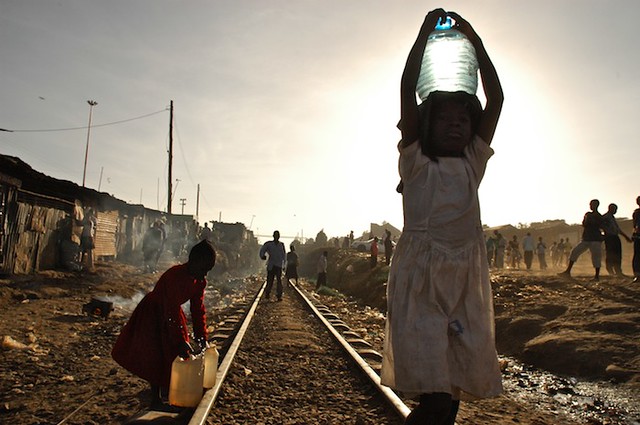
Facts About Child Labor in Kenya
According to UNICEF, a child laborer is a child who is too young to work or one who is involved in hazardous activities that could compromise their physical, mental, social and educational development. In Kenya, the Employment Act 2007 and the Children Act define a child as any person below the age of 18 years. Section 56 of the Employment Act makes it illegal to employ children under the age of 13. Children between the ages of 13 to 16 can be employed in “light work” while those between 16 and 18 are considered employable. Keep reading to learn the top seven facts about child labor in Kenya.

7 Facts About Child Labor in Kenya

  1. Farming, sand harvesting, drug peddling, street hawking, domestic work and sex work are the most common industries where child labor is present in Kenya. The commercial sexual exploitation of children tends to be more prevalent in tourism-heavy areas which include the capital city — Nairobi — and the coast.

  2. According to the U.S. Department of Labor, most child laborers in Kenya (including those who are victims of commercial sexual exploitation) are girls. However, boys are also involved. Overall, 35.6 percent of children between the ages of 5 and 14 engage are considered child laborers.

  3. Lack of education is one of the causes of child labor in Kenya. Primary education is free and mandatory but some parents are often unable to afford books, uniforms and other learning materials. Furthermore, 40 percent of those who complete primary school do not transition to secondary school, leaving many children at risk of exploitation. In 2018, the government began rolling out free secondary education for all Kenyans which will hopefully help curb this obstacle.

  4. Several laws protect children from child labor in Kenya including the Employment Act 2007. The Children’s Act says that children should be protected from economic exploitation, any work that interferes with their education, and work that is harmful to a child’s health or social, mental, physical and spiritual development. Additionally, the law mandates that no child shall be recruited in armed conflicts.

  5. Kenya has ratified several international conventions that are aimed at protecting children from exploitation. These include Minimum Age, Worst Forms of Child Labour, Optional Protocol on Armed Conflict, and the Palermo Protocol on Trafficking in Persons. However, Kenya is yet to ratify the United Nations Convention on the Rights of the Child Optional Protocol on the Sale of Children, Child Prostitution and Child Pornography which leaves children vulnerable to sex work.

  6. While some people may argue that child labor is beneficial to the economy because it raises a family’s income, this is hardly true. It harms the country’s economy in the long run as children are denied the opportunity to an education which could give them skills useful for getting a better job in the future.

  7. The government is doing its part in trying to end child labor in Kenya. In 2018, they increased the number of labor inspectors as well as the number of inspections conducted. The government also operates an emergency, toll-free child hotline to report instances of child abuse, including child labor. Organizations such as Save the Children and the African Network for the Prevention and Protection Against Child Abuse and Neglect are also helping out.

The government can help speed up the eradication of child labor in Kenya by subsidizing the cost of books, uniforms and other fees to ensure that all children can attend school. Additionally, there is a need to ensure that laws explicitly define and set parameters for what children can and cannot do. Finally, the government can ensure that the Ministry of Labour, Social Security and Services have sufficient financial and human resources to address child labor violations.

– Sophia Wanyonyi
Photo: Flickr

December 26, 2019
Share this entry
  • Share on Facebook
  • Share on X
  • Share on WhatsApp
  • Share on Pinterest
  • Share on LinkedIn
  • Share on Tumblr
  • Share on Vk
  • Share on Reddit
  • Share by Mail
https://borgenproject.org/wp-content/uploads/borgen-project-logo.svg 0 0 Kim Thelwell https://borgenproject.org/wp-content/uploads/borgen-project-logo.svg Kim Thelwell2019-12-26 05:39:102024-05-29 23:14:237 Facts About Child Labor in Kenya

Get Smarter

  • Global Poverty 101
  • Global Poverty… The Good News
  • Global Poverty & U.S. Jobs
  • Global Poverty and National Security
  • Innovative Solutions to Poverty
  • Global Poverty & Aid FAQ’s
Search Search

Take Action

  • Call Congress
  • Email Congress
  • Donate
  • 30 Ways to Help
  • Volunteer Ops
  • Internships
  • Courses & Certificates
  • The Podcast
Borgen Project

“The Borgen Project is an incredible nonprofit organization that is addressing poverty and hunger and working towards ending them.”

-The Huffington Post

Inside The Borgen Project

  • Contact
  • About
  • Financials
  • President
  • Board of Directors
  • Board of Advisors

International Links

  • UK Email Parliament
  • UK Donate
  • Canada Email Parliament

Get Smarter

  • Global Poverty 101
  • Global Poverty… The Good News
  • Global Poverty & U.S. Jobs
  • Global Poverty and National Security
  • Innovative Solutions to Poverty
  • Global Poverty & Aid FAQ’s

Ways to Help

  • Call Congress
  • Email Congress
  • Donate
  • 30 Ways to Help
  • Volunteer Ops
  • Internships
  • Courses & Certificates
  • The Podcast
Link to: The Impact of Cash Transfers in sub-Saharan Africa Link to: The Impact of Cash Transfers in sub-Saharan Africa The Impact of Cash Transfers in sub-Saharan Africa Link to: 9 Facts about Human Rights in Eritrea Link to: 9 Facts about Human Rights in Eritrea 9 Facts about Human Rights in Eritrea
Scroll to top Scroll to top Scroll to top