10 Things to Know about Living Conditions in Qatar
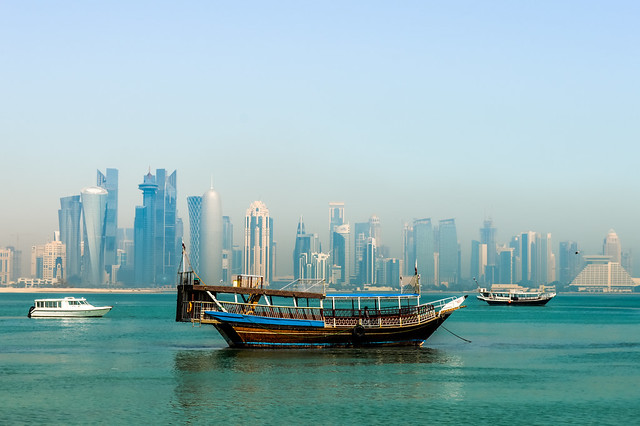
Qatar is a small nation bordered predominantly by Saudi Arabia. The nation has the highest GDP production in the Arab speaking world. Because of this, living standards are higher than many other Middle Eastern nations. Yet, Qatar is not without its issues surrounding living conditions despite its perceived excessive wealth.
10 Things to Know About Living Conditions in Qatar
- Qatar has a forced labor problem. Migrant workers make up 90 percent of Qatar’s population. Under a 2009 sponsorship law, workers have to hand over their passports to their employers. Workers often hesitate to complain or report abuses because this makes them vulnerable to the whims of their employers. Workers pay thousands to recruiters and often arrive to find that they are being paid less than promised, but they can’t leave because they are under contract and their employers have their passports.
- Qatar has a unique single-payer public health care system and a new national health strategy that seeks to improve outcomes for those living in Qatar. Qatar has one of the most effective healthcare systems in the Middle East. It ranks 13 in the world’s best healthcare systems and is number one in the Middle East.
- Men outnumber women four to one. There are only 700,000 women in Qatar, a country of 2.5 million people. This is due to the massive influx of migrant workers in the country, which are mostly men trying to provide for their families.
- Women in Qatar are twice as likely to pursue higher education than men. Men often decide to go straight into work after high school. Although women graduate at twice the rate of men, they only occupy 31 percent of the workforce.
- Women’s rights are limited in Qatar. The nation is a religious and conservative Muslim country, subscribing to Sharia law. It is still a taboo for women to fraternize with men. Women in Qatar cannot marry without the consent of a male family member. While men have uninhibited access to divorce, a woman can only divorce a man on narrow grounds. A woman cannot divorce her husband in Qatar if she is beaten or raped by her husband because domestic abuse and marital rape are not illegal under Qatari law.
- Qatar has the first Refugee Asylum Law in the Gulf. Qatar recently passed a law allowing refugees to seek asylum in the country. In an attempt to improve its public image for the upcoming world cup, Qatar has abolished exit visas for migrant workers. This may be a good first step in resolving the countries problem with forced labor. The law offers freedom of religion and freedom of movement for refugees as well as giving them access to an education while in Qatar.
- It is believed that upwards of at least 12,000 workers have died in the construction of World Cup stadium. This is due to workers being forced to build outside during summer in a country where temperatures usually can reach up to 50C (122F) degrees. There is a law banning work outside from June to August from 11:30- 3:00, but this has done little to decrease the work-related deaths. The most support for workers has come not from the Qatari Government, but from the Human Rights Watch, which has been trying to get the country to provide better conditions for workers.
- Pregnancy can be a crime. Sex outside of wedlock is illegal in Qatar, and extramarital affairs are punishable by stoning to death. Doctors are even required by law to refer to any pregnant women who cannot prove they are married to the authorities.
- Half of Qatar’s fresh water comes from a desalination process, and chemicals are added to the water to keep it from corroding the pipes. Unfortunately, the water often lacks basic minerals and contains harmful bacteria and is often not potable. This water is mostly good for use in agriculture. Qatar has the highest domestic water consumption in the world. The average household in Qatar uses 430 liters of water a day. Crops are watered with water from aquifers, which are being used up faster than they can be replenished.
- Qatar has a significant expat population. People from many different nationalities flock to Qatar for a number of reasons, including job opportunities and fewer tax restrictions. Those arriving from nearby nations experience less of a culture shock than those arriving from Western Europe although English is still the second highest spoken language in the region. Qatar is actively promoting the influx of expats through reduced visa restrictions.
Life in Qatar is vastly different and often times more difficult than that of the Western World. Human rights abuses still occur every day. Women, by international standards, are struggling to find a prominent socio-economic role. Even still, Qatar has a few unique features, including its single-payer healthcare system, that separate it positively from other nations. There is clearly more work to be done in regards to living conditions in Qatar.
– Sarah Bradley
Photo: Flickr
