Girls’ Education in Mongolia
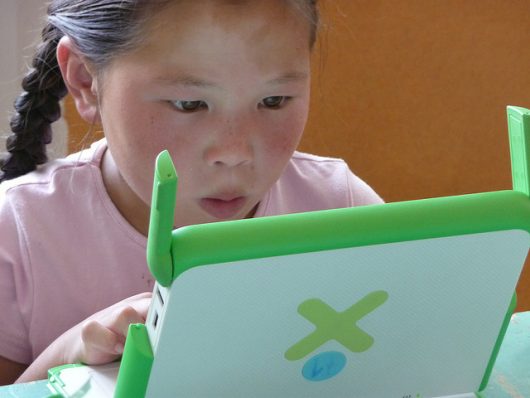
From a single party rule to a multi-party democracy, Mongolia has sought to accommodate more of its people’s demands, particularly in the advancement of girls’ education.
In 2000, the average time spent by girls in school was 9.4 years, but by 2010, it had increased to 14.6 years. The government’s effort in funding the development of more rural classrooms and educational resources has been inspired by the hope of reducing the high rate of teen pregnancies, as about a third of the population lives in rural areas that lack access to reproductive healthcare and education.
Improving Girls’ Education in Mongolia to Spur Economic Growth
As with decreasing global poverty, decreasing discrimination against women is also an investment in accelerating economic growth. The United Nations Development Programme, along with its U.N. partners, has worked towards closing gender disparities, such as in primary education. Approximately a third of Mongolia’s labor force consists of livestock herders, but higher access to education has increased young girls’ opportunities to seek jobs in other sectors.
These efforts have been fruitful: the number of women working in non-agricultural sectors has increased from 35 percent in 1990 to 41 percent today. As reported in 2014 by the World Bank, women own or partially own almost 40 percent of Mongolian firms.
The State of Progress in Girls’ Education in Mongolian
Although Mongolia can now boast of its position at 53 out of 159 countries in gender inequality globally, the gender disparities in the workforce still run particularly deep, as exhibited through women’s limited access to economic opportunities, unequal salaries, and their higher rate of inclination towards unreliable, informal work away from entrepreneurial sectors. The full benefits of the progress made in girls’ education in Mongolia have been limited by such inequalities.
To maximize the advantages of increasing girls’ education in Mongolia, other factors that commonly require a woman’s time and attention should be considered. Females are traditionally assigned the role of nurturing family; therefore, increasing construction of more eldercare and childcare facilities would provide more girls the chance to prioritize their education or job. More access to early-childhood education will also yield the same empowering effect for women, especially those living in rural towns.
Teenage fertility is especially high in Mongolia, at 40.4 childbirths for every 1000 girls between the ages of 15 to 19. Unwanted pregnancies are also relatively high in this age range as 14.1 percent of pregnant girls have abortions. These factors, left often unattended, limit the educational opportunities that girls can now seek.
Location also plays a huge role in determining the level of access to education for young girls. About 55 percent of students achieve secondary education, but this holds true for only 45 percent of students in rural areas. Children from rural areas must often confront inhibitions to accessing education, such as seasonal challenges and poor infrastructure.
Support of Girls’ Educational Opportunities in the Sciences
In 2010 the Shirin Pandju Merali Foundation, partnered with The Asian Foundation and the Zorig Foundation, introduced a university scholarship program for Mongolian girls that would pay for four years at the National University of Mongolia and the Mongolian University of Science and Technology for 60 girls from low-income families. This program is geared towards providing girls with opportunities in the sciences since Mongolian girls are largely underrepresented in those fields.
Even though more than 60 percent of university students are female, there remains a large discrepancy in the number of men and women in the sectors related to science and technology. By focusing on improving education for girls in this subject, Mongolia is expanding its labor force to fields beyond agriculture, which has consistently faced major setbacks due to natural disasters.
In 2010, Mongolia suffered a dzud, which is a national disaster of a drought in the summer followed by a severe winter, and lost almost 20 percent of the nation’s herds. One-third of Mongolia, whose livelihoods rely on herding, could no longer afford university tuition for their children, so this scholarship program would succeed in providing an education for specifically poor, rural girls.
The country is currently focused on its development through its minerals sector. Major infrastructure projects in developing mines are underway, and skilled workers are in high demand. Investing in girls’ education, so that more girls may access a job in this sector, is also an investment in Mongolia’s economic development as the country gravitates towards a more stable means of income.
By accounting for these factors in improving gender parity, developments in areas such as location and rethinking traditional gender norms and attitudes, Mongolia can improve education for girls and yield more long-term sustainable change. As women are more likely to pursue tertiary education, Mongolia will only benefit from addressing these different factors in helping women achieve educational success, and subsequently, inclusion in sectors significant to Mongolia’s economic prosperity. The butterfly effect of these developments in empowering women will continue to ripple throughout Mongolia’s poverty-reducing progress.
– Alice Lieu
Photo: Flickr
