How the U.S. Benefits from Foreign Aid to Montenegro
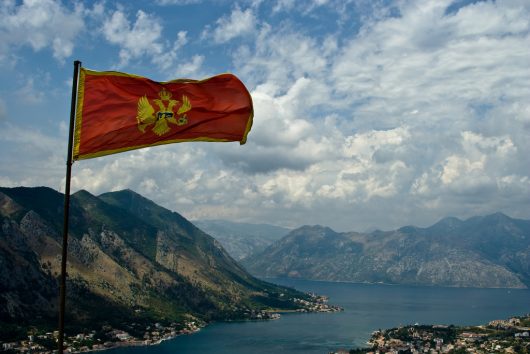 In comparison to other partners of the United States, such as Saudi Arabia and China, Montenegro appears to be quite small and insignificant. It is true that Montenegro’s total population is less than a million people. Furthermore, the country itself is slightly smaller than the state of Connecticut. However, Montenegro has proven to be a sturdy economic and military partner to both the United States and European Union. The overall goal of this piece will be to explore how the U.S. benefits from foreign aid to Montenegro.
History and Renewed Relations
U.S.-Montenegrin relations officially began in 1905 and lasted until 1920. Montenegro eventually became a part of the Socialist Federal Republic of Yugoslavia until its dissolution in 1992. Montenegro wouldn’t achieve independence again until May 2012. In a referendum, rough 55 percent of the population voted for independence from the state union of Serbia-Montenegro. As a result, the United States re-established relations with Montenegro in 2006.
Quoting the U.S. Department of State on current relations with Montenegro, “The relationship between the U.S. and Montenegro has promoted peace and prosperity in the region and around the world.” For the FY 2019 budget, Montenegro is earmarked to receive $2.5 million in U.S. foreign assistance. Of that, 35 percent is geared towards bolstering democracy, human rights, and governance. The remaining 65 percent will be invested in peace and security.
Benefit: Influence in the Balkans
As aid continues to Montenegro, the U.S. gains a foothold in the Balkan region and can further promote its agenda. In recent years the U.S. has aimed for Montenegro to achieve Atlantic-Euro integration. On June 5, 2017, Montenegro became the 30th member to join NATO. In addition, Montenegro entered into accession negotiations with the E.U. to become a full member.
As a potential member of the E.U. and a part of NATO, Montenegro is of strategic significance to the U.S., particularly in reducing Russian influence and aggression in the Balkans. To reduce crime, the U.S. has sought to increase Montenegro’s ability to fight organized crime and corruption. If U.S. assistance continues as such, Montenegro has the potential to become a stronger economic and military partner which, in turn, affects greater U.S. influence and support in the region. This is a major example of how the U.S. benefits from foreign aid to Montenegro.
Benefit: Foreign Investment
Montenegro’s low corporate tax rates and business-friendly policies have enticed foreign investment from the U.S. and E.U. The U.S. Department of State explains that Montenegro has enacted the following incentives to potential investors:
- a business-oriented economic system
- a high level of economic freedom
- a stable currency (euro)
- macroeconomic predictability
- and openness to incentivized tax structures.
If Montenegro enters the E.U. it has the potential to gain increased investment from U.S. companies.

U.S. foreign assistance and economic investment in Montenegro has proven to be both beneficial and successful. Montenegro’s unemployment rate has decreased noticeably as U.S. and E.U. investment has increased. The country has also become a full member of NATO and is projected to enter the E.U. in 2022. As Montenegro strengthens, U.S. interests are further protected in the Balkans which is essential in limiting Russian influence. Overall, Montenegro has helped protect U.S. economic and strategic interests in the region. These two serious factors prove how much the U.S. benefits from foreign aid to Montenegro.
– Colby McCoy
Photo: Flickr
