Improving Women’s Empowerment in Mozambique
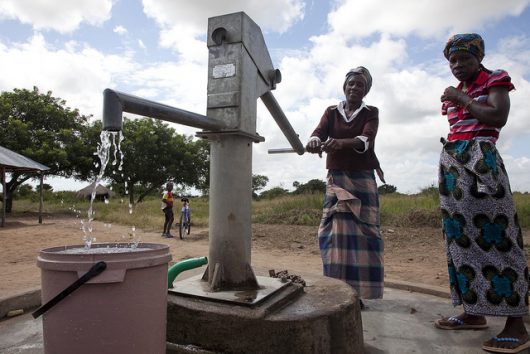 As with many areas populated mainly by rural people, women’s empowerment in Mozambique takes a long time to spread through scattered communities. As of July 2017, Mozambique’s population stands at around 26,573,706, a number that accounts for the millions of inhabitants who have died from the HIV/AIDS epidemic, which severely affected much of this region.
The seaside nation is one of Africa’s less-populated countries, and, as the CIA states, the majority of its population is under the age of 15. With such an underprivileged and underaged society, there is much room for improvement, especially in the area of women’s rights.
U.N. Women
U.N. Women is an organization working to produce international legislation and support for women where women may not have a voice otherwise. According to its most recent report on Mozambique, “Mozambique is in a period of great transformation. Rapid economic growth coexists with high inequalities, very low human development indicators and a tense political situation.”
The amount of poverty and lack of economic growth in the region coupled with the major loss in adult population due to the HIV/AIDS epidemic leaves the women of Mozambique in a tough position — they are in charge of the economic stability in their community due to the lack of male population, but they are required to still adhere to strict social standards of the past.
Land and Labor
One of the most significant inhibitors of women’s empowerment in Mozambique is the tradition of male land-ownership. According to U.N. Women, women account for 87 percent of the labor force, but only 25 percent of these workers own land of their own. Many traditions in the Mozambique society focus on patriarchal norms, with the man being the breadwinner, landowner and leader in household activities.
However, with the severe decline in male population, these traditions are becoming harder to uphold. According to the International Labor Organization, over 59 percent of women work in informal or manual labor, which makes up 95 percent of the labor distribution in Mozambique.
The small margin of formal labor is known to be quite discriminatory toward women, and so the International Labor Organization produced a list of recommendations that labor unions and the Mozambican government to work on implementing for the betterment of women’s empowerment in the country.
Women’s empowerment in Mozambique is just beginning to take form; according to the U.N.’s Economic Commission for Africa, there are now 98 women in Parliament as of 2012. This number has increased from women holding only seven political seats in 2008, but it still only amounts to 39 percent of the entire parliamentary population.
Legal Action Needed
In the legal system, Mozambicans fight major issues such as human trafficking and abuse through legislation such as The Family Code, which was adopted in 2004. According to the International Federation for Human Rights, the Family Code establishes “total gender equality in family law, marriage, divorce, raising children and sharing assets within a marriage.” The law also establishes a woman’s right to property ownership which, as mentioned before, has been a contentious subject in the rural areas.
With this law, among many others which protect against egregious human rights violations such as human trafficking and rape, women in Mozambique are beginning to be viewed as equal to men in their homes, communities and society overall.
While there is plenty of work to be done in advocacy and fighting for women’s empowerment in Mozambique, there have been many strides taken to readjust the outlook of Mozambican society and to open doors for rural and cosmopolitan women in the country.
– Molly Atchison
Photo: Flickr
