Efforts to Reduce the Syrian Education Crisis
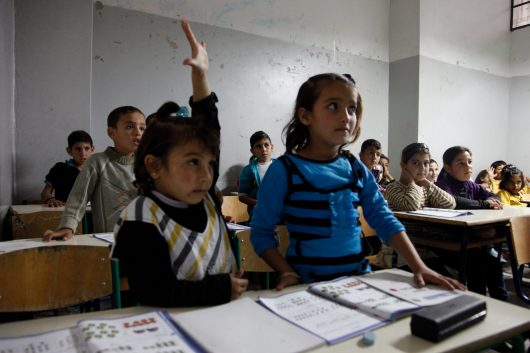
The Syrian education crisis is a direct result of the displacement of people during the Syrian Civil War, which began in 2011 with protesting and civil unrest that turned increasingly violent. The conflict continues today, after four years of fighting, and while there are innumerable effects of the war, among the worst and long-lasting effects is an uneducated generation of Syrians.
Before the beginning of the conflict in 2011, Syria reported that 97% of primary-school-aged children were enrolled, with high literacy rates for both men and women — higher than the regional average with neighboring countries like Lebanon, Turkey, Egypt and Jordan. Now, the United Nations estimates that over 500,000 Syrian refugee children are not receiving any education, which does not account for children who are still in Syria and are not being taught.
More than 4,200 schools, about 20% of schools in Syria, have been damaged, destroyed, or are currently shelters for displaced people. The U.N. believes that more than five million young lives are at risk of becoming a “lost generation.” Schools can provide shelter, structure and stability for students coping with trauma. The implications of an entire generation of youths not having access to a stable and fully developed educational system can be extensive, but include an increased risk of abuse, exploitation and recruitment into armed groups, as well as a lack of knowledge and skills needed to rebuild a community post-conflict.
Groups Advocating for Syrian Students
There are some notable organizations working to improve these conditions that have set goals and aspirations for the future of Syrian education.
UNICEF is one organization seeking to alleviate the Syrian education crisis with its No Lost Generation initiative. The strategy, as described by UNICEF, proposes “…$1 billion focused on expanding access to learning and psychosocial support, strengthening social cohesion and peacebuilding efforts, and restoring hope for the future to millions of children.” This initiative comes from leading international humanitarian organizations and key advocates and donors. The action that comes from the incentive expands vocational and remedial secondary education and alternative ways of delivering education, as well as “building life-skills for children and adolescents; vocational training; mobilizing communities to support peacebuilding (e.g. peace forums and…integrating peacebuilding into education, programs that directly confront conflict and its causes, sports and arts…).”
Save the Children is making ongoing efforts to aid Syrian children. They accept donations from as many people as possible and of any size. They describe their efforts as ensuring children are nourished, educated and warm through the winter while also giving families food and a means by which to earn income.
There are also smaller efforts being made across the globe, like that of Dubai Cares, who worked with Save the Children to give 50,000 refugees school kits in five provinces in Jordan. Small and large efforts combined are what can truly reduce and potentially eliminate the Syrian education crisis altogether, and guarantee a generation is not lost due to conflict they cannot control.
– Gabriella Paez
Photo: Flickr
