• Link to X
  • Link to Facebook
  • Link to Instagram
  • Link to TikTok
  • Link to Youtube
  • About
    • About Us
      • President
      • Board of Directors
      • Board of Advisors
      • Financials
      • Our Methodology
      • Success Tracker
      • Contact
  • Act Now
    • 30 Ways to Help
      • Email Congress
      • Call Congress
      • Volunteer
      • Courses & Certificates
      • Be a Donor
    • Internships
      • In-Office Internships
      • Remote Internships
    • Legislation
      • Politics 101
  • The Blog
  • The Podcast
  • Magazine
  • Donate
  • Click to open the search input field Click to open the search input field Search
  • Menu Menu
Blog - Latest News
Global Poverty

Seven Facts About Poverty in Poland
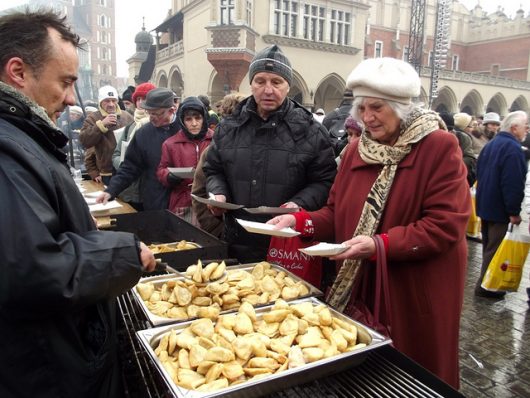
Poverty in Poland Facts
Poland is not a poor country by any means, but the region has historically possessed little wealth due to occupation, wartime and political mistreatment. As such, alleviation of poverty in Poland has been a focal point of recent Polish governments. Discussed below are the leading facts about poverty in Poland, and how the issue is addressed at the national and international level.


7 Key Facts About Poverty in Poland


  1. Poverty in Poland has been steadily decreasing since 2004. Over the past decade, the country has cut the population of people living on less than $5 a day in half, from 20 percent to 10.
  2. Poland’s government spends heavily on social resources, with a quarter of the nation’s GDP spent on pensions, public health care, public education and other social services.
  3. Compared to other parts of the world, poverty in Poland is shallow. There are very few people living in dangerously extreme poverty or hunger. Less than a tenth of the population live on $2 a day or less.
  4. Income inequality in Poland is also relatively low. In a World Bank ranking of income inequality, Poland scored significantly better than the United States and Russia with stratification levels near the U.K. and France.
  5. While they are rarely in extreme poverty, many young people in Poland live on very little due to a lack of employment. Overall unemployment in Poland is at 14 percent, but is 25 percent for those who primarily seek industrial jobs.
  6. Poland’s heavily industrial economy is something of a double-edged sword. GDP growth was mildly hindered by the 2008-9 global economic downturn when compared with other European nations. This growth, however, has proven slow with an average of a one percent annual increase.
  7. Poland seeks to both decrease rural poverty and increase its economic productivity by improving the agricultural sector. The EU has been a major benefactor in this cause, revamping the nation’s agricultural policy in 2004 and annually contributing large sums of money. In 2014, Polish farmers received three billion euros in direct payments from EU funding.

These facts about poverty in Poland only begin to scratch the surface of such a complex region. This eastern European nation exudes fiscal prosperity amidst underlying unemployment and rural poverty, a conundrum that needs to be solved.

– John English

Photo: Flickr

September 11, 2016
Share this entry
  • Share on Facebook
  • Share on X
  • Share on WhatsApp
  • Share on Pinterest
  • Share on LinkedIn
  • Share on Tumblr
  • Share on Vk
  • Share on Reddit
  • Share by Mail
https://borgenproject.org/wp-content/uploads/borgen-project-logo.svg 0 0 Borgen Project https://borgenproject.org/wp-content/uploads/borgen-project-logo.svg Borgen Project2016-09-11 01:30:202024-05-27 09:34:39Seven Facts About Poverty in Poland

Get Smarter

  • Global Poverty 101
  • Global Poverty… The Good News
  • Global Poverty & U.S. Jobs
  • Global Poverty and National Security
  • Innovative Solutions to Poverty
  • Global Poverty & Aid FAQ’s
Search Search

Take Action

  • Call Congress
  • Email Congress
  • Donate
  • 30 Ways to Help
  • Volunteer Ops
  • Internships
  • Courses & Certificates
  • The Podcast
Borgen Project

“The Borgen Project is an incredible nonprofit organization that is addressing poverty and hunger and working towards ending them.”

-The Huffington Post

Inside The Borgen Project

  • Contact
  • About
  • Financials
  • President
  • Board of Directors
  • Board of Advisors

International Links

  • UK Email Parliament
  • UK Donate
  • Canada Email Parliament

Get Smarter

  • Global Poverty 101
  • Global Poverty… The Good News
  • Global Poverty & U.S. Jobs
  • Global Poverty and National Security
  • Innovative Solutions to Poverty
  • Global Poverty & Aid FAQ’s

Ways to Help

  • Call Congress
  • Email Congress
  • Donate
  • 30 Ways to Help
  • Volunteer Ops
  • Internships
  • Courses & Certificates
  • The Podcast
Link to: Malnutrition in China: Overcoming Hunger in Rural Areas Link to: Malnutrition in China: Overcoming Hunger in Rural Areas Malnutrition in China: Overcoming Hunger in Rural Areas Link to: UK Makes Girls’ Education a Priority Link to: UK Makes Girls’ Education a Priority UK Makes Girls’ Education a Priority
Scroll to top Scroll to top Scroll to top