New 6-In-1 Vaccine in Mauritania Can Save Millions of Lives
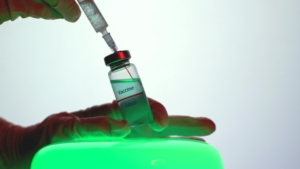 Each year, nearly four million children aged below 5 die due to infectious diseases. Many of these diseases, such as measles, whooping cough and tetanus, have been largely eliminated in developed countries. However, a lack of vaccination in underdeveloped nations has had serious repercussions for residents who can’t access the medicine.
Difficulties in transporting the vaccine while keeping it at the proper temperature (called the “cold chain” process) and finding enough workers trained to administer it are only a few of the problems that these countries face. The sheer amount of immunizations that children must receive (as many as 30 by the age of 18) only compounds the problem. This puts strain on families to devote time and money to getting vaccinated.
However, scientists have a solution: a 6-in-1 vaccine that costs less and requires less medical assistance, thus eliminating barriers that previously prevented poor countries, like Mauritania from vaccinating. Mauritania and Senegal are the first two developing countries to adopt the 6-in-1 vaccine. Their adoption indicates a promising outlook for disease prevention in poverty-stricken nations.
About the Hexavalent Vaccine
The 6-in-1 (“hexavalent”) vaccine consists of a single shot that contains protection against diphtheria, tetanus, pertussis (whooping cough), hepatitis B, Haemophilus influenzae type b (Hib) and polio. Before it was first used in the mid-2010s, the World Health Organization (WHO) utilized a similar pentavalent vaccine containing all the same immunizations except for polio, which had to be administered through a separate shot.
The pentavalent vaccine was highly successful, protecting approximately 80 million children annually during its 20-plus-year stint. However, the new hexavalent vaccine may have even greater potential. This is due to its ability to reduce inefficiencies caused by multiple shots and reduce overall storage and shipping costs.
Financial Crisis in Mauritania
Mauritania and its neighbor, Senegal, were the first low-income countries to implement the hexavalent vaccine in July 2025. Both countries experience significant poverty rates. However, Mauritania faces an especially pressing problem: to produce enough crops to feed its population of 5.2 million when less than 0.5% of its land is suitable for farming.
Despite being one of the least densely populated countries in the world, Mauritania faces an alarming hunger crisis compounded by recent flooding and an influx of refugees. In fact, inflation and decreased agricultural productivity are expected to bring an additional 200,000 people into poverty by 2027. As of 2022, food insecurity rates have reached 20%, up 9% from the previous year. An influx of refugees from neighboring countries also burdens Mauritania.
These factors cast a grim shadow over the future of Mauritania. Only 55% of children attend school due to the nation’s severely underfunded education sector. The health care industry is similarly lacking; a recent diphtheria outbreak in a refugee camp underscores the need for disease prevention in Mauritania.
Given its precarious economic and social situation, Mauritania may seem like a losing battle; however, introducing the hexavalent vaccine marks a new chapter in comprehensive aid for struggling countries.
A Helping Hand
Mauritania needs all the help it can get and Gavi is determined to provide it. Gavi, the Vaccine Alliance, is a Switzerland-based humanitarian organization responsible for introducing hexavalent vaccines into low-income countries, starting with Mauritania and Senegal. The group is also pushing for greater immunization equality worldwide.
In Mauritania alone, there are more than 35,000 underimmunized children. This results in exponentially higher infectious disease rates and an average lifespan 10 years shorter than that of the U.S. and other developed countries. The discrepancy can be attributed to lower levels of public health funding in impoverished countries like Mauritania. Without financial support, vaccines have also been too expensive to afford.
Katy Clark, a senior program manager at Gavi, expresses her frustration: “It wasn’t fair that high-income countries have had this combination vaccine for more than 20 years, while lower-income countries have had to wait.”
However, thanks to Gavi’s funding, Mauritania can purchase the 6-in-1 Vaccine for $3.00 per dose, which is $1.50 less than it would cost without Gavi’s support. The nation also saves money on labor and packaging, since the vaccine requires one fewer shot than the previous pentavalent and polio combination.
Conclusion
In the past 50 years, Gavi has vaccinated more than a billion children and prevented 40 million casualties from infectious diseases. This number can continue to increase through a strategic approach that prioritizes health care, affordable prices and humanitarian aid.
Global organizations like Gavi and UNICEF can provide targeted support by considering each nation’s specific needs and deficiencies, such as Mauritania’s hunger crisis and low vaccination rates. This approach can greatly improve the livelihoods of those in low-income countries.
The hexavalent vaccine has the potential to aid millions of people worldwide. Its path of trial and success demonstrates how crucial technological innovation is to the future of global health.
– Grace Gonzalez
Grace is based in Oakton, VA, USA and focuses on Business and Global Health for The Borgen Project.
Photo: Pexels
