Three Ways Women’s Empowerment in Costa Rica is on the Rise
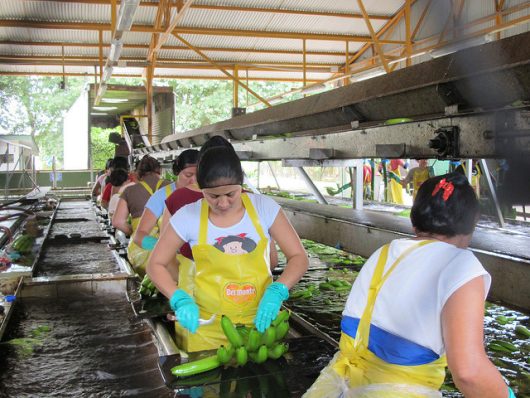
Costa Rica was ranked 32nd out of 144 on the 2016 Global Gender Gap Report. With a score of two representing maximum gender equality, Costa Rica scored 0.736, moving up six positions since the 2015 report. While this report evaluates the gap between women and men in economics, political empowerment, education, health and life expectancy, from an economic standpoint Costa Rica is making great leaps toward equality. With traditional family roles shifting and more Costa Rican women working outside of the home, opportunities have had to be available over the last decade to accommodate this change and growth. While conditions are far from perfect and equal pay is still a hot topic, women occupy more leadership roles in business, politics, education and agriculture, creating a significant influx of female empowerment in this Latin American country.
Female Leadership
Costa Rica is one of five Latin American countries that have adopted gender parity policies, aimed at increasing the number of women in national parliaments.
In 2011, Costa Rica elected its first female president. Laura Chinchilla Miranda won the presidential election and was more than 20 percentage points ahead of the runner-up. Her term ended in 2014, but her presence in a position of power marks the great strides being made toward gender equality and women’s empowerment in Costa Rica. With the 2018 election approaching, the representation of women has significantly increased, with women in Parliament exceeding 40 percent. These are historic numbers.
Among government leadership, there has also been an increase of female representation in the police force. Over the past three years, Costa Rica’s police force has gone from 3 percent to 17 percent female officers in the agency. With leadership in Parliament and on the streets, Costa Rican women are being represented more and more.
The Gender Equality Seal
Costa Rica has created a seal to verify and certify gender equality in the workplace. The Gender Equality Seal is a recognition given to public and private organizations. Its goal is to implement a system that will guarantee gender equality in each organization’s internal processes and labor relations. Existing gaps between women and men must be identified and a work plan to close those gaps must be created. The system is implemented in four areas: human resources, integral health, social co-responsibility in care and workplace environment. The seal seeks to empower women by offering them more opportunities in the workplace with equal pay as well as opportunities for high-level executive positions.
In 2016, 45 organizations participated in The Gender Equality Seal and signed a letter of commitment towards gender equality.
Coffee
More than 500 million people around the world are dependent on coffee for their livelihoods. Costa Rican coffee has been considered among the best in the world. As one of the country’s top three exports, coffee is a major source of revenue and a staple in the economy. Although coffee farmers can be paid extremely low wages for their work, there has been an influx of female-centered organizations seeking to remove the gender gap and allow women to make a living through coffee farming.
The International Women Coffee Alliance Costa Rican chapter, Women in Coffee Alliance of Costa Rica (WCACR), provides women in coffee a voice and vote in political decisions regarding the commodity. Formed in 2005, WCACR seeks to create sustainable developments in each community that are environmentally, economically and socially viable. They also offer opportunities for women in the coffee industry to learn more about the production of coffee and the marketplace.
Organizations like ASOMOBI, the Association of Organized Women of Biolley, make a point to advertise that their coffee is produced by women in an effort to strengthen gender equity and empower the women of this cooperative.
Today, with more than 30 associate members of the chapter including millers, producers, exporters and roasters, they represent 17 companies and organizations from Costa Rica’s seven coffee-producing regions.
Although Costa Rica is moving in the right direction, with equality in the workplace and gender salary as a topic of discussion among leaders and influencers, they still have a long way to go. But as politics change and leaders invest more energy into promoting an equal and thriving country, there is hope that women’s empowerment in Costa Rica will continue to be on the rise.
– Kailey Brennan
Photo: Flickr
