10 Facts about U.S. Aid to Syria
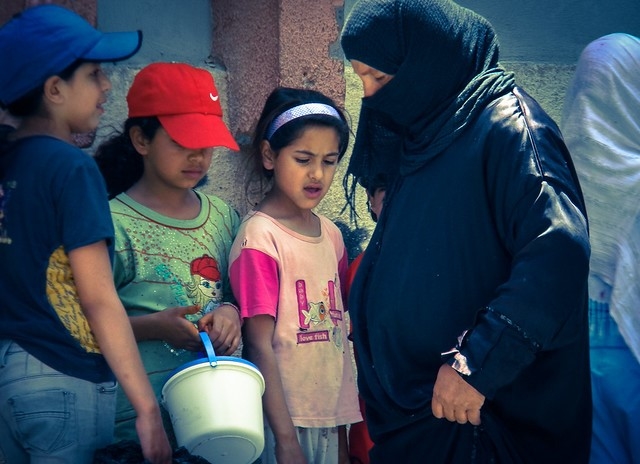 Syria faces a great deal of poverty, in part because of the violent conflict taking place there. The U.S. is deeply involved in Syria, both militarily and through foreign aid. The U.S. uses aid to address Syrian poverty in a variety of ways. Although this aid has helped the U.S. successfully achieve some of its goals, the aid has recently been reduced. These 10 facts explore the impact of U.S. aid to Syria, methods used to provide that aid and the potential consequences of cuts in aid.
10 Facts about U.S. Aid to Syria
- Currently, 13.1 million Syrians require assistance. 6.6 million Syrians require housing, and 2.98 million Syrians live in areas affected by violence or that cannot be easily accessed by relief agencies. Millions of Syrians are forced to live in exile. They escape the violence of their home country only to find more poverty in Turkish, Lebanese and Jordanian refugee camps.
- Since 2011, U.S. aid has reached the amount of $7.7 billion. This aid funds the provision of food, water, healthcare and other necessities. It also funds “stabilization assistance,” allowing Syrian communities themselves to rebuild infrastructure and continue agricultural practices.
- In 2014, more than 40% of food-related emergency relief in Syria came from the U.S. This aid was sent throughout the 14 regional districts of Syria. At the time, 300 medical facilities in Syria were backed by the U.S., with more than 280,000 surgeries taking place at these locations.
- In 2016, U.S. aid to Syria amounted to $601 million. The aid was used to send food to impoverished areas. It also funded polio vaccinations for Syrian children.
- In 2017, the U.S. House of Representatives introduced a bill requiring the U.S. to prevent violence against the Syrian people perpetrated by the Assad regime. Known as the Caesar Syria Civilian Protection Act of 2017, the bill sanctioned supporters of the Assad regime. The bill also sanctioned groups and individuals known to prevent Syrian access to humanitarian aid.
- In the spring of 2019, the U.S. restored power to 500,000 citizens of Raqqa. The Syrian Recovery Trust Fund, funded by USAID, provided food security to 256,051 Syrians. The same program also funded waste removal for 53,645 families.
- USAID is currently implementing a program to improve damaged infrastructure in Raqqa. The program gives authority to the community leaders of Raqqa. USAID plans to cooperate with local leaders and NGOs to restore power lines and increase regional access to electricity.
- In 2018, U.S. aid to Syria was cut by $230 million. The U.S. called for $300 million in aid from other Arab nations. The new reduced amount of U.S. aid was redirected primarily toward the reconstruction of the city of Raqqa, the former center of ISIS operations in Syria.
- After making significant cuts to the amount of proposed aid to Syria, the U.S. planned to allow that money to be used for other purposes. The administration emphasized the $300 million being sent to Syria by other nations. $100 million was sent by Saudi Arabia alone.
- The expanded role of other nations in Syria is used as a justification for the U.S. taking a less prominent role. As U.S. aid to Syria decreases, U.S. military involvement in the country is decreasing as well. Many Syrians are still in need of U.S. aid, even if U.S. policy
seems to be moving away from providing that aid.
Thanks to U.S. aid, thousands of Syrians have access to better infrastructure, electricity, food and healthcare. U.S. aid facilitates stability in Syria. Further cuts to U.S. aid would be detrimental to Syrian stability. To help protect U.S. aid to Syria, U.S. voters can contact Congress in favor of protecting the International Affairs budget using this link.
— Emelie Fippin
Photo: Flickr
