5 Poverty Statistics on Sub-Saharan Africa
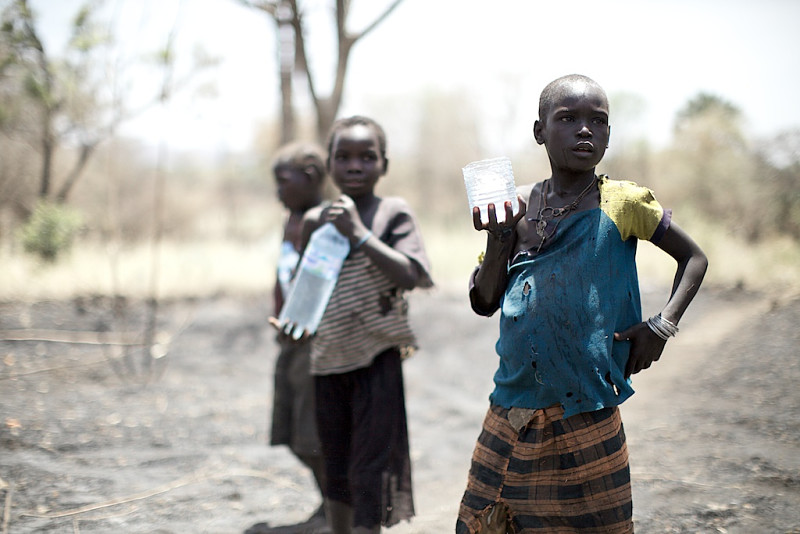 Nearly half the population in Sub-Saharan Africa lives below the international poverty line. Discussed below are five shocking statistics regarding poverty in Sub-Saharan Africa.
Leading Facts on Poverty in Sub-Saharan Africa
- The average life expectancy at birth for someone born in sub-Saharan Africa is 46. This sobering number is due to the prevalence of HIV/AIDS in the region. According to UNDP, “a person can hope to live on average only 46 years, or 32 years less than the average life expectancy in countries of advanced human development, with 20 years slashed off of life expectancy due to HIV/AIDS.” Thankfully, HIV death rates are decreasing across sub-Saharan Africa. In Rwanda, AIDS-related mortality rates dropped from 7% to 5% from 2011-2012. Similarly, in Uganda the life expectancy was raised by ten years between 2000 and 2013, from age 46 to age 55. Foreign aid and the distribution of HIV/AIDS medication has played a large role in this reversal.
- 48.5% of the population is living on less than $1.25 per day, and 69.9% on less than $2.00 per day. With a little over 910 million people living in the region, this places around 637 million Africans below the poverty line. The good news is that poverty rates are steadily declining in almost all of the countries in the region. In 2011, the head of the Africa World Economic Forum Katherine Tweedie stated that “10 fastest-growing economies will come from sub-Saharan Africa in the next five years.” In 1981, the poor in this region accounted for 50% of the world’s poor population. Today, they account for one third of the world’s poor population. Although one third is still a significant number, it is considerably less daunting than the numbers from a few decades ago.
- HIV/AIDS is the #1 killer in sub-Saharan Africa. UNAIDS estimates that 2 million Africans perish each year from the disease. 70% of these African HIV/AIDS deaths were in sub-Saharan Africa. The region also lays claim to 90% of new HIV infections in children. In Namibia alone, 15,000 people die every year from the disease.
- The Democratic Republic of the Congo is the poorest country in Africa and the second poorest country in the world, with almost 88% of the population living on less than $1.25 a day. With a population of 65.7 million people, 88% is an unnerving statistic. Children are severely malnourished (rates have reached 30% in certain areas) and many die due to these adverse conditions. In fact, children account for almost 50% of deaths in the country. If any country in Africa deserves aid from the United States, it is the Democratic Republic of the Congo.
- The majority of poor people in the region live in rural areas. Due to a decline in agricultural assistance, the rural sectors of sub-Saharan African nations are hotbeds of extreme poverty. Much of the land is very dry, making it difficult for farmers to grow food for sustenance. Luckily, efforts are being made by the UNDP to foster the development of sustainable agriculture in these areas. In Lesotho, reform actually came from the government when King Letsie III introduced sustainable farming to his people.
– Josh Forgét
Sources: The World Bank, The New Times, Farmers Weekly, The National, Rural Poverty Portal, World Concern
Photo: City Data
