Five Facts About Women’s Health in Africa
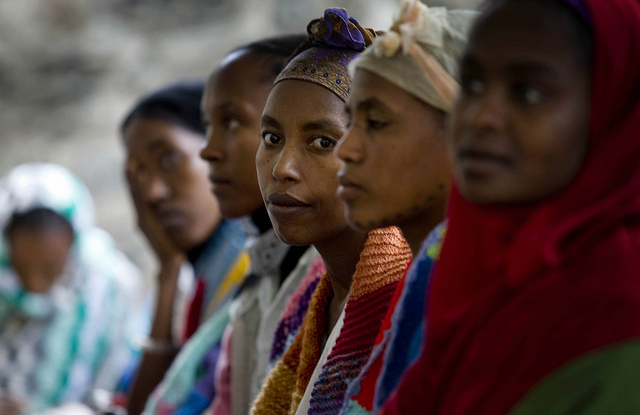 Women’s health is of great importance to social and economic development in Africa. Representing over 50 percent of the country’s human resources, women’s health in Africa has major implications for the nation’s development. Overwhelming evidence shows that by supporting women’s health status and income levels, both households and communities are drastically improved. Therefore, women’s disempowerment must be regarded as a human rights issue. These are a few facts about women’s health in Africa today.
Maternal Deaths Are Still High
Although woman’s life expectancy at birth in more than 35 countries around the world is upwards of 80 years, in the African region, it is only 54 years, according to recent World Health Organization statistics. Sixty-six percent of maternal deaths happen in sub-Saharan Africa. One in 42 African women still dies during childbirth, as opposed to one in 2,900 in Europe.
Teenage Pregnancy Education
Due to the lack of education and healthcare, teenage mothers experience many complications and premature deaths since their young bodies are still developing and not ready for the physical and emotional trauma of childbirth. Because of this, according to the Center for Global Health and Diplomacy, teenage pregnancy needs to be at the top of the education agenda in Africa among young girls if they are going to be empowered to take control of their bodies, their futures and their health.
Improving Infrastructure Can Save Women’s Lives
Several of the major issues affecting women’s health in Africa are associated with poor living conditions. As the main gatherers of food for their households, women are exposed to particular health risks. There is ample evidence that improving infrastructure such as access to roads and providing safe and accessible water sources can considerably improve women’s health and economic well-being.
HIV Affects More Women than Men
In 2015, 20 percent of new HIV infections among adults were among women aged 15 to 24, despite this group only accounting for 11 percent of the global adult population, according to Avert.com. “In East and Southern Africa, young women will acquire HIV five to seven years earlier than their male peers. In 2015, there were on average 4,500 new HIV infections among young women every week, double the number of young men.” In west and central Africa, 64 percent of new HIV infections among young people occurred among young women. Location has a lot to do with this, as adolescent girls aged 15 to 19 are five times more likely to be infected with HIV than boys of the same age in Cameroon, Côte d’Ivoire and Guinea.
The Fight for Empowerment
U.N. Women, in partnership with the International Rescue Committee, puts great effort into the protection of women’s empowerment in Africa. This organization supports critical policies for social protection for women. Partnerships with national banks are expanding access to finance to make that happen, along with collaborations with regional and U.N. economic commissions. Although women’s health in Africa is in desperate need of reform, there are many organizations like this one fighting to make that possible.
Policy reform designed to improve women’s health in Africa must address the issue of women’s place in African society so that the health of women can be seen as a basic right.
– Kailey Brennan
Photo: Flickr
