Empowering Women in India’s Informal Sector
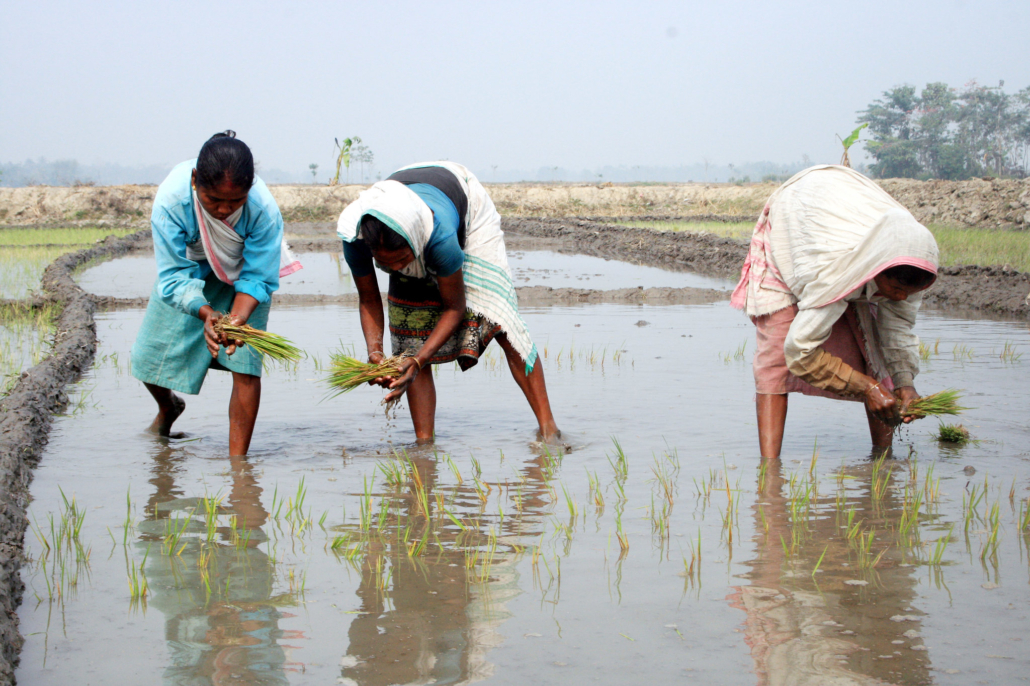
Informal employment compromises a large percentage of India’s labor force, with the size of India’s informal economy estimated to be 43.1% of its total GDP. Importantly, 88% of employed Indian women are working in the informal sector, mainly in small-scale farming. Other informal work includes domestic cleaners, street vendors and garment factory workers.
As 9.5% of India’s employed population living below the poverty line are women, it is not hard to see that women bear a significant economic burden. Yet, empowering women in India’s informal sector will not only alleviate the symptoms of poverty for women and their families, but it will also benefit the global economy.
Progress on the Sustainable Development Goals (SDGs)
The Sustainable Development Goals (SDGs) were developed to create a better and more prosperous future for all. Goal 5 directly relates to achieving gender equality and empowering all women and girls across the globe, whilst the other SDGs recognize gender poverty, women’s unequal access to education and health care, and women’s poor health and well-being as key issues going forward.
According to UN Women, despite commitments to end gender inequality, the world has failed to make considerable progress and only 48% of the data needed to monitor SDG 5 is currently available. In fact, if the world does not take substantial action now, predictions have indicated that it will take another 286 years to enforce and monitor gender equality.
The disproportionate number of women in India’s informal sector is hindering the ability of developing countries to meet the Sustainable Development Goals (SDGs). In the informal economy, workers do not receive contracts, lack the same level of social protection that the formal sector provides and earn lower wages. Not only this, but the nature of informal work is often more precarious, hindering women’s ability to gain social and economic security.
Empowering Female Workers
In spite of these circumstances, women in India’s informal sector are demanding better treatment, health and protection in the workplace. Indeed, the COVID-19 pandemic has raised the urgency of having secure employment and health and well-being.
Formed in 1984, The Self-Employed Women’s Association (SEWA) has around 2.5 million workers and is empowering women in India’s informal sector to be self-reliant and take back ownership over their work.
SEWA’s Punjab state co-ordinator Harsharan Kaur told Foreign Policy that it is important for the government to recognize that the informal sector is the largest contributor to India’s economy so that it takes social protection measures for women seriously.
Foremost, SEWA educates women about their rights before helping them to collaborate to demand better pay and lobby the government into action. Through the association, more than 300,000 women have joined collective enterprises where women are made equal shareholders, providing them with greater economic power.
The association believes that asset ownership through cooperatives is the key to freeing women from poverty by ensuring that women have equal access to services such as health and childcare and financial, legal and housing services.
Global Economic Benefits
According to Oxfam, gender inequality results in a loss of $9 trillion a year in developing countries which is not only detrimental to women and their families, but the global economy.
Between 2000 and 2010, a 30% reduction in poverty in Latin America was achieved by increasing the number of women in secure, paid employment showing how closing the gender gap in India could also help to reduce poverty.
Achieving gender equality by securing women’s employment will have universal economic benefits, for which informal work accounts for 60% of all global employment.
A study by the IMF showed that only 13% of women working in sectors that are more integrated into the global economy are employed informally compared to 20% of women in sectors that are less integrated.
Integrating developing countries into the global market will therefore help women to access more secure employment opportunities. Boosts in the global market will help achieve gender equality by exposing women to better jobs and in turn, increase women’s spending power.
Looking Ahead
The World Bank’s International Development Association has already directed $93 billion toward low-income countries which should be appropriately channeled toward supporting and strengthening informal workers’ organizations, skills and empowerment. By recognizing that informal work constitutes a large proportion of India’s economy, investing in women’s futures will not only help developing nations meet their sustainability goals but benefit the global economy at the same time.
– Tatum Richards
Photo: Flickr
