• Link to X
  • Link to Facebook
  • Link to Instagram
  • Link to TikTok
  • Link to Youtube
  • About
    • About Us
      • President
      • Board of Directors
      • Board of Advisors
      • Financials
      • Our Methodology
      • Success Tracker
      • Contact
  • Act Now
    • 30 Ways to Help
      • Email Congress
      • Call Congress
      • Volunteer
      • Courses & Certificates
      • Be a Donor
    • Internships
      • In-Office Internships
      • Remote Internships
    • Legislation
      • Politics 101
  • The Blog
  • The Podcast
  • Magazine
  • Donate
  • Click to open the search input field Click to open the search input field Search
  • Menu Menu
Blog - Latest News
Global Poverty

Why is Tunisia Poor?
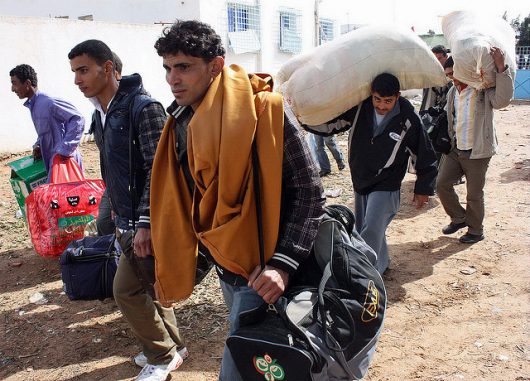
Why is Tunisia Poor

Tunisia is a country of around 11 million people in North Africa. In the past decade, it has emerged as the only success story of the Arab Spring, a revolutionary and democratically-minded movement that swept the Arab world in the early 2010s. So why is Tunisia poor?

In the decade before 2010, Tunisia managed to halve its poverty rate, dropping from 35 percent to 16 percent. This success came from certain important social achievements. Universal access to electricity, high enrollment in primary education and reductions in child malnutrition were significant factors. However, these trends seemed to stall after 2010, and the poverty rate has remained fairly stagnant.

Despite the poverty reduction and economic growth, inequality has also increased. Many investments in the early 2000s moved from high-skill jobs to low-skill ones. Tunisia also lacks a significant social security system and unemployment insurance. Investments typically happen in coastal regions, which increases regional wealth disparities.

In central Tunisia, poverty and and unemployment rates are several times higher than the national average. Some experts worry that the lack of infrastructure and jobs will create a breeding ground for extremism that could threaten Tunisia’s progress.

But why is Tunisia poor in certain areas? Several factors contribute to overall unequal opportunity in Tunisia. Where you live and the circumstances you were born into can determine how long you attend school and whether you have access to water. Additionally, Tunisia falls behind most other Middle Eastern and North African countries when it comes to sanitation.

Certain facts about an individual household in Tunisia can determine whether the family is impoverished. The educational attainment of the head of the household and the ratio of male to female employees are some indicators. Additionally, the ratio of the food budget spent on inexpensive cereal products can also indicate a level of poverty. Finally, households with fewer children are also less likely to be impoverished.

Thankfully, with successes both in reducing poverty in the past and in the Arab Spring, the people of Tunisia have proved that they can achieve incredible social victories. The International Monetary Fund has also recently lent Tunisia $2.9 billion to help address the issue of poverty.

– Brock Hall

Photo: Flickr

August 25, 2017
Share this entry
  • Share on Facebook
  • Share on X
  • Share on WhatsApp
  • Share on Pinterest
  • Share on LinkedIn
  • Share on Tumblr
  • Share on Vk
  • Share on Reddit
  • Share by Mail
https://borgenproject.org/wp-content/uploads/borgen-project-logo.svg 0 0 Borgen Project https://borgenproject.org/wp-content/uploads/borgen-project-logo.svg Borgen Project2017-08-25 01:30:542024-05-28 00:15:46Why is Tunisia Poor?

Get Smarter

  • Global Poverty 101
  • Global Poverty… The Good News
  • Global Poverty & U.S. Jobs
  • Global Poverty and National Security
  • Innovative Solutions to Poverty
  • Global Poverty & Aid FAQ’s
Search Search

Take Action

  • Call Congress
  • Email Congress
  • Donate
  • 30 Ways to Help
  • Volunteer Ops
  • Internships
  • Courses & Certificates
  • The Podcast
Borgen Project

“The Borgen Project is an incredible nonprofit organization that is addressing poverty and hunger and working towards ending them.”

-The Huffington Post

Inside The Borgen Project

  • Contact
  • About
  • Financials
  • President
  • Board of Directors
  • Board of Advisors

International Links

  • UK Email Parliament
  • UK Donate
  • Canada Email Parliament

Get Smarter

  • Global Poverty 101
  • Global Poverty… The Good News
  • Global Poverty & U.S. Jobs
  • Global Poverty and National Security
  • Innovative Solutions to Poverty
  • Global Poverty & Aid FAQ’s

Ways to Help

  • Call Congress
  • Email Congress
  • Donate
  • 30 Ways to Help
  • Volunteer Ops
  • Internships
  • Courses & Certificates
  • The Podcast
Link to: A Continued Water Shortage In Antigua & Barbuda Link to: A Continued Water Shortage In Antigua & Barbuda A Continued Water Shortage In Antigua & Barbuda Link to: Why is Burundi Poor? Link to: Why is Burundi Poor? Why is Burundi Poor?
Scroll to top Scroll to top Scroll to top