Five Things You Should Know About Water Quality in Namibia
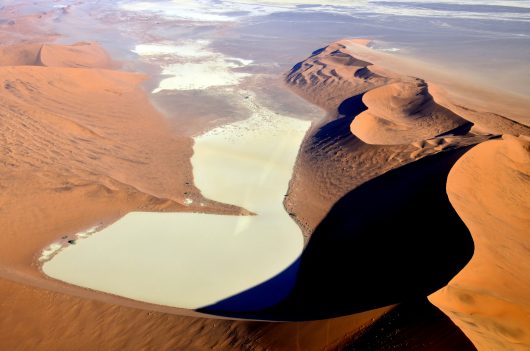
Located in southern Africa and bordering the Atlantic Ocean, the Republic of Namibia is known for its sweeping deserts and mineral exports. However, the country’s dry climate makes it susceptible to drought, which means there are scarce freshwater resources. Here are five things you should know about water quality in Namibia.
Five Things Facts About Water Quality in Namibia
- Water quality in Namibia has greatly improved since the 1990s. Total improved water increased from 70 percent in 1990 to 91 percent in 2015. Great improvements were seen in rural areas, where roughly 53 percent of the population resides. The proportion of the rural population with improved drinking water increased from 58 percent in 1990 to 85 percent in 2015.
- Despite improvements, water quality in Namibia is still lacking in rural areas. This is partly due to the difficulty of upkeep and system installation in communities with limited resources. “The disturbing truth is that installed rural water supply infrastructure is far harder to keep operational than hoped for, and often fails before its planned design lifetime due to poor maintenance,” the Rural Water Supply Network wrote in a report.
- Rural communities are coming up with their own ways to clean and filter water. Among these is the use of filtration cloths. Water is poured over a piece of fabric that catches contaminants. Tests reveal that certain kinds of cloth, such as cotton, can even remove some microorganisms as well. While these methods are not as effective as a modern filtration system, they offer a temporary solution for vulnerable communities.
- The government has taken steps to improve water quality in Namibia by creating policies focused on regulating wastewater reuse and water saving. The Water and Sanitation Policy, or WASP, which was enacted in 1993, is an example of such policy. Since WASP was established, the water supply in rural areas has increased enough to meet the domestic and livestock requirements of the majority of the farming population. This improvement has had a great impact because 72 percent of Namibia’s water is used for agriculture.
- Technology has played a significant role in increasing access to and improving water quality in Namibia. The capital city, Windhoek, pioneered direct potable reuse systems, or DPR. DPR is the process of treating wastewater and then returning it to the water supply without using an environmental buffer, such as a reservoir, first. Namibia’s DPR system has been operating since 1968 and has been so efficient that some U.S. agencies are studying its success.
Despite countless environmental and geographic challenges, the Namibian people have used innovation and technology to make great progress in improving water quality and availability in Namibia.
– Alexi Worley
Photo: Flickr
