Improving WASH in South African Schools
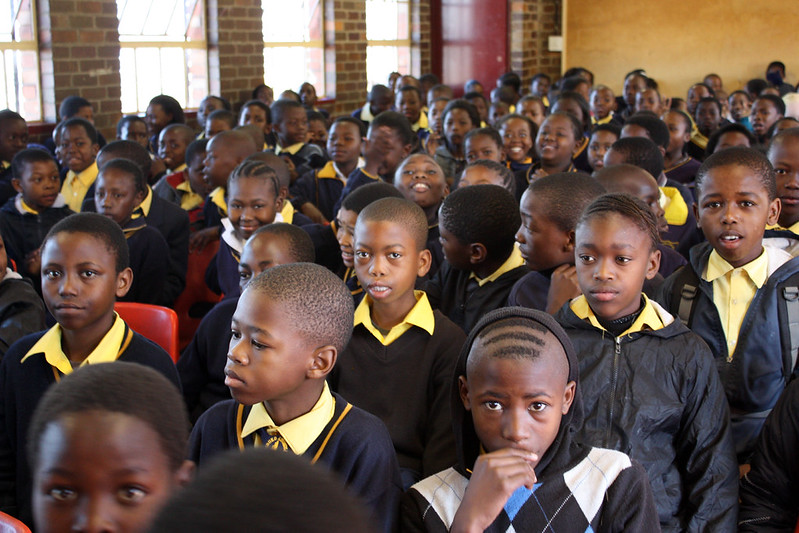 South Africa is a country where access to clean water and sanitation is not readily available to all, and this directly impacts education. Around 462 million students globally attend schools without access to water, sanitation and hygiene (WASH).
When sanitation is not safely managed, it can contaminate soil, food and water sources, spreading disease and causing death in extreme cases. South Africa’s government is taking steps to improve WASH for its next generation.
The Impact of Poor WASH on Education
Improving education has remained a major challenge for the South African government, and this is directly linked to the lack of WASH services in schools. The problem is especially prevalent in underprivileged, water-scarce areas, where students leave school without completing their education due to the inaccessibility of water and toilets within schools.
Even with South Africa investing in schools and policy reforms, WASH access differs depending on socioeconomic status and community. South Africa’s informal settlements, where citizens face limited access to housing, education and job opportunities, are often the most affected.
This disparity causes students in lower-income communities to have higher exposure to waterborne diseases, making them unable to focus properly due to dehydration, lack of privacy, illness and poor sanitation. This limits classroom time, stunting cognitive development and reducing attendance rates.
A New Sanitation Solution
South Africa has looked to other countries for help in improving WASH in its schools. A South African delegation attended the 2018 Reinvented Toilet Expo in Beijing, where a new sanitation system was showcased. The system purifies solid waste and urine, removes all pathogens and recycles the output as flushable water — a solution South Africa was ready to implement.
At the event, South Africa partnered with Enviro Loo to adapt the system for local schools. The system was installed in 2020, and Enviro Loo has since continued to install it in South African schools and informal settlements, reaching more than 41 locations with more being built.
Enviro Loo is also part of the South African Sanitation Enterprise Programme (SASTEP), a government initiative that organizes sanitation solutions and tracks new systems and technologies to increase WASH access in South African schools.
Measurable Results
The effects of the new system have been immediate. Schools now have bathrooms located in hallways next to classrooms, rather than in secluded areas.
- Absenteeism has dropped by 80% since installation.
- Students from informal settlements are attending class with confidence, knowing they have access to clean toilets and proper sanitation.
- Students are arriving at school earlier and remaining in class for the full school day, improving educational outcomes.
Looking Ahead
South Africa is continuing to expand WASH access for its next generation. Indeed, with its continued partnership with Enviro Loo and the Gates Foundation, students are better able to focus on their education, and the program offers a model for addressing sanitation-linked barriers to learning in other developing countries.
– Kianna Phosouvanh-Sythong
Kianna is based in Upper Darby, PA, USA and focuses on Good News and Global Health for The Borgen Project.
Photo: Flickr
