Urban Innovation in Lagos Fights for a Fairer City
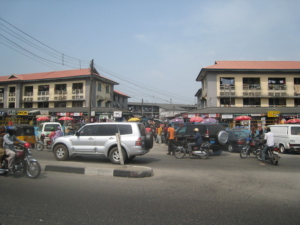 In Lagos, rapid urbanization has exacerbated housing shortages and food insecurity. In response to these pressures, community groups and nongovernmental organizations (NGOs) are reshaping urban innovation in Lagos. Across the city’s informal settlements, grassroots solutions aim to improve food security and expand opportunities for low-income residents.
Urban Poverty and Informal Settlement Dynamics
Lagos is one of Africa’s largest and most densely populated cities. Population estimates range from 16 million to more than 20 million. Rural migrants to Lagos increasingly turn to informal settlements as affordable housing fails to keep pace with population growth. Research finds that Lagos’ slum districts grew to more than 200 by 2023, with more than 70% of the city’s population now living in informal settlements. Poverty remains the primary challenge facing settlement residents.
The latest World Bank statistics show that about 37% of Nigerians live below the national poverty line. This is particularly acute in Lagos, where an estimated two-thirds of residents live on the equivalent of $1 a day. As inflation reached nearly 34% in 2024, food prices increased fivefold. Low-income households, which spend about 70% of their wages on food, face the greatest impact.
Community-Led Solutions
In response to these pressures, community groups are reshaping urban innovation in Lagos through practical programs aimed at improving living conditions in informal settlements. The Okerube Project addresses chronic water, sanitation and hygiene (WASH) challenges by strengthening community-led systems. The project links women’s water and sanitation committees with community development associations to implement sustainable WASH infrastructure. Using a bottom-up approach, the Okerube Project relies on community governance to ensure infrastructure improvements reflect the needs of settlement residents.
Food Security Initiatives
The United Nations World Food Program (WFP) has warned of an emerging hunger crisis in Nigeria. Food insecurity remains a major challenge in Lagos’ informal settlements, where residents struggle with high living costs and inflation. In response, local nonprofits such as the Lagos Food Bank Initiative’s Family Farming Program support urban farming to help households produce food and generate income.
Participants receive practical training and starter kits to establish backyard farms for personal consumption and sale. Lagos’ rapid urban development has displaced many residents from agricultural land, causing income loss. The Family Farming Program aims to counter this trend by supporting the revival of small-scale farming livelihoods.
Digital and Technological Innovation
Digital and technological solutions play an important role in urban innovation in Lagos. Technology initiatives such as Co-Creation Hub (CcHUB) address social challenges in informal settlements. CcHUB works with scientists, entrepreneurs, government leaders and local residents to support sectors most affected by poverty.
Projects include Re:learn, which works with schools to improve how teachers deliver science, technology, engineering and mathematics (STEM) subjects. Through Re:learn, CcHUB introduces digital laboratories, modernizes STEM instruction and provides professional development for teachers. By partnering with organizations such as the Mastercard Foundation, CcHUB expands access to STEM education in informal settlements, supporting participation in Lagos’ emerging job markets.
The Future of Urban Innovation in Lagos
As these efforts expand, the future of urban innovation in Lagos is increasingly shaped by policy engagement. State institutions and research bodies are beginning to formalize support for inclusive development by linking grassroots experience with city-level planning. In 2025, the Lagos State Government partnered with the African Cities Research Consortium (ACRC) to strengthen urban resilience strategies.
These initiatives align future development planning with community-led projects and reflect broader policy efforts to integrate lived experience into responses to complex urban challenges.
Building on the work of community groups and NGOs, these policies connect grassroots initiatives with formal planning processes. With nearly 35 million people facing extreme hunger in Nigeria, Lagos remains a critical site for resilience-building. The growing alignment between policymakers, researchers and community actors suggests that urban transformation can support both infrastructure development and inclusive growth. Urban innovation in Lagos may offer lessons for other emerging megacities across Africa.
– Rory Wesson
Rory is based in London, UK and focuses on Technology and Politics for The Borgen Project.
Photo: Flickr
