UNFPA-UNICEF: Supporting Adolescent Girls in West Africa
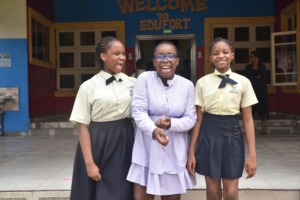 In the heart of West Africa during September 2024, floods devastated large portions of northeastern Nigeria. Millions of Nigerians were displaced and thousands of children and adolescents lost their belongings, including clothes, school bags, uniforms and shoes.
Yasmin Sherif, the Executive Director of Education Cannot Wait, described how disruptions caused by natural disasters like this have serious consequences for adolescent girls in West Africa. These girls already face high rates of gender-based violence (GBV) such as abduction and sexual violence, as well as child, early and forced marriage (CEFM).
CEFM in West Africa
An estimated 30% of adolescent girls in Nigeria are married before the age of 18 and approximately 27% of girls aren’t in school. With rooted cultural beliefs already limiting the participation of adolescent girls in West African society, the Malala Fund found that CEFM further reduces their opportunities. It decreases women and girls’ chances of finishing secondary or higher education by 23%.
In 2018, CEFM affected between 30% and 40% of adolescent girls in Liberia and Mauritania. The rates were higher in Nigeria at about 40%. Well-paying job opportunities for teenage girls in West Africa decline even further when they are blocked from education.
Female Genital Mutilation
Female Genital Mutilation (FMG) is a human rights violation with long-lasting consequences on psychological and physical health, with an especially high prevalence in West Africa. Roughly 18% of adolescent girls are affected in Nigeria, 38% in Liberia, 75% in Burkina Faso, 83% in Sierra Leone, 88.6% in Mali and 94.5% in Guinea. As a consequence of social norms, gender biases and false beliefs about female genitalia, the practice is often a prerequisite for adolescent girls’ passage into adulthood or marriage.
UNFPA-UNICEF Joint Program on FGM Elimination
The United Nations Population Fund (UNFPA) and the United Nations Children’s Fund (UNICEF) coordinate the Joint Program, utilizing funding from nations around the world to provide technical assistance. The U.S. was the second largest contributor in 2023, with $5 million donated and $29.2 million raised, outpacing the European Union and Canada.
Collaboration is at the heart of the program from the grassroots to the national levels. It enables it to be the world’s largest FGM elimination effort. The Joint Program’s primary mission seeks to partner with national governments, NGOs and private sector entities to “shift underlying social norms within affected communities.” To protect millions of adolescent girls in West Africa, the Joint Program leads advocacy efforts and supports national and subnational-level policymaking.
It also provides financial assistance to help countries address the issue directly. Other efforts include establishing community surveillance systems, mass media messaging to garner international attention, organizing grassroots entities into powerful coalitions and developing prevention and protection services. Thousands of arrests have sprung from the Joint Program’s enforcement and FGM legislation support.
When the program launched in 2008, FGM affected 30% of girls and women aged 15 to 49 in Nigeria. A decade later, the prevalence dropped to 20%. Burkina Faso is an especially successful example wherein FGM rates were consistently between 72% and 76% from 1999 to 2010, falling to 68% in 2015 and 56% in 2020. Unfortunately, the rate in Mali from 2008 to 2019 fluctuated between 85% and 91%, highlighting the need for further support.
UNFPA-UNICEF Global Program To End Child Marriage
The U.S. contributed $500,000 to the Global Program in 2023, which began in 2016 and is scheduled to end in 2030. It is now in the third and final phase (2024-2030). This program focuses its efforts in West and Central Africa, where six of the top 10 nations affected by child marriage reside.
By supporting school retention rates, mobilizing communities and delivering cost-effective services, the program empowers adolescent girls in West Africa. Through direct advocacy for national policy frameworks and assistance to governments in implementing them, the program further helps them become independent members of society.
As a direct result, multiple nations within the African Union have endorsed the African Common Position to End Child Marriage and the Campaign to End Child Marriage in Africa. Moreover, several African states have begun developing and executing their national strategies and action plans to end CEFM, with the assistance of UNICEF and UNFPA.
The European Union and Canada were the largest contributors to the Global Program in 2023. However, U.S. funding directly benefits adolescent girls in West Africa by expanding resource and opportunity access, empowering young girls and women and securing government commitment to protection from GBV.
The Future of US Support for West African Girls
The U.S. has contributed to significant efforts at reducing GBV, CEFM and FGM among adolescent girls in West Africa. Established programs continue to increase girls’ access to education, expand their economic participation and reduce their exposure to incidents of violence and oppression. While CEFM and FGM rates continue to decline globally, adolescent girls in West Africa still persistently suffer from the highest rates of occurrence. This trend has been consistent over the last 25 years.
Since the release of the U.S.’s 2016 Global Strategy to Empower Adolescent Girls, new challenges have arisen in humanitarian conflicts, natural disasters, crises and access to digital technologies. In the updated 2024 report, the U.S. Office of Global Women’s Issues declared that Africa’s child population will be “an essential determinant of any success in achieving greater economic growth, democracy and stability.” The U.S. thus reaffirmed its commitment to empower adolescent girls in West Africa and around the globe.
– Shea Dickson
Shea is based in Newton, MA, USA and focuses on Politics for The Borgen Project.
Photo: Pexels
