The Trump Administration’s Foreign Aid Policy
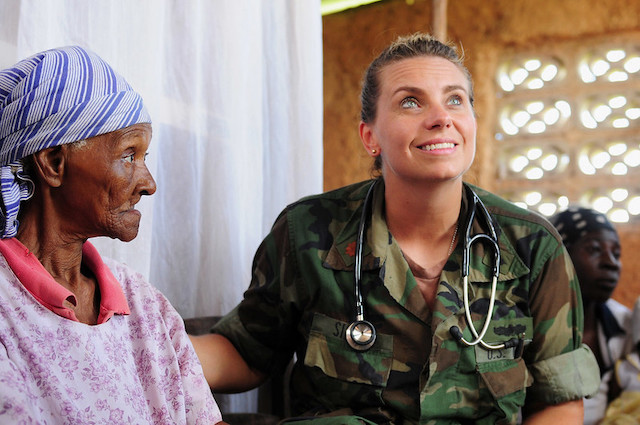 Since the 1940s, the U.S. has been a global leader in foreign aid. The first U.S. foreign assistance program began when Secretary of State George Marshall enacted the Marshall Plan. The program provided $12 billion to help a war-torn Europe recover after World War II. In 1961, President Kennedy started the United States Agency for International Development (USAID) after signing the Foreign Assistance Act into law. Today, the U.S. operates foreign aid programs with the aid of more than 20 U.S. government agencies, helping more than 100 countries. Since taking office, the Trump administration’s foreign aid policy has consisted of numerous attempts to pare down U.S funding for foreign aid.
The Trump Administration’s Foreign Aid Policy: 2017-2019
- The White House proposed a budget requesting a 31 percent cut in funding for several different agencies and programs.
- The Trump administration canceled $300 million in aid to Pakistan, claiming the nation had failed to properly combat terrorism in the region.
- The Trump administration cut the budget to fund Palestinian refugees through the U.N. Relief and Works Agency to $65 million from the initial promise of $125 million.
- The Trump administration ended aid to the Northern Triangle of Central America for not doing more to prevent illegal immigration to the U.S.
- The White House froze billions of dollars worth of foreign aid funding. The decision was in an effort to identify “unobligated resources of foreign aid” and “ensure accountability.”
The freeze in August created a logjam that left many officials at the State Department scrambling in the days before the end of the fiscal year. As a result, the State Department was unable to deliver more than $70 million to non-profit and humanitarian organizations in time. To help understand this complex process and the role of the executive and legislative branches in the funding of foreign aid, The Borgen Project reached out to an expert in the field.
An Expert’s Opinion
Dr. Steven Shirley, Ph.D. is an adjunct professor at the University of Southern Maine and Southern New Hampshire University. He earned his doctorate in International Studies from Old Dominion University, has lived and worked abroad in Southeast and East Asia. He has authored several “Op-Eds, articles and books.” According to Shirley, foreign policy is the responsibility of the executive branch. Although Congress provides the budget, it cannot dictate its allocation. That power lies with the executive branch.
Critics see the Trump administration’s move as a “bureaucratic maneuver” intended to surreptitiously cut funding for foreign aid. One official who is familiar with the matter said this method of cutting funds will have “major ripple effects.” Dr. Shirley believes that some good may yet come from these ripples. He thinks it may increase accountability for the agencies in regard to spending. Dr. Shirley says that requiring an account of money spent is “fiscally responsible” although it runs the danger of delaying the disbursement of funds.
Countries That Are Impacted
Because of the Trump administration’s foreign aid policy, various programs are in jeopardy. Due to a lack of funding, four non-profit humanitarian organizations working in China are at risk of shutting down. These NGOs remain unnamed due to the sensitivity of their work in China. The cuts also affected roughly $1 million to support programming in Ethiopia through the non-profit group Freedom House. Freedom House receives its primary funding in the form of grants from USAID and the State Department.
In Ethiopia, Freedom House is working to improve human rights, aid the country in its transition to democracy and establish a free press. According to Freedom House, Ethiopia is an authoritarian state ruled by the Ethiopian People’s Revolutionary Democratic Front. Despite progress toward eliminating extreme poverty, Ethiopia remains one of the poorest countries in the world. Around 30 percent of the population lives below the poverty line and millions suffer from food insecurity. Transitioning to democracy is often the first step in improving these living conditions.
These examples show that U.S. foreign aid does a lot of good around the world. The Trump administration’s foreign aid policy would cut funding to a lot of these programs. What long-term effects this may have globally are yet to be seen.
– Adam Bentz
Photo: Flickr
